
Pediatric Dental Clinic in Abu Dhabi and Al Shamkha
Children’s dental care, decay treatment, anxiety support and prevention in an age-appropriate plan
Does your child have toothache or cavities?
Are you noticing black or white spots on your child's teeth?
Does the child refuse to eat or complain when drinking cold or hot drinks?
Are you afraid that a visit to the dentist will turn into a terrifying experience for your child?
Are you looking for pediatric dentistry in Abu Dhabi or a pediatric dentist in Al Shamkha near Baniyas, Al Falah and Shakhbout?
Pediatric dentistry is a specialty that focuses on the dental health of children from the first age until adolescence. It is concerned with prevention, treatment of caries, monitoring tooth growth, dealing with child fear, treating pain, preserving baby teeth, and directing parents to the correct method of care at home.
At AHLI Specialists Medical Center in Al Shamkha - Abu Dhabi, we provide pediatric dental services within a calm medical environment suitable for families, focusing on making the child feel safe, understanding the condition of the teeth early, and treating the problem in a way that suits the child’s age and cooperation. We serve families from Al Shamkha, Baniyas, Al Falah, Al Shawamekh, Shakhbout, Mohammed bin Zayed City, Khalifa City, Al Bahia, Al Raha, and various areas of Abu Dhabi.

What is pediatric dentistry?
Pediatric dentistry is specialized care for a child’s teeth and mouth, including baby and permanent teeth, gums, jaw, oral habits, cavity prevention, and treatment of dental problems in a manner appropriate to the child’s age and psychology. A child is not like an adult in a dental clinic - he needs a special approach, simple explanations, gradual steps, and a reassuring environment.
The goal is dental treatment when needed, but the most important thing is prevention and building a positive relationship between the child and the dentist.
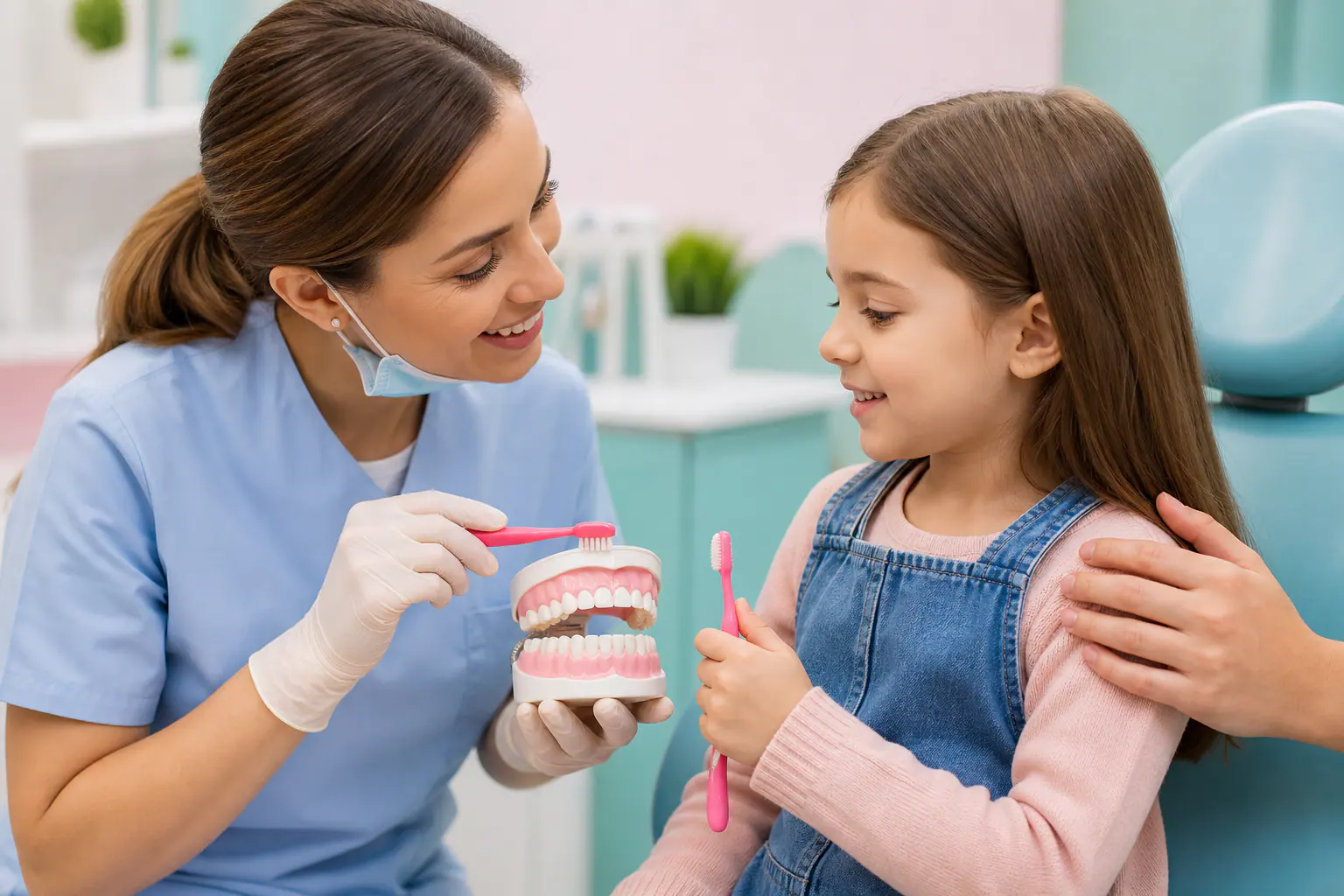
Why are children's baby teeth important?
Some parents believe that baby teeth are not important because they will fall out later, but this is not true. Baby teeth play a major role in a child’s health and development.
Ignoring baby tooth decay may lead to pain, abscesses, difficulty eating, sleep disturbances, absence from school, or premature loss of the tooth.
When should a child visit the dentist for the first time?
It is preferable that the child's first visit to the dentist be early, when the first tooth appears or at an age close to the first year. The goal is not only treatment, but prevention, guidance for parents, assessment of the risk of caries, and accustoming the child to the dental clinic environment.
- ● Tooth growth examination
- ● Early detection of caries
- ● Teaching parents how to brush their child’s teeth
- ● Preventing breastfeeding caries
- ● Know the appropriate amount of toothpaste
- ● Assess habits such as pacifier or thumb sucking
- ● Reducing the child’s fear of the clinic over time
- ● Building a comfortable relationship between the child and the doctor
The earlier a child starts visiting the dentist in a positive manner, the easier visits will be in the future.
When does a child need a dentist appointment?
Don't wait until the pain becomes severe. Many children's problems are more easily treated if caught early.
Causes of tooth decay in children
Tooth decay in children is one of the most common oral problems, and it may begin at a very early age if the teeth are not taken care of properly.
Signs of tooth decay in children
The child may not complain of pain at the beginning of decay, so parents must monitor the shape of the teeth.
- ● White spots on the teeth
- ● Yellow or brown spots
- ● A small hole in the tooth
- ● Mouth odor
- ● Sensitivity when drinking cold water
- ● Pain when eating
- ● Change in the color of one of the teeth
- ● The child cries when chewing
- ● A swelling or abscess next to the tooth
- ● Night pain or difficulty sleeping
If any signs appear, it is best to book an examination early before the decay reaches the nerve.
Should Decay in Primary Teeth Be Treated?
Yes, in many cases baby tooth decay must be treated, because neglecting it may lead to pain, infection and early tooth loss. A decayed tooth is not left behind just because it is “baby and will fall out.”
Sometimes the treatment is a simple filling, and sometimes the tooth requires root canal treatment or extraction, depending on the case.
Pediatric dental services
Children's dental examination
Examination of teeth and gums and monitoring the growth of milk and permanent teeth.
Treatment of caries in children
Treating caries with fillings or appropriate treatment depending on the depth of the caries.
Children's fillings
Fillings for baby or permanent teeth to preserve the tooth.
Root canal treatment of baby teeth
Treating deciduous nerve inflammation when needed.
Children's clothing
Protecting weak baby teeth after root canal treatment.
Cleaning children's teeth
Removing plaque and pigmentation and teaching proper care.
Children's fluoride
Apply preventative fluoride to reduce the risk of cavities.
Sealants for cracks
Protecting permanent molars from tooth decay.
Extraction of baby teeth
Extraction of irreversible teeth when necessary.
Keep your distance
Preserving the location of the permanent tooth after losing a baby tooth early.
Treating child fear
Be courteous and build trust in the clinic.
Nitrous Oxide for Children
Assessment of whether nitrous oxide is appropriate to reduce anxiety when needed.
Treatment and prevention of children's teeth
Dental fillings for children
Fillings are used to treat tooth decay when the tooth can be saved. The doctor removes the decayed part, cleans the tooth, and then applies a suitable filling material.
- ● Caries in a baby tooth
- ● Caries in a permanent tooth
- ● Small or medium hole
- ● A simple fracture in the tooth
- ● Caries between teeth
- ● Mild pain or sensitivity
Early filling may prevent the progression of the cavity to the nerve and abscess.
Root canal treatment of baby teeth for children
If the decay reaches the baby tooth nerve, the child may need pediatric root canal treatment instead of direct tooth extraction, if the tooth is still important.
- ● Remove pain
- ● Treating inflammation inside the tooth
- ● Preserving the baby tooth
- ● Prevent abscess
- ● Maintain distance for permanent tooth
The tooth after root canal treatment may need a pediatric crown to protect it.
Children's dental crowns
Children's crowns are used to protect weak baby teeth or those that have been subjected to significant decay or root canal treatment.
- ● Large caries
- ● A weak baby tooth after root canal treatment
- ● A fractured tooth
- ● Large filling may not hold up
- ● A tooth needs protection until it is replaced
Children's crowns are a way to protect the tooth and prevent recurrence of breakage or decay.
Extraction of baby teeth in children
Extraction is not always the first option, but it may be necessary in some cases.
- ● A baby tooth that is severely decayed and cannot be treated
- ● Severe abscess
- ● A tooth that is very mobile and causing pain
- ● A baby tooth prevents the appearance of a permanent tooth
- ● Major fracture
- ● Recurrent inflammation
After a baby tooth is extracted early, the child may need a space maintainer depending on his age and the location of the tooth.
Keep distance for children
A space maintainer is a small device used after the early loss of a baby tooth to maintain space until the permanent tooth appears in its correct place.
- ● Early extraction of a baby tooth
- ● The permanent tooth has not yet appeared
- ● Risk of movement of adjacent teeth
- ● Loss of space may affect the eruption of permanent teeth
Not every extraction requires a spacer — the doctor determines this depending on the child's age and stage of tooth development.
Cleaning children's teeth
Cleaning children’s teeth at the clinic helps remove plaque and stains, and teaches the child and parents the correct method of care.
- ● Plaque accumulation
- ● Surface pigmentation
- ● Mouth odor
- ● Difficulty in brushing
- ● Inflamed gums
- ● High susceptibility to caries
- ● Periodic preventive examination
Baby cleaning can be offered as an educational and relaxing visit.
Teeth cleaning ←Fluoride for children
Fluoride helps strengthen tooth enamel and reduce the risk of tooth decay in children. The doctor may recommend a fluoride application in the clinic depending on the child's condition.
- ● Repeated caries
- ● The beginning of white spots
- ● Difficulty in brushing teeth
- ● A diet rich in sugars
- ● New permanent teeth
- ● History of caries
Fluoride use should be appropriate for the child's age and needs.
Sealants for fissures on children's molars
A thin layer of protection placed on the chewing surface of molars to reduce the risk of caries in deep grooves.
- ● New permanent molars
- ● Deep grooves
- ● Difficulty cleaning the back teeth
- ● High susceptibility to caries
- ● History of caries in baby teeth
Sealants are not a substitute for brushing, but they do help protect tough areas.
Treatment of toothache in children
Toothache may be due to tooth decay, nerve infection, abscess, fall or blow, the eruption of a new tooth, or a gum problem.
- ● Constant pain
- ● Night pain
- ● Swelling of the gums or face
- ● Heat with pain
- ● Abscess
- ● A broken tooth
- ● Severe allergy
If there is significant facial swelling, high temperature, or difficulty swallowing, urgent medical evaluation should be sought.
Tooth abscess in children
Tooth abscess means there is inflammation or pus accumulation around the tooth, often due to deep decay that has reached the nerve.
- ● Swelling of the gums
- ● A bump or swelling near the tooth
- ● Severe pain
- ● Swelling of the face
- ● Heat
- ● Difficulty eating
- ● Baby crying or sleep disturbance
A tooth abscess should not be postponed. Antibiotics alone do not always solve the problem if the source of infection is from a tooth.
Broken teeth in children
The fracture should be evaluated quickly, especially if the tooth is permanent or there is pain or bleeding.
- ● Save the broken part, if any
- ● Do not try to paste it at home
- ● Rinse the mouth gently with water
- ● Apply a cold compress if there is swelling
- ● Book an appointment quickly
- ● If a complete permanent tooth comes out — emergency care immediately
Treatment depends on the type of tooth, the size of the fracture, the presence of pain, and whether the nerve is affected or not.
The first permanent teeth in children
The first permanent molar usually appears around the age of 6 years, and appears behind the baby teeth without a tooth falling out before it - so parents may not realize that it is a permanent tooth.
- ● New back molars appear
- ● The child has difficulty cleaning it
- ● Deep grooves
- ● Food gathering
- ● Need for solid materials
- ● Check it periodically
Protecting the first permanent molar from decay is a very important step for future oral health.
Changing teeth in children
Changing teeth is a normal stage, but sometimes it needs follow-up.
- ● A permanent tooth appears behind a baby tooth
- ● A baby tooth that does not fall out despite the movement of the permanent tooth
- ● Obvious crowding
- ● Premature loss of a baby tooth
- ● Delayed appearance of teeth
- ● Pain or swelling while shifting
Early follow-up helps detect the need for braces or a distance keeper.
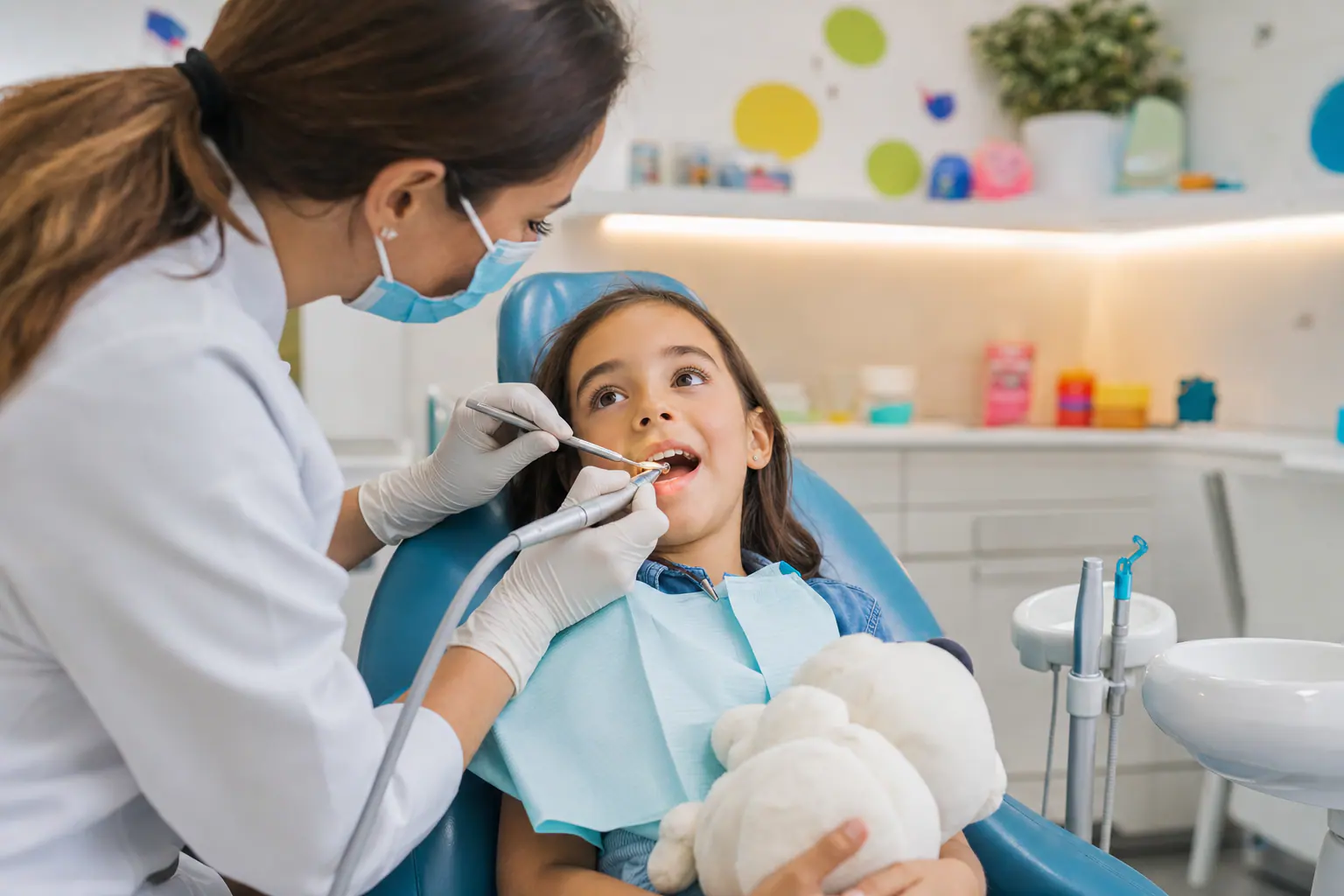
The child's fear of the dentist
A child's fear of the dentist is common, and it may be due to previous experience, fear of the unknown, or hearing scary stories.
- ● Talk to the child in simple language
- ● Explain the steps in a way that suits his age
- ● Do not surprise the child as much as possible
- ● Give the child time to get to know the place
- ● Use a gentle and reassuring approach
- ● Encourage the child instead of scaring him
- ● Make the first visit a positive experience
- ● Involve parents in an appropriate manner
A child's visit to the doctor should be a therapeutic and humanizing experience, not just a quick procedure.
How do parents prepare the child to visit the dentist?
- ● Talk about the visit in a positive way
- ● Avoid words like needle, pain, dislocation, blood
- ● Do not threaten the child with going to the dentist
- ● Read a simple story about a visit to the doctor
- ● Choose an appropriate time when the child is not hungry or tired
- ● Do not promise the child that “nothing will happen” if treatment is possible
- ● Praise the child after the appointment, no matter how simple his cooperation is
Parents' cooperation is very important in making the dental experience easier.
Treating children's teeth under anesthesia or sedation
Some children cannot cooperate in the clinic due to their young age, extreme fear, the number of teeth that need treatment, or the presence of special needs.
- ● A very young child who is not cooperating
- ● Many cavities
- ● Extreme fear
- ● Special needs
- ● Painful or long treatment
- ● Failure of regular treatment attempts
The decision to anesthetize or sedate requires careful medical evaluation, and discussing the benefits and risks with the parents.
Dentistry for children with special needs
Children with special needs may require dental care that is more gradual and gentle.
- ● The child's sensitivity to sounds or light
- ● Fear of touching the mouth
- ● Difficulty sitting or understanding instructions
- ● Needing a longer time
- ● Cooperation with parents
- ● Divide treatment into stages
- ● Intensive prevention to reduce the need for treatment
The goal is to provide the safest and most appropriate experience possible for each child.
Breastfeeding caries in children
Breastfeeding caries may appear in young children due to frequent exposure to milk or juices, especially during sleep.
- ● Do not let the child sleep with the breastfeeding in his mouth if it is sweetened
- ● Clean the baby's gums before teeth appear
- ● Start brushing when the first tooth appears
- ● Limit juices and sweetened drinks
- ● Book an early visit to the dentist
Caries at a young age can develop quickly, so prevention is very important.
When does a child start brushing his teeth?
Mouth cleaning should be started early. Before teeth appear, baby's gums can be gently cleaned with a clean cloth. When the first tooth appears, brushing begins with a small, soft brush.
- ● Brush your child's teeth twice a day
- ● Use a soft, age-appropriate brush
- ● Use an amount of paste appropriate for the child’s age
- ● Supervise the child’s brushing so that he can brush well
- ● Make brushing a fun daily habit
Children need parents' help with brushing for years.
The appropriate amount of toothpaste for children
Very young children: A very small amount, approximately the size of a grain of rice
Older children: A small amount, approximately the size of a pea, depending on age and as directed by your doctor
Ask your dentist about the appropriate amount for your child, depending on his age and risk of tooth decay.
Nutrition and its role in children's dental health
Caries prevention begins at home before the clinic.
Teeth grinding in children
Some children grind their teeth while sleeping. The stridor may be temporary, but needs evaluation if it is severe.
The doctor determines whether the child needs monitoring only or a night guard in specific cases.
Thumb and pacifier sucking habits
Thumb sucking or using a pacifier may be normal at an early age, but continuing it for a long time may affect the shape of the teeth and jaw.
If the habit persists beyond an appropriate age, a dentist can evaluate the condition and provide guidance.
Pediatric evaluation: When do we need early evaluation?
Some tooth and jaw problems appear early and may require orthodontic evaluation.
The pediatric dentist may refer the child to orthodontics if signs appear that require follow-up.
Orthodontics ←Preventing caries in children
A child cannot alone bear responsibility for his or her dental health — the role of parents is essential.
What happens at a pediatric dental visit?
Welcoming the baby
Calm the baby down and get to know the place.
Parents' question
About the problem, pain or habits.
Examination of teeth and gums
Evaluation of cavities, stains and tooth eruption.
X-rays When Indicated
If necessary for accurate diagnosis.
Explanation of the case
Discuss a treatment or prevention plan with the family.
Cleaning or fluoride
If it is suitable for the child.
Teaching brushing
How to care at home.
Follow
Schedule a subsequent treatment or examination.
Does the child need dental x-rays?
The child may need x-rays if the doctor cannot see the problem with an examination alone.
- ● Caries between teeth
- ● Unexplained pain
- ● Abscess or swelling
- ● Injury or fracture
- ● Delayed tooth eruption
- ● Evaluation of permanent molars
- ● Plan a take-off or distance keeper
X-rays are not ordered randomly, but rather according to diagnostic need and at the least appropriate amount.
Is dental treatment for children painful?
We always strive to make treatment for children as comfortable as possible. Some procedures are simple, and some may require local anesthesia.
The earlier the problem is treated, the simpler and less uncomfortable the treatment is often.
How do we maintain a positive child experience?
- ● Don't wait until the pain becomes severe
- ● Do not use the dentist as a threat
- ● Do not convey your fear to the child
- ● Make the first visit preventive if possible
- ● Praise the child after the visit
- ● Maintain regular reviews
- ● Follow the doctor’s instructions at home
Each calm visit builds a child's confidence and reduces fear for the future.

Short answers
What is pediatric dentistry?
Pediatric dentistry is the care of children's teeth from the age of first age until adolescence, and includes prevention, treatment of caries, fillings, treatment of the deciduous nerve, fluoride, and follow-up tooth replacement.
When should a child visit the dentist for the first time?
It is preferable that the first visit be when the first tooth appears or near the age of one year, for the purpose of preventive examination and guidance to the parents.
Should Decay in Primary Teeth Be Treated?
Yes, in many cases it must be treated because it is important for chewing, speaking, and maintaining space for permanent teeth.
What are the causes of tooth decay in children?
Too much sugar, juice, breastfeeding while sleeping, not brushing your teeth well, and not visiting the dentist early.
Where can I find a pediatric dentist in Al Shamkha Abu Dhabi?
AHLI Specialists Medical Center in Al Shamkha - Abu Dhabi. For reservations: 024487553.
Book a pediatric dentistry appointment
The first step is a simple examination that helps to know the condition of the child’s teeth and develop an appropriate plan.
Why choose AHLI Specialists Medical Center?
An Age-appropriate Plan
A sound choice begins with an examination that considers the child’s age, cooperation and treatment needs.
Clear Explanations for the Family
A clear explanation of the diagnosis, options, priorities and alternatives before treatment begins.
Treatment and Prevention Together
Treating the current problem while setting practical steps to reduce recurrent decay.
Structured Dental-anxiety Support
Gradual care, trust-building and assessment of suitable anxiety-control options when needed.
Preserving Primary Teeth
Assessing the tooth’s importance for chewing, speech and space maintenance before choosing treatment.
Follow tooth growth
Monitoring tooth eruption, crowding and the need for early orthodontic referral.
Preparation and Monitoring
Reviewing medical history, instructions and monitoring when anxiety-control techniques are used.
Convenient Family Location
A clinic in Al Shamkha serving Baniyas, Al Falah, Shakhbout City and Abu Dhabi communities.
Pediatric dentistry in Al Shamkha - Abu Dhabi
If you are looking for pediatric dentistry in Abu Dhabi or a pediatric dentist in Al Shamkha, AHLI Specialists Medical Center offers pediatric dental examination and treatment services in a comfortable, family-friendly environment.
We help children treat tooth decay and pain, and help parents with prevention and daily care.
AHLI Specialists Medical Center — Al Qayed Street, Al Shamkha, Abu Dhabi
For reservations and inquiries: 02-448-7553
When do I book an appointment for my child?
Related Services
Frequently asked questions about pediatric dentistry
Are baby teeth important?
When do I start brushing my child's teeth?
How often should a child brush his teeth?
Should fluoride toothpaste be used for children?
Does baby tooth decay require a filling?
Can cavities reach the nerve in children?
Does the extraction of a baby tooth affect the permanent teeth?
What is a distance keeper?
Is fluoride safe for children?
What are crack sealants?
What should I do if my child's tooth breaks?
Is a child's fear of the dentist normal?
Is it possible to treat the teeth of a child who is not cooperating?
Should children's teeth be cleaned in the clinic?
How do I protect my child from cavities?
Related services

Children's dental examination
Examination of teeth and gums and monitoring the growth of milk and permanent teeth.
Learn more
Cleaning children's teeth
Removing plaque and pigmentation and teaching proper care.
Learn more Treatment of caries in children
Treating caries with fillings or appropriate treatment depending on the depth of the caries.
Learn more Children's fillings
Fillings for baby or permanent teeth to preserve the tooth.
Learn more Root canal treatment of baby teeth
Treating deciduous nerve inflammation when needed.
Learn more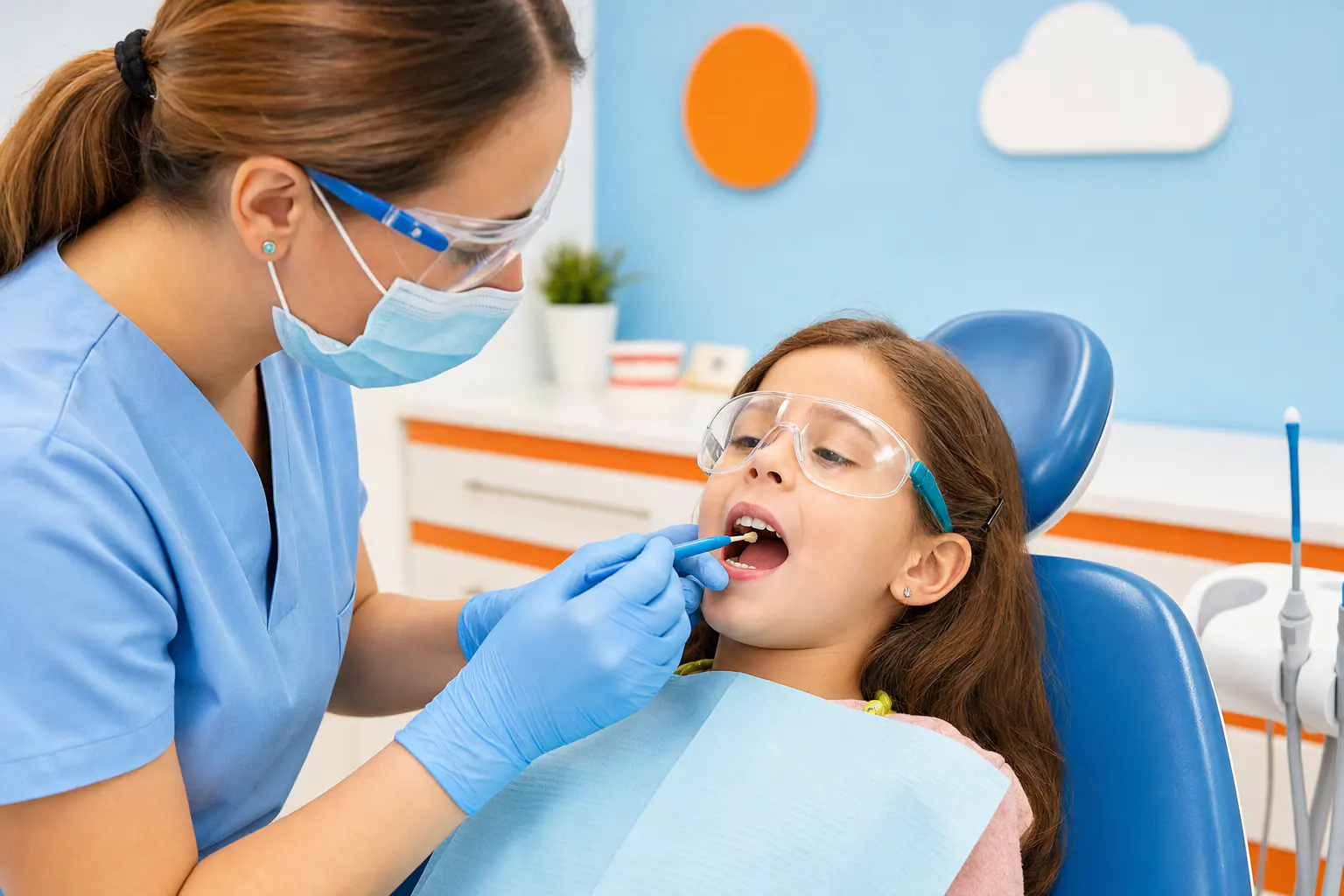
Fluoride for children
Apply preventative fluoride to reduce the risk of cavities.
Learn more Extraction of children's teeth
Extraction of irreversible teeth when necessary.
Learn more Keep distance for children
Preserving the location of the permanent tooth after losing a baby tooth early.
Learn more children’s dental anxiety care
Be courteous and build trust in the clinic.
Learn more Nitrous Oxide for Children
Assessment of whether nitrous oxide is appropriate to reduce anxiety when needed.
Learn more Follow tooth growth
Monitoring the eruption of baby and permanent teeth and replacing them.
Learn more
A healthy smile for your child starts here
Pediatric dentistry in Al Shamkha — examination, treatment and prevention in a comfortable family environment.