
Children's teeth cleaning in Abu Dhabi
Gentle cleaning and cavity prevention at AHLI Specialists Medical Center - Al Shamkha
Do you notice a yellow or white layer accumulating on your child's teeth?
Does your child have bad breath or slight bleeding when brushing?
Are there stains on the child’s teeth due to eating or poor cleaning?
Want a gentle clean that helps your child prevent cavities?
Are you looking for baby teeth cleaning in Abu Dhabi or baby teeth cleaning in Al Shamkha near Baniyas, Al Falah and Shakhbout?
Cleaning children's teeth is a gentle preventive procedure that aims to remove plaque and surface stains and evaluate the health of the gums and teeth, while teaching the child and parents the correct daily care method. Cleaning a child’s teeth is not just “polishing.” Rather, it is an opportunity to detect the beginning of tooth decay, improve gum health, reduce the accumulation of bacteria, and accustom the child to visiting the dentist in a comfortable and non-frightening way.
At AHLI Specialists Medical Center in Al Shamkha - Abu Dhabi, we provide cleaning of children’s teeth in a manner appropriate to the child’s age and cooperation, along with examining the teeth and gums, assessing the risk of caries, and providing guidance to parents about brushing, the amount of toothpaste, nutrition, fluoride, and home prevention. We serve families from Al Shamkha, Baniyas, Al Falah, Al Shawamekh, Shakhbout, Mohammed bin Zayed City, Khalifa City, Al Bahia, Al Raha, and various areas of Abu Dhabi.
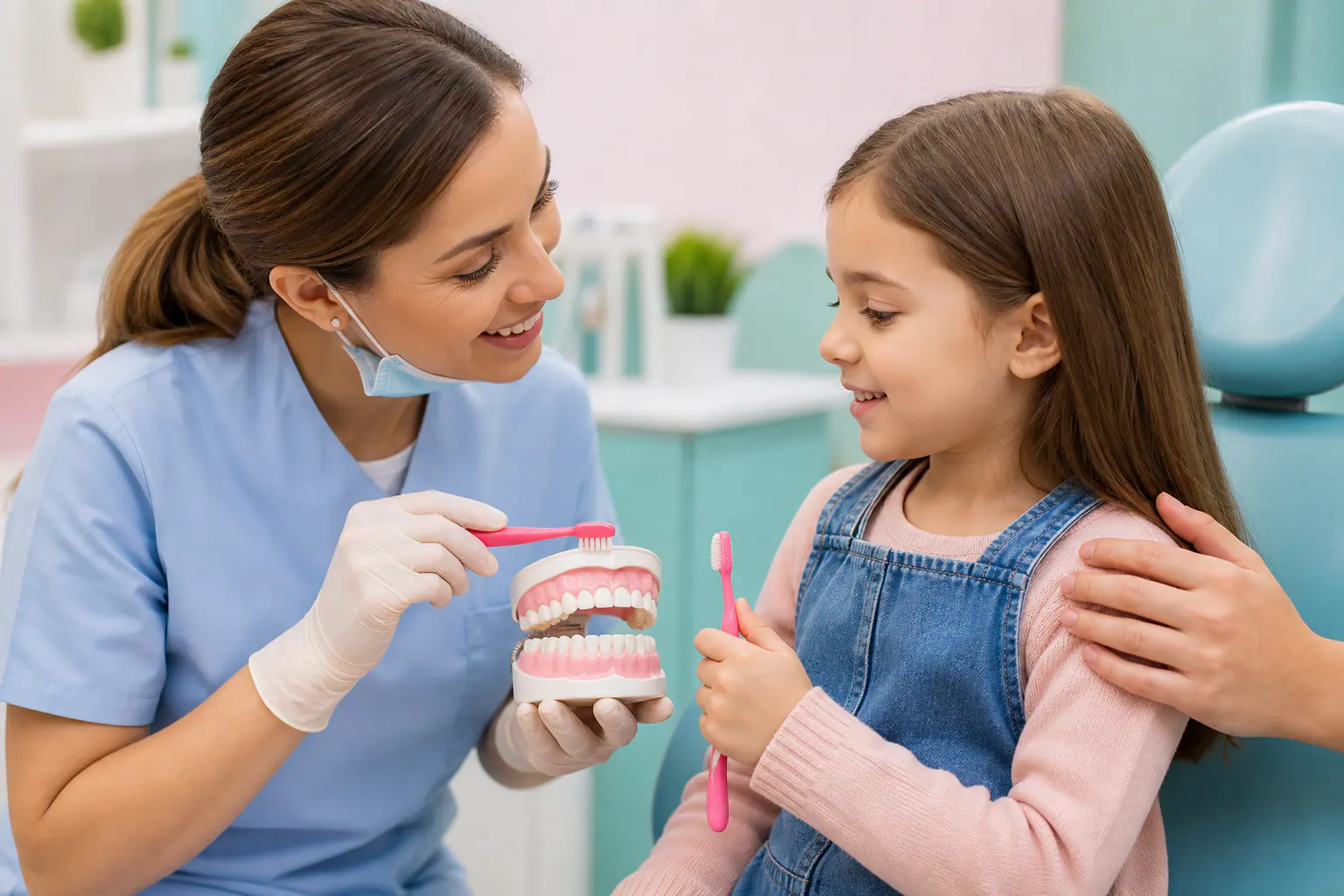
What is children's teeth cleaning?
Cleaning children's teeth is a procedure carried out by the dentist or the specialized team to remove plaque, surface stains, and deposits that are difficult for the child or the parents to remove with home brushing alone.
Grooming for children should be gentle and age-appropriate, not a scary or painful experience.
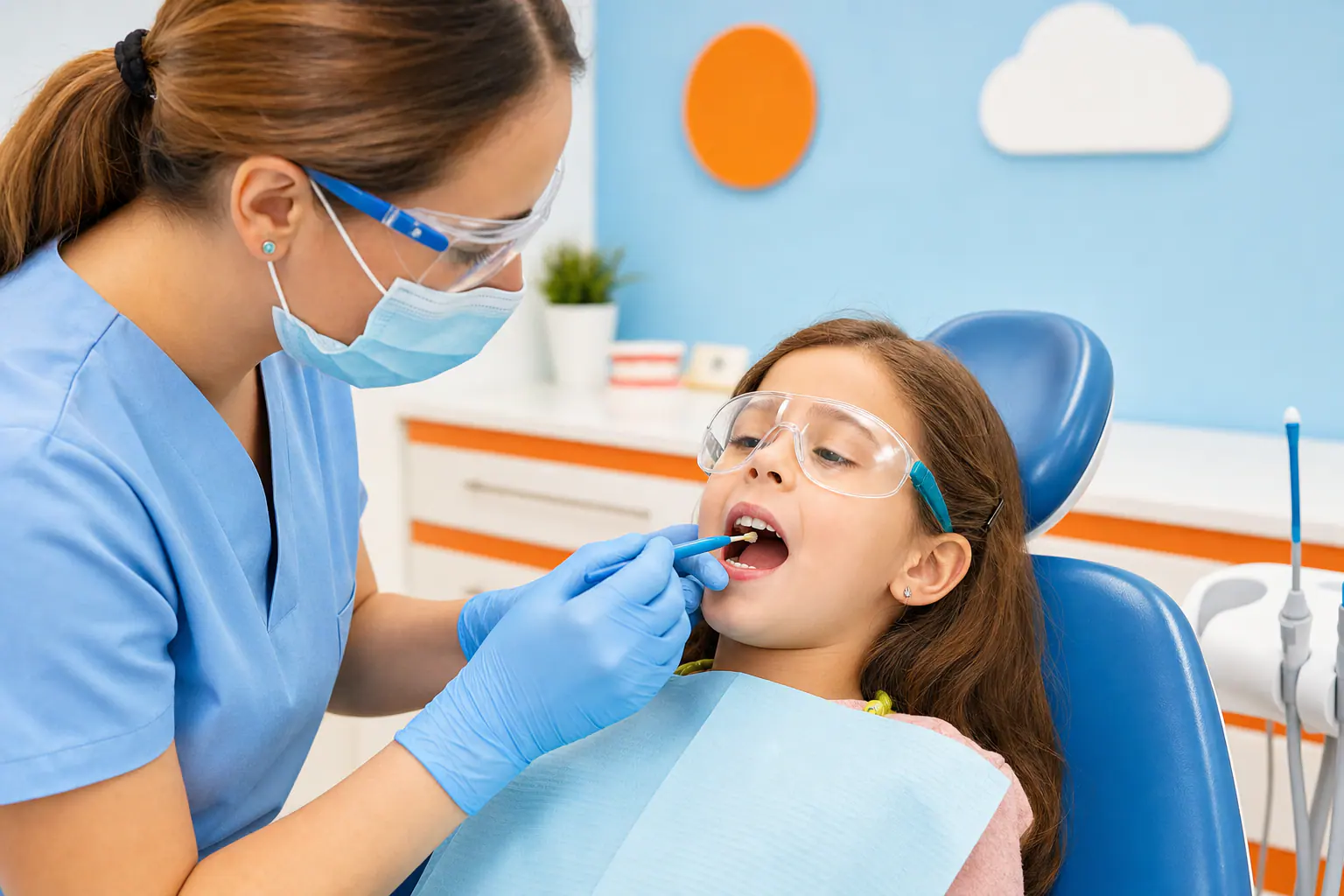
Why do children need teeth cleaning in the clinic?
Even with brushing at home, a child may not be able to brush all the teeth well, especially the back teeth, between the teeth and near the gums. Children often need parental supervision because the skill of good brushing is not completed early.
- ● Remove accumulated plaque
- ● Reduce mouth odor
- ● Improve gum health
- ● Reduce the risk of caries
- ● Detecting caries early
- ● Removal of surface pigmentation
- ● Teach the child proper care
- ● Accustoming the child to the dental clinic
- ● Assess the need for fluoride or incision sealants
- ● Guiding parents about nutrition and sugars
- ● Protecting baby and permanent teeth
Each cleaning visit can be an important preventative opportunity before problems arise.
Is it necessary to clean children's teeth if there is no decay?
Yes, cleaning may be beneficial even if there is no decay, because it helps prevent, improve gums, and teach the child daily care.
- ● Reduce plaque buildup
- ● Prevent gingivitis
- ● Detecting problems early
- ● Teach the child how to clean better
- ● Strengthen the habit of visiting the dentist
- ● Reducing the child’s fear of the clinic
- ● Assess the need for fluoride
- ● Protection of new permanent molars
Visiting a child without pain makes his or her experience with the dentist more positive.
What is the difference between children's dental examination and teeth cleaning?
Children's dental examination
The examination is to evaluate the condition of the teeth, gums, growth, decay and replacement. The doctor looks for problems and determines whether the child needs cleaning, treatment, or prevention.
Cleaning children's teeth
Brushing is the removal of plaque, stains, and surface deposits from the teeth, and may be associated with teaching the child to brush and apply fluoride if appropriate.
Examination informs us of the condition of the teeth, and cleaning helps remove deposits and improve prevention. Examination and cleaning are often combined in the same visit if the child is cooperative and the condition is appropriate.
What is the difference between cleaning children's teeth and teeth whitening?
Brushing children's teeth is not whitening. Children do not usually need cosmetic teeth whitening, especially at young ages.
Teeth cleaning
- ● Suitable for children
- ● Removes plaque and surface pigmentation
- ● Helps maintain gum health
- ● Part of cavity prevention
- ● It may make teeth appear cleaner if stains are superficial
Teeth whitening
- ● Cosmetic treatment for natural teeth
- ● Not the usual choice for children
- ● Needs to evaluate the age and condition of the teeth
- ● Do not use randomly for children
If a child's teeth look yellow or dark, we start by examining, cleaning, and finding out the reason instead of bleaching.
When does a child need teeth brushing?
Even if there are no symptoms, periodic cleanings may be beneficial as assessed by your dentist.
Steps to clean children's teeth in the clinic
Welcoming the child and calming him down
We start by making the child feel safe and explaining the visit in a simple, age-appropriate way.
Examination of teeth and gums
Before cleaning, the teeth and gums are examined to ensure the presence of decay, inflammation, or areas that need special care.
Removal of plaque and deposits
Deposits, plaque and surface discoloration are gently cleaned as needed by the child.
Teeth polishing
Teeth may be polished to remove minor stains and make the tooth surface smoother.
Fluoride assessment
If the child is susceptible to cavities, the doctor may recommend a preventive fluoride application.
Teaching brushing
The appropriate brushing method for the child and the parent is explained, especially in areas where plaque has accumulated.
Nutrition tips
We discuss sweets, juices, night feedings, and habits that increase cavities.
Follow-up plan
The next examination or cleaning is scheduled according to the risk of decay and the condition of the gums and teeth.
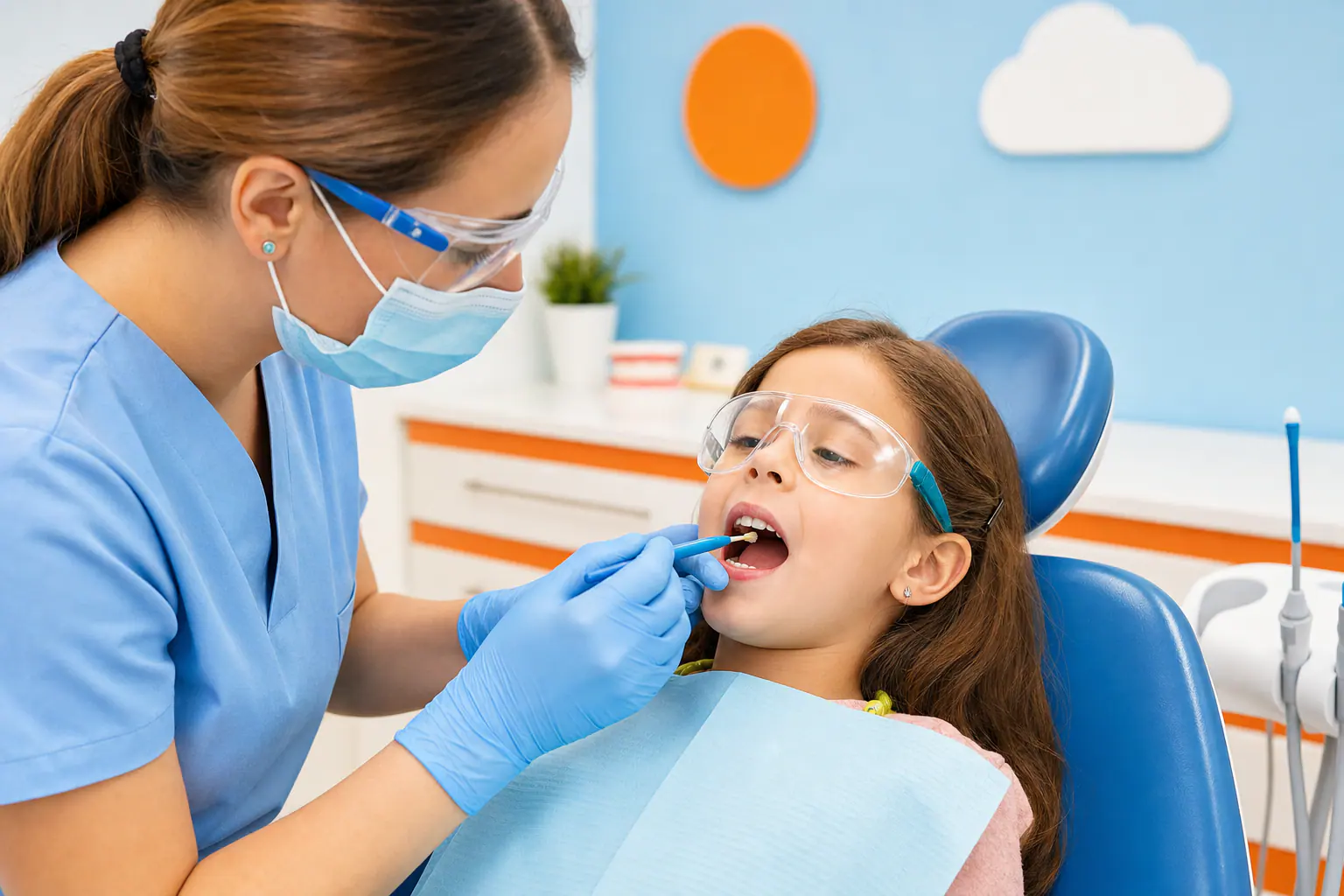
Is brushing children's teeth painful?
Brushing children's teeth is often not painful. The child may feel a slight vibration, the sound of instruments, or a strange sensation, but it is not usually a painful treatment.
- ● Explain the steps to the child simply
- ● Use a gentle manner
- ● Stop when needed
- ● Taking into account the child’s age and cooperation
- ● Start with a familiarization session if the child is afraid
- ● Giving parents instructions to reduce inflammation at home
Early examination and cleaning is usually much easier than waiting for pain or an abscess.
Does cleaning children's teeth require anesthesia?
Usually, cleaning children's teeth does not require anesthesia, because it is a superficial and simple procedure. But if the child has a severe infection, pain or other treatment with cleaning, the plan may differ depending on the case.
Normal preventive cleaning is often done without anesthesia, and is intended to remove deposits and teach care.
Can a child's teeth be cleaned on the first visit?
Yes, a child's teeth can be cleaned on the first visit if the child is cooperative and in appropriate condition. But if the child is very afraid or very young, the first visit may be just for familiarization and examination.
The important thing is that the child's experience is as positive as possible.
Important topics in cleaning children's teeth
What is plaque in children?
Plaque is a sticky layer of bacteria and food debris that forms on the teeth, especially near the gums and between the teeth. If it is not removed with good brushing, it may cause tooth decay or gingivitis.
- ● A white or yellow layer near the gums
- ● Mouth odor
- ● Bleeding when brushing
- ● Red gums
- ● Pigmentation
- ● The beginning of caries
- ● Teeth feel as if they are not smooth
- ● Food collects between the teeth
Cleaning teeth in the clinic helps remove what has accumulated, but daily prevention at home is the basis.
Does tartar appear in children?
Yes, tartar may appear in some children, especially if brushing is irregular or there are areas that are difficult to clean. Tartar is hardened plaque on the teeth, and it cannot be easily removed by brushing at home.
- ● Behind the lower front teeth
- ● Near the gums
- ● Between the teeth
- ● About orthotics
- ● In children who do not clean well
- ● When saliva is present, it causes faster accumulation
If tartar is present, it must be gently removed in the clinic so that gingivitis or bacteria accumulation does not continue.
Cleaning stains on children's teeth
Staining of children's teeth may be superficial or internal. Superficial discolorations may improve with cleaning, while internal discolorations need to be evaluated to determine the cause.
- ● Some foods and drinks
- ● Poor brushing
- ● Plaque buildup
- ● Certain medications or supplements
- ● Stains caused by weak enamel
- ● Early caries
- ● Injury or blow to the tooth
- ● Natural factors in tooth formation
Not every dark color means it just needs cleaning. Some stains may be the beginning of decay, so they should be examined before judging.
Cleaning children's teeth and bad breath
Bad breath in children may be due to plaque buildup, food debris, tooth decay, gingivitis, dry mouth, mouth breathing, or other causes.
- ● Plaque buildup
- ● Food leftovers
- ● Simple gingivitis
- ● Cavities or areas where food collects
- ● Poor tongue cleaning
- ● Difficulty in cleaning the back teeth
If bad breath persists after cleaning and improved care, the child may need broader evaluation to find out the cause.
Cleaning children's teeth and bleeding gums
If your baby's gums bleed when brushing, the cause may be a simple infection due to plaque buildup. Cleaning in the office and improving brushing at home may help reduce bleeding.
- ● Plaque accumulation near the gums
- ● Irregular brushing
- ● Vigorous brushing in the wrong way
- ● Not using a suitable brush
- ● Having braces or a device
- ● Gingivitis
- ● Difficulty cleaning the back teeth
If the bleeding is persistent or severe, the gums should be examined and not ignored.
Cleaning children's teeth before school
Brushing children's teeth before school is a good idea, especially if the child has not been to the dentist in a while.
- ● Caries examination
- ● Cleaning plaque
- ● Evaluation of permanent molars
- ● Teaching the child to brush
- ● Apply fluoride when needed
- ● Treat problems early
- ● Reducing absences due to toothache
- ● Build a regular preventative habit
A healthy mouth helps a child eat, sleep and concentrate better.
Cleaning children's teeth after braces or with braces
Children with braces or oral appliances may need extra care, because plaque collects easily around brackets and wires.
- ● Remove plaque around the brackets
- ● Reduce gingivitis
- ● Reduce the risk of white spots
- ● Teach the child how to clean around braces
- ● Evaluate the need for special cleaning tools
- ● Protecting teeth during orthodontic treatment
If the child uses braces, cleaning and check-up visits should be more regular as recommended by the doctor.
Cleaning children's teeth and first permanent molars
The first permanent molar usually appears around the age of 6 years, and appears behind the baby teeth without a tooth falling out before it. Many parents do not realize that it is a permanent tooth.
- ● The emergence of the first permanent molar
- ● The presence of deep grooves
- ● Food accumulation in the chewing surface
- ● The child’s need for sealants for the incisions
- ● The child’s ability to clean the back of the mouth
- ● The presence of the beginning of caries
Protecting the first permanent molar is very important because it stays with the child for life.
Teeth cleaning for children with frequent caries
Some children have a higher susceptibility to cavities, and may need more regular cleanings and preventive checkups.
- ● Previous caries
- ● Many fillings
- ● Repeated caries
- ● White spots on the teeth
- ● Drink plenty of juices or sweetened drinks
- ● Eating sweets frequently
- ● Not brushing your teeth before bed
- ● Difficulty in brushing
- ● Visible plaque buildup
- ● Braces or devices
- ● Strong family history of caries
In these cases, it is not enough to just treat caries; A prevention plan should be developed that includes regular cleaning, fluoride, nutritional guidelines, and improved brushing.
Cleaning the teeth of a child who is afraid of the dentist
If your child is afraid of the dentist, a cleaning session can be a good opportunity to build confidence, as they are often simpler than cavity and extraction treatments.
- ● Explain the tools in simple words
- ● Start with small steps
- ● Do not rush the child
- ● Praise every simple collaboration
- ● Allow the child to get to know the place
- ● Use a calm and reassuring manner
- ● Make the first visit to get acquainted if the fear is severe
- ● Involve parents in a way that does not increase stress
Each comfortable visit reduces the child's fear in the future.
Fluoride after brushing children's teeth
After teeth cleaning, a fluoride application may be appropriate for some children, especially if they have a higher risk of cavities. Fluoride helps strengthen tooth enamel and supports prevention.
- ● Previous caries
- ● Early white spots
- ● New permanent molars
- ● Eat a lot of sugar or juice
- ● Poor cleaning
- ● Braces or devices
- ● Difficulty in daily care
- ● History of recurrent caries
Fluoride is not a substitute for brushing, but it is an important part of prevention in appropriate children.
Sealing materials for cracks after brushing teeth
During a dental cleaning and examination, the doctor may notice that the child's permanent molars contain deep grooves in which food debris collects.
- ● Cover deep grooves
- ● Reduce food accumulation
- ● Protecting the back molars
- ● Reducing the risk of caries in chewing surfaces
- ● Support prevention in children exposed to caries
The tooth may be cleaned first, then sealant applied if it is suitable and free of deep decay.
Does brushing children's teeth remove white spots?
White spots may be the beginning of weakening of the enamel or the beginning of decay, and they may not go away with cleaning because they are not always superficial stains.
- ● Assess the cause of the stain
- ● Improve brushing
- ● Reducing sugars
- ● Fluoride application
- ● Spot follow-up
- ● Additional treatment if it develops
- ● Assess the presence of braces or weak enamel
White spots should not be ignored as they may be an early sign of cavities.
Does brushing children's teeth remove blackness?
Depends on the cause of the darkening. If the darkening is superficial, it may improve with cleaning. However, if it is cavities or an internal change in the tooth, it may require another treatment.
- ● Superficial pigmentation
- ● Caries
- ● Stuck food residue
- ● Old filling
- ● Weak enamel
- ● Injury to the tooth
- ● Tooth discolouration after blow
- ● Pigmentation related to internal factors
Therefore, darkening must be examined before considering it as mere pigmentation.
Cleaning children's teeth at a young age
A young child's teeth can be examined and cleaned in a way that is very appropriate for his age if he needs it. At young ages, the primary goal may be examination, removal of simple plaque, and teaching parents how to clean the home.
- ● Gently clean gums and teeth
- ● Preventing breastfeeding caries
- ● Teach the appropriate amount of paste
- ● Reduce juices and sugars
- ● Instructing parents on how to brush
- ● Accustom the child to visiting the doctor
- ● Early detection of spots
Even if the child is small, early care is very important.
Cleaning the teeth of children with special needs
Some children with special needs require a more customized cleaning and prevention plan.
- ● The child’s sensitivity to sound or touch
- ● Needing a longer time
- ● Divide the visit into steps
- ● Use simple or visual explanations
- ● Cooperation with parents
- ● Teach the caregiver how to clean
- ● Choose suitable household tools
- ● Focus on prevention to reduce the need for major treatments
The goal is to make cleaning as possible, comfortable and safe as possible.
Cleaning teeth with caries
If a child has cavities, cleaning can be part of the plan, but it does not treat the cavity itself.
- ● Teeth cleaning to remove plaque
- ● Fluoride application if appropriate
- ● Treating holes with fillings
- ● Treating the nerve of baby teeth if the decay reaches the nerve
- ● Extracting the tooth if it is not treatable
- ● Develop a preventive plan to prevent new caries
Cleaning helps prevent and improve gums, but it is not a substitute for treating cavities.
Teeth cleaning after caries treatment
After treating cavities or fillings, periodic cleaning remains important to prevent the recurrence of cavities around the fillings or the appearance of cavities in other teeth.
- ● Improve brushing
- ● Reducing sugars
- ● Clean between teeth when needed
- ● Follow up on fillings
- ● Apply fluoride if necessary
- ● Periodic cleaning according to the risk of decay
- ● Dental examination every appropriate period
Treating cavities is not the end of the problem if daily habits do not change.
Teeth brushing and night feeding
Babies who sleep with breastfeeding in their mouth, especially if it contains milk or sweetened liquids, may be more susceptible to front tooth decay.
- ● Brush the child's teeth before bed
- ● Do not leave the bottle in the mouth while sleeping if it contains milk or a sweetened drink
- ● Reduce juices
- ● Use water when needed according to the child’s age and as directed by the doctor
- ● Start your dental visit early
- ● Watch for white spots on the front teeth
Brushing teeth alone is not enough if the habit that causes tooth decay continues.
Children's teeth cleaning and nutrition
Nutrition plays a big role in a child's dental health. Excessive sugars and frequent snacks cause bacteria to produce acids that attack the teeth many times during the day.
- ● Reduce daily sweets
- ● Avoid frequent juicing
- ● Make water the primary beverage
- ● Reduce sugary snacks
- ● Do not give the child sugars before bed
- ● Encourage whole fruits and vegetables instead of juices
- ● Brushing teeth before bed
- ● Do not use candy as a permanent reward
- ● Pay attention to sticky foods that stick to the teeth
Prevention starts from the daily routine, not just from the clinic.
How do I take care of my child's teeth after brushing?
After cleaning the child's teeth, the result must be maintained at home through a simple and regular routine.
- ● Brush teeth twice daily
- ● Brushing teeth before bed is essential
- ● Use an amount of paste appropriate for the child’s age
- ● Help the child with brushing so that he can clean well
- ● Clean the back teeth carefully
- ● Use floss if the teeth are close together as directed by the doctor
- ● Reduce sweets and juices
- ● Drink water after meals
- ● Keep an eye on any spots or pain
- ● Attendance for periodic examination
Parents are the most important element in the success of prevention in children.
The appropriate amount of toothpaste for children
The amount of paste is very important for children. Using a large amount does not mean better cleaning, and the child may swallow an excessive amount of paste.
- ● For very young children: A very small amount, approximately the size of a grain of rice
- ● For children 3 to 6 years: a small amount, approximately the size of a pea
- ● Parents must supervise brushing
- ● The child should be taught to spit out the paste when he is able
- ● Do not make the child eat or swallow the paste
- ● Do not use whitening toothpaste for children without recommendation
Ask your dentist about the appropriate amount for your child, depending on his age and risk of tooth decay.
Does the child need floss?
Yes, a child may need to floss if the teeth are close together and the brush cannot clean between them.
- ● Teeth close together
- ● Food collects between the teeth
- ● There is previous interstitial caries
- ● The child has fillings between the teeth
- ● The doctor noticed the accumulation of plaque between the teeth
- ● There is bad breath due to food accumulation
Parents often need to help the child use floss until he grows up and is able to use it correctly.
Is mouthwash suitable for children?
Mouthwash is not necessary for every child, and is not recommended for use on young children without medical guidance.
- ● Under the appropriate age to use lotion
- ● Swallows liquids while rinsing the mouth
- ● He has frequent cavities
- ● Uses a orthodontic treatment
- ● He has bad breath
- ● Needs additional fluoride
Correct brushing and the appropriate paste are more important than relying on lotion.
How often does a child need teeth cleaning in the clinic?
The child's teeth are often examined and cleaned every 6 months, but the frequency varies depending on the child's condition and the risk of decay.
- ● Repeated caries
- ● Rapid plaque buildup
- ● Gingivitis
- ● orthodontic treatment
- ● Difficulty in brushing
- ● A diet rich in sugars
- ● New permanent molars need follow-up
- ● White spots or the beginning of caries
- ● Special needs that make brushing difficult
After the examination, the doctor determines the appropriate period for your child.
Does cleaning teeth protect against abscesses?
Brushing your teeth helps reduce the risk of tooth decay and gingivitis, but it does not guarantee abscess prevention if there is deep, untreated tooth decay.
- ● Severe pain
- ● Swelling of the gums or face
- ∙ A bean bean
- ● The smell or taste of pus
- ● Fever with toothache
- ● Night pain
- ● Difficulty eating
Cleaning is prevention, but an abscess requires evaluation and treatment.
When is brushing your teeth not enough?
Brushing teeth is not enough if the child has a problem that needs treatment.
- ● Visible caries
- ● A hole in the tooth
- ● Constant pain
- ● Abscess
- ● Fracture of a tooth
- ● Nerve inflammation
- ● A tooth that moves due to an infection
- ● Broken gasket
- ● A permanent tooth that appears abnormally
- ● Deep spot not superficial pigmentation
In these cases, cleaning is part of the plan or a preventive step, but it does not replace proper treatment.
Signs that require a quick visit to the dentist
Book an appointment soon if your child has any of the following signs:
- ● Toothache
- ● Swelling of the face or gums
- ● An abscess or bump near the tooth
- ● Persistent bleeding gums
- ● Fracture of a tooth
- ● Darkening or obvious pit
- ● Strong breath that does not improve
- ● Difficulty eating
- ● Severe allergy
- ● Crying when brushing
- ● A permanent tooth that has fallen out of its socket after a blow
If there is significant facial swelling, fever, or difficulty swallowing or breathing, urgent medical evaluation should be sought.
Common mistakes in cleaning children's teeth
Some daily mistakes may increase tooth decay even though parents try to take care of their teeth:
- ● Allowing the child to brush alone at a young age
- ● Use a large amount of paste
- ● Not brushing your teeth before bed
- ● Drink juice frequently
- ● Sleeping while breastfeeding
- ● Considering baby teeth as unimportant
- ● Not using floss when needed
- ● Neglecting white spots
- ● Postpone a visit to the doctor until the pain appears
- ● Using a whitening paste or lotion that is not appropriate for the child’s age
- ● Brush quickly without brushing the back teeth
- ● Reward the child with sweets constantly
- ● Not visiting the dentist regularly
Correcting these errors may reduce cavities and significantly improve the child’s oral health.
Children’s teeth cleaning in Al Shamkha - Abu Dhabi
If you are looking for children's teeth cleaning in Abu Dhabi or child teeth cleaning in Al Shamkha, AHLI Specialists Medical Center offers gentle cleaning suitable for children, with a comprehensive examination of the teeth and gums and guidance for parents on home prevention.
We help your child get rid of plaque and surface stains, and we help you, as a parent, know the best way to protect his teeth from decay.
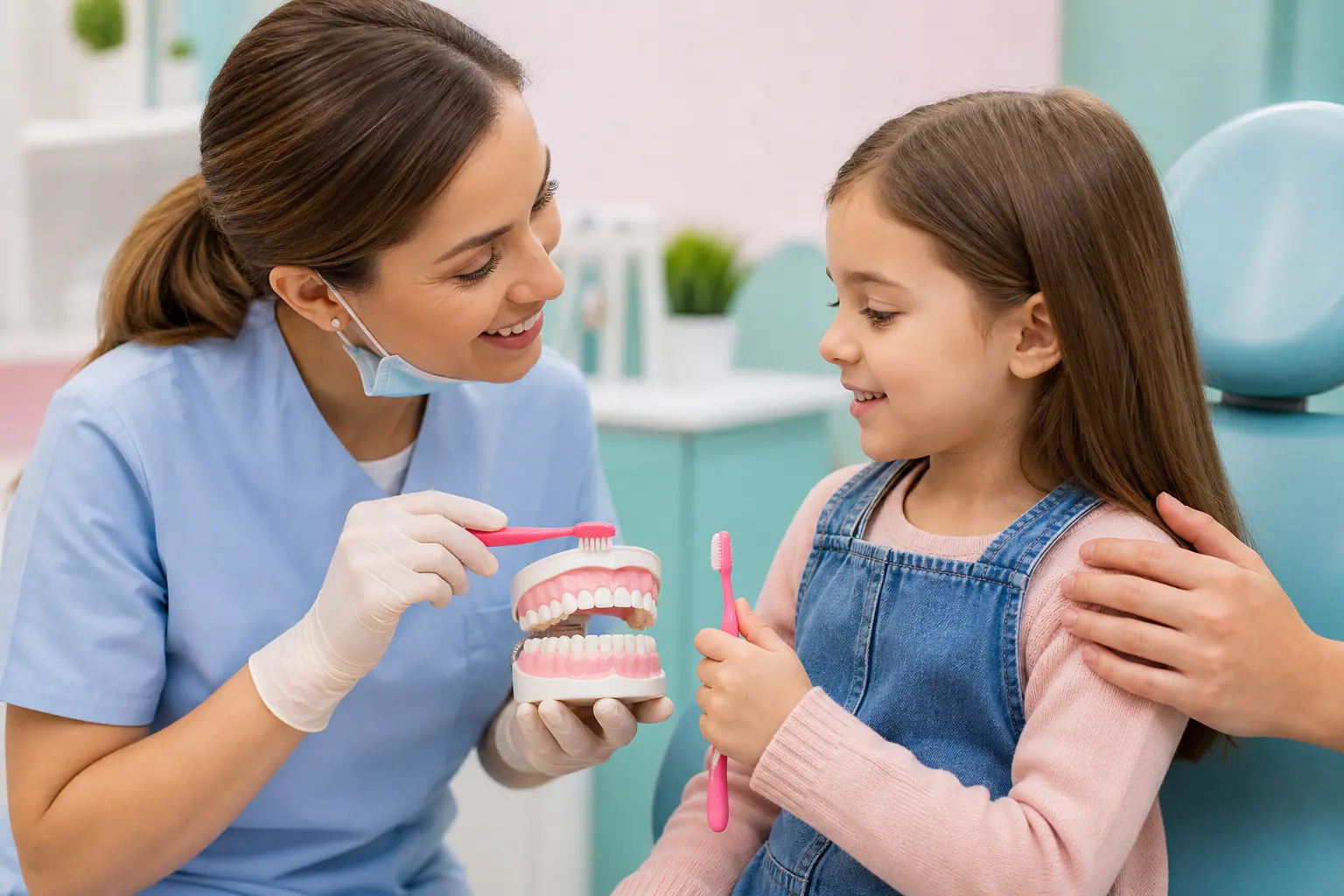
Why choose AHLI Specialists Medical Center?
- ✓ Cleaning children's teeth in a gentle and age-appropriate way
- ✓ Examine teeth and gums before cleaning
- ✓ Removal of plaque and surface pigmentation
- ✓ Teaching the child how to brush
- ✓ Instruct parents about the appropriate amount of paste
- ✓ Assess the need for fluoride or incision sealants
- ✓ Follow-up of milk and permanent teeth
- ✓ Dealing with a child's fear of the dentist
- ✓ A quiet medical environment suitable for families
- ✓ Location close to Al Shamkha, Baniyas, Al Falah, Shakhbout and Abu Dhabi areas
- ✓ Linking the service to pediatric dentistry, dental examination, fillings, and prevention

Services related to cleaning children's teeth
Pediatric dentistry
The main service for children's dental care, prevention and treatment of caries.
Children's dental examination
Evaluating milk and permanent teeth and detecting early caries.
Teeth cleaning
Professional teeth and gum cleaning for adults and families.
General Dentistry
Dental examination and treatment for older children and adolescents.
Teeth whitening
Cosmetic treatment for adults — not the usual option for children.
Children's fluoride
Strengthening tooth enamel and reducing the risk of caries.
Children's fillings
Treating early and moderate caries.
Root canal treatment of baby teeth
Treating baby teeth when the decay reaches the nerve.
Keep your distance
Preserving the location of the permanent tooth after losing a baby tooth.
When do I book a dental cleaning for my child?
The first step is to examine the child, then determine whether he needs cleaning only, fluoride, or additional treatment.
AHLI Specialists Medical Center - Al Shamkha, Abu Dhabi
For reservations and inquiries: 02-448-7553
Location: Al Qayed Street, Al Shamkha, Abu Dhabi
Short answers
What is children's teeth cleaning?
Cleaning children's teeth is a preventive measure that aims to remove plaque, surface pigmentation and deposits from the teeth, while examining the gums and teeth and teaching the child and parents how to take daily care.
Is brushing children's teeth painful?
It's often not painful, but it may cause minor discomfort if the gums are inflamed or the child is frightened. Cleaning is done in a gentle manner, appropriate for the child's age.
When does a child need teeth brushing?
A child needs cleaning if he has plaque buildup, bad breath, bleeding gums, stains, recurring cavities, braces, or if it has been a long time since his last visit to the dentist.
What is the difference between teeth cleaning and teeth whitening for children?
Teeth cleaning removes plaque and surface stains, while whitening is a cosmetic treatment that is not usually the appropriate option for children. So we start examining and cleaning to find out the reason for the color change.
Where can I find children's teeth cleaning in Al Shamkha, Abu Dhabi?
Children's teeth cleaning can be booked at AHLI Specialists Medical Center in Al Shamkha - Abu Dhabi for families from Baniyas, Al Falah, Shakhbout and Abu Dhabi areas.
Frequently asked questions about cleaning children's teeth
Does the child need a dental cleaning in the clinic?
How often should children's teeth be cleaned?
Does cleaning children's teeth remove cavities?
Does brushing teeth remove dark spots in children?
Does brushing children's teeth remove bad breath?
Does brushing children's teeth cause sensitivity?
Does cleaning children's teeth require anesthesia?
Can a young child's teeth be cleaned?
Should teeth be brushed before fluoride?
Is teeth cleaning important for children with braces?
Does brushing teeth protect against cavities?
Does brushing children's teeth whiten teeth?
Does the child need to floss after cleaning?
Is mouthwash suitable for children?
What should I do if my child is afraid of brushing teeth?
Book a children's teeth cleaning appointment
Gentle cleaning removes plaque and protects against cavities — with examination and guidance for parents.