
Immediate transplantation after extraction in Abu Dhabi
Dental implants in the same extraction session at AHLI Specialists Medical Center - Al Shamkha
Do you have an untreatable tooth and want to replace it as quickly as possible?
Did the doctor tell you that the tooth needs to be extracted, and you are wondering if an implant can be placed immediately after the extraction?
Do you want to reduce the number of sessions and shorten the duration of treatment as much as possible?
Are you looking for immediate implants after extraction in Abu Dhabi or dental implants directly after extraction in Al Shamkha?
Immediate post-extraction implantation is a procedure in which an untreatable tooth is extracted and a dental implant is placed in the same session, if the condition is suitable. This option may help reduce the number of stages and preserve the shape of the gums and bone in some cases, but it is not suitable for everyone, and requires careful evaluation of the bone, inflammation, gums, occlusion, and initial stability of the implant.
At AHLI Specialists Medical Center in Al Shamkha - Abu Dhabi, we provide a comprehensive assessment of the possibility of immediate implantation after extraction, along with developing an appropriate treatment plan aimed at replacing the missing tooth in a safe and thoughtful way, whether immediate implantation is possible or it is better to postpone the implant and prepare the bone first.
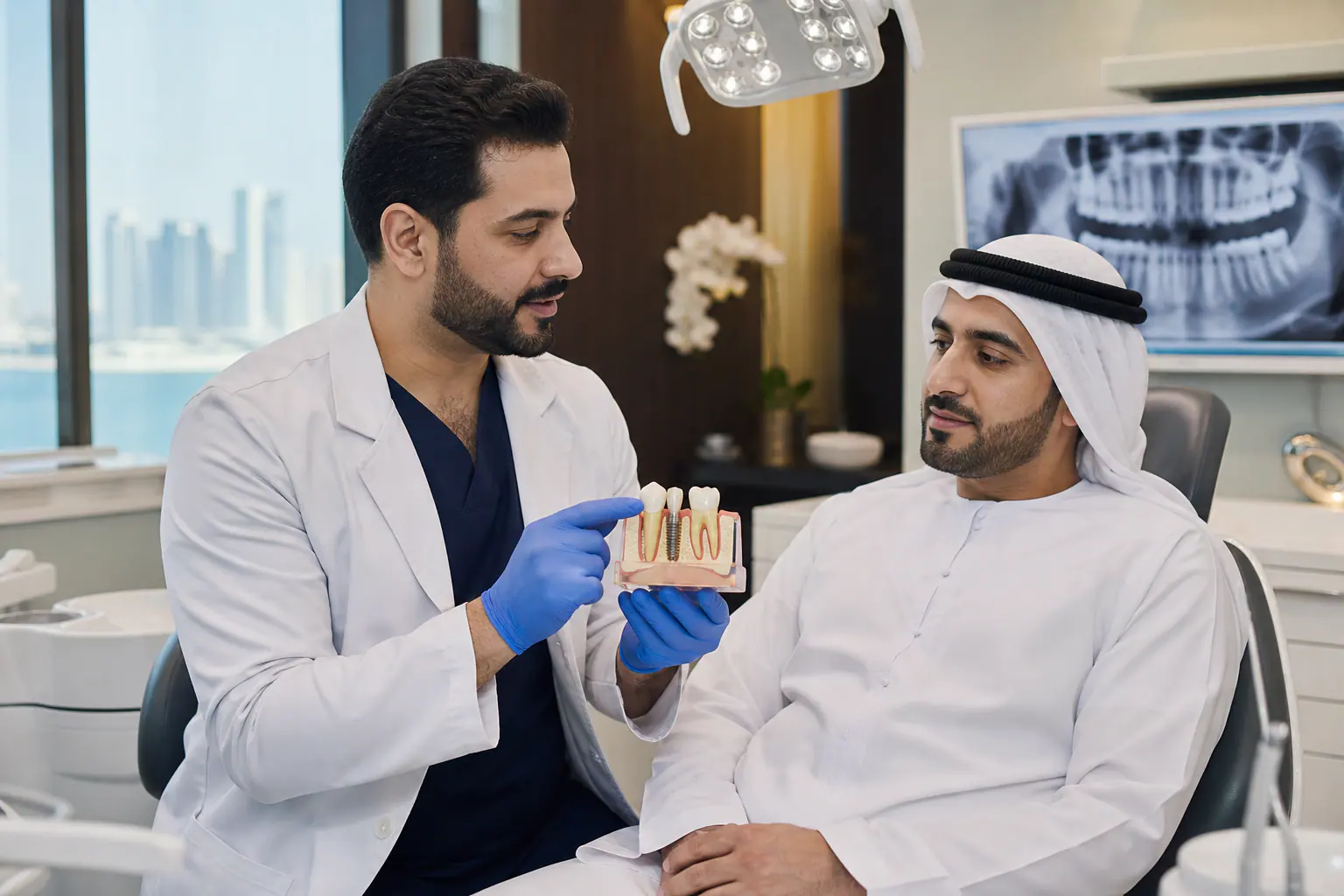
What is immediate implantation after extraction?
Immediate implantation after extraction means placing a dental implant in the place of the extracted tooth during the same session or immediately after the extraction, instead of waiting several weeks or months for the extraction site to heal.
- 1 Examine the tooth and surrounding area
- 2 Extract the tooth as conservatively as possible
- 3 Clean the extraction site well
- 4 Evaluation of bone and gums after extraction
- 5 Place the implant in the appropriate location if the condition allows
- 6 Add bone or supporting material when needed
- 7 Close the area or place a healing piece as planned
- 8 Determine the temporary or final crown stage later
Immediate implantation does not always mean the final crown is fitted on the same day, nor does it always mean chewing directly onto the implant. There is a difference between placing the implant immediately and loading it with a temporary or permanent crown.
The difference between instant farming and instant loading
One of the most confused concepts among patients is that immediate implantation means obtaining a final tooth on the same day. This is not always true.
Instant cultivation
It means placing the implant inside the bone immediately after extracting the tooth in the same session.
Instant download
It means installing a crown or temporary prosthesis over the implant within a very short time, sometimes on the same day, provided that the implant has strong stability and proper condition.
The final crown
It is often installed after a healing period and to ensure the stability of the implant, depending on the condition of the bone and gums and the location of the implant.
The implant may be done immediately after extraction, but the final crown may need to wait until the implant has healed with the bone.
When is immediate planting an appropriate option?
Immediate implantation after extraction may be an appropriate option in specific cases, especially when the bone around the tooth is good and there is no severe inflammation that would prevent implant placement.
- ● A tooth that cannot be treated and needs to be extracted
- ● Sufficient bone around the tooth
- ● Healthy or manageable gums
- ● No severe active infection or large abscess
- ● The possibility of extracting a tooth without destroying the surrounding bone
- ● The possibility of installing the implant with good initial stability
- ● There is no severe pressure on the implant area
- ● No squeaking or forceful uncontrolled clenching
- ● General health suitable for the procedure
- ● Adherence to post-transplant instructions
The final decision is made only after examination, x-rays, and evaluation of the location of the tooth before and after extraction.
When is immediate planting not appropriate?
Although immediate transplantation is an attractive option, it is not the best solution for all cases. Sometimes postponing transplantation is safer and better for the final outcome.
In these cases, the best plan may be to extract the tooth, clean the area, place bone to hold the tooth where needed, and then implant after healing.
Why would we choose immediate implantation after extraction?
Reduce the number of stages
In some cases, extraction and implantation can be combined in one session instead of waiting and implanting later.
Maintaining the shape of the bone and gums
Placement of the implant directly may help support the shape of the area after extraction when well planned.
Reducing the overall treatment duration
It may shorten some of the treatment time compared to delayed implantation, but it does not always eliminate the healing period.
Support the cosmetic aspect
In the front teeth, it may be part of a plan to maintain the shape of your gums and smile.
Reducing free time
Suitable temporary compensation may be used in some cases so that the patient is not left with an apparent void.
Is immediate planting better than delayed planting?
Instant cultivation
It is suitable when the bone is good, there is no severe infection, the extraction is conservative, the implant holds well and the patient adheres to the instructions.
Deferred cultivation
It is best when there is severe inflammation, insufficient bone, a need for bone grafting, gums that need preparation, or the implant cannot be fixed well.
The doctor does not choose immediate transplantation only because it is faster, but also because it is appropriate and safe for the condition.
What is the difference between immediate implantation and preservation of the extraction site?
Instant cultivation
The implant is placed immediately after extraction if the condition is appropriate.
Save the place of extraction
The tooth is extracted, bone material is placed to maintain bone volume, and then waiting for healing before the implant is subsequently placed.
The choice of plan depends on the condition of the bone, the presence of inflammation, the location of the tooth, and the cosmetic goal.
The difference between immediate implants and single-tooth implants
Single tooth implant
Replacing a missing tooth with an implant and crown, whether the implant is done immediately after extraction or after a period of healing.
Instant cultivation
Timing of implant placement — i.e. placement immediately after extraction in the same session.
The case may be an immediate single-tooth implant, an immediate implant with a temporary crown, or a bone-preserving extraction and subsequent implantation.
Single tooth implant ←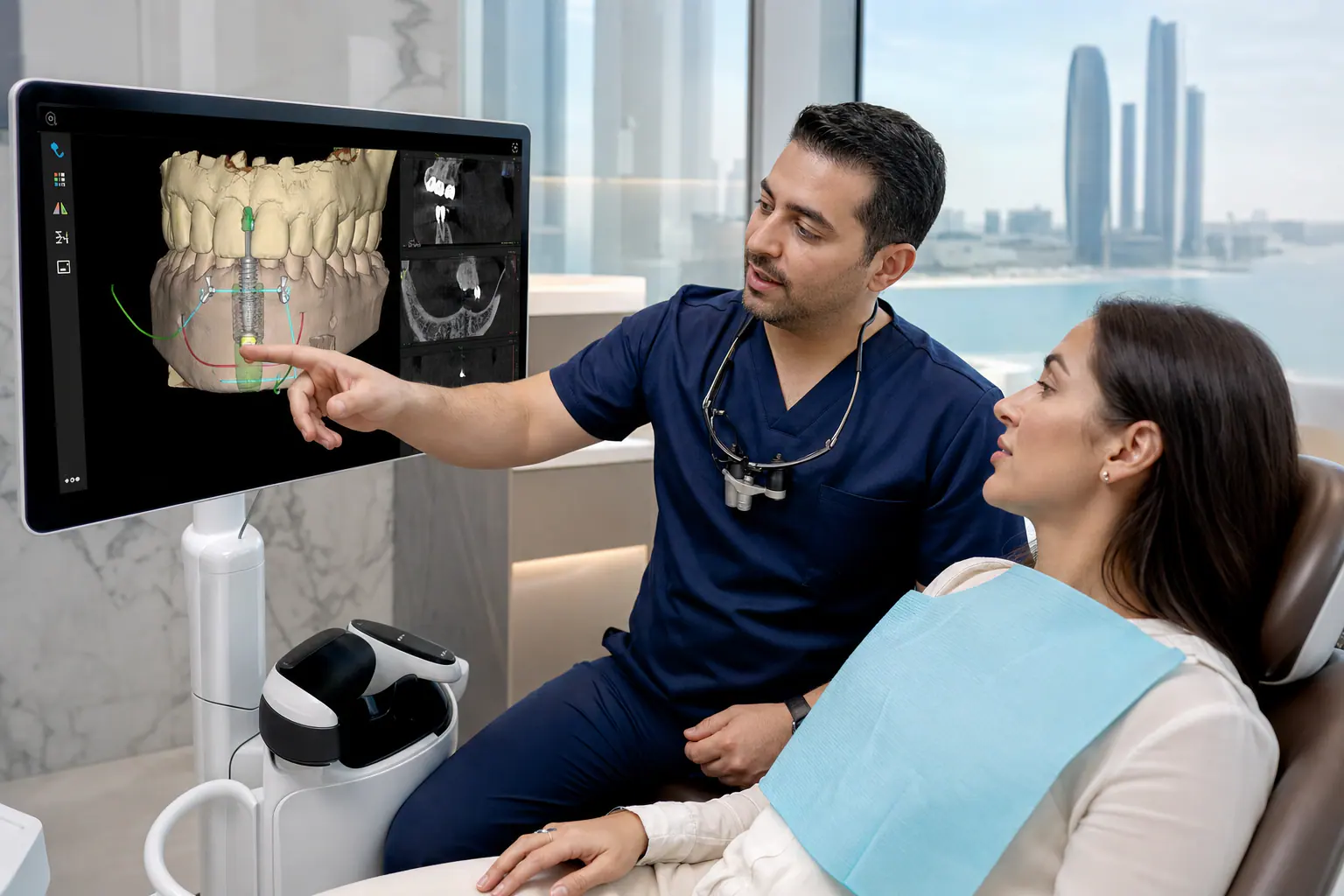
Cases that may need immediate transplantation
- ● A broken, irreparable front tooth
- ● Residual root that needs to be extracted
- ● Non-restorable tooth
- ● A tooth that has failed root canal treatment and cannot be saved
- ● Longitudinal fracture of the root
- ● A mobile tooth due to a local problem with sufficient bone
- ● A tooth to be extracted with a desire for quick replacement
- ● Expected loss of a tooth in an esthetic area
- ● A desire to reduce the number of sessions if the condition is appropriate
The presence of these conditions does not mean that immediate transplantation is guaranteed, but rather it means that it is an option that should be evaluated.
Are immediate implants suitable for front teeth?
It may be suitable in some cases of front teeth, but it requires very careful cosmetic planning. The front teeth appear when smiling and speaking, so the shape of the gums and bone must be preserved as much as possible.
- ● Gum shape
- ● The amount of frontal bone
- ● Tooth root location
- ● There is inflammation around the root
- ● Smile line
- ● Color and shape of adjacent teeth
- ● The need for a temporary crown
- ● The need for bone or gum grafts
- ● Where the final crown emerges from the gums
- ● Avoid any pressure on the implant during healing
A successful outcome in the front teeth depends on planning, not just speed.

Is immediate implantation suitable for molars?
It may be suitable for some molars, but it may sometimes be more complicated due to the shape of the molar roots, the width of the extraction site, and the chewing force in the back area.
- ● The number of roots and the shape of the extraction site
- ● There is sufficient bone between the roots or around the site
- ● Near the maxillary sinuses
- ● Near the maxillary nerve in the lower jaw
- ● High chewing power
- ● Need for grafting around the implant
- ● Avoid chewing on the implant during the healing period
- ● Design a suitable crown later
Deferred implants are sometimes safer in molars if the bone is not suitable or there is significant inflammation.
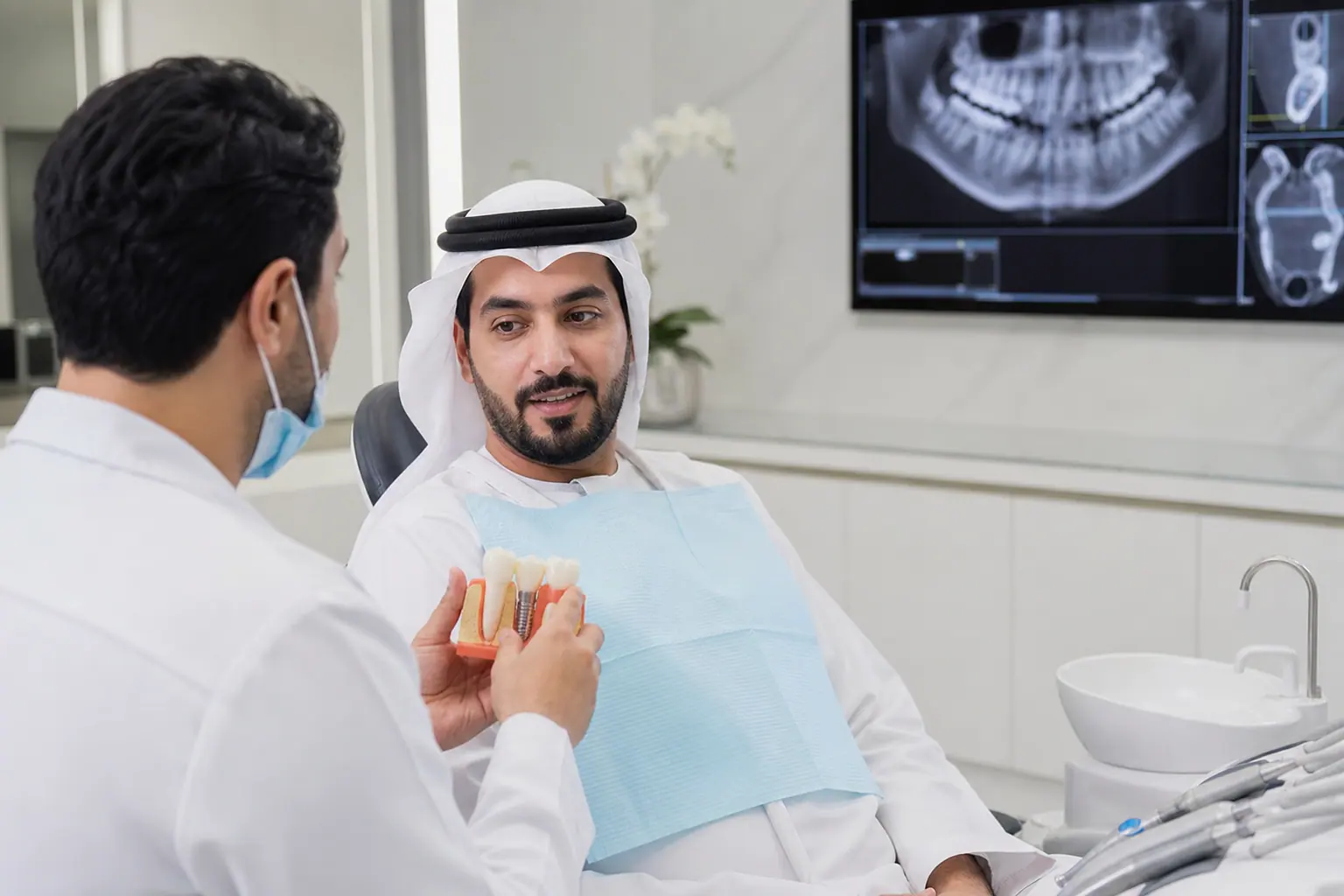
Can a temporary crown be placed on the same day of implantation?
In some cases, yes, but not always. Placing a temporary crown on the same day of implantation depends on the stability of the implant, the location of the tooth, occlusion, the presence of sufficient bone, and the condition of the gums.
It may be possible if:
- ● The implant is adequately fixed
- ● The area is frontal and needs an aesthetic solution
- ● There is no strong pressure on the crown
- ● The patient is committed to avoiding chewing on the temporary crown
- ● The doctor considers temporary loading to be safe
It may not be suitable if:
- ● The implant needs time to heal without pressure
- ● The bone is weak
- ● There is significant bone grafting
- ● The patient clenches or grinds his teeth
- ● The tooth is in the area of vigorous chewing
- ● Initial stability is insufficient
A temporary crown is not the primary goal; The most important goal is the long-term success of the implant.
Is the final crown installed on the same day of implantation?
Mostly not. The final crown is usually installed after the healing period and ensuring the stability of the implant. In some special cases, a temporary prosthesis may be fitted, but the final crown often needs to wait until the implant fuses with the bone and the gums stabilize.
It is important not to confuse immediate implantation with immediate final crown.
Implant crown ←Do I need a bone graft with immediate implantation?
You may need to add bone or support material around the implant in some immediate implant cases, especially if there is space between the implant and the walls of the extraction site or if the bone needs support to maintain shape.
In other cases, patching may not be required. The decision depends on the examination, x-rays, and what appears after the extraction.
Bone evaluation before transplantation ←Immediate transplant steps after extraction
Consultation and examination
Examination of the tooth to be extracted, gums, adjacent teeth, occlusion, and symptoms.
Radiology and bone evaluation
Evaluation of the bone around the tooth, the location of the roots, and near the nerves or sinuses.
Determine the possibility of immediate cultivation
Is it possible to place the implant in the same session as the extraction, or is it better to postpone?
Conservative tooth extraction
Extract carefully to preserve the surrounding bone and gums.
Cleaning the extraction site
Remove any inflamed tissue or debris that may affect healing.
Implant placement
Place the implant in the planned location ensuring proper initial stability.
Add bone when needed
Place a supportive bone material according to the case.
Close the area
Placement of a covering or healing pad, and a temporary prosthesis may be placed in some cases.
Healing period
Time for the implant to fuse with the bone — avoid excessive pressure.
Fitting the final crown
After the implant is stabilized, the final implant crown is designed and installed.
Are immediate implants after extraction painful?
The procedure is often performed under local anesthesia, and the patient does not feel pain during extraction or placement of the implant, but he may feel pressure or movement. After the procedure, temporary discomfort, swelling, or pain may occur.
- ● Take medications as prescribed by the doctor
- ● Use cold compresses if your doctor recommends
- ● Avoid smoking
- ● Avoid chewing on the area
- ● Eat soft foods at first
- ● Do not touch the implant site with your tongue or fingers
- ● Commit to a follow-up review
If the pain is severe, increases, or is accompanied by abnormal swelling, you should contact the clinic.
How long does immediate implantation take after extraction?
The extraction and implant procedure may be done in one session if the condition is appropriate, but the complete treatment up to the final crown may require several months in many cases.
Immediate implantation shortens some stages, but does not always eliminate the healing period.
Is instant cultivation safe?
Immediate transplantation may be safe and successful in appropriate cases when properly planned, implemented, and followed up. But it requires careful selection of the situation.
- ● The implant does not fuse with the bone
- ● Inflammation of the implant site
- ● Pain or swelling after the procedure
- ● Implant failure due to poor initial stability
- ● Receding gums or bone in the anterior area
We do not recommend immediate transplantation just to shorten the time if the condition is not suitable.
What are the success factors for immediate cultivation?
A successful immediate implant is the result of careful planning and not just speed of treatment.
Does smoking affect immediate implantation?
Yes, smoking may affect the healing and health of the gums and bone around the implant. With immediate implants, healing is very important because the implant is placed immediately after extraction.
You may be advised to reduce or stop smoking before and after the procedure, especially in the first weeks. Tell your doctor clearly if you are a smoker.
Does diabetes prevent immediate transplantation?
Diabetes does not always prevent transplantation, but uncontrolled diabetes may affect healing and increase the risk of infection. In immediate implantation, we need good healing after extraction and placement of the implant.
- ● Sugar control level
- ● Medications used
- ● The presence of recurrent infections
- ● Gum health
- ● Commitment to care
- ● The need for coordination with the treating physician
If diabetes is controlled and oral status is appropriate, transplantation may be possible after evaluation.
Immediate transplantation in the presence of infection or abscess
The presence of an infection or abscess does not always mean that immediate transplantation is impossible, but it does make the decision more sensitive. If the inflammation is severe or the bone is damaged, it may be best to postpone the transplant.
- ● Severity of inflammation
- ● The amount of remaining bone
- ● Possibility of cleaning the extraction site well
- ● The presence of an active abscess
- ● The ability of the implant to stabilize
- ● Gum health
- ● The patient's general condition
In some cases, the tooth is extracted, the area is cleaned, bone is placed, and then the implant is waited for later for a safer result.

What happens if immediate planting is not suitable?
1. Extract the tooth and clean the place
Remove the untreatable tooth and clean out any infection.
2. Bone preservation or site grafting
Bone may be placed to preserve the extraction site and prepare it for later implantation.
3. Wait until it heals
Give the bone and gums time to heal.
4. Re-evaluation
After healing, evaluate the bone again and determine the time of implantation.
5. Later placement of the implant
Transplanted in a more stable environment, the outcome may be better.
The goal is not the fastest transplant, but the most appropriate and safest transplant for your condition.
Immediate post-planting care
- ● Avoid chewing on the implant site
- ● Eat soft foods at first
- ● Do not touch the wound with your tongue or fingers
- ● Not smoking
- ● Take medications as prescribed by the doctor
- ● Avoid forceful rinsing the mouth for the first day according to the instructions
- ● Maintain gentle oral hygiene
- ● Avoid intense exercise in the first days
- ∙ Attendance at follow-up dates
- ● Contact the clinic if there is severe pain, bleeding, or abnormal swelling
Instructions for each case may vary — you must follow your doctor's instructions.
Eating immediately after planting
Suitable:
Avoid:
If a temporary crown is fitted, you should probably not chew on it even if it appears secure.
Signs that need to be reviewed immediately after planting
- ● Severe pain that does not improve
- ● Swelling increases after several days
- ● Constant bleeding
- ● Pus discharge
- ● Abnormal smell or taste
- ● Hazard height
- ● Movement of the implant or temporary crown
- ∙ severe pain at bite
- ● continuous drug or serum
- ∙ Opening of the wound
- ● Difficulty opening the mouth, swallowing, or breathing
Early review helps deal with the problem before it develops.
Book an immediate implant consultation after extraction
The first step is examination and x-rays, then determining whether immediate transplantation is appropriate for your case.
Why AHLI Specialists Medical Center for Instant Agriculture?
Accurate evaluation
Before deciding on immediate implantation — examine the bone, gums and occlusion.
Take off wallets
It helps protect the bone as much as possible.
Clear explanation
The difference between immediate implantation and immediate and final crown.
Patching evaluation
Determine the need for bone grafting during transplantation.
Comprehensive follow-up
From the procedure until the implant crown stage.
Alternative plan
If immediate is not suitable – extraction, preparation and subsequent transplantation.
Convenient Al Shamkha Location
Close to Baniyas, Al Falah, Shakhbout and Abu Dhabi areas.
Specialization
Single tooth implant, bone evaluation, and implant crown.
When do I book a consult?
Related Services
Dental Implant Team

Immediate implantation after extraction in Al Shamkha - Abu Dhabi
AHLI Specialists Medical Center — Al Qayed Street, Al Shamkha, Abu Dhabi
For reservations and inquiries: 02-448-7553
Book a consultationFrequently asked questions about immediate implantation after extraction
Can a tooth be implanted immediately after extraction?
Is immediate transplantation painful?
Do I get a tooth on the same day as the extraction?
What is the difference between immediate implant and immediate crown?
Is immediate planting better than delayed planting?
Do I need bone with immediate implantation?
Is it possible to perform an immediate transplant if there is an abscess?
Are immediate implants suitable for front teeth?
Is immediate implantation suitable for molars?
How long does instant cultivation take?
Does smoking affect immediate implantation?
Does diabetes prevent immediate transplantation?
What happens if immediate planting is not suitable?
Is instant cultivation safe?
Is immediate transplantation suitable for your condition?
Book a consultation at Al Shamkha — we evaluate your bone and gums and determine the best plan for you.