
Bone evaluation before dental implants in Abu Dhabi
Examining the jaw bone and determining readiness for transplantation at AHLI Specialists Medical Center - Al Shamkha
Have you been told that there is not enough bone for transplantation?
Have you lost a tooth a long time ago and want to know whether implantation is possible?
Do you need a single tooth implant, an immediate implant, or a full jaw implant?
Do you have receding gums or bone after an old extraction?
Are you looking for a bone evaluation before dental implants in Abu Dhabi or a bone scan for implants in Al Shamkha?
Evaluating the bone before implantation is an essential step before placing a dental implant, because it helps to know whether the jawbone is suitable to support the implant or whether it needs preparation such as bone grafting or a different implant plan. Successful implantation depends not only on the placement of the implant, but also on choosing the correct location, the appropriate size of the implant, the relationship of the implant to the nerves and sinuses, the presence of sufficient bone, and the health of the gums around the area.
At AHLI Specialists Medical Center in Al Shamkha - Abu Dhabi, we provide a comprehensive assessment of the jaw bone before dental implantation, with a study of the condition of the gums, adjacent teeth, occlusion, location of the missing tooth, and the patient’s needs for final compensation, whether the case is a single tooth implant, an immediate implant after extraction, a full jaw implant, an implant crown, or an implant for the elderly.
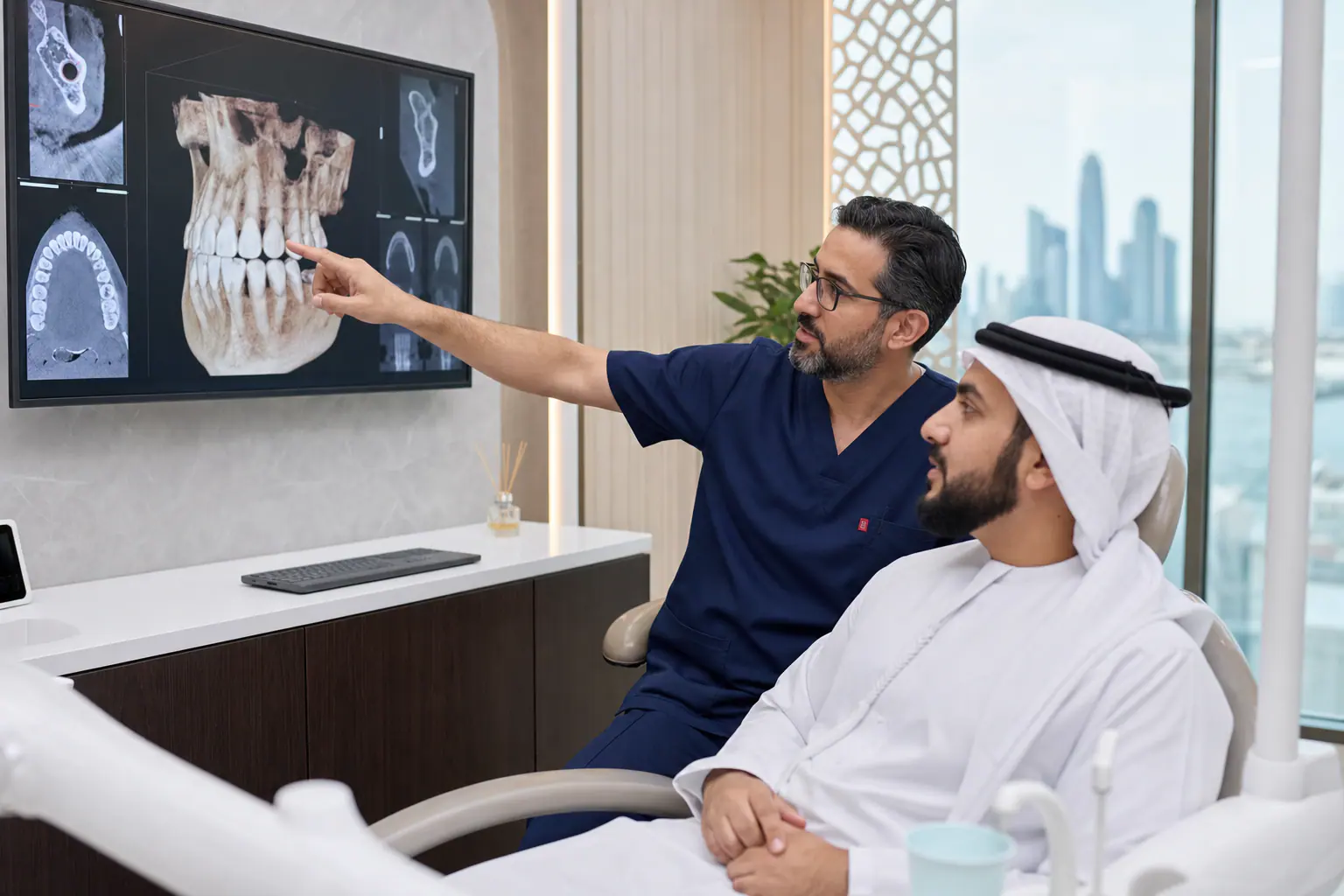
What is bone evaluation before dental implants?
Bone evaluation before dental implants is a careful examination of the jawbone in the area of the missing tooth or teeth, with the aim of knowing whether the bone is suitable for placing the implant in terms of quantity, quality and location. The implant needs bone to surround and support it during healing and after the crown or bridge is installed.
- ● Measure bone height
- ● Evaluate the width or thickness of the bone
- ● Study of bone density and quality
- ● Identify the proximity of the nerve in the lower jaw
- ● Determine the proximity of the maxillary sinuses
- ● Evaluate the shape of the gums and tissues around the area
- ● Determine whether the tooth was lost recently or a long time ago
- ● Determine whether immediate planting is possible
- ● Determine whether we need bone grafting
- ● Choose the appropriate implant size and location
- ● Planning for an implant crown or final prosthesis
Bone evaluation is not an insignificant additional step, but rather the foundation of safe dental implant planning.
Why is bone evaluation important before transplantation?
Dental implants are like building a strong foundation before installing a replacement tooth. If the bone does not fit, problems such as implant instability, poor healing, gum recession, difficulty fitting the crown, or the need for additional treatment later may increase.
- ● Find out whether agriculture is possible directly
- ● Reduce surgical surprises
- ● Determine the need for bone grafting
- ● Protect nerves and sinuses
- ● Choose the implant location carefully
- ● Improving the cosmetic result, especially in the front teeth
- ● Improved long-term stability of the implant
- ● Plan a suitable and easy-to-clean crown
- ● Determine whether immediate or delayed transplantation is better
- ● Choose a fixed prosthesis or a bone-supported denture
- ● Develop a realistic plan for duration, cost and steps
The more accurate the bone evaluation, the clearer and safer the implant plan will be.
When do you need a bone evaluation before transplantation?
In fact, every patient considering dental implants needs some degree of bone evaluation. But evaluation becomes more important in certain cases.
Suitability for transplantation cannot be determined accurately without evaluating the bone, gums and adjacent teeth.
What happens to the jawbone after losing a tooth?
After losing a tooth, the bone in the extraction area gradually begins to change. The reason is that the bone was receiving natural stimulation from the tooth root during chewing, and when a tooth is lost, this stimulation in the area decreases.
- ● Decrease in bone width
- ● Decrease in bone height
- ● Receding gum shape
- ● Change in the shape of the void
- ● The sinuses approach the implant area in the upper jaw
- ● The jaw nerve approaches the surface in the lower jaw
- ● Difficulty in placing an implant of the ideal size
- ● Need for bone grafting before transplantation
- ● Greater difficulty in achieving a natural cosmetic result in the front teeth
The longer a tooth is missing, the more important it is to evaluate the bone before making an implant decision.
Does all bone loss prevent transplantation?
no. Bone deficiency does not always mean that transplantation is impossible. In many cases, bone deficiency can be dealt with through bone grafting, saving the extraction site, choosing a suitable implant, modifying the plan, or choosing a different type of prosthesis.
The evaluation determines whether it is possible to plant directly, or do we need preparation before planting, or is there another, safer solution.
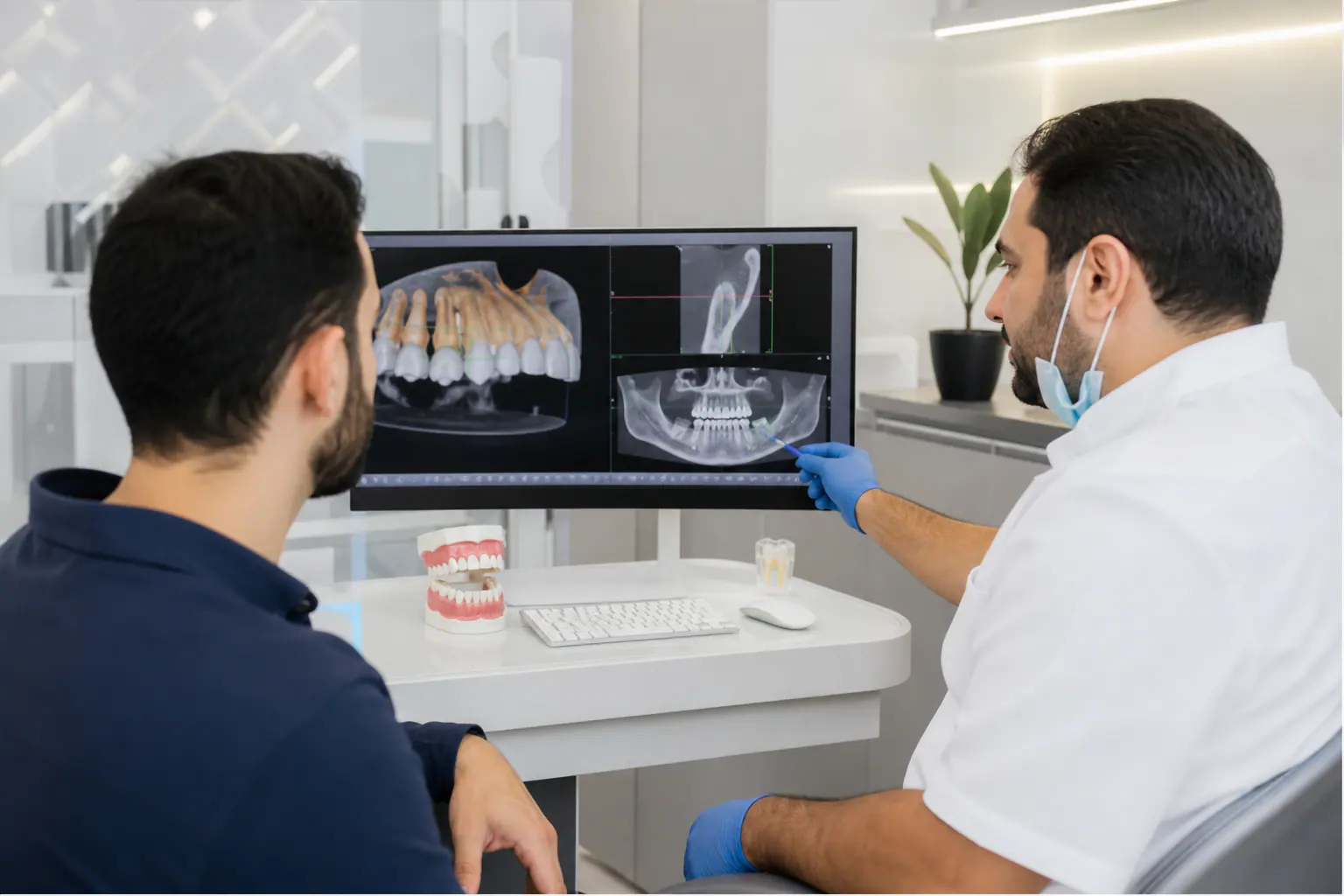
How is bone evaluated before dental implants?
Bone evaluation begins with a clinical examination, then it may require x-rays depending on the case. It is not enough to just look at the space, because the bone inside the jaw cannot be accurately evaluated by eye.
- 1
Examination of the mouth and gums
Examination of the area of the missing tooth, gums, adjacent teeth, the presence of inflammation, recession, the shape of the space, and the extent of oral hygiene.
- 2
Examination of adjacent teeth
Evaluate caries, inclination, movement, or need for treatment before implantation.
- 3
Occlusal examination
Evaluate the way you bite and apply pressure to the area, because the implant must adequately withstand the force of chewing.
- 4
X-rays
Help with basic knowledge of adjacent roots, infections, and bone level.
- 5
3D rays when needed
Important in complex cases or those close to nerves and sinuses to evaluate the bone more accurately.
- 6
Determine the need for bone grafting
After examination and x-rays, it is determined whether the bone is sufficient or needs support or construction before implantation.
- 7
Linking the evaluation to the final compensation
Choosing the implant location to be suitable for the final crown placement, smile, chewing and cleaning.
What do we look for in a bone evaluation?
Bone height
Is there enough height to place an implant of appropriate length without getting close to a nerve or sinus?
Bone width
Is the bone thickness sufficient to secure and surround the implant well?
Bone density
Is the bone strong and suitable for stability? Soft or weak bone may need different planning.
Bone shape
Is the bone regular, or is there a dip, hole, or deficiency in a certain direction?
Near the nerve
In the lower jaw, the location of the nerve must be known to avoid getting close to it during implantation.
Near the sinuses
In the posterior maxilla, the relationship of the bone to the sinuses should be evaluated.
Gum health
Healthy gums help protect the implant and improve the appearance of the final crown.
The presence of inflammation
Any previous infection or abscess may affect the bone quality and needs to be treated before or during transplantation.
Final crown location
The location of the implant must be suitable for the crown, not just the existing bone.
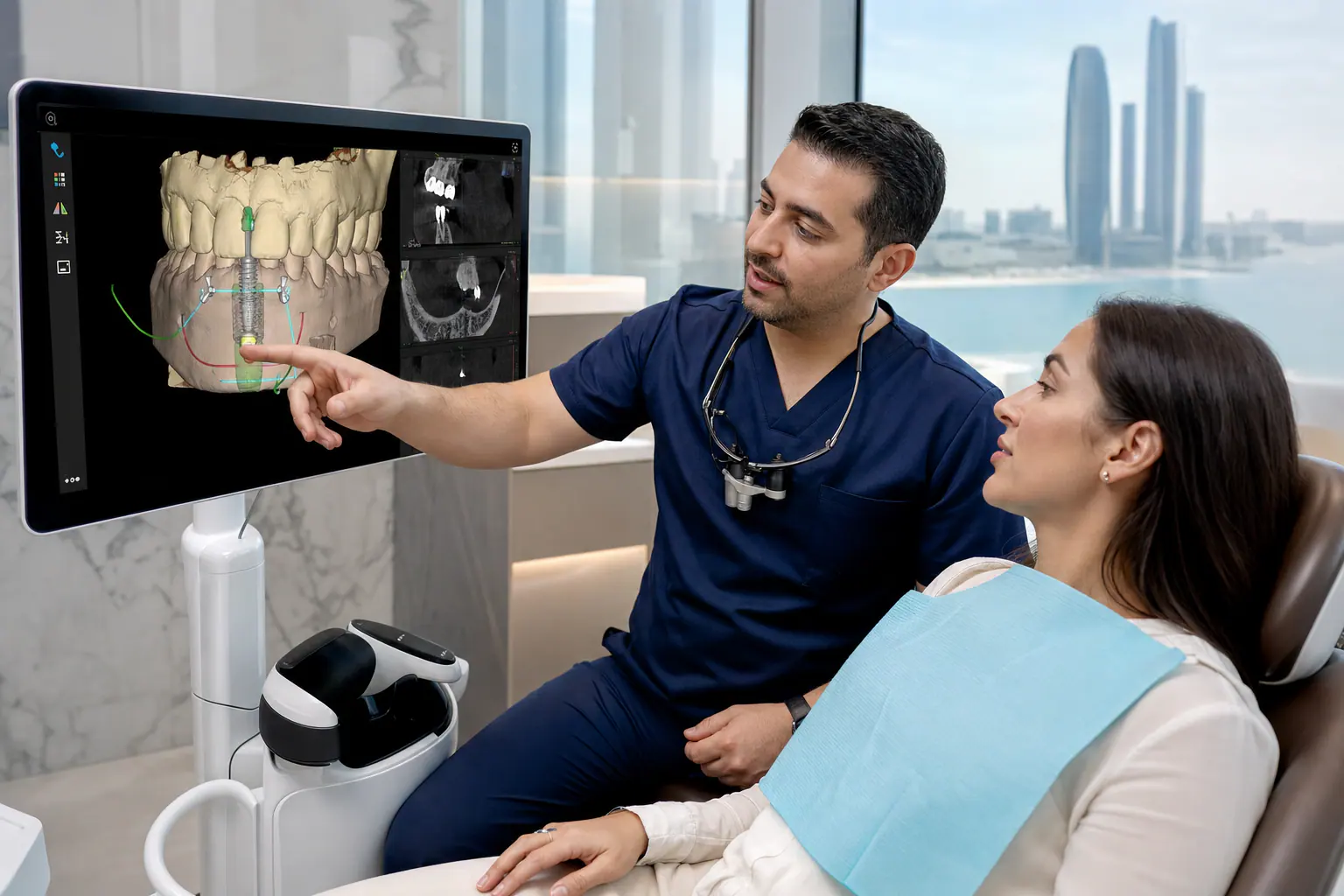
3D rays before implantation
3D rays may be important in many cases of dental implants, because they give a more accurate picture of the bone in terms of width, height, and relationship to sensitive areas.
- ● Posterior tooth implants in the upper jaw
- ● Posterior tooth implants in the lower jaw
- ● Expected bone loss
- ● Cosmetic front tooth implant
- ● Immediate implantation after extraction
- ● Full jaw implant
- ● Planning for multiple transplants
- ● Cases of old divorce
- ● The area is close to the sinuses
- ● The area is close to the jaw nerve
- ● The need for bone grafting
- ● Evaluation of an implant-supported denture
X-rays are not used merely for augmentation, but rather when diagnosis and planning require additional details.
Is bone evaluation painful?
no. The bone evaluation itself is often painless, as it consists of a clinical examination and x-rays when needed. The patient may only feel slight discomfort during the oral examination if the gums are inflamed or there is pain in the area.
If an additional procedure is needed, such as extraction, bone grafting, or implantation, this is explained to the patient before starting and appropriate anesthesia is used according to the case.
Does a bone evaluation mean I will need a bone graft?
Not necessarily. The goal of evaluating the bone is to determine whether it needs grafting or not. Many cases may be suitable for direct transplantation, especially if the tooth was recently lost or the bone is in good condition.
- ● The bone is suitable for direct transplantation
- ● Bone is suitable, but requires choosing a specific implant
- ● The bone requires minor grafting during implantation
- ● The bone needs grafting before transplantation
- ● It is better to save the extraction site and then transplant later
- ● Immediate transplantation is not appropriate, but delayed transplantation is possible
- ● It is better to choose another compensation if the implant is not suitable
Evaluation helps avoid guesswork and develop a clear plan.
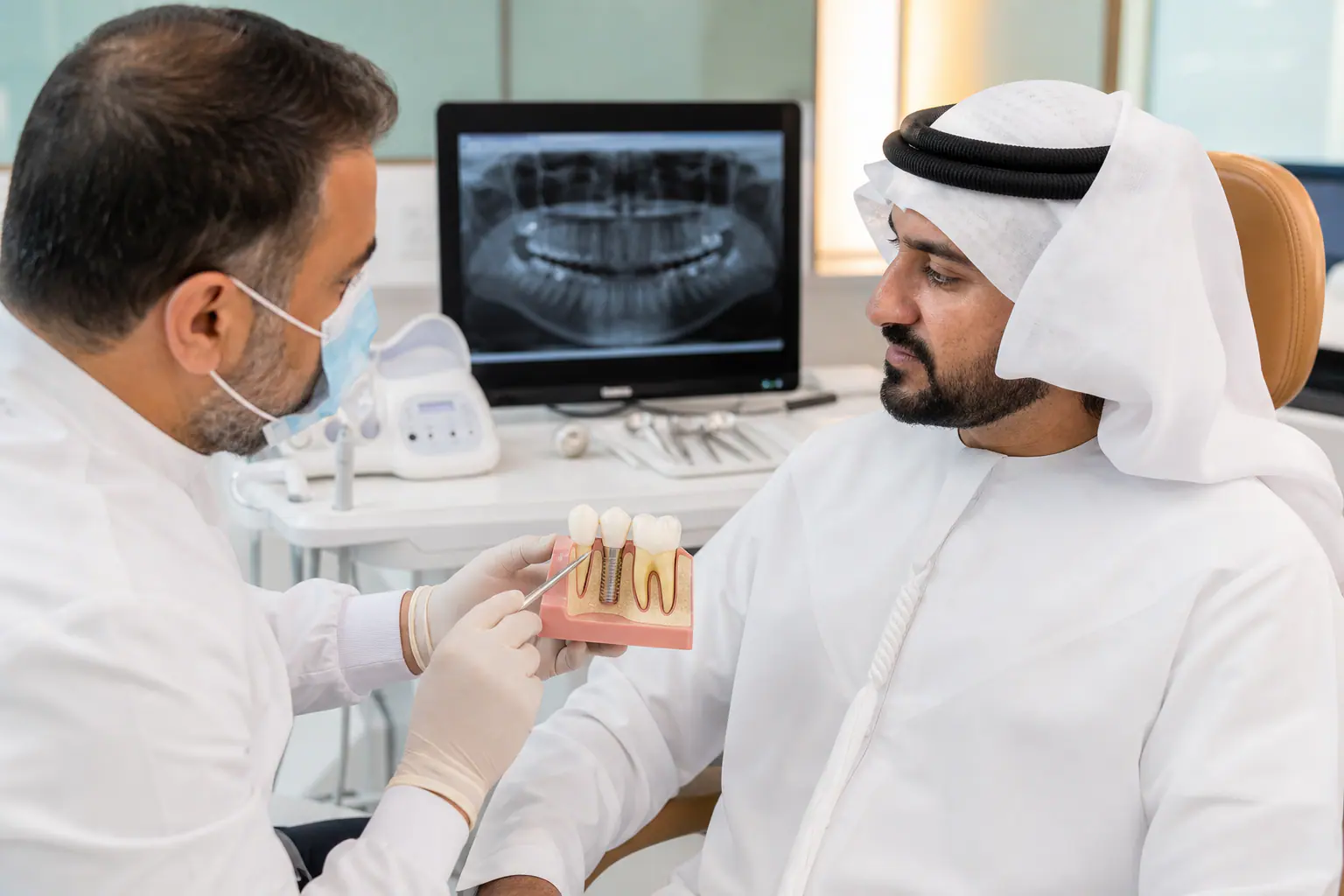
What is pre-transplant bone grafting?
Bone grafting is a procedure intended to replace or support lost bone in the transplant area. It may be done using customized bone materials or different techniques depending on the case, with the aim of providing a better base for the implant.
- ● Some time before planting
- ● On the same day of planting if the deficiency is minor and appropriate
- ● After extraction to preserve the location of the tooth
- ● In the front area to improve shape
- ● In the posterior upper jaw when there is a lack of bone near the sinuses
- ● In cases of full jaw implantation, if the plan requires
Bone grafting does not mean that the condition is always bad, but rather it may be an important step in obtaining a more stable implant and a better result.
When do we need bone grafts?
- ● Long-term tooth loss
- ● Thin or low bone
- ● Tooth extraction with loss of bone wall
- ● Inflammation or abscess that has eroded the bone
- ● Gum diseases that cause bone loss
- ● Frontal area that needs cosmetic support
- ● The posterior maxilla is close to the sinuses
- ● Need for larger or more stable plantings
- ● Complete jaw implant with bone deficiency
- ● Insufficient width of the implant
- ● Not enough height for the implant
The type and time of grafting are determined according to the examination and x-rays.
Is it possible to transplant without grafts despite bone deficiency?
Sometimes it can, sometimes it doesn't. It depends on the amount and location of the deficiency and the type of compensation sought. In some cases, an appropriately sized implant may be used, the implant location may be changed, or a different compensation plan may be chosen. In other cases, patching is necessary.
Trying to avoid patching may affect:
The decision must be based on safety and results, not just on the desire to shorten the steps.
Bone evaluation according to the type of implant
Bone evaluation before single tooth implantation
In a single tooth implant, we need to evaluate the bone in a precisely defined location. The condition may be simple if the tooth was recently missing and the bone is good, or it may be more complex if the space is old or adjacent teeth have moved.
Bone assessment prior to immediate implantation
Immediate implantation after extraction requires a more accurate bone evaluation, because the implant will be placed in the same place as the tooth immediately after its extraction. There should be enough bone to hold the implant, the infection should not be severe, and the extraction should be as conservative as possible.
Bone evaluation before full jaw implantation
Full jaw implants require a comprehensive evaluation of the bone in multiple areas, because the plan depends on distributing the implants appropriately to support a complete replacement.
Bone assessment of the elderly before transplantation
Older people may be suitable for implants, but their bone evaluation is very important, because the tooth loss may be ancient and the bone may have deteriorated over time. General health, medications, and ability to care must also be taken into account.
Evaluation of the bone and implant crown
Some may think that bone is only important for implant placement, but bone also affects the shape of the final implant crown. If the bone does not fit, the crown may be long, abnormally shaped, or difficult to clean, especially in the front teeth.
Bone evaluation according to the jaw area
Evaluation of the bone in the upper jaw
The upper jaw needs special evaluation, especially in the back teeth due to the proximity of the sinuses. When a patient loses upper molars for a long period, the amount of bone available for implantation may decrease.
- ● Near the sinuses
- ● Height of available bone
- ● Bone density
- ● The need for sinus lift or grafting in some cases
- ● The shape of the bone in the front teeth
- ● Support your gums and smile
- ● Implant location in relation to the final crown
- ● Quality of healing
Evaluation of the bone in the lower jaw
The lower jaw requires careful evaluation due to the presence of the mandibular nerve, especially in the area of the posterior molars. The exact location of the nerve must be known before transplantation to avoid getting close to it.
- ● Location of the mandibular nerve
- ● Elevation of the bone above the nerve
- ● Bone thickening
- ● Bone density
- ● Chewing force in the posterior region
- ● Location of adjacent teeth
- ● Need for a short implant or alternative plan in some cases
- ● Final crown shape
- ● Easy to clean
Evaluation of the bone in the anterior region
The frontal area is aesthetically sensitive, because any bone or gum deficiency may show up in the shape of the crown and smile. Therefore, we need a very careful evaluation before implanting a front tooth.
- ● Thickening of the frontal bone
- ● Gum shape
- ● Smile line
- ● Do gums appear when laughing?
- ● Color and shape of adjacent teeth
- ● The need for bone or gum grafts
- ● Can a temporary crown be placed?
- ● Is immediate cultivation suitable?
- ● Will the finished crown look natural?
The relationship of gingivitis to bone loss
Advanced gingivitis may lead to loss of bone supporting the teeth. If a patient loses a tooth due to gum disease, the bone around the area may be affected, and he or she may need periodontal treatment before the implant.
- ● Are there inflamed gums?
- ● Is there bleeding?
- ● Are there gingival pockets?
- ● Is the bone around adjacent teeth affected?
- ● Does the patient need a deep cleaning?
- ● Does he need gum treatment before implantation?
- ● Can adjacent teeth be preserved?
It is not recommended to place an implant in a mouth with active, untreated gingivitis, because the infection may affect the implant later.
Does an abscess or infection affect the bone?
Yes, an abscess or chronic infection around the tooth root may cause bone loss around the area. Therefore, when evaluating a tooth that needs extraction and implantation, you must know whether there was a previous infection, cyst, or abscess.
- ● The amount of remaining bone
- ● Possibility of immediate cultivation
- ● The need to clean the area well
- ● The need for bone grafting
- ● Planting timing
- ● Healing period
- ● The final result
In some cases, it is best to treat the infection and let the area heal before transplanting.
Does smoking affect bone and implants?
Yes, smoking may affect the health of the gums, healing, and bone around implants. When evaluating bone, we take smoking into account because it may increase the risk of infection or delayed healing.
If you are a smoker, tell your doctor. The doctor may recommend reducing or stopping smoking before and after the transplant to improve the chances of healing.
Does diabetes affect bone and implant evaluation?
Diabetes does not always prevent transplantation, but it does require evaluation. Uncontrolled diabetes may affect healing and increase the risk of infection, so the level of blood sugar control must be known before the procedure.
- ● Sugar control level
- ● Gum health
- ● The presence of recurrent infections
- ● The patient’s ability to heal
- ● The need to clean or treat gums before implantation
- ● Commitment to care and follow-up
- ● Medical coordination when needed
If the diabetes is stable and the bone and gums are suitable, implantation may be possible according to evaluation.
Do orthopedic medications affect implants?
Some orthopedic medications, especially those used for osteoporosis or certain other conditions, may need significant evaluation before any oral surgical procedure. Therefore, you should tell your dentist about all the medications you use, especially orthopedic medications that are taken for long periods.
Do not stop any medication on your own. The doctor evaluates the condition and may request coordination with your treating physician when needed.
What happens after a bone evaluation?
After evaluating the bone, the doctor explains the result to the patient and determines the most appropriate plan.
Direct farming
If the bone is suitable and there are no problems that prevent implantation.
Cultivation with simple grafting
If there is a limited deficiency, it can be dealt with during implant placement.
Bone grafting before transplantation
If the deficiency is larger and needs to build bone before placing the implant.
Extraction and preservation of the tooth location
If the tooth needs to be extracted and immediate implants are not suitable.
Instant cultivation
If the tooth is to be extracted and the bone is suitable for placing the implant in the same session.
Full jaw implant plan
If the patient is missing several teeth or the entire jaw.
Choose an alternative compensation
If the implant is not suitable or does not achieve the best result in the current case.
The goal is to choose the safest and most realistic plan, not to force the condition into direct transplantation.
Can the bone be evaluated if the tooth has not yet been extracted?
Yes. The bone can be evaluated before extracting the tooth to determine whether an immediate implant is possible, whether it is better to extract the tooth and save the bone, or whether the area needs to wait.
- ● A front tooth in danger of being extracted
- ● Non-restorable tooth
- ● Broken root
- ● An abscessed tooth
- ● Desire for implants immediately after extraction
- ● A desire to maintain the shape of the gums
- ● Planning temporary compensation after dislocation
The more planning is done before the extraction, the better the chance of saving the bone and gums.
Can the bone be evaluated if the tooth has been missing for years?
Yes. In these cases, evaluation is more important, because the bone may have receded over time. The space, adjacent teeth, and the opposite tooth are examined, and we may need x-rays to determine the amount of remaining bone.
- ● The bone still fits
- ● The bone needs grafting
- ● The space has become tight and needs correction or another plan
- ● The opposing tooth has moved and needs to be adjusted
- ● Implantation is possible, but the crown requires a special design
- ● It is better to compensate differently depending on the case
This cannot be known without examination.
How long does it take to evaluate the bone before transplantation?
Consultation and examination may often take place in one visit, but if there is a need for additional x-rays, review of medical reports, or development of a complex plan, it may require more than one step.
The goal is not just speed, but rather arriving at a safe and clear plan.
Does bone evaluation determine the cost of implantation?
Yes, bone evaluation helps determine the plan and thus estimate the cost more accurately. It is not possible to accurately estimate the cost of dental implants without knowing whether you need bone grafting, immediate implants, an implant crown, several implants, or gum treatment before implantation.
- ● Number of implants
- ● Type of agriculture
- ● The need for bone grafting
- ● Type of crown or prosthesis
- ● Need to take off
- ● Need for gum treatment or cleaning
- ● The need for additional x-rays
- ● Is the condition one tooth or the entire jaw?
- ● Is there temporary compensation?
- ● Degree of complexity of the case
Bone evaluation is an essential step to develop a clear plan instead of an inaccurate general estimate.
How do I prepare for my orthopedic evaluation appointment?
- ● Any previous dental x-rays, if any
- ● The date of the tooth extraction or the reason for its loss
- ● List of medications used
- ● Information about diabetes, heart or bone disease
- ● Information about smoking
- ● Do you have teeth grinding or use a night guard?
- ● Do you have an old kit or bridge?
- ● Do you have pain or inflammation?
- ● Do you want to implant one tooth or several teeth?
- ● Do you prefer a fixed or mobile solution?
- ● Any important medical reports
This information helps the doctor accurately evaluate the condition and develop an appropriate plan.
Common errors in pre-implantation bone evaluation
- ● Beginning the implant without examining the bone carefully
- ● Rely on visual inspection only in complex cases
- ● Ignore gingivitis before transplantation
- ● Ignoring an old abscess in the place of the tooth
- ● Urgent immediate transplantation despite bone deficiency
- ● Rejection of bone grafting despite the need for it
- ● Choosing an implant that is not suitable for the size of the bone
- ● Not studying the final crown location
- ● Not informing the doctor of medications or illnesses
- ● Avoid smoking or diabetes
- ● Comparison with another person's condition
- ● Postpone compensation for years and then always expect direct transplantation
Correct evaluation protects you from an inappropriate plan or a lower than expected result.

Book a bone assessment before dental implants
The first step is to examine and evaluate the bone, then develop a clear and appropriate treatment plan.
Why AHLI Orthopedic Evaluation Center?
Comprehensive evaluation
To the jawbone before implantation.
Study of bone and gums
and adjacent teeth before making a decision.
Determine planting readiness
Is direct cultivation possible or does it require preparation?
Patching evaluation
Determine the need for bone grafting.
Final compensation planning
Associated with the location of the crown and smile.
Sensitive areas
Consider the sinuses and jaw nerve.
Link to services
Single tooth, immediate, full jaw, and elderly implants.
Convenient Al Shamkha Location
Close to Baniyas, Al Falah, Shakhbout and Abu Dhabi areas.
When should I book a bone evaluation before transplantation?
Related Services
Dental Implant Team


Bone evaluation in Al Shamkha - Abu Dhabi
AHLI Specialists Medical Center — Al Qayed Street, Al Shamkha, Abu Dhabi
For reservations and inquiries: 02-448-7553
Book an orthopedic assessmentFrequently asked questions about pre-implantation bone evaluation
Should the bone be evaluated before each transplant?
How do I know that the bone is sufficient for transplantation?
Do I need a 3D scan?
What does bone deficiency mean?
Why does osteopenia occur after tooth extraction?
Is it possible to transplant if the bone is weak?
What is pre-transplant bone grafting?
Is bone grafting necessary for all patients?
Can bone grafting and transplantation be done on the same day?
Does immediate implantation require bone evaluation?
Do the front teeth need a special orthopedic evaluation?
Is the maxilla more difficult to evaluate for osteotomy?
Does the lower jaw need a nerve evaluation?
Does bone evaluation determine the cost of implantation?
Can the bone be evaluated before tooth extraction?
Is your bone ready for transplantation?
Book an orthopedic evaluation at Al Shamkha — We examine your jaw and determine the most appropriate plan before any procedure.