
Complete jaw implant in Abu Dhabi
Completely replacing jaw teeth with dental implants at AHLI Specialists Medical Center - Al Shamkha
Have you lost most of your upper or lower jaw teeth?
Do you use a removable denture but it doesn't hold well while eating or talking?
Do you have difficulty chewing due to missing teeth?
Have you started avoiding eating in front of people for fear of denture movement or lack of confidence?
Are you looking for a full jaw implant in Abu Dhabi or a full jaw implant in Al Shamkha?
Full jaw implants are an advanced solution to replace missing teeth in a complete or semi-complete jaw using a number of dental implants to support a fixed or semi-fixed replacement or an implant-supported denture, depending on the condition of the bone, gums and mouth and the patient’s needs. This treatment aims not only to improve the appearance of the smile, but also to restore the ability to chew, improve stability, support speech, and increase confidence in daily life.
At AHLI Specialists Medical Center in Al Shamkha - Abu Dhabi, we provide a comprehensive evaluation of cases of complete or almost complete tooth loss, studying the bone, gums, occlusion, smile shape, oral health, and general health condition, then determining the most appropriate plan: a fixed bridge on implants, an implant-supported denture, an immediate implant, a bone assessment, or a preparatory plan before implantation.
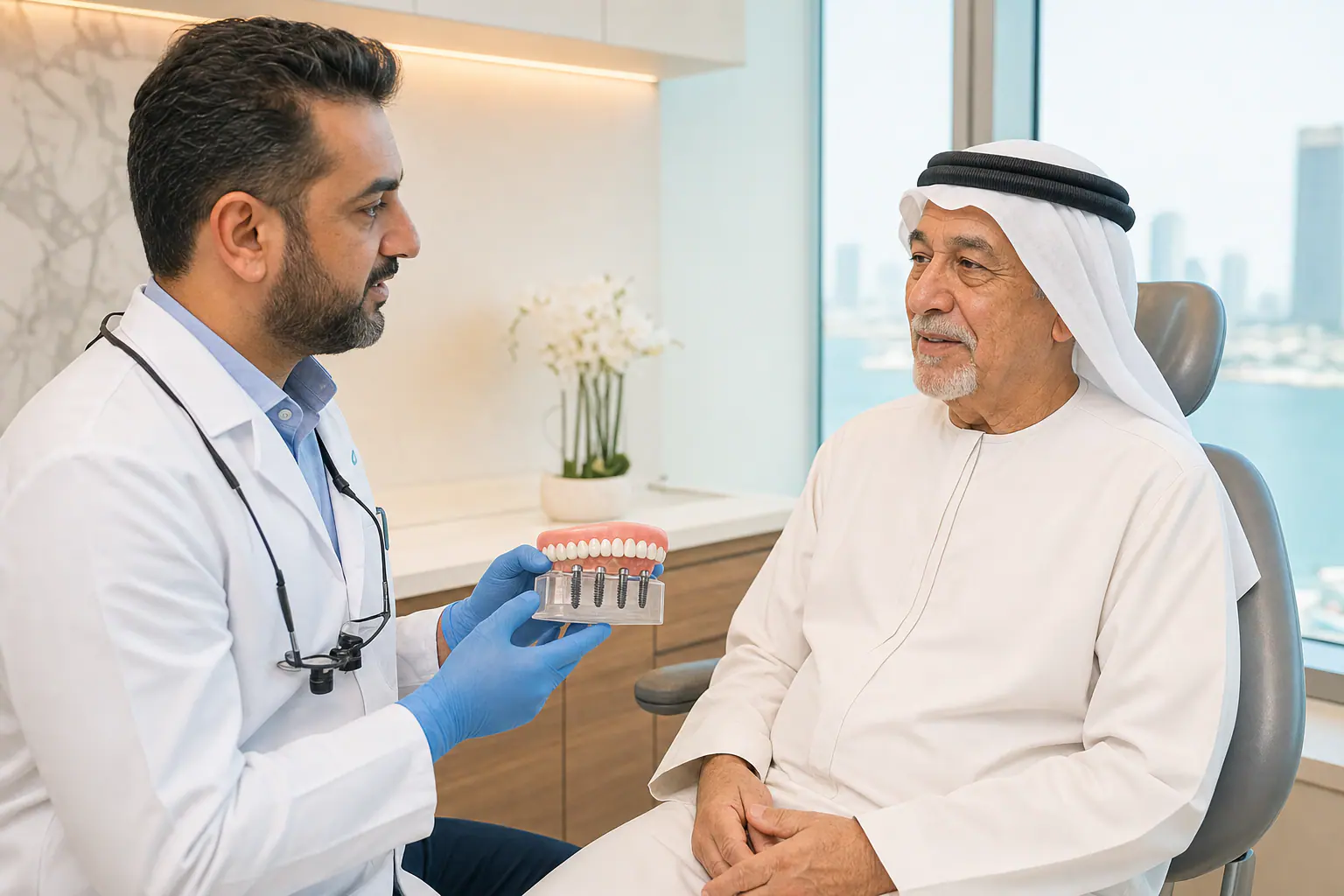
What is meant by a complete jaw implant?
Complete jaw implantation means using dental implants to replace all missing teeth in one jaw, whether the upper jaw or lower jaw, or replacing both jaws together in some cases. Instead of replacing each missing tooth with a separate implant, a specific number of implants are usually used to support a complete replacement such as a fixed bridge or implant-supported denture.
- ● They have lost all their jaw teeth
- ● They have most of their teeth missing
- ● Many teeth that are mobile or cannot be treated
- ● They suffer from an unstable moving denture
- ● They want a sturdier solution than a traditional kit
- ● They need to improve chewing, speech and confidence
- ● They have bone, gum and health conditions that allow for a suitable implant plan
Full jaw implants are not just installing fixed teeth, but rather rebuilding the function of the mouth and smile in a way that requires careful planning.
What is the difference between a full jaw implant and a single tooth implant?
Single tooth implant
It is used to replace one missing tooth with one implant and one crown. The plan is localized around the location of the missing tooth.
Full jaw implant
It is used to replace a complete or almost complete jaw, and requires a broader study: the number of implants, bone, gums, lips, occlusion, type of compensation, cleaning, chewing, and the complete cosmetic aspect.
Full jaw implants require more comprehensive planning than single-tooth implants.
Single tooth implant ←When does a patient need a full jaw implant?
The examination is what determines whether a full jaw implant is appropriate, or whether a removable denture, bridge, or other treatment plan may be better.
Why is a removable denture not enough for some patients?
A removable denture may be a suitable solution for some cases, but it is not suitable for everyone to the same extent. Some patients experience discomfort due to denture movement, poor stability, ulcers, or difficulty chewing.
- ● Denture movement while eating
- ● Poor ability to chew solid foods
- ● Difficulty speaking
- ● Need for adhesives
- ● Ulcers in the gums
- ● Uncomfortable pressure on the bone
- ● Fear of the denture falling or moving
- ● Lack of confidence when laughing or speaking
- ● Difficulty getting used to the kit
- ● Gradual decline in the jaw bone over time
In these cases, implants may be an option to improve stability and comfort, either through a fixed bridge or an implant-supported denture.
Benefits of complete jaw implants
Improve tooth stability
Implants support compensation instead of relying solely on the gums, which may provide better stability than traditional dentures.
Improve chewing ability
When compensation is more stable, the patient may feel better able to chew and eat a variety of foods.
Improve confidence when speaking
Fixed or implant-supported prosthesis may reduce anxiety in denture movement during speaking or smiling.
Improving the shape of the smile
Prosthetics can be designed to replace the shape of the teeth and smile, taking into account the face, lips and gums.
Support lips and face
A well-planned full prosthesis may help improve the external support of the smile.
Reduce reliance on denture adhesives
In implant-supported dentures, the need for adhesives may be reduced in some patients.
Suitable solution for extensive loss
Instead of replacing each tooth with an implant, a specific number of implants can be used to support a complete replacement.
Types of full jaw implants
Fixed bridge on implants
A fixed prosthesis is attached to a number of implants and is not removed by the patient daily. Suitable for those who want a closer feel to fixed teeth.
Implant-supported removable denture
A denture that can be removed and cleaned, but is mounted on implants for improved stability compared to a traditional denture.
Fixed or semi-fixed set
Implant-supported prosthesis is fixed in daily use, but can be removed by the doctor for maintenance.
Complete upper jaw implant
Special evaluation is required due to the proximity of the sinuses and the nature of the bone and lip support.
Complete lower jaw implant
The location of the nerves, the amount of bone, and the stability of the denture or bridge need to be evaluated.
There is no one-size-fits-all plan. The choice depends on the bone, gums, general health, cleaning ability, and goal of treatment.
What is the difference between a fixed bridge and an implant-supported denture?
Fixed bridge on implants
It is fixed and the patient does not remove it daily. It gives a firmer feel, but requires careful care and good cleaning around and under the compensation.
Implant-supported denture
The patient can remove it and clean it, but it is attached to implants to improve stability. It may be easier to clean for some patients.
Choosing between them requires examination and evaluation, and not a decision based on the name alone.
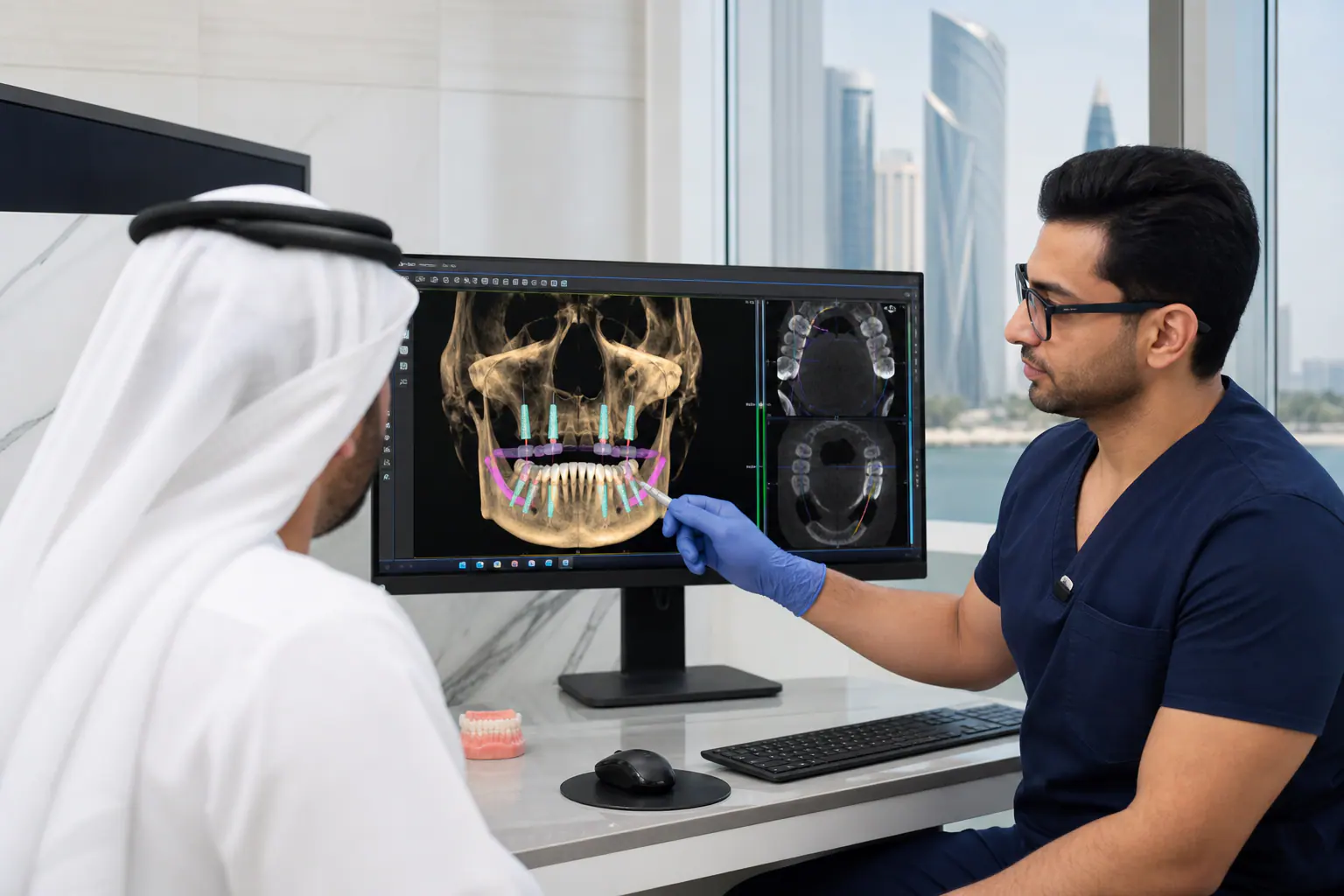
Does full jaw implant mean All-on-4?
The term All-on-4 is often used to refer to a complete jaw replacement supported by four implants, but it is not the only option and does not suit all cases. Some cases may need four implants, and some need a larger number or a different plan.
- ● The number of implants is not constant for all patients
- ● The upper jaw may need a different layout than the lower jaw
- ● Bone quality affects the plan
- ● A fixed prosthesis is different from a supported prosthesis
- ● Some cases require bone grafting
- ● Some cases require a preparatory stage before transplantation
We use a bone and oral evaluation to determine the appropriate plan rather than relying on a brand name or fixed number.
Is full jaw implant suitable for everyone?
May be suitable:
- ● Complete or almost complete loss of teeth
- ● Public health permits the procedure
- ● Sufficient or prepareable bone
- ● Healthy or treatable gums
- ● Desire for fixed or more stable compensation
- ● Ability to clean and replace implants
- ● Commitment to reviews
- ● Realistic expectations about time and outcome
You may need to prepare:
- ● Active gingivitis
- ● Severe osteopenia
- ● Uncontrolled diabetes
- ● Heavy smoking
- ● Drugs that affect bone or healing
- ● Squeaking or intense pressure
- ● Poor ability to clean the mouth
- ● Unstable general illnesses
- ● Unrealistic expectations of getting final teeth in one day
A medical and oral examination is the basis for making a decision.
Bone evaluation before full jaw implantation
Bone evaluation is an essential step before implanting the entire jaw, because implants need sufficient bone in suitable places to stabilize the final prosthesis.
- ● The amount of bone in the jaw
- ● Bone density
- ● Suitable implant locations
- ● Near the maxillary sinuses
- ● Near the nerves in the lower jaw
- ● Do we need bone grafts?
- ● Can some weak areas be avoided?
- ● Is a complete jaw implant possible?
- ● What type of compensation is most appropriate?
- ● Is the case suitable for a fixed prosthesis or a supported denture?
We may need 3D scans in some cases.
Bone evaluation before transplantation ←Does the patient need bone grafting?
Some patients may need bone grafting if there is not enough bone to support the implants. This is common in people who lost teeth many years ago or have gum disease or old dentures.
- ● Decreased bone height
- ● Decreased bone thickness
- ● Near the sinuses
- ● Near the mandibular nerve
- ● The need for cosmetic support in the frontal area
- ● Severe decline after tooth loss
- ● Desire for fixed compensation that requires strong support
Not every patient needs grafting. In some cases, implants can be planned in places of available bone.
Is it possible to extract teeth and implant the entire jaw on the same day?
In some cases, non-treatable teeth can be extracted and implants placed in the same session, and a temporary prosthesis may be installed depending on the stability of the implants and the condition of the bone and gums. But this does not suit all patients.
Instant farming ←Is it possible to get fixed teeth on the same day?
In some cases, fixed temporary compensation can be placed on the same day or within a short period, but not always. This depends on the stability of the implants, bone quality, number of implants, type of prosthesis, bite force, and the health of the patient.
Temporary: It may be used during the healing period, and may have restrictions in eating and chewing.
Final: It is often necessary to wait until the implants have healed and the gum and bone have stabilized, and then the final prosthesis is carefully designed.
We do not recommend taking teeth in one day as a fixed promise for all cases. The decision must be based on safety and stability, not just speed.
Complete jaw implant steps
First consultation
Examine the mouth, gums and remaining teeth and understand the patient's complaint.
Public health assessment
Review chronic diseases, diabetes, heart, blood thinners, and medications.
Radiology and bone evaluation
Evaluation of the entire bone in the jaw, and we may need 3D X-rays.
Evaluation of remaining teeth
Can it be preserved or does it need to be removed within the plan?
Choose the type of compensation
A fixed bridge, implant-supported denture, or other solution.
Implant planning
Determine the number and locations of implants according to bone and type of compensation.
Cultivation stage
Placement of implants. Extraction or grafting may be done at the same stage or in stages.
Temporary compensation
Providing temporary compensation according to the case, especially if the patient cannot be left without teeth.
Healing period
Time for the implants to fuse with the bone — avoid excessive pressure.
Final compensation design
Take measurements or digital scan of shape, color and occlusion.
Installation of final teeth
Check comfort, chewing, occlusion, speech, and grooming.
Follow-up and maintenance
Follow-up is necessary to maintain the health of implants, gums, and prostheses.
Is full jaw implant painful?
Dental implants are often performed under local anesthesia, and the patient may feel more pressure or movement than pain during the procedure. After a full jaw implant, temporary swelling, discomfort, or pain may occur.
- ● Take medications as prescribed by the doctor
- ● Follow post-transplant eating instructions
- ● Avoid smoking
- ● Do not apply pressure to the implants or temporary prosthesis
- ● Maintain gentle oral hygiene
- ● Commit to reviews
- ● Contact the clinic if there is severe pain or persistent bleeding
Each case is different, so instructions are given according to the patient's plan.
How long does a full jaw implant take?
The duration of full jaw implantation varies depending on the case. Some cases may go faster if the bone is suitable, while others require stages extending over several months.
The duration cannot be determined accurately without an examination and x-rays, but the plan and expected schedule are explained after the evaluation.
Is full jaw implant safe?
Full jaw implants may be safe and successful in appropriate cases when properly planned, implemented and followed up. But it is a major procedure compared to a single tooth implant.
- ● Inflammation after surgery
- ● Failure of some implants to bond with the bone
- ● Temporary pain, swelling, or bleeding
- ● The need to modify the temporary compensation
- ● Occlusal problems
Reducing risks depends on planning, appropriate case selection, oral hygiene, patient compliance, and regular follow-up.
What are the success factors for full jaw implants?
Full jaw implants are not a procedure that ends with installation only, but rather requires maintenance and follow-up.
Complete upper jaw implant
The upper jaw needs special evaluation because the bone in it may be less dense in some cases, and because the sinuses are close to the posterior implant areas.
- ● The amount of bone beneath the sinuses
- ● Shape of the anterior jaw bone
- ● Lip support
- ● Smile line
- ● Gum shape
- ● The appropriate number of implants
Complete lower jaw implant
The lower jaw needs to be evaluated for location of nerves and amount of bone. Many patients experience more movement of the lower denture than the upper, so implants may be useful to improve stability.
- ● Location of the mandibular nerve
- ● Bone height and thickness
- ● Stability of the current denture, if any
- ● Bite force
- ● The type of compensation requested
- ● Patient's ability to clean the prosthesis
- ● Occlusal with the maxilla
- ● The appropriate number of implants


Full jaw implant for the elderly
Age alone is not a contraindication for full jaw implants, but elderly people need special evaluation of general health, medications, bone, periodontal, and ability to take daily care.
Dental implants for the elderly ←Full jaw implant for diabetes
Uncontrolled diabetes may increase the risk of inflammation and delayed healing, so treatment may be postponed until the situation becomes more stable.
Full jaw implant with smoking
Telling your doctor about smoking is important to develop a realistic plan and reduce complications.
Full jaw implant with bruxism
Neglecting squeaking may increase the risk of fracture of the prosthesis, loosening of screws, or fatigue of the implants.
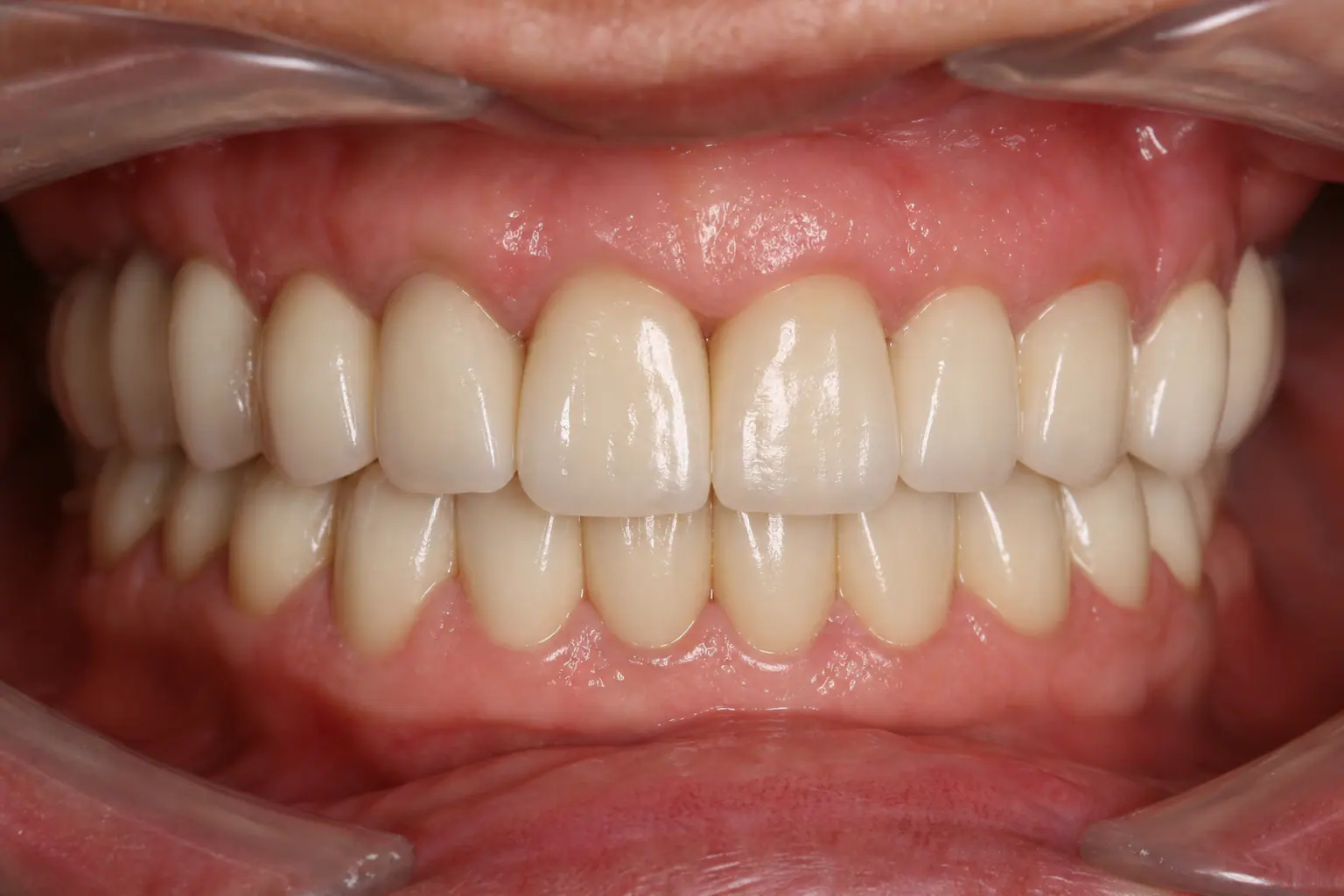
Final compensation after full jaw implantation
Final prosthesis is the stage that gives the patient the final teeth in terms of form and function. This stage is very important because it determines rest, chewing, vocalization, and grooming.
How are full jaw implants cleaned?
Complete jaw implant cleaning is very important to maintain healthy gums and bone around the implants. The cleaning method varies according to the type of compensation.
- ● Soft toothbrush
- ● Interdental brushes as recommended
- ● Special thread for implants or bridges
- ● Waterproof device in some cases
- ● Clean the bottom of the bridge if it is fixed
- ● Remove and clean the supported denture if it is mobile
- ● Cleaning the gums around the implants
- ● Regular cleaning in the clinic
- ● Regular audits to check bolts or compensation
If the patient cannot clean the prosthesis well, a design that is easier to clean should be chosen or the patient should be trained in the correct method.
Do full jaw implants last long?
Successful implantation requires a partnership between the doctor and the patient after installation.
Can a full jaw prosthesis be repaired or replaced?
Regular follow-up helps detect these issues early.
Risks and drawbacks of full jaw implants
- ● Higher cost than some moving solutions
- ● The need for surgery
- ● Possible need for bone grafting
- ● A treatment period that may extend to several months
- ● The need for temporary compensation
- ● The necessity of daily careful cleaning
- ● Potential maintenance or adjustment of compensation over time
- ● Risks of infection around implants
- ● The possibility of failure of one or more implants
- ● The result is affected by smoking or uncontrolled diabetes
- ● The need for long-term periodic reviews
Knowing these points helps the patient make an informed and realistic decision.
Common mistakes before full jaw implantation
- ● Choose a plan based on price only
- ● Not treating the gums before implantation
- ● Ignore bone assessment
- ● Expect final teeth on the same day for all cases
- ● Hiding medical information or medications from the doctor
- ● Continue smoking heavily without knowing the risks
- ● Choose a fixed compensation despite not being able to clean it
- ● Not understanding the difference between a supported denture and a fixed bridge
- ● Comparing the situation with the situation of another person
- ● Neglecting follow-up reviews
- ● Ignore the stridor or nighttime pressure
- ● Not planning for temporary compensation during treatment
Full jaw implantation requires a thoughtful decision and a clear plan, not just a quick procedure.
What happens if the implants are not cleaned well?
Implants do not suffer from tooth decay like natural teeth, but the gums and bone around them may become inflamed. This infection may lead to bleeding, swelling, odor, pain, bone recession, or problems with implant stability.
- ● Bleeding around implants
- ● Swelling or redness
- ● Abnormal smell or taste
- ● Pain when chewing
- ● Movement in compensation
- ● Pus discharge
Book a full jaw implant consultation
The first step is to examine and evaluate your bone, gums and overall health, then determine the most appropriate plan.
Why AHLI Specialists Medical Center for Full Jaw Implant?
Comprehensive evaluation
For cases of complete or almost complete tooth loss.
Study of bone and occlusion
Before determining the planting plan.
Multiple options
A fixed bridge, an implant-supported denture, or a custom plan.
Patching evaluation
Determine the need for bone grafting.
Consider the elderly
Chronic diseases and medications.
Final compensation planning
In terms of chewing, shaping and cleaning.
Follow-up after transplantation
To maintain the result in the long term.
Convenient Al Shamkha Location
Close to Baniyas, Al Falah, Shakhbout and Abu Dhabi areas.
When do I book a full jaw implant consultation?
Related Services
Dental Implant Team

Complete jaw implant in Al Shamkha - Abu Dhabi
AHLI Specialists Medical Center — Al Qayed Street, Al Shamkha, Abu Dhabi
For reservations and inquiries: 02-448-7553
Book a consultationFrequently asked questions about full jaw implants
What is a total jaw implant?
Is a full jaw implant suitable for everyone who has lost their teeth?
How many implants do I need for a complete jaw?
Is All-on-4 suitable for everyone?
Is full jaw implant painful?
How long does a full jaw implant take?
Do I need a bone graft?
Is it possible to extract teeth and jaw implants on the same day?
Can fixed teeth be installed on the same day?
Is implantation better than a moving kit?
Can elderly people get full jaw implants?
Does diabetes prevent full jaw implants?
Does smoking affect full jaw implants?
How do I clean full jaw implants?
Do full jaw implants last long?

Is a full jaw implant suitable for your condition?
Book a consultation at Al Shamkha — we evaluate your bone and gums and explain your options honestly.