
Vocational rehabilitation in Abu Dhabi
Occupational therapy to return to work and study after injury or illness at AHLI Specialists Medical Center - Al Shamkha
Have you stopped working due to an injury, pain or health condition?
Do you feel like you can come back, but don't know how to start safely?
Have some work tasks become difficult, such as writing, standing, prolonged sitting, using one's hand, concentrating, carrying tools, or managing fatigue?
Do you need a step-by-step plan for returning to work or school after a stroke, injury, operation, chronic pain, or neurological condition?
Are you looking for an evaluation that explains your current abilities and what modifications might help you return to your job or daily activity?
Vocational rehabilitation is an occupational therapy service that helps a person return to work, school, or professional activity in a safe and orderly manner after an injury, illness, chronic pain, motor impairment, neurological condition, or difficulties that affect daily functioning. The goal is not only to return to work, but to return in a way that maintains health, reduces the risk of relapse, and takes into account the person’s abilities, the requirements of his work, and his environment.
At AHLI Specialists Medical Center in Al Shamkha - Abu Dhabi, we provide an assessment and occupational treatment plan for vocational rehabilitation, which helps the patient understand his current abilities, identify the difficulties that prevent him from returning to work or study, and develop practical recommendations for progression, modifying tasks, improving endurance, supporting the use of the hand, regulating energy, and improving independence in the vocational role.

What is vocational qualification?
Vocational rehabilitation is a program aimed at helping a person return to work, study, or maintain his or her professional role after a health problem that affected his or her ability to perform. The problem may be physical, neurological, cognitive, psychological, motor, or related to pain and fatigue.
The person
His abilities, health, strength, endurance, skills, fears, and goals.
Work or study
Nature of tasks, working hours, sitting, standing, use of hands, carrying tools, concentration, communication, speed required.
the environment
Desk, chair, table, devices, noise, distance, mobility, safety, and how to organize tasks.
Based on this, a plan is developed to help the person return as gradually and safely as possible.
Who needs vocational qualification?
A person may need vocational rehabilitation if his health condition affects his ability to work, study, or perform his daily tasks.
Vocational rehabilitation is suitable for adults, and may also be useful for teenagers or older students who need to return to study, training or academic activities after a health condition.
When do you need a vocational qualification assessment?
You may need a vocational rehabilitation evaluation if you notice that returning to work or school is becoming difficult or unclear.
- ● Pain that increases during work
- ● Rapid fatigue after a short period of activity
- ● Weakness in the hand or arm that affects tasks
- ● Difficulty sitting or standing for an appropriate period of time
- ● Difficulty using the computer or phone
- ● Difficulty writing or holding tools
- ● Extreme slowness in completing tasks after injury
- ● Difficulty concentrating or remembering steps
- ● Fear of return due to the possibility of the pain returning
- ● Long absence from work and you need a progression plan
- ● Not knowing what adjustments are right for you
- ● Need for a functional report or practical recommendations to assist in return
- ● Difficulty performing both home and work tasks due to fatigue or pain
Evaluation helps you know what you can do now, and what needs training, modification, or progression.
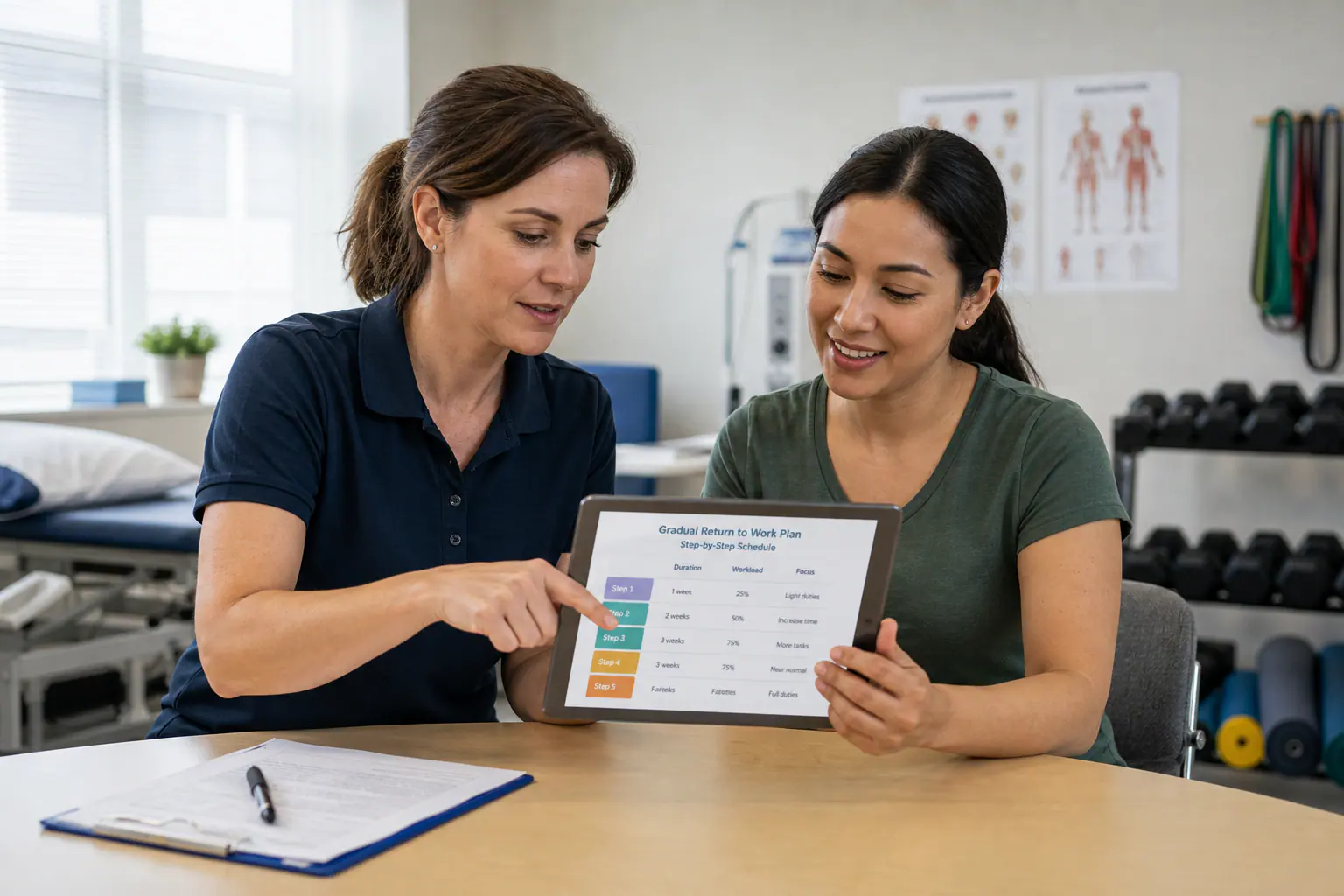
What is the difference between vocational rehabilitation and general occupational therapy?
General occupational therapy
It focuses on improving a person's ability to perform daily activities such as dressing, eating, writing, using the hand, moving, organizing, or personal care.
Vocational Rehabilitation
A specialized section focuses on the person's role at work or study — nature of work, challenging tasks, endurance hours, office adjustment, progression of working hours, and safe return strategies.
Vocational rehabilitation not only addresses the body, but also addresses the relationship between the body, work and the environment.
Cases that may require professional rehabilitation
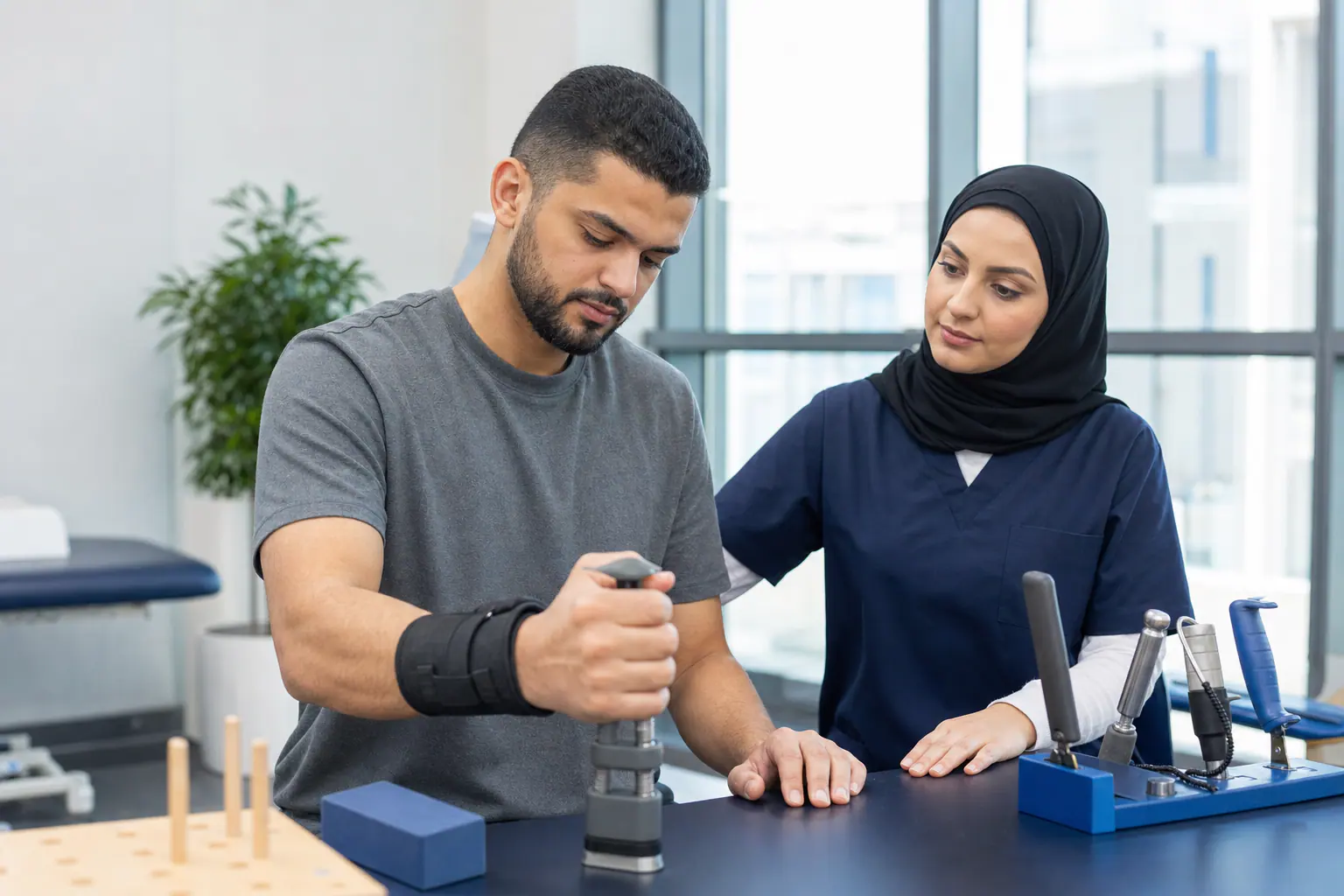
Returning to work after a hand or arm injury
Hand and arm injuries may affect writing, grasping, lifting, using tools, opening doors, using a computer, or carrying objects.
- ✓ Hand strength and endurance training
- ✓ Improve fine skills
- ✓ Grasp and grip training
- ✓ Modify the way tools are carried
- ✓ Use a splint or device when needed
- ✓ Gradual training on work tasks
- ✓ Recommendations to reduce pain during use
- ✓ Organizing rest periods
Returning to work after a stroke or neurological condition
After a stroke or brain injury, movement, hand, balance, concentration, memory, response speed, or ability to organize tasks may be affected.
- ✓ Training to use the affected hand
- ✓ Support balance during tasks
- ✓ Training the sequence of work steps
- ✓ Strategies for memory and attention
- ✓ Energy regulation
- ✓ Gradual return to work
- ✓ Environmental and safety recommendations
- ✓ Coordination with speech or physical therapy when needed
Returning to work with chronic pain
Chronic pain may cause a person to avoid movement or fear increased pain. Vocational rehabilitation helps understand the relationship between pain and activity, and organize tasks in a way that reduces stress.
- ✓ Energy management
- ✓ Divide tasks
- ✓ Organized rest periods
- ✓ Adjusting the working position
- ✓ Progressive endurance training
- ✓ Teaching joint protection strategies
- ✓ Gradually reduce fear of movement
- ✓ Review daily habits that increase pain

Returning to work after back or neck injuries
Office or field work may increase back or neck pain if the posture or way of working is inappropriate.
- ✓ Evaluate sitting posture
- ✓ Modify the desk and chair
- ✓ Teaching safe lifting
- ✓ Organizing movement periods
- ✓ Endurance training
- ✓ Reduce prolonged sitting without movement
- ✓ Temporarily modify some tasks
- ✓ Develop a gradual plan for return
Return to study or training
A student or trainee may need vocational/job rehabilitation if an injury or health condition affects his ability to study, write, sit, concentrate, or use a computer.
- ✓ Modify the study method
- ✓ Support typing or using a computer
- ✓ Rest breaks
- ✓ Organizing the study schedule
- ✓ Help tools
- ✓ Recommendations to the school or university when needed
- ✓ Training on fatigue management and attention
Difficulties with concentration and memory at work
After certain neurological or health conditions, a person may be physically able to work, but suffer from distraction, slow thinking, or forgetting steps.
- ✓ Divide tasks
- ✓ Use reminder lists
- ✓ Organizing the work environment
- ✓ Reduce distractions
- ✓ Step sequence training
- ✓ Use digital or paper organizing tools
- ✓ Establish a consistent routine
- ✓ Gradual return to complex tasks
How does health condition affect work?
Health conditions may affect work in different ways, not always clearly. Some people can perform simple tasks at home, but they get tired when they return to real work pressure.
Vocational rehabilitation helps to analyze these difficulties and develop a realistic plan.
What are the goals of vocational rehabilitation?
The goals of vocational rehabilitation vary depending on the person’s condition and the nature of his work. Objectives may include:
The ultimate goal is to help the person perform their professional role as safely, independently and realistically as possible.
How is vocational qualification evaluated?
At AHLI Specialists Medical Center, the vocational rehabilitation evaluation begins with understanding the health condition and the nature of work or study, then analyzing the tasks that have become difficult.
The specialist may ask for a precise description of the nature of your work, such as the number of hours you sit, the type of equipment used, the weights you carry, repetitive tasks, or the position that causes the most pain or fatigue.
What happens after the evaluation?
After the evaluation, the results are explained and an appropriate plan is developed. The plan may include:
- ✓ Occupational therapy sessions
- ✓ A gradual program to increase endurance
- ✓ Training on work-like tasks
- ✓ Functional exercises for the hand, arm or body
- ✓ Pain or fatigue management plan
- ✓ Recommendations for sitting and desk posture
- ✓ Modifications in the way work is performed
- ✓ A gradual return to work plan
- ✓ Recommendations for rest periods
- ✓ Help tools or adaptive solutions when needed
- ✓ Guidance for school or work upon approval by references
- ✓ Follow progress and modify the plan
There is no one-size-fits-all plan. An office employee is different from a teacher, doctor, driver, technician, athlete, student, and field employee.
Steps for vocational rehabilitation
Determine a professional goal
We start by clearly defining the goal: Do you want to return to the same work? Reduce pain during labor? Increase working hours? Back to study? Improve hand use? Or knowing the appropriate adjustments?
Business requirements analysis
We analyze what the work requires, such as movement, sitting, standing, carrying, concentration, speed, writing, using a computer, communication, or mobility.
Evaluate current capacity
We determine what the person can do now, and what is causing pain, fatigue or difficulty.
Build a step-by-step plan
Returning to work isn't always all at once. Sometimes a person needs a progression of time, tasks, or effort level.
Functional skills training
Work-related skills are trained, such as using the hand, writing, sitting, standing, holding tools, or organizing tasks.
Modifying the environment or way of working
We may recommend adjusting your chair, desk, screen height, writing utensils, holding objects, or assigning tasks.
Manage pain and fatigue
The person learns to distribute effort, take breaks, avoid overload, and gradually increase his capacity.
Support confidence and realistic returns
Many people are afraid to come back after an injury. Qualification helps build confidence by trying progressive tasks and measuring progress.
Follow up and modify the plan
As you return to work or increase tasks, new challenges may arise. The plan is reviewed and modified as needed.
Gradual return to work plan
Gradual return means that the person does not immediately return to full work hours and tasks if his condition does not allow it, but rather returns in stages.
- ✓ Reduce working hours initially
- ✓ Start with lighter tasks
- ✓ Temporarily avoid certain tasks
- ✓ Increase the effort gradually
- ✓ Set short rest periods
- ✓ Distribution of difficult tasks during the day
- ✓ Use auxiliary tools
- ✓ Adjusting the working position
- ✓ Review progress weekly or as needed
- ✓ Full return when capacity and readiness improve
This plan must take into account the doctor's directions, the nature of the work, and the employer's policies, and may need appropriate coordination upon approval by the auditor.
Possible professional adjustments
Some simple modifications may help a person return to work more safely. Examples of modifications include:
Modifications do not mean poor performance, but rather may help a person perform work in a healthy and sustainable way.
Professional qualification for office employees
Office work may seem light, but it may cause or increase neck, back, shoulder and hand pain due to prolonged sitting and frequent typing.
- ● Assess sitting posture
- ● Adjust the height of the screen and chair
- ● Organizing the location of the keyboard and mouse
- ● Regular movement breaks
- ● Appropriate functional exercises
- ● Reduce hand fatigue
- ● Organizing tasks throughout the day
- ● Support focus and reduce distractions
- ● Managing fatigue and pain during work
Simple adjustments in the office can make a big difference in your ability to return to work.
Professional qualification for field or physical work
Field work may require lifting, standing, walking, climbing, using tools, or repetitive motion.
- ● Assess the ability to lift, push and pull
- ● Teach safe ways to lift
- ● Functional endurance training
- ● Modify the way tasks are performed
- ● Use assistive tools
- ● Divide tedious tasks
- ● Gradient return to voltage
- ● Preventing recurrence of infection
- ● Recommendations for safety in the work environment
Returning to physical work requires a realistic progression that takes into account job requirements and health status.
Vocational rehabilitation and pain management
Pain may affect work even if there is no obvious injury. The person may change the way he moves, avoid some tasks, or get tired quickly.
- ● Understand the tasks that increase pain
- ● Modifying the way work is performed
- ● Voltage division
- ● Regulating rest
- ● Reduce repetitive loading
- ● Improve posture
- ● Increase activity gradually
- ● Reduce fear of movement
- ● Develop a realistic plan instead of stopping completely or putting too much pressure
Pain management is an essential part of a sustainable return to work.
Vocational rehabilitation and fatigue management
Fatigue can be physical or mental, and may appear after injuries, neurological conditions, chronic pain, or certain illnesses.
- ● Distribution of tasks during the day
- ● Start important tasks at maximum power
- ● Use short rest periods
- ● Reduce multitasking
- ● Organize sleep and routine as much as possible
- ● Use lists and notes
- ● Reduce distractions
- ● Gradually increase tolerance
- ● Avoid continuous work without stopping
See a doctor if fatigue is severe or unexplained.
Vocational qualification and cognitive skills
Some people can move and function physically, but have difficulty concentrating, memory, organization, or processing speed.
- ● Use to-do lists
- ● Divide work into steps
- ● Reduce distractions
- ● Use timers and reminders
- ● Organizing the workplace
- ● Gradual return training for complex tasks
- ● Establish a consistent routine
- ● Set times for mental rest
- ● Teach strategies to reduce errors
Cognitive support may be necessary even when movement is good.
Does vocational rehabilitation require communication with the employer?
In some cases, communicating with the employer may be useful, but this is only done with the approval of the references and as needed. General recommendations or a functional report outlining needs can be provided without sharing unnecessary medical details.
- ● Clarifying the required modifications
- ● Suggest a gradual return
- ● Temporarily organizing working hours
- ● Modify tasks
- ● Providing appropriate tools or environment
- ● Reduce the risk of infection or relapse
- ● Support the employee in a practical way
Reference privacy is important, and any information sharing should be clear, limited, and related to the job objective.
Does vocational qualification mean that I am ready to work immediately?
Not always. The assessment does not just give a general judgment such as “ready” or “not ready”, but also shows:
- ● What tasks you can perform now
- ● What tasks need to be graded
- ● What tasks may need to be modified
- ● What skills do you need to train?
- ● What factors increase pain or fatigue
- ● What recommendations might help you return safely
The decision to return to work may also depend on the doctor, employer, nature of the job, health condition, and work-related laws or policies.
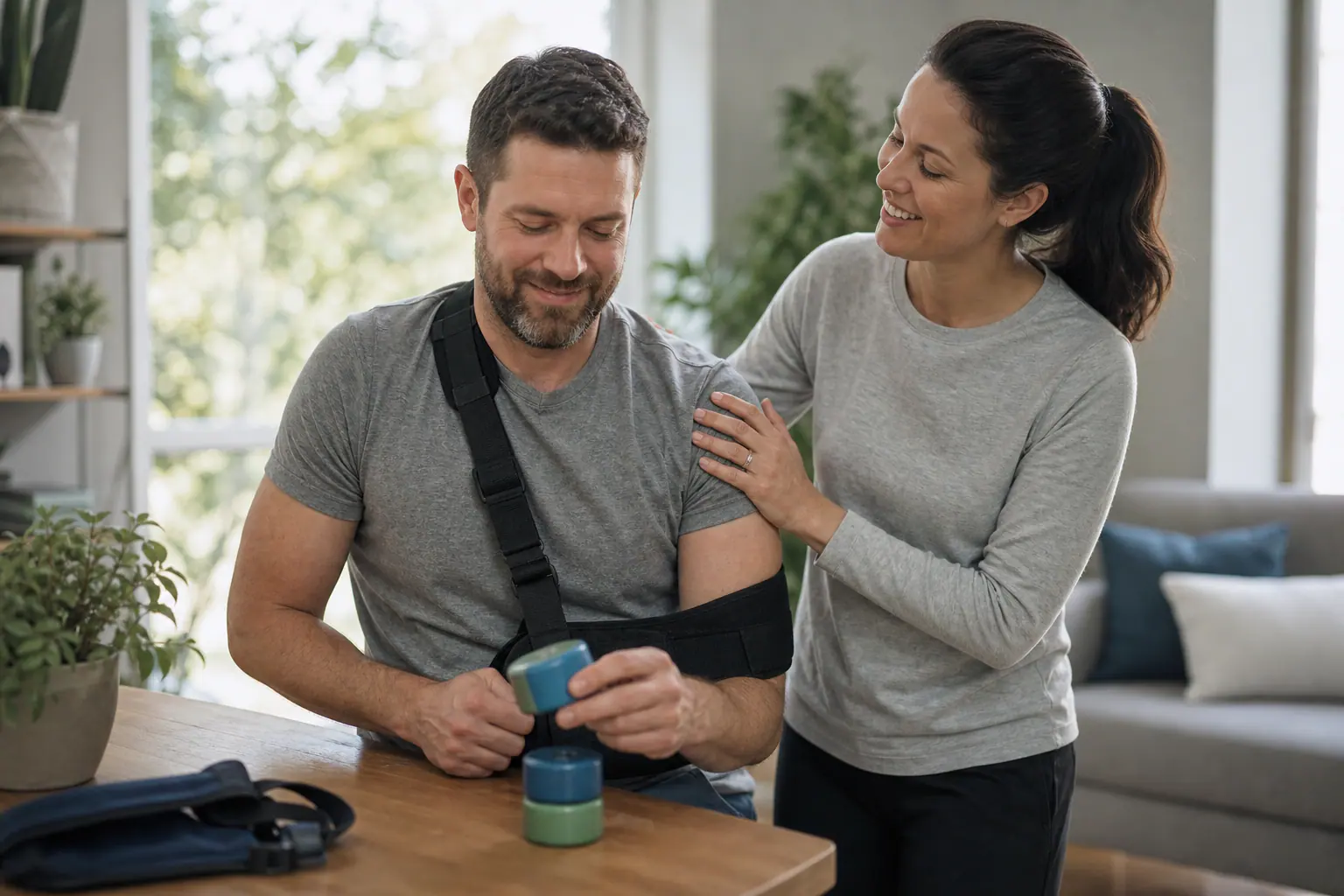
The role of the family in vocational rehabilitation
Family may play an important role, especially if the reviewer is recovering from an injury, stroke, or health condition that affected his confidence and independence.
- ✓ Encouraging gradual independence
- ✓ Not doing all the tasks for the person if he or she is able to try
- ✓ Respect fatigue and pain without overprotection
- ✓ Home plan application support
- ✓ Organizing daily routine
- ✓ Help the person adhere to rest periods
- ✓ Encourage communication with the specialist when new difficulties arise
- ✓ Providing a safe and organized environment
- ✓ Support confidence in gradual return
Proper support means helping the person get back, not pressuring him or preventing him from trying.
Common mistakes to avoid
- ✗ Sudden return to complete tasks without delay
- ✗ Ignore pain or fatigue until the problem worsens
- ✗ Complete stop for a long time without a plan
- ✗ Using tools or splints without evaluation
- ✗ Sitting for long hours without moving
- ✗ Not adjusting the work environment despite the presence of pain
- ✗ Focus on exercises only without training work tasks
- ✗ Neglecting difficulties with concentration and memory
- ✗ Comparing your recovery to someone else
- ✗ Failure to inform the specialist of the true nature of the work
- ✗ Return to dangerous tasks without medical approval
- ✗ Relying only on pain relief without addressing performance technique
A safe return requires a plan, progression, and follow-up.
Vocational rehabilitation in Al Shamkha - Abu Dhabi
If you are looking for vocational rehabilitation in Abu Dhabi or occupational therapy to return to work in Al Shamkha, AHLI Specialists Medical Center provides an assessment and treatment plan that helps you gradually return to work or school after an injury, illness or neurological condition.
We help you understand your current capabilities, analyze your business requirements, develop a practical plan, and suggest modifications that help you perform your tasks more safely and confidently.
Specialized evaluation
Evaluation of specialized occupational therapy for vocational rehabilitation.
Work analysis
Analysis of work or study requirements.
Graduation plan
An individual plan for a gradual return.
Multiple cases
Support for hand injuries, pain, strokes, neurological conditions, and fatigue.
Practical training
Training on practical work-related tasks.
Environmental modifications
Recommendations to modify the work environment or method of performance.
Pain management
Support pain and fatigue management.
Helping tools
Hand, writing and computer training when needed.
Multidisciplinary Coordination
Possibility of cooperation with a doctor, physical therapy or speech therapy.
Distinctive location
Close to Al Shamkha, Baniyas, Al Falah, Shakhbout and Abu Dhabi areas.
Sub-treatments
Direct links to specialized treatment pages.
Vocational Rehabilitation
Specialized evaluation and treatment in vocational rehabilitation - periodic follow-up at AHLI Specialists Medical Center.
Returning to work after injury
Specialized evaluation and treatment for returning to work after injury - periodic follow-up at AHLI Specialists Medical Center.
Evaluation of occupational therapy for children
Specialized evaluation and treatment for children - periodic follow-up at AHLI Specialists Medical Center.
Occupational therapy sessions for children
Occupational therapy sessions for children - periodic follow-up at AHLI Specialists Medical Center.
Services related to vocational rehabilitation
The auditor may need one or more of the following services depending on the assessment:
Return to work assessment
To determine the person's current abilities and difficulties that may affect return.
Analysis of work tasks
To understand job requirements and determine what needs training or modification.
Work endurance training
To gradually increase a person's ability to sit, stand, use the hand, move, or concentrate.
Rehabilitation of hand injuries
To support return to writing, printing, grasping, using tools, and fine tasks.
Rehabilitation after strokes
To support hand use, organization, attention, and gradual return to occupational role.
Manage pain and fatigue
To teach strategies for energy distribution, rest, task modification, and stress reduction.
Workplace modifications
To provide recommendations about seating, desk, tools, rest periods, and how to perform tasks.
Adaptive devices and solutions
To choose tools or modifications that help perform work or study easier and safer.
When do I book an appointment?
Book an assessment if you are experiencing:
- ● Difficulty returning to work after an injury or illness
- ● Pain increases during work
- ● Weakness in the hand or arm that affects function
- ● Difficulty writing, printing, or using tools
- ● Fatigue quickly during work
- ● Difficulty sitting or standing for an appropriate period of time
- ● Difficulties with concentration or memory after a health condition
- ● Need for a gradual return plan
- ● Need for adjustments in the work environment
- ● Fear of returning due to pain or lack of confidence
- ● Difficulty returning to study or training
However, if there are severe or sudden symptoms such as chest pain, sudden weakness, speech changes, shortness of breath, or sudden neurological symptoms, emergency medical help must be sought first.
The assessment helps you understand your current capabilities and develop a realistic and safe return plan.
Book a vocational qualification assessment
If you need to return to work or school after an injury, pain, stroke, neurological condition, or a long period of absence, we can help you through an occupational therapy evaluation for vocational rehabilitation and develop a practical plan that suits your condition and the requirements of your professional role.
AHLI Specialists Medical Center - Al Shamkha, Abu Dhabi
Al Qayed Street, Al Shamkha, Abu Dhabi
Frequently asked questions about vocational qualification
What is vocational qualification?
What is the role of occupational therapy in returning to work?
Is vocational rehabilitation appropriate after a hand injury?
Can it help after a stroke?
Does everyone need an adjustment at work?
What is meant by a gradual return to work?
Is there communication with the employer?
Does vocational qualification determine my suitability for work?
Does it help with work-related back and neck pain?
How long does vocational qualification take?
Our specialized team


Book a vocational qualification assessment
02-448-7553 — Al Shamkha, Abu Dhabi