
Daily life skills for children in Abu Dhabi
Occupational therapy to develop independence and self-reliance at AHLI Specialists Medical Center - Al Shamkha
Does your child find it difficult to dress or undress?
Can't use a spoon or fork like children his age?
Does he need a lot of help washing his hands, brushing his teeth, using the bathroom, or organizing his belongings?
Does daily routine such as bathing, eating or sleeping turn into a daily battle?
Do you feel that your child depends on you more than expected for his age?
Daily living skills are skills that help the child to rely on himself in basic daily activities such as eating, dressing, using the bathroom, personal hygiene, washing hands, brushing teeth, arranging tools, and following a daily routine. These skills are not as simple as they seem; It requires coordination between movement, attention, understanding, sensory organization, planning, and strength of the hands and body.
At AHLI Specialists Medical Center in Al Shamkha - Abu Dhabi, we provide assessment and occupational therapy for children who have difficulty with daily life skills, through an individual plan that helps the child develop independence, confidence, and participation at home, nursery, and school.
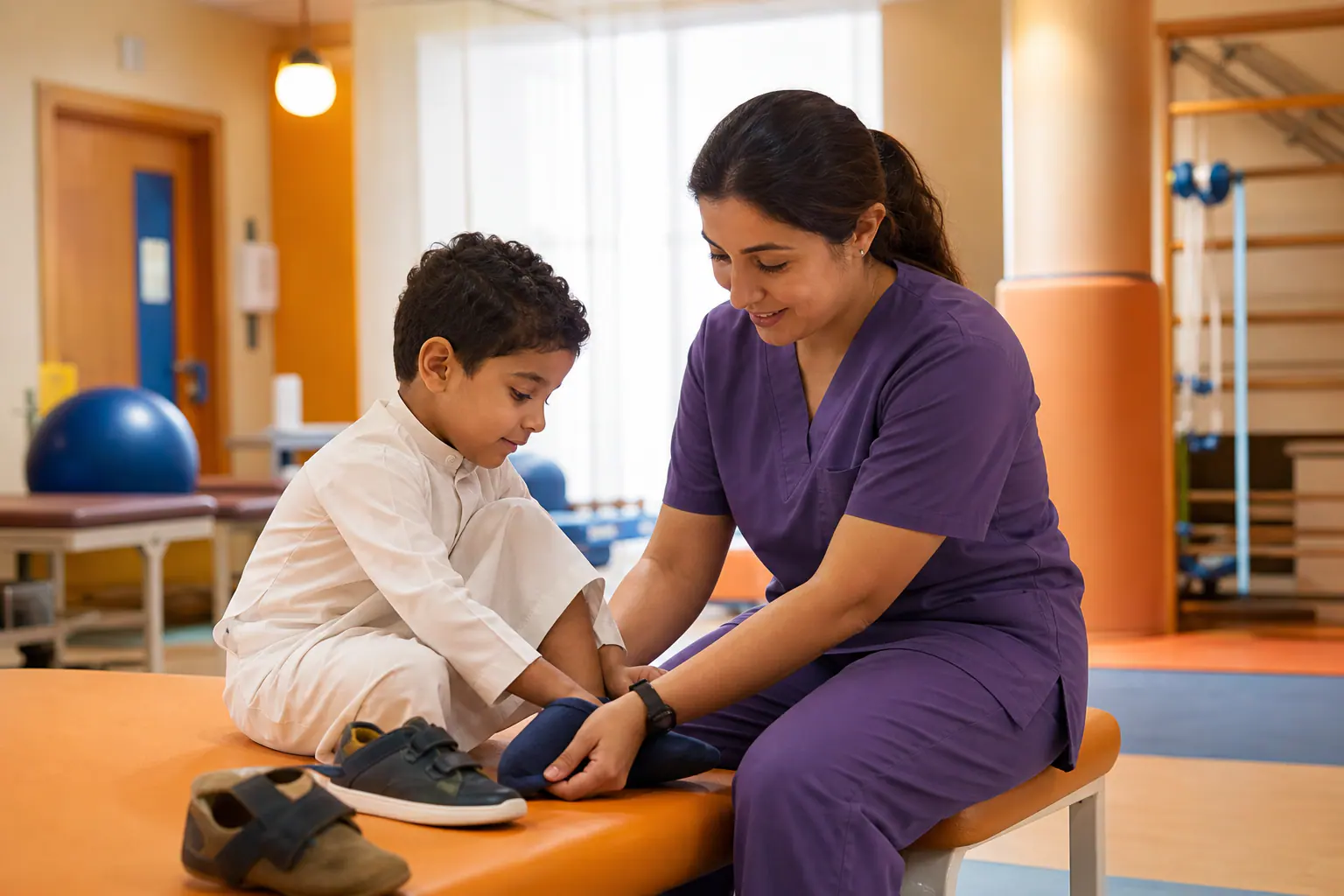
What are daily living skills?
Daily living skills are the basic activities a child needs to take care of themselves and participate in their daily life in an age-appropriate manner. These skills begin in early childhood and gradually develop with growth, training, and experience.
When a child has difficulty with these skills, it may appear to parents as stubbornness, laziness, or excessive dependence, but in many cases there are real reasons such as weak fine motor skills, difficulty in motor planning, sensitivity to touch, poor attention, or difficulty understanding the sequence of steps.
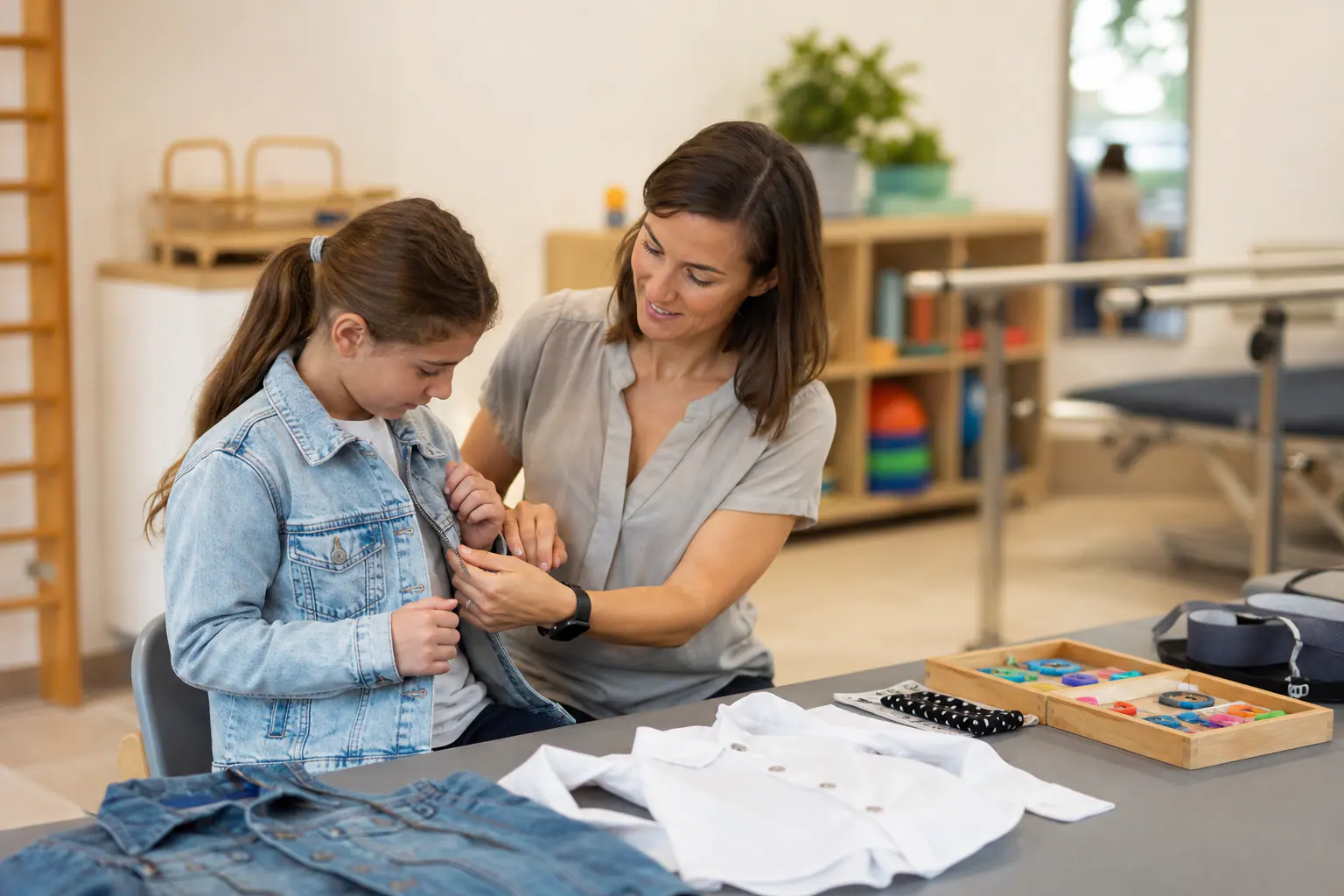
Why are daily living skills important?
Daily living skills are not just household skills, they are an essential part of a child's independence and self-confidence. When a child can eat, dress, wash his hands, use the bathroom, and organize his belongings in an age-appropriate manner, he feels capable and involved and not completely dependent on others.
The goal of occupational therapy is not to suddenly make the child self-reliant, but rather to train him step by step in skills appropriate to his age and ability.
When does a child need occupational therapy for daily living skills?
A child may need an occupational therapy evaluation if everyday skills are more difficult for him than expected for his age, or if the daily routine is causing frequent stress for the family.
- ● He cannot dress or undress at a level appropriate for his age
- ● Rejects clothes because of texture, labels, or tightness
- ● He cannot use a spoon or fork well
- ● Spills food or drinks often
- ● He refuses to brush his teeth or wash his face
- ● He cannot tolerate bathing, cutting nails, or combing his hair
- ● He finds it difficult to use the bathroom or follow his steps
- ● Cannot open buttons or zippers
- ● He needs a lot of help putting on shoes and socks
- ● The order of steps in the daily routine is not known
- ● Breaks down or becomes angry when moving from one activity to another
- ● He cannot organize his bag or tools
- ● He is very late in completing daily tasks
- ● He avoids trying and asks his parents to do everything for him
- ● He feels frustrated when doing tasks that his peers do easily
Having difficulty with one skill does not always mean there is a major problem, but if the difficulty is persistent and affecting the life of the child or family, evaluation helps to understand the cause and develop an appropriate plan.
What are the reasons for difficulty in daily life skills in children?
A child may have difficulty with daily living skills for a number of reasons, and the cause may be one or a combination of factors.
Occupational therapy doesn't just look at the skill itself, it tries to understand why the child can't perform it: Is the problem with the hand? body? Allergies? Understanding? Attention? the fear? Or the sequence of steps?
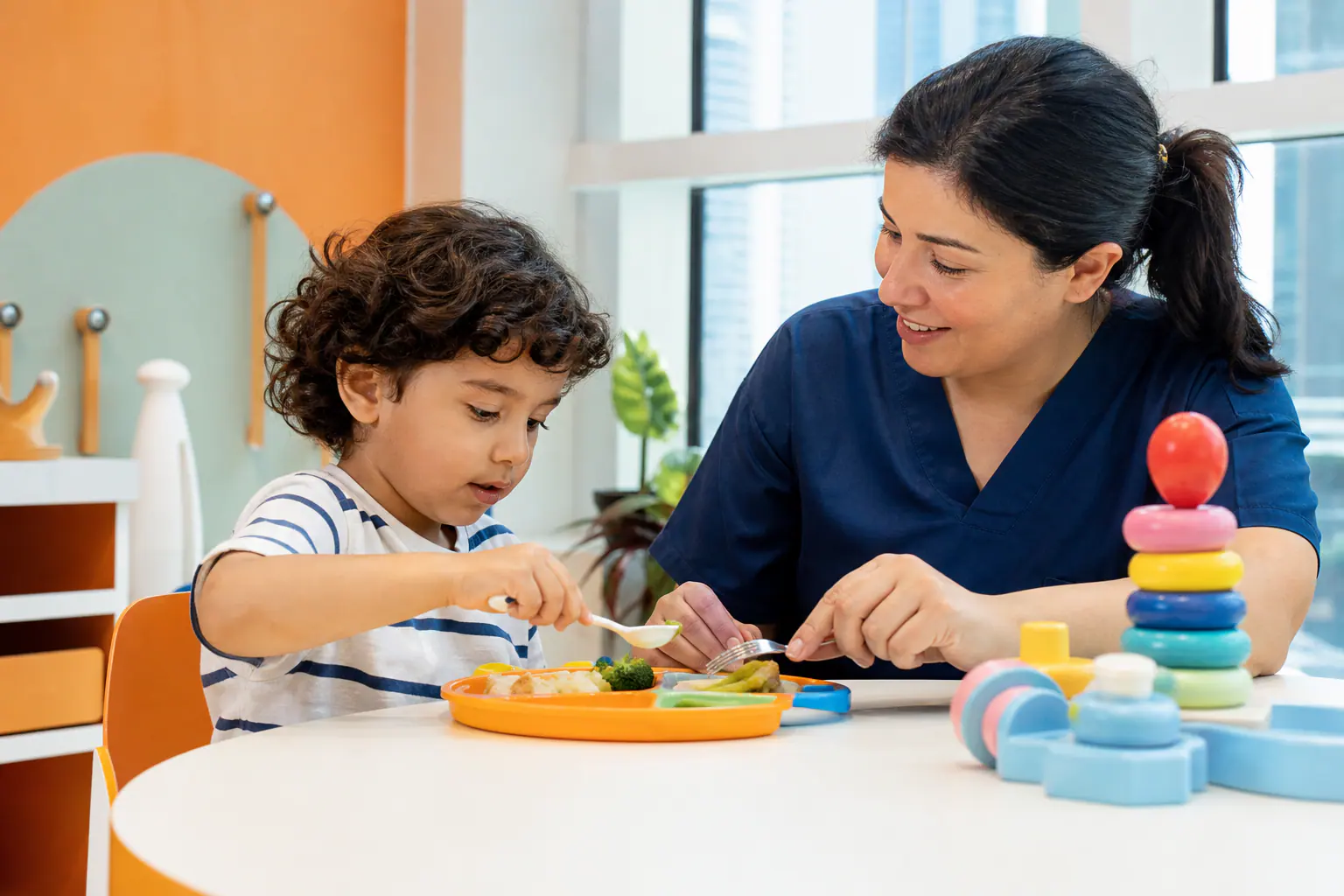
Eating and drinking skills
Eating is one of the most important skills in daily life, but it requires coordination between sitting, hand control, using tools, accepting food, chewing, and paying attention during the meal.
- ● Does not use a spoon or fork well
- ● Spills food often
- ● He cannot drink from a cup
- ● He depends on his family to feed him, even though he is old enough to try
- ● He refuses to touch food with his hands
- ● It does not tolerate certain textures or odors
- ● Gets distracted a lot during meals
- ● Does not sit at the table for an appropriate period
- ● He refuses to try new foods
- ● He cannot open a lunch box or water bottle at school
Occupational therapy may help a child develop sitting skills, use tools, hand control, accept certain textures and textures, and increase independence during meals.
Dressing and undressing skills
Dressing is an everyday skill that is more complex than some might expect. It requires balance, muscle strength, coordination between the hands, directional awareness, motor planning, and sensory tolerance for clothing.
- ● He cannot put his hands or feet into clothes
- ● He wears clothes backwards frequently
- ● The order of dressing steps is not known
- ● Has difficulty with zippers or buttons
- ● He cannot wear socks or shoes
- ● He rejects some clothes because of their texture
- ● Clothes come off due to tags or tightness
- ● It takes a very long time to wear
- ● Gets angry or cries when changing clothes
- ● Completely dependent on parents, although partly capable
In occupational therapy, the dressing skill is divided into small steps, and the child is trained for each step in an appropriate manner.
Toilet skills
Using the bathroom is an important skill that affects a child's independence and comfort at home and school. Some children need support not only in potty training, but in understanding the full sequence of the routine.
- ● He does not know the steps to use the bathroom
- ● Needs constant reminders
- ● He cannot take off or lift clothes
- ● He refuses to sit on the bathroom
- ● He is afraid of the sound of the flush or the public bathroom
- ● He does not pay attention to his body’s signals at the right time
- ● He forgets to wash his hands after the bathroom
- ● He has difficulty using the bathroom at school
- ● He relies on the parents for steps that can be gradually trained
Occupational therapy helps build clear routines, use pictures or visual steps when needed, and train toilet-related dress skills.
Personal hygiene skills
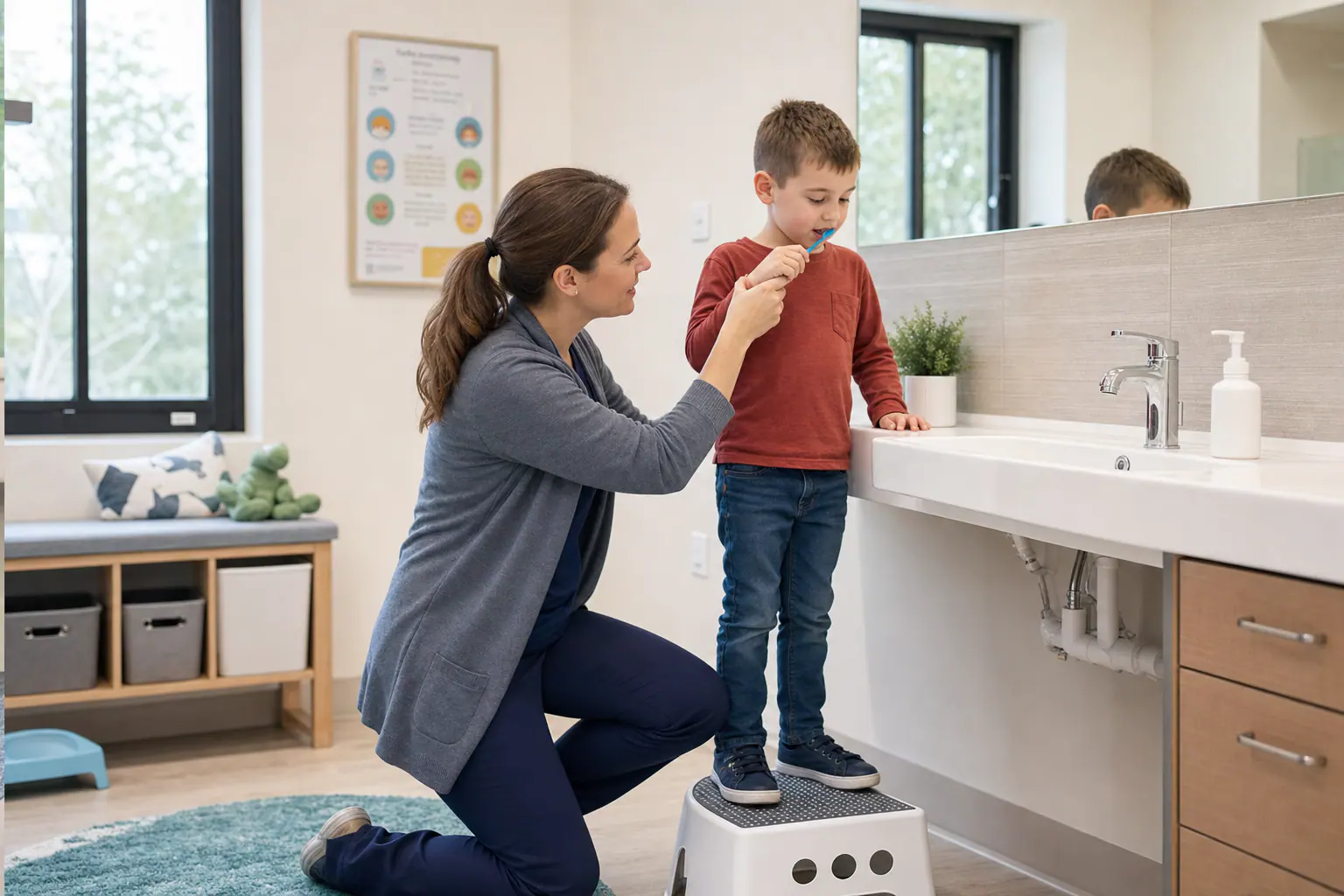
Personal hygiene includes washing hands, brushing teeth, washing the face, bathing, combing the hair, cutting nails, and taking care of the body.
- ● Wash hands with soap
- ● Hold water on the face
- ● Teeth cleaning
- ● Open the mouth while brushing
- ● Holds toothpaste
- ● Combing hair
- ● Cutting nails
- ● Shower
- ● Dry the body with a towel
- ● Follow the hygiene steps in order
Some children do not reject these skills out of stubbornness, but rather because the texture of water, a brush, or soap causes sensory discomfort. Here occupational therapy works to grade and regulate sensitivity.
Morning and bedtime routine skills
Many families struggle with their morning or bedtime routine. A child may be capable of some skills, but cannot organize them into a clear daily sequence.
- ● Wake up and get ready for school
- ● Washing the face and teeth
- ● Wearing clothes
- ● Eat breakfast
- ● Arrange the bag
- ● Transitioning from playing to sleeping
- ● Wear sleepwear
- ● Resistance to moving from one activity to another
- ● Extreme delay in implementing the routine
- ● Anger or breakdown when the plan is changed
Occupational therapy helps design a routine suitable for the child, dividing it into steps, and using visual aids when needed.
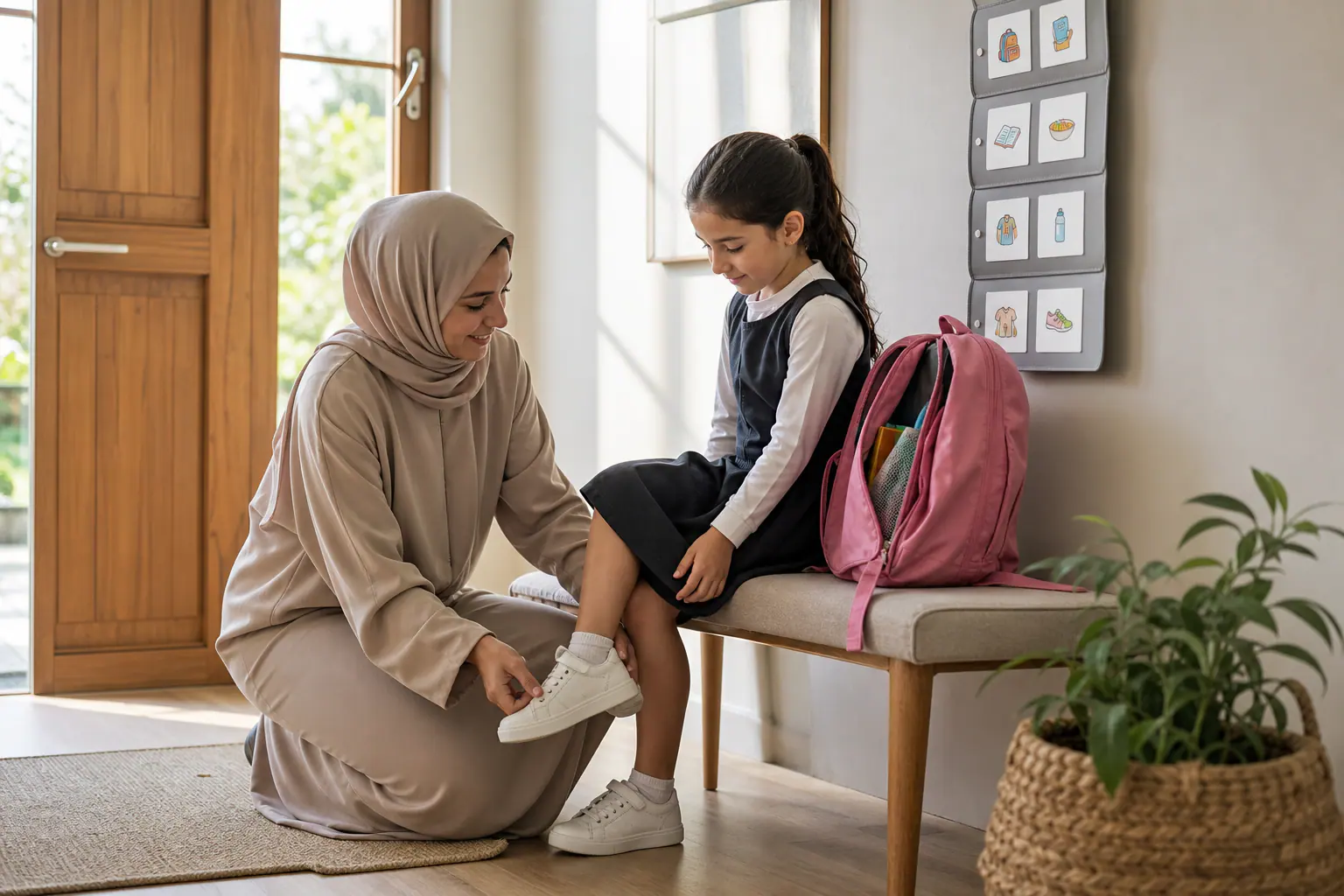
Organization and arranging skills
Some children have difficulty organizing their tools, bag, toys, or daily steps. A child may appear chaotic, but in fact, he or she may have difficulty planning and organizing.
- ● He forgets his school supplies often
- ● He does not know where to put his things
- ● He cannot organize his bag
- ● Starts the task but does not finish it
- ● Moves from one activity to another without completing
- ● Doesn't know where to start
- ● Needs guidance at every step
- ● He wastes a lot of time on simple tasks
- ● He cannot arrange his toys after playing
- ● Has difficulty following a daily schedule
Occupational therapy helps the child learn organization through clear steps, visual schedules, division of tasks, and age-appropriate practical training.
The relationship between daily living skills and sensory integration
Sensory integration plays a big role in daily living skills. Some children cannot perform a certain skill because their bodies respond strongly to sensory stimuli.
In these cases, it is not enough to ask the child to “put up with it.” The child needs a gradual plan that helps his sensory system deal with the situation better.
The relationship between daily life skills and fine motor skills
Many daily life skills depend on the hands and fingers. If a child has weak fine motor skills, he or she may have difficulty with seemingly simple tasks.
Occupational therapy helps strengthen the hands, improve coordination, develop the use of fingers, and train the child in the same skill in gradual steps.
The relationship between daily living skills and attention
Some children can do the skill, but they don't finish it because they get distracted or forget the steps. Here the problem is not only in motor ability, but in attention and organization.
- ● He starts dressing and then stops to play
- ● He forgets to wash his hands after the bathroom
- ● Needs constant reminders during routine
- ● Does not concentrate while eating
- ● Leaves the task before completing it
- ● Cannot follow two- or three-step instructions
- ● He wastes a lot of time preparing
In these cases, occupational therapy works to organize the environment, reduce distractions, use visual sequencing, and train the child to complete tasks step by step.
How are daily living skills assessed?
At AHLI Specialists Medical Center, the evaluation begins with understanding the child’s daily routine and the difficulties facing the family at home or school. The child is not only evaluated within the session, we need to know how he deals with tasks in his real life.
After the evaluation, the results are explained to the parents in a clear way, identifying the skills that need training, and the best way to support the child without excessive pressure.
What happens after the evaluation?
- ✓ Regular occupational therapy sessions
- ✓ Training a specific skill such as dressing or using a spoon
- ✓ A simple home program for parents
- ✓ Modify daily routine
- ✓ Use pictures or a visual table
- ✓ Training the child in gradual steps
- ✓ Support fine motor skills
- ✓ Support sensory regulation
- ✓ Recommendations for school or nursery
- ✓ Collaborate with speech therapist or doctor when needed
The plan is not the same for all children. One child may need dress training, another child needs sensory regulation during bathing, and another child needs support with eating or toileting.
Steps to treat daily life skills
Choose the most important skill
We choose the skill that most impacts the child and family's life, such as eating, dressing, bathroom, or morning routine.
Divide the skill into small steps
Each skill is broken down into easy steps. For example, dressing may begin by taking off the socks, then inserting the foot, then pulling up the pants.
Determine the cause of the difficulty
We determine whether the child does not know the steps, cannot perform the movement, is sensitive to texture, is distracted, or is afraid.
Training the child in a practical way
Training is through real activity or similar to daily life, and not just theoretical talk.
Use progression and appropriate assistance
We give the child help at first, then gradually reduce it until he can perform a larger part himself.
Parent training
Parents learn how to help the child without doing everything for him, and how to give him a chance to try in a safe way.
Transferring the skill to home and school
The goal is for the child to use the skill in daily life, not just within the session.
Track progress
The skill is followed and the plan is modified according to the child’s response, then moving to a new goal when the first goal is achieved.
Examples of occupational therapy goals for daily living skills
- ● That the child uses the spoon better
- ● To drink from a cup without pouring repeatedly
- ● Put on or take off an item of clothing with less assistance
- ● To wash his hands by following clear steps
- ● To clean his teeth with simple assistance
- ● Tolerate cutting nails or combing hair gradually
- ● To use the bathroom following a clear routine
- ● To organize his bag or toys
- ● Follow the morning routine better
- ● To reduce refusal of clothing or bathing
- ● To sit at the table for an appropriate period
- ● To move from one activity to another more calmly
- ● To open a can of food or a bottle of water
- ● To improve the use of hands in daily tasks
Goals are chosen according to the child's age, ability, and family needs.
How do we help a child become independent without pressure?
Independence does not mean that we suddenly leave the child to accomplish the task alone. Independence develops when we give the child adequate opportunity, adequate help, and clear encouragement.
- ✓ Give the child more time to try
- ✓ Do not rush to complete the task for him
- ✓ Break the task into short steps
- ✓ Praise the attempt, not just the result
- ✓ Use pictures of the steps
- ✓ Choose a quiet time to train
- ✓ Start with an easy skill before the difficult skill
- ✓ Reduce distractions
- ✓ Use the same routine daily
- ✓ Allow some mistakes while learning
- ✓ Make training part of daily life
The goal is for the child to feel that he is capable, not that he is under constant test.
The role of parents in developing daily life skills
The role of parents is very essential because daily skills are practiced at home every day. Therapy sessions help, but real progress occurs when the skill is implemented into a daily routine.
- ✓ Give him opportunities to try
- ✓ Avoid doing everything instead
- ✓ Choose one skill to train initially
- ✓ Make the routine as consistent as possible
- ✓ Use short, clear instructions
- ✓ Do not give many orders at the same time
- ✓ Use pictures or tables
- ✓ Praise any small progress
- ✓ Do not compare the child with his siblings
- ✓ Reduce stress during training
- ✓ Apply home instructions from the specialist
- ✓ Tell the specialist what works and what does not work at home
Parents are not required to turn the home into a therapy session, but rather to turn the daily routine into simple opportunities for training.
School or nursery homes
Some daily living skills are evident in nursery or school, such as opening a lunch box, using the bathroom, organizing a bag, washing hands, putting on shoes, or transitioning between activities.
- ● He cannot open his meal
- ● He needs help with the bathroom
- ● He does not know the arrangement of his tools
- ● He forgets his things
- ● He cannot wear shoes after activity
- ● Gets nervous when routine is changed
- ● He cannot wash his hands without being reminded
- ● Needs more time for daily tasks
Occupational therapy can make recommendations that help the nursery or school support the child in an appropriate way, such as using a visual schedule, giving him extra time, or training a specific skill in cooperation with the parents.
Do difficulties with daily living skills mean a diagnosis?
Not always. Some children just need extra training or a modification in routine. Some have sensory sensitivity or poor fine skills, and some have developmental delays or other diagnoses.
The aim of the assessment is not to give the child a “rating”, but rather to understand the cause of the difficulty and develop an actionable plan. Sometimes recommendations are very simple and make a big difference in a family's life.
Are daily living skills improving?
Many children improve when they are trained in an appropriate and gradual manner. Improvement depends on the age of the child, the cause of the difficulty, the severity of the problem, the cooperation of the parents, the regularity of training, and the presence of other difficulties.
Improvement at first may be simple, such as the child taking off socks on his own, holding a spoon better, or tolerating tooth brushing for a shorter period. These small steps are important because they build independence and confidence over time.
Common mistakes to avoid
- ✗ Always do everything for the child
- ✗ Expect him to suddenly learn the skill without training
- ✗ Scolding the child when he fails
- ✗ Comparing the child with his siblings or peers
- ✗ Train many skills at the same time
- ✗ Extend the training time until the child gets bored
- ✗ Ignore allergies to clothing, water or food
- ✗ Using pressure or threats while eating or dressing
- ✗ Change the routine every day
- ✗ Not giving the child enough time to try
- ✗ Consider every difficulty only as stubbornness
- ✗ Postponing evaluation despite the impact of the problem on daily life
The best approach is to understand the reason, choose one goal, and train the child step by step.
Daily life skills in Al Shamkha - Abu Dhabi
If you are looking for occupational therapy for daily living skills in Abu Dhabi or a pediatric occupational therapist in Al Shamkha, AHLI Specialists Medical Center provides an evaluation and treatment plan that helps the child develop independence in eating, dressing, hygiene, using the bathroom, and organizing daily routines.
We help parents understand why the child has difficulty with daily skills, and we develop a practical plan that helps him become more self-reliant in a way that is appropriate for his age and abilities.
Specialized evaluation
Comprehensively assess children's daily living skills.
Individual plan
An occupational treatment plan according to the child’s age and needs.
Practical training
Training in eating, dressing, bathroom, hygiene, and routine.
Fine motor skills
Support the use of hands in daily tasks.
Sensory aspects
Understand allergies that affect clothing, food, water, and hygiene.
Home instructions
Easy instructions for parents to apply at home.
School recommendations
Recommendations for nursery or school when needed.
Clear follow-up
Regular follow-up of the child’s development.
Quiet environment
A medical environment suitable for children and families.
Distinctive location
Close to Al Shamkha, Baniyas, Al Falah, Shakhbout and Abu Dhabi areas.
Services related to daily living skills
The child may need one or more of the following services depending on the assessment:
Assessment of daily living skills
To know the child’s level of independence in eating, dressing, bathroom, hygiene, and routine.
Most requestedRehabilitation of daily life skills
Occupational therapy sessions to develop independence in daily tasks.
Child Independence Training
A program to develop independence and confidence in daily tasks.
Training eating and drinking skills
Use a spoon, fork, cup, and sit during the meal.
Dressing skills training
Clothes, buttons, zippers, shoes, and socks.
Training bathroom and hygiene skills
Using the bathroom, washing hands, brushing teeth, and showering.
Support daily routine
Morning routine, sleeping, and getting ready for school.
Treating sensory difficulties
For children who refuse clothing, water, or certain textures of food.
Developing fine motor skills
Support the use of hands in daily tasks.
When do I book an appointment for my child?
Book an assessment if your child has:
- ● Difficulty dressing or undressing
- ● Difficulty using a spoon or cup
- ● Refusal to brush teeth or wash hands
- ● Difficulty using the bathroom
- ● Refusing to shower, cut nails, or comb hair
- ● Allergy to clothing or contacts
- ● Excessive dependence on parents for tasks appropriate to his age
- ● Delay in completing daily routine
- ● Difficulty arranging tools or the bag
- ● Frequent outbursts of anger during simple daily tasks
- ● Feedback from nursery or school about independence
The first step is a clear assessment that helps understand the cause and develop a practical plan that suits the child and the family.
Book a daily living skills assessment for your child
If your child is having difficulty eating, dressing, using the bathroom, personal hygiene, or following daily routines, we can help you with an occupational therapy assessment for daily living skills and develop an appropriate plan to develop his independence and confidence.
AHLI Specialists Medical Center - Al Shamkha, Abu Dhabi
Al Qayed Street, Al Shamkha, Abu Dhabi
Frequently asked questions about daily living skills
What are children's daily life skills?
When does a child need occupational therapy for daily living skills?
Does difficulty dressing or eating mean that the child is lazy?
Does occupational therapy help teach a child to use the bathroom?
Does occupational therapy help a child who refuses clothes?
Is it possible to train daily life skills only at home?
How many sessions does a child need?
Are daily living skills related to sensory integration?
Do daily living skills affect school?
Does the child improve with occupational therapy?
Our specialized team


Book a daily living skills assessment
02-448-7553 — Al Shamkha, Abu Dhabi