
Sensory integration in children in Abu Dhabi
Occupational therapy to regulate sensory response at AHLI Specialists Medical Center - Al Shamkha
Is your child bothered by loud noises or crowded places?
Does he reject some clothes because of their texture or labels?
Does he put things in his mouth a lot or does he look to jump, spin and squeeze?
Is he afraid of swings, stairs, or movement?
Does he move a lot and can't sit or concentrate?
Do simple activities such as bathing, cutting nails, brushing teeth, eating or dressing turn into tantrums and crying?
These behaviors may be related to difficulties with sensory integration or sensory processing, which is the way a child's brain receives information from the senses and organizes it for use in moving, playing, learning, eating, dressing, and paying attention.
At AHLI Specialists Medical Center in Al Shamkha - Abu Dhabi, we provide evaluation and occupational therapy for children who suffer from sensory difficulties that affect their daily lives, through an individual plan that helps the child regulate his body, improve his participation, and reduce stress at home, nursery, and school.
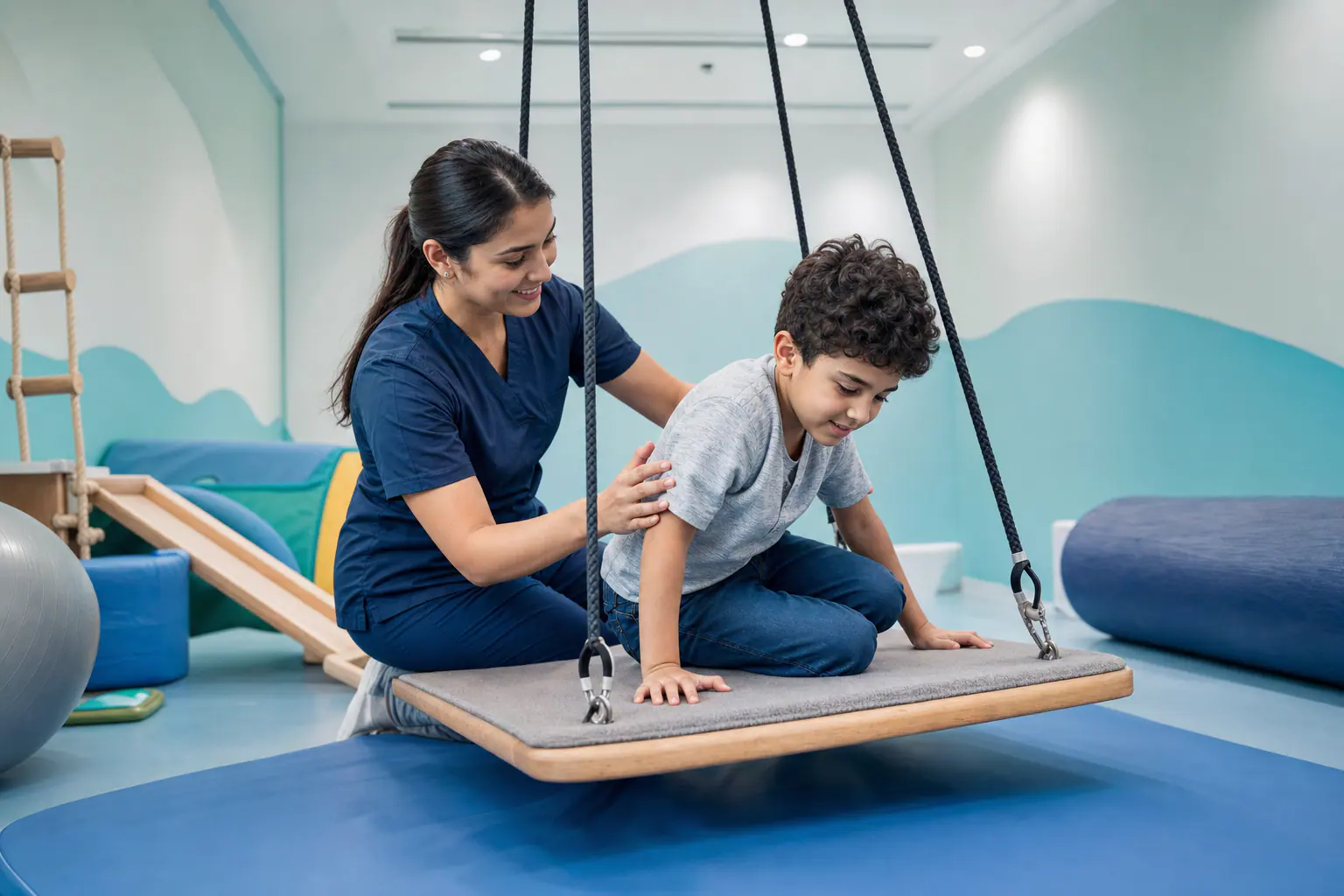
What is sensory integration?
Sensory integration is the brain's ability to receive information from the senses, organize it, and understand it so that the child can respond in an appropriate way. The child receives information all the time from sound, touch, movement, sight, smell, taste, body position, and internal signals such as hunger or the need to use the bathroom.
When sensory integration is working well, a child can:
When a child faces sensory difficulties, some daily influences may be very annoying to him, or he may not feel them enough, or he may search for them excessively. Therefore, he may show rejection, crying, excessive movement, fear, withdrawal, or difficulty concentrating.
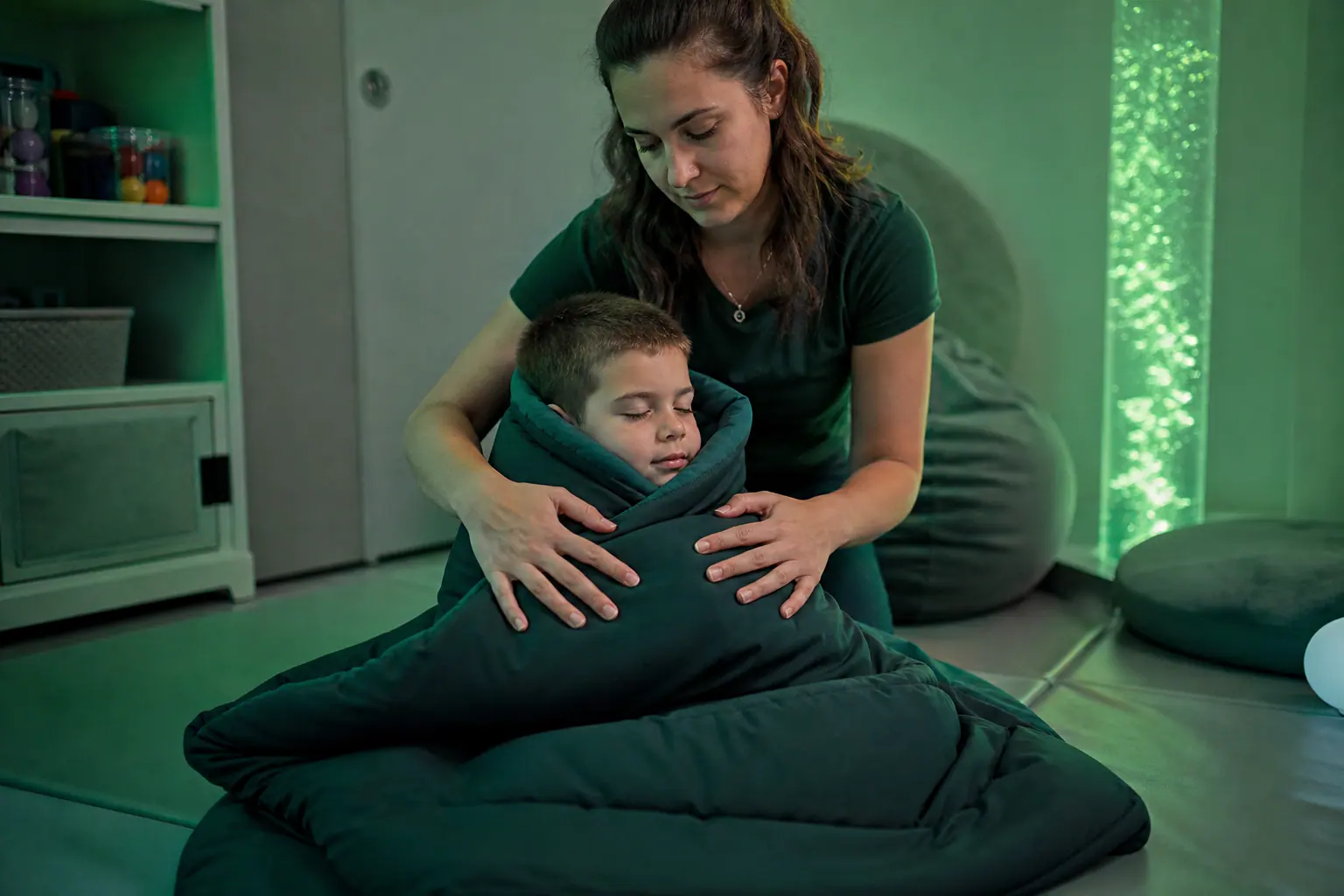
Is sensory integration a diagnosis in itself?
Sensory integration or sensory processing difficulties are not always a standalone diagnosis in and of themselves. Sometimes sensory difficulties appear alone, and sometimes they are associated with other conditions such as autism, ADHD, developmental delays, learning disabilities, anxiety, or difficulties with body regulation.
For this reason, occupational therapy does not rely solely on the name of the diagnosis, but looks at the impact of the difficulty on the child's daily life:
Evaluation helps to understand the child's sensory pattern, then develop an appropriate plan instead of treating the behavior as stubbornness, pettiness, or lack of upbringing.
What senses are associated with sensory integration?
When we talk about sensory integration, we don't just mean the five senses. There are other sensory systems that are very important for regulating a child's body and behavior.
sense of touch
It includes feeling clothes, water, sand, food, soap, cutting nails, combing hair, touching others, and various textures.
The child may appear sensitive to touch and refuse clothing or bathing, or he may seek touch and touch everything or press hard on others.
sense of hearing
Includes responding to sounds such as a broom, a blender, children screaming, mall sounds, classroom sounds, or the sound of a siphon.
The child may cover his ears or collapse in crowded places, or may not pay attention to sounds unless they are very loud.
Sense of movement and balance
It is linked to the vestibular system, which is responsible for the sense of movement and balance, such as swinging, jumping, turning, climbing stairs, and running.
The child may be afraid of movement or swing, or he may search for it excessively and jump and spin all the time.
Proprioception
It is the sense of body position, pressure and force. It helps the child know where his body is without looking, and control the force of movement.
The child may need firm pressure, tight hugs, pushing and pulling, carrying heavy objects, or may bump into things because his body does not feel well in place.
vision
Includes the ability to manipulate lighting, visual movement, detail, color, and visual crowding.
The child may be distracted by the large number of things around him or disturbed by strong lighting.
Smell and taste
They are associated with the smells, taste and texture of food. The child may reject foods because of the smell or texture, or put non-food items in his mouth.
Refusing foods because of the smell or texture, or putting non-food items in the mouth.
Inner feeling
It is the child's awareness of his body's signals, such as hunger, thirst, need to use the bathroom, fatigue, pain, or fullness.
Some children do not pay attention to these signals easily, which affects eating, bathroom, sleep, and body regulation.
Types of sensory difficulties in children
Sensory integration difficulties may present in different ways. Not every child has the same style, and a child may combine more than one style at the same time.
Excessive sensitivity to stimuli
In this case, the child feels that some sounds, touches, or movements are too strong and annoying.
- ● Cover the ears from sounds
- ● Reject clothing or labels
- ● Crying while cutting hair or nails
- ● Refusal to brush teeth
- ● Fear of swings or stairs
- ● Discomfort from crowding
- ● Rejecting certain food textures
- ● Collapse when routine or environment changes
Poor sensory response
In this case, the child may not pay attention to some stimuli to the extent expected.
- ● Sometimes not paying attention when called
- ● Not noticing dirty hands or face
- ● Not responding clearly to pain
- ● Need to repeat the alert
- ● Slow start of activity
- ● Not understanding body position well
- ● Difficulty knowing when he needs the bathroom or food
Sensory search
In this condition, the child searches for sensory stimuli repeatedly in order to feel his body or regulate himself.
- ● Frequent jumping
- ● Rotation
- ● Colliding with furniture or people
- ● Love strong hugs or pressure
- ● Putting objects in the mouth
- ● Violent play
- ● Continuous movement
- ● Press firmly on the pen
- ● Chewing on clothes or pens
Difficulty in sensory discrimination
The child may hear the sound or feel the touch, but he does not interpret the information accurately.
- ● Difficulty knowing where to place his body
- ● Using inappropriate force during play
- ● Difficulty holding a pen or tools
- ● Difficulty with balance or coordination
- ● Not estimating distances
- ● Difficulty using hands accurately
Signs of sensory integration difficulties
Your child may need an occupational therapy evaluation if you notice one or more of the following signs:
Just one sign does not necessarily mean there is a major problem, but if these signs are affecting the child's daily life or causing frequent stress for the family, it is best to get an evaluation.
How do sensory integration difficulties affect daily life?
Sensory difficulties may appear in simple details, but they occur daily, making the life of the child and family more stressful.
Influence on clothing
The child may reject certain types of clothing, socks, shoes, fabrics, or stickers. Dressing may take a long time because the child feels real discomfort from a certain texture.
Effect on eating
A child may reject foods because of the texture, smell, temperature, color, or appearance of the food. He may prefer very limited types or refuse to try new foods.
Impact on personal hygiene
May refuse to brush teeth, bathe, wash hair, comb hair, cut nails, or wash face due to sensitivity to touch, water, or smells.
Impact on gameplay
The child may seek out intense movement or avoid motor games. He may be afraid of the swing or bump into children while playing.
Impact on the school
May be distracted by noise, lighting, or many children. It may be difficult for him to sit, concentrate, use a pen, or move between activities.
Impact on Behaviour
Apparent behavior such as crying, screaming, refusing, running away, or hyperactivity may sometimes be a sensory reaction rather than intentional stubbornness.
Impact on sleep and routine
The child may have difficulty transitioning from play to sleep, or refuse the bedtime routine due to clothing, lighting, sounds, or difficulty calming the body.
Occupational therapy helps to understand these difficulties and link them to the child’s daily life, then develop an appropriate practical plan.
The difference between a tantrum and a sensory meltdown
It is important for parents to differentiate between a normal tantrum and a sensory meltdown.
Tantrum
It may occur when a child wants a certain thing and does not get it. He often calms down when he gets what he wants or when the situation changes.
Sensory collapse
It occurs when a child's sensory system is overworked or unable to handle stimuli. The child is not able to control easily, and may need calming, reducing stimuli, and time to regain control.
Example: A child cries in the mall not only because he wants a toy, but because the sounds, lighting, crowding, smells, and movement have become more than his body can bear.
Understanding the difference helps parents cope more calmly and effectively.
Causes of sensory integration difficulties
Sensory integration difficulties may appear for various reasons, and may be related to the child's pattern of nervous system development. Factors and conditions that may be associated with it include:
The goal of the evaluation is not to search for just one cause, but rather to understand the child’s pattern of response to stimuli, and the impact of this on his daily life.
How is sensory integration assessed?
At AHLI Specialists Medical Center, sensory integration assessment begins with a comprehensive understanding of the child’s behavior at home, school, and daily routine. Because the child may appear normal in the clinic, but he struggles in specific situations such as bathing, eating, school, or the mall.
After the evaluation, the results are explained to the parents: What influences are disturbing the child? What influences is he looking for? What activities help him get organized? What things should be avoided or modified?
What happens after a sensory integration assessment?
After the evaluation, an individual occupational therapy plan is developed according to the child's needs. The plan may include:
- ✓ Regular occupational therapy sessions
- ✓ A sensory activities program suitable for home
- ✓ Modify some daily routines
- ✓ Instructions for dressing, eating or bathing
- ✓ Activities to regulate movement and the body
- ✓ Support balance and coordination skills
- ✓ Strategies for calming down and transitioning between activities
- ✓ Recommendations for nursery or school
- ✓ Training parents to deal with sensory breakdowns
- ✓ Follow up and modify the plan according to the child’s response
The plan is not random. What helps one child may not help another. Therefore, activities should be chosen based on the child's sensory pattern.
How does occupational therapy help with sensory integration?
Occupational therapy helps the child regulate his response to sensory stimuli in a gradual and safe way. Treatment does not mean forcing the child to bear what bothers him, nor does it mean letting him avoid everything. The goal is to reach an appropriate balance that helps him participate in his daily life.
- ✓ Reduce sensitivity to some textures or sounds
- ✓ Improve the child’s tolerance for daily routine
- ✓ Regulate excessive movement
- ✓ Improve sitting and attention
- ✓ Reduce sensory meltdowns
- ✓ Improve balance and coordination
- ✓ Develop the child’s ability to play and participate
- ✓ Improve eating, dressing and hygiene skills
- ✓ Help parents understand the child’s behavior
- ✓ Train the child on calming strategies appropriate for his age
Therapy often involves purposeful play, motor activities, deep pressure activities, balance, sensory modulation, and environmental regulation.
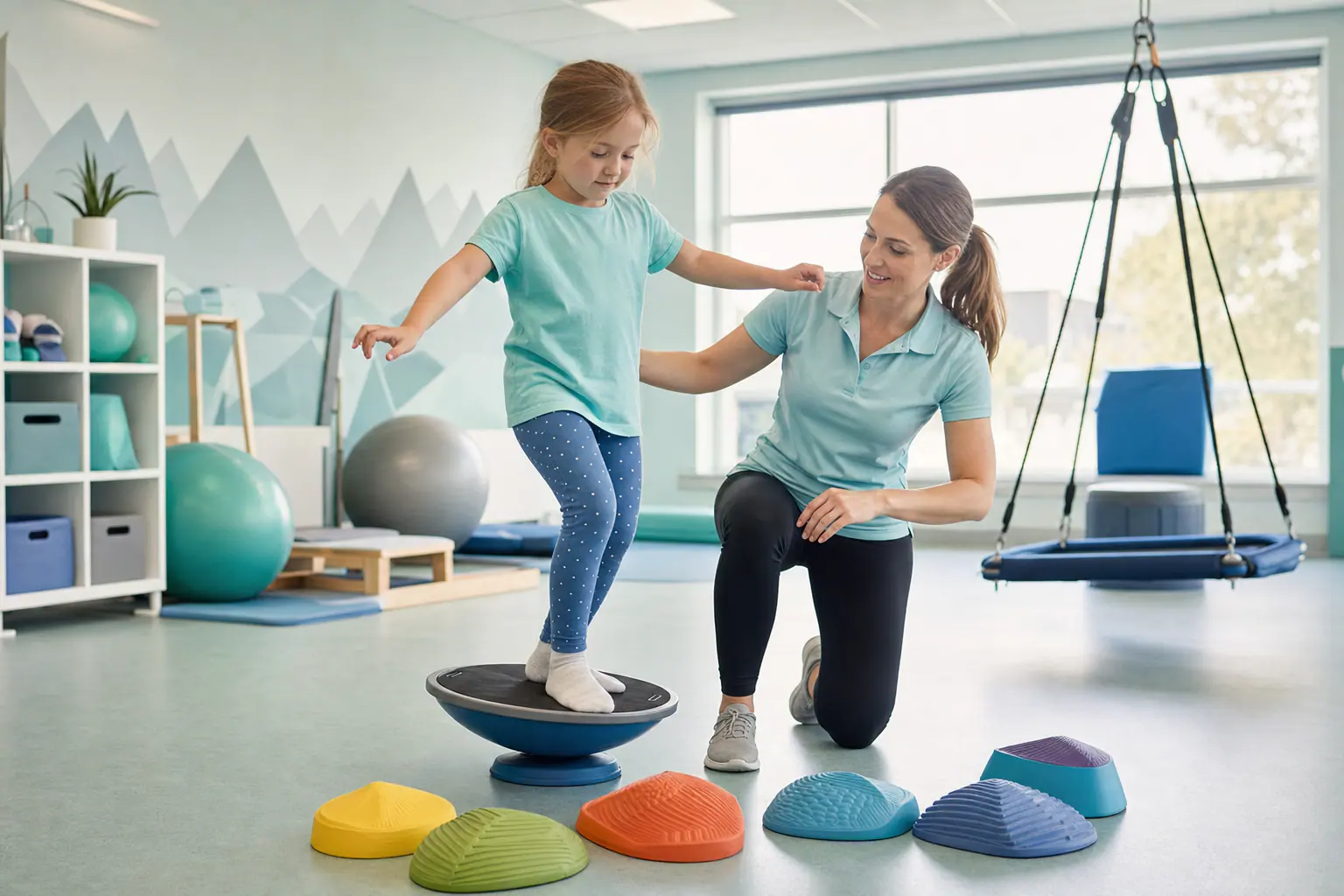
What is a sensory session in occupational therapy?
A sensory integration occupational therapy session may seem like fun play, but it is designed to achieve clear therapeutic goals. The specialist chooses activities according to the child's needs, and not just to relieve energy.
The goal is for the child to emerge from the session with skills that help him in daily life, not just to enjoy the activity.
Sensory integration and the child is very mobile
Some sedentary children move not just to disturb, but because their bodies need sensory input in order to feel organized. The child may look to jump, run, spin, squeeze, or bump because he does not feel his body well enough.
- ● Difficulty sitting
- ● Continuous movement
- ● Jumping on furniture
- ● Colliding with others
- ● Playing violently
- ● Chewing on clothes or pens
- ● Difficulty concentrating without moving
- ● Impulsiveness while playing
Occupational therapy helps provide organized and safe movement, rather than preventing movement completely. The goal is not to make the child remain still all the time, but rather to learn how to organize his body and use movement in an appropriate way.
Sensory integration and the child's sensitivity to sounds
Some children are disturbed by sounds that seem normal to others. The sounds of a vacuum, blender, children, siphon, electronic toys, mall, or class can be very annoying to them.
- ● Covers his ears
- ● Flee from the place
- ● Crying at sudden sounds
- ● Refuses to enter crowded places
- ● He gets nervous at parties or malls
- ● It is difficult for him to concentrate in class
The plan may include modifying the environment, gradually increasing exposure to sounds, teaching the child soothing methods, and using appropriate solutions as needed, without completely isolating the child from daily life.
Sensory integration and the child's sensitivity to clothing and touch
The child may reject clothes because of the feel of the fabric, labels, socks, shoes, or tightness of the clothes. He may refuse to cut hair, cut nails, brush his teeth, or shower. This does not always mean that the child is spoiled. Sometimes the sensation is too strong and unpleasant for him.
- ● Understand the type of irritating touch
- ● Temporarily adjust clothing when needed
- ● Gradation in contact tolerance
- ● Use calming strategies before the routine
- ● Teaching parents how to present the activity
- ● Reduce daily conflict over clothing and hygiene
Occupational therapy helps by understanding the type of irritating touch, grading tolerance to touch, and calming strategies before the routine.
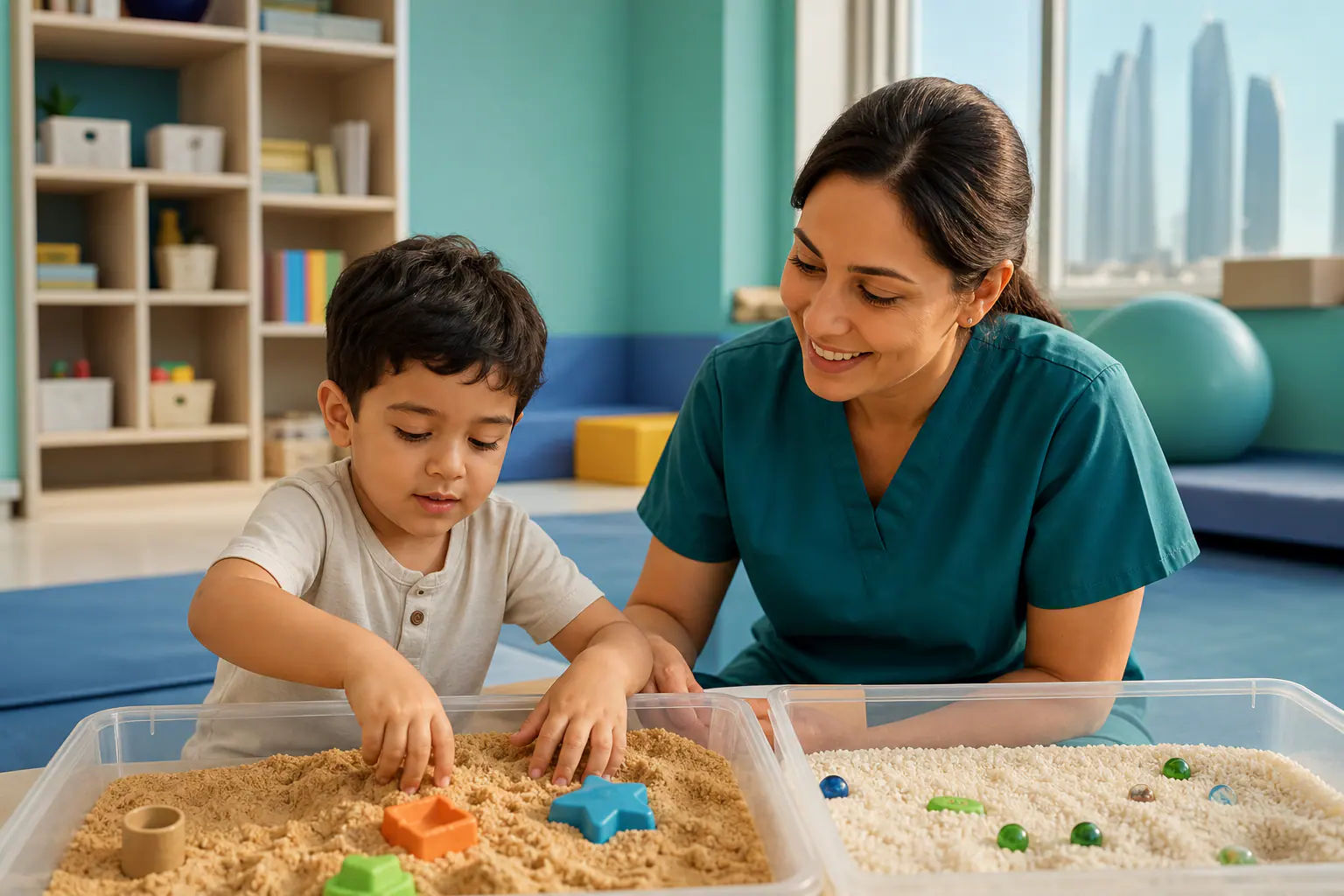
Sensory integration and eating difficulties
Eating difficulties may be related to sensory sensitivity. A child may reject food because of the texture, smell, color, temperature, or appearance of the food, not just because of the taste.
- ● Soft foods
- ● Crunchy foods
- ● Mixed foods
- ● Foods with a strong smell
- ● New foods
- ● Touching food with his hand
- ● There are food residues on his mouth or hands
Occupational therapy may help if the problem is sensory, through gradual tolerance of textures, smells, and touch. If there is coughing, choking, difficulty swallowing, or poor growth, swallowing should be evaluated or medically followed up, depending on the case.
Sensory integration and attention in school
A child who cannot regulate his body may find it difficult to sit and pay attention. He may need movement, pressure, or short breaks until he is ready to learn.
- ● He moves a lot in the chair
- ● He puts his head on the table
- ● He presses hard on the pen
- ● He gets up
- ● Distracted by sounds
- ● Constantly touching tools
- ● Does not finish tasks
- ● It is difficult for him to move between activities
School recommendations such as movement breaks, appropriate seating, minimizing distractions, short instructions, or organizational tools may help, depending on the child's assessment.
Home sensory program
An occupational therapist may recommend a home sensory program, which is a set of simple activities done at specific times to help the child regulate.
- ✓ Deep pressure activities
- ✓ Secure payment and withdrawal
- ✓ Carry items appropriate for the child’s age
- ✓ Organized jumping
- ✓ Crawl or climb safely
- ✓ Calming activities before bed
- ✓ Sensory routine before homework
- ✓ Gradual touch activities
- ✓ Organizing the eating or dressing environment
- ✓ Visual schedule to move between activities
The sensory program must be individualized. It is not recommended to implement activities from the Internet randomly, because an activity that calms one child may increase the activity of another child.
Sensory tools: Does every child need them?
Not every child needs sensory tools. Some children benefit from modifying routines, motor activities, or handling more than tools. Some of them may need simple tools or adaptive solutions.
Tools should not be purchased randomly. They should be chosen according to the child's assessment, because inappropriate use may not help or may increase the problem.

The role of parents in sensory integration treatment
Parents are an essential part of the plan's success, because the child encounters sensory influences at home, school, and society every day.
- ✓ Notice the situations that disturb him or increase his activity
- ✓ Do not describe him as stubborn before understanding the reason
- ✓ Reducing stimuli during sensory breakdown
- ✓ Give him time to calm down
- ✓ Use a clear and predictable routine
- ✓ Advance preparation for changes
- ✓ Apply home activities recommended by the specialist
- ✓ Avoid forcefully forcing him to experience an annoying sensory stimulus
- ✓ Use gradualism instead of surprise
- ✓ Praise the child’s small attempts
- ✓ Cooperation with the school
- ✓ The specialist shares home observations
The more parents understand the child's sensory pattern, the easier and calmer daily dealings become.
School and nursery homes
The child may need sensory support within school or nursery to be able to participate better. The goal is not to relieve the child from activities, but to help him tolerate the environment and participate in an appropriate manner.
- ● Sit the child in a place with less distraction
- ● Reduce noise when possible
- ● Give short movement breaks
- ● Use a visual table
- ● Prepare the child before moving between activities
- ● Allow for appropriate regulatory tools
- ● Divide instructions into steps
- ● Providing a quiet corner when needed
- ● Avoid embarrassing him in front of children when he is upset
- ● Communicate with parents about difficult situations
Recommendations vary depending on the child and not all of them apply to all cases.
When should you not wait?
It is best to book an evaluation if sensory difficulties are affecting the child's daily life or causing ongoing stress at home or school.
- ● He severely refuses to dress, eat, or clean himself
- ● Collapses in crowded places or at sounds
- ● Moves in an excessive way that affects safety
- ● He is clearly afraid of movement or games
- ● He cannot sit or concentrate because of his body
- ● He has sensory difficulties that affect school
- ● He refuses to try daily activities appropriate for his age
- ● Needs a lot of help due to allergies or distraction
- ● He suffers from severe food selectivity
- ● He is exposed to daily frustration due to routine
However, if there is a sudden loss of skills, obvious decline, seizures, weakness in one limb of the body, breathing or swallowing difficulties, or worrying medical symptoms, you must see a doctor urgently.
Does sensory integration improve with treatment?
Many children improve when their sensory pattern is understood and an appropriate treatment plan is provided. Improvement may appear gradually in:
- ✓ Better tolerance to clothing or touch
- ✓ Reduced sensory meltdowns
- ✓ Better sitting and concentration
- ✓ More organized movement
- ✓ Better engagement in gameplay
- ✓ Better acceptance of certain routines
- ✓ Easier transition between activities
- ✓ Sleep or a calmer routine
- ✓ Better school participation
- ✓ Greater confidence when trying new activities
Improvement depends on the age of the child, the severity of the difficulty, the regularity of the sessions, implementation of the plan at home, and the cooperation of the school when needed.
Common mistakes to avoid
- ✗ Consider every rejection as stubbornness
- ✗ Forcing the child forcefully to touch or sound that disturbs him
- ✗ Buy random sensory tools
- ✗ Application of exercises from the Internet without evaluation
- ✗ Completely preventing movement instead of regulating it
- ✗ Ignore clothing or food allergies
- ✗ Yelling at the child during a sensory meltdown
- ✗ Change routine suddenly without preparation
- ✗ Comparing the child with his siblings or classmates
- ✗ Always using the screen to calm him down instead of understanding the reason
- ✗ Neglecting school notes
- ✗ Postponing evaluation despite the impact of the problem on daily life
Correct handling begins with understanding the sensory pattern, then developing an appropriate and safe plan.
Sensory integration in Al Shamkha - Abu Dhabi
If you are looking for sensory integration therapy for children in Abu Dhabi or a sensory integration occupational therapist in Al Shamkha, AHLI Specialists Medical Center provides an assessment and treatment plan that helps the child regulate his response to movement, touch, sounds, food, clothing, and daily routines.
We help parents understand the cause of discomfort, excessive movement, or refusal to routine, and we develop a practical plan that helps the child participate more comfortably and confidently at home, nursery, and school.
Specialized evaluation
Specialized evaluation of sensory integration difficulties.
Individual plan
An individual occupational treatment plan according to the child's sensory style.
Purposeful play
Therapeutic sessions based on purposeful play and sensory regulation.
Multiple styles
Support increased sensitivity, sensory seeking, or poor responsiveness.
Home instructions
Practical guidance for parents at home.
School recommendations
Recommendations for nursery or school when needed.
Everyday skills
Supporting eating, dressing, hygiene, sitting, and attention skills.
Quiet environment
A quiet medical environment suitable for children and families.
Clear follow-up
Clear follow-up of the child's development.
Distinctive location
Close to Al Shamkha, Baniyas, Al Falah, Shakhbout and Abu Dhabi areas.
Sub-treatments
Direct links to specialized treatment pages.
Sensory integration disorders
Evaluation and treatment of sensory processing disorders — periodic follow-up at AHLI Specialists Medical Center.
Sensory therapy for children
Sensory therapy sessions for children - periodic follow-up at AHLI Specialists Medical Center.
Services related to sensory integration
The child may need one or more of the following services depending on the assessment:
Sensory integration assessment
To know the child’s response pattern to stimuli such as sounds, touch, movement, food, and clothing.
Treatment of hypersensitivity
For children who are disturbed by sounds, clothing, water, cutting, combing, or textures.
Organizing sensory search
For children who are looking to jump, spin, squeeze, bump, or put objects in their mouth.
Sitting and attention support
To help the child regulate his body before learning, food or homework tasks.
Treatment of sensory eating difficulties
For children who refuse food because of texture, smell, color or texture.
Support daily routine
To facilitate dressing, bathing, brushing teeth, sleeping, and transitioning between activities and school.
Home sensory program
Activities tailored to the child’s style to be applied at home in a safe and organized manner.
Parent training
To help the family understand sensory difficulties and deal with them in a practical way.
When do I book an appointment for my child?
Book an assessment if your child has:
- ● Extreme sensitivity to sounds
- ● Refusing clothes, socks or shoes
- ● Refusal to shower, cut hair, or brush teeth
- ● Extreme food selectivity due to texture or smell
- ● Excessive movement or constant search for jumping and pressure
- ● Obvious fear of movement or swing
- ● Difficulty sitting and paying attention
- ● Outbursts of anger in specific emotional situations
- ● Difficulty moving between activities
- ● Problems in daily routine due to touch, sound or movement
- ● Feedback from school about distraction, movement, or discomfort with the environment
The first step is a clear assessment that helps to know the child's sensory pattern and develop an appropriate plan.
Book a sensory integration assessment for your child
If you notice that your child is experiencing increased sensitivity, hyperactivity, fear of movement, refusal of clothing or food, or difficulty regulating his body, we can help you through an occupational therapy evaluation for sensory integration and develop a plan appropriate for his daily needs.
AHLI Specialists Medical Center - Al Shamkha, Abu Dhabi
Al Qayed Street, Al Shamkha, Abu Dhabi
Frequently asked questions about sensory integration
What is sensory integration in children?
What are the signs of sensory integration difficulties?
Do sensory integration difficulties mean that a child has autism?
Does a child who is very active need sensory integration treatment?
Could refusal of clothes or food be caused by a sensory reaction?
Does occupational therapy help with sensory integration?
Is it possible to do sensory exercises at home?
Does the child need sensory tools?
Do sensory integration difficulties improve?
When should I worry?
Our specialized team


Book a sensory integration assessment
02-448-7553 — Al Shamkha, Abu Dhabi