
Orthodontics for children in Abu Dhabi
Early evaluation and orthopedic treatment for children at AHLI Specialists Medical Center - Al Shamkha
Have you noticed crowding or protrusion in your child's teeth and want an early evaluation?
Do you have concerns about your child's open, deep or crossbite?
Are you looking for the best time to start orthodontics for children before the problem gets worse?
Do you want to know the difference between early follow-up and comprehensive evaluation for teens?
Are you looking for children's braces in Abu Dhabi or in Al Shamkha near Baniyas, Al Falah and Shakhbout?
Orthodontics for children focuses on early diagnosis and timely monitoring of the growth of the jaws and permanent teeth. The goal is not always to install braces immediately, but rather to detect problems early, such as crowding, tooth protrusion, open, deep, or inverted bite, and then choose the most appropriate intervention at the correct time.
At AHLI Specialists Medical Center in Al Shamkha - Abu Dhabi, we provide an orthodontic evaluation for children and adolescents that includes dental examination, occlusion, eruption area of permanent teeth, oral habits, and breathing pattern. After the evaluation, we determine whether the case requires follow-up, an early orthodontic device, a space maintainer, expansion, or metal or clear braces for adolescents. We serve families from Al Shamkha, Baniyas, Al Falah, Shakhbout, Al Shawamekh, Mohammed Bin Zayed City, Khalifa City, and many areas of Abu Dhabi.
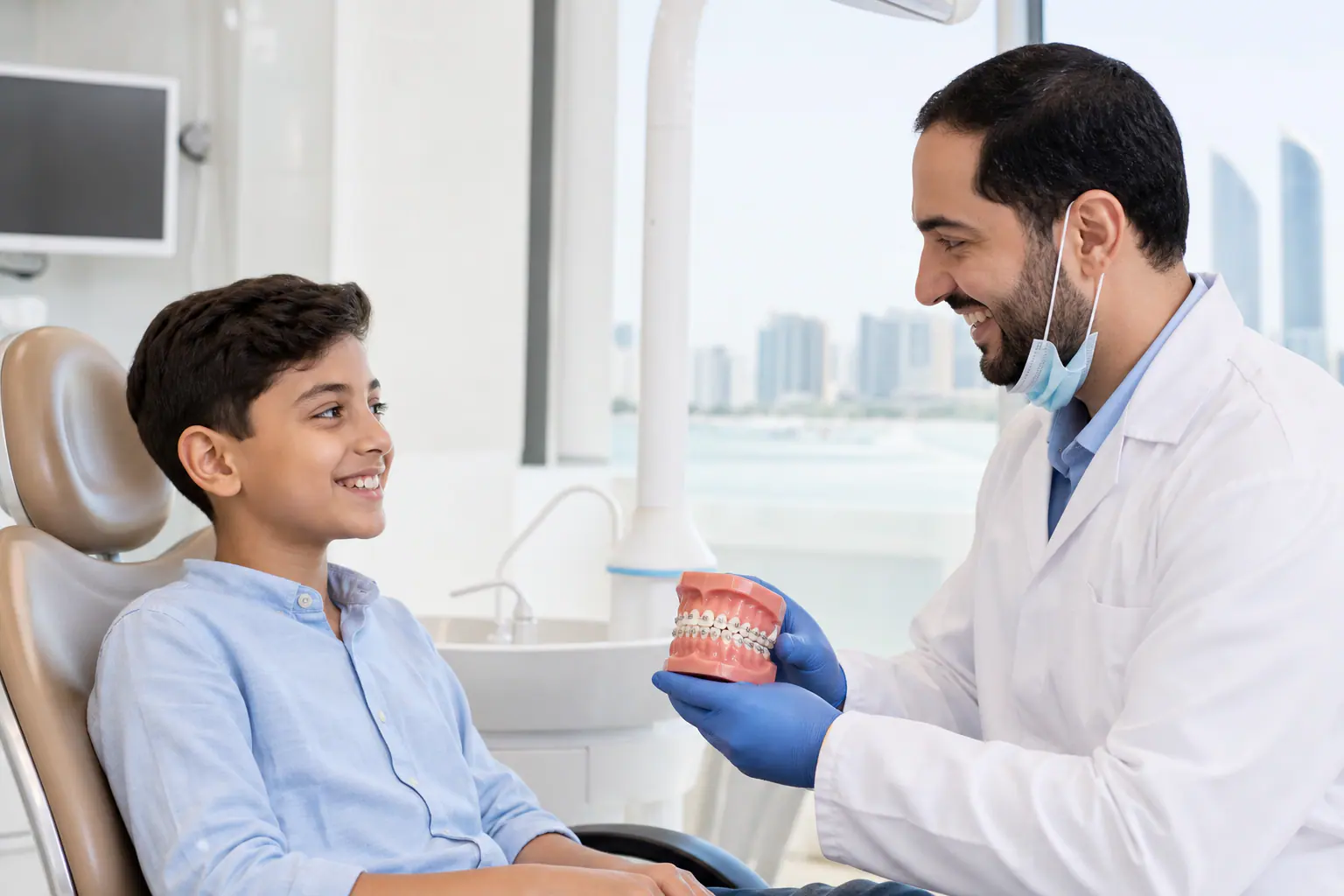
What is orthodontics for children?
Pediatric orthodontics is the evaluation, monitoring, and treatment of dental alignment and occlusal problems during development, with the goal of guiding the development of the jaws and permanent teeth and improving function and smile.
Not every child needs a direct orthosis; Sometimes regular follow-up is the best option until the timing is right for treatment.
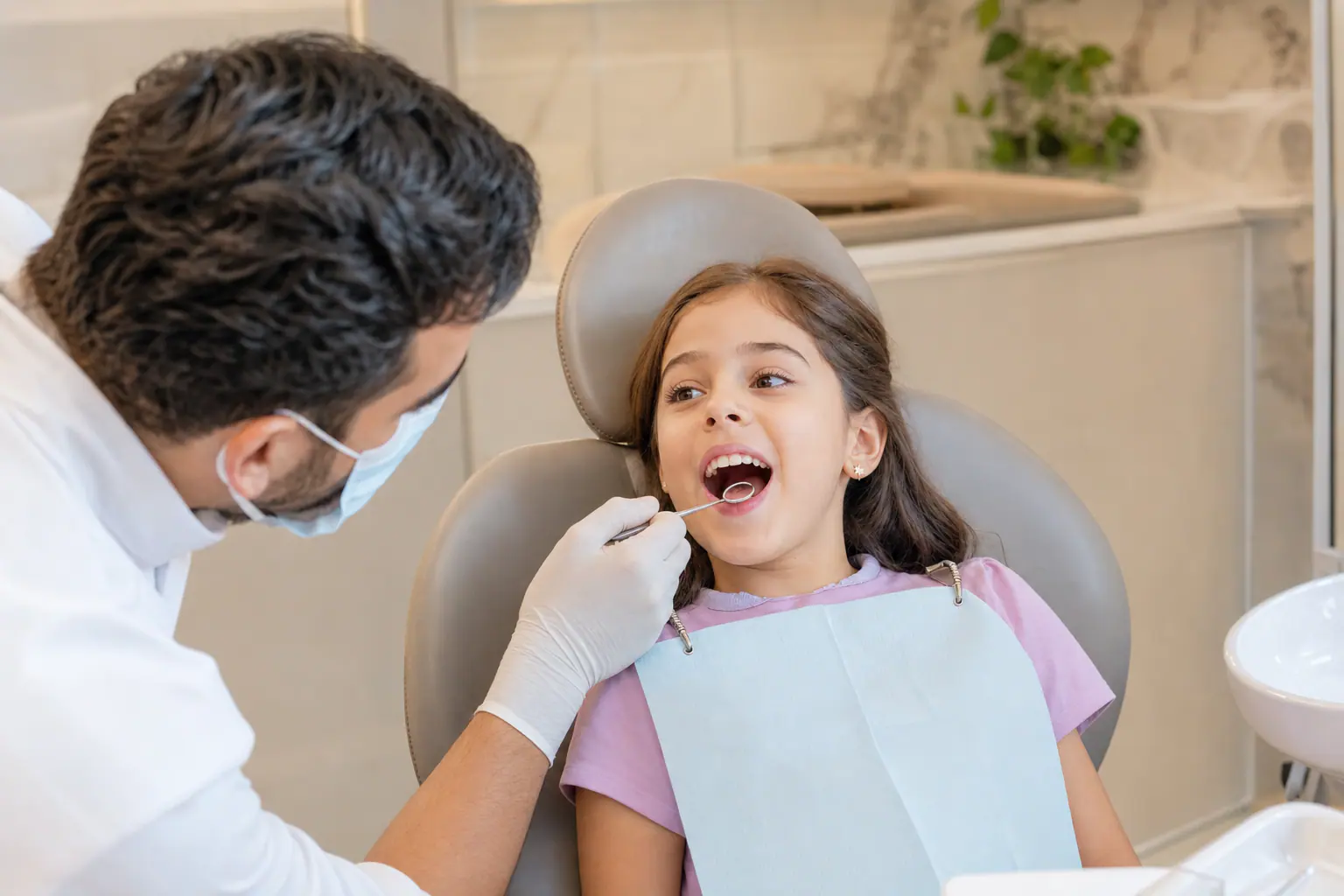
When should a child be examined?
- ● Obvious crowding or overlapping of the front teeth
- ● Eruption of upper or lower teeth
- ● The presence of an open, deep or reverse bite
- ● Delayed or disturbed tooth replacement
- ● Premature loss of a baby tooth
- ● Mouth breathing or persistent oral habits
- ● Delayed eruption of the canines or their appearance outside the arch
- ● Difficulty chewing or closing the mouth comfortably
Early examination does not always mean starting treatment, but it helps prevent complications and determine the most appropriate time for intervention.
Why is early assessment important?
- ● Discover the problem before it increases
- ● Reducing the need for more complex treatment later
- ● Improving the chances of permanent teeth erupting in the correct place
- ● Helping the child chew and pronounce better
- ● Reducing the risk of injury to protruding teeth
- ● Increase self-confidence while improving the smile
Early diagnosis saves the family time and effort, and makes treatment more predictable during the developmental stage.
Signs that require pediatric orthodontic evaluation
- ● Overlapping or crooked teeth
- ● Abnormal spaces or obvious protrusions
- ● Mismatch of teeth when closing
- ● Anterior open bite when the mouth is closed
- ● The lower teeth are ahead of the upper teeth in some areas
- ● Jaw joint sounds or strain when chewing
- ● Continuous finger sucking or tongue thrusting
- ● Breathe through the mouth most of the time
- ● Delayed emergence of a permanent tooth or its appearance out of place
The appearance of a single sign does not always mean a major problem, but a professional evaluation determines the cause and a follow-up plan.
The difference between a children's dental examination and an orthodontic examination
Children's dental examination
- ● Focuses on tooth decay, gum health and hygiene
- ● Follows the replacement of teeth and the growth of the mouth in general
- ● Includes prevention such as fluoride and preventive fillings
- ● Treats toothache, infections, and daily problems
Orthodontic examination
- ● Focuses on dental alignment and occlusion
- ● Evaluates the relationship of the upper and lower jaw
- ● Analyzes the space available for the eruption of permanent teeth
- ● Determines the need for early or comprehensive orthodontic follow-up or treatment
The best result usually comes from a combination of regular follow-up with a pediatric dentist and orthodontic evaluation when needed. Pediatric dentistry · Children's dental examination
Does every child need braces?
- ● No, some children only need follow-up
- ● Some cases benefit from limited early intervention
- ● Others need comprehensive orthodontics at a later age
- ● The decision depends on the development, severity of the problem, and the child’s cooperation
The goal is to provide timely treatment and not to rush to install a device unnecessarily.
What is early orthodontic treatment?
- ● Intervention in the mixed dentition stage when needed
- ● May include expanders, growth guides, or distance maintainers
- ● It helps improve the space for the eruption of permanent teeth
- ● It may reduce the severity of the problem before comprehensive evaluation
Early orthodontics is not a permanent substitute for comprehensive orthodontics, but it may make the later stage easier.
Interim orthodontic treatment or comprehensive orthodontic treatment?
Staged treatment
- ● Start at a younger age when there is a clear need
- ● Focuses on a specific developmental or occlusal problem
- ● A second phase may follow during adolescence
Comprehensive treatment
- ● It often begins after an adequate amount of permanent teeth have been developed
- ● It addresses the arrangement of teeth and occlusion in an integrated manner
- ● Includes metallic or clear options for suitable teens
Choosing the type depends on diagnosis and timing, not just age.
What is the best age for children's orthodontics?
- ● Early orthodontic examination is preferred when signs are noticed
- ● Some problems require intervention at a young age
- ● Many cases are followed up until adolescence
- ● The final decision is based on the examination and growth of the teeth and jaws
There is no one age that suits all children; Individual timing is most important.
Mixed dentition stage
- ● The deciduous and permanent teeth meet in the mouth
- ● Indicators of crowding and the path of the canines appear
- ● Allows preventive intervention when there is an obvious problem
- ● You need periodic follow-up to evaluate the development of occlusion
Follow-up at this stage is important to reduce surprises when the permanent teeth are completed.
Important topics in pediatric assessment
Teeth crowding in children
Teeth crowding is one of the most common reasons for pediatric orthodontic revision, and it occurs when there is a lack of space compared to the size of the teeth.
- ● Overlapping teeth
- ● Difficulty cleaning
- ● Recurrent gingivitis
- ● Need to evaluate the space early
Early evaluation helps choose the optimal time for treatment. Check out the service
Spaces between teeth
Gaps may be normal during growth, and may require follow-up or treatment depending on the cause and size.
- ● Evaluation of normal presentation
- ● Inspect the bridle
- ● Occlusal analysis
- ● Determine the need for treatment
Not every vacuum needs immediate intervention. Check out the service
Protruding front teeth
Erupting teeth may increase the risk of injury and affect the shape and closing of the smile.
- ● Assess the protrusion of the incisors
- ● Measuring the relationship of the jaws
- ● Choose an early or comprehensive plan
- ● Functional and aesthetic protection
Some children may benefit from early intervention to reduce prominence. Check out the service
Crossbite
Crossbites may be dental or skeletal, and are best evaluated early.
- ● Lower teeth in front of upper teeth
- ● Difference in closing path
- ● Evaluate jaw growth
- ● Timely intervention
Some cases of crossbite require early intervention. Check out the service
Open bite
An open bite may be associated with oral habits such as thumb sucking or tongue thrusting.
- ● The front teeth do not touch
- ● Habit evaluation
- ● Behavior modification plan
- ● Orthodontic treatment when needed
The success of treatment is linked to correcting the causative habit. Check out the service
Deep bite
A deep bite may cause premature wear or excessive pressure on the front teeth.
- ● Evaluate the amount of vertical overlap
- ● Posterior occlusal analysis
- ● Age-appropriate treatment plan
- ● Periodic follow-up
Appropriate intervention reduces the impact of deep bite in the future. Check out the service
Tightness of the upper jaw
A narrow jaw may cause crowding or a backbite and affect the alignment of the teeth.
- ● Evaluate jaw width
- ● Check the contact of the back teeth
- ● Explore the need for expansion
- ● Follow growth
Early intervention may help improve space and guide growth. Check out the service
Delayed eruption of canines
Delayed canines or their eruption in an abnormal location requires early assessment of space and trajectory.
- ● Follow-up x-rays when needed
- ● Evaluate available space
- ● Examination of the emergence path
- ● Determine the intervention plan
Early diagnosis reduces the complexity of canine treatment later. Check out the service
Premature loss of baby teeth
Early loss may cause adjacent teeth to move and close the space before the permanent teeth erupt.
- ● Estimating the expected age of emergence
- ● Determine space loss
- ● Search for the need to keep your distance
- ● Regular follow-up
Early intervention preserves the space required for permanent teeth. Check out the service
Keep your distance
A spacer is a protective device used after the premature loss of a baby tooth to maintain the location of the permanent tooth.
- ● Preventing space from being closed
- ● Directing tooth eruption
- ● Reduce future crowding
- ● Support the orthodontic treatment plan
The type of distance keeper is chosen according to the child's age and the location of the missing tooth. Check out the service
Oral habits affecting occlusion
Persistent habits such as thumb sucking or tongue thrusting may affect jaw and occlusal development.
- ● Thumb sucking
- ● Tongue thrust
- ● Lip biting
- ● Coordinate the habit modification plan with treatment
Habit treatment is an important part of the success of pediatric orthodontics. Check out the service
Mouth breathing and its relationship to orthodontics
Mouth breathing may affect the development of the face and jaws and increase some occlusal problems.
- ● Dry mouth
- ● Imperfect tongue position
- ● Effect on the dental arch
- ● Need for multidisciplinary evaluation
We may recommend additional evaluations depending on the child's general condition. Check out the service
Types of treatment available
Early follow-up
When there is no need for immediate intervention while monitoring tooth growth.
Keep your distance
To maintain the location of the permanent tooth after the early loss of a baby tooth.
Early orthodontic devices
To improve occlusion or guide growth in selected cases.
Metal braces for teens
An effective option for moderate to complex cases.
Ceramic braces
A fixed option that is less noticeable than metallic in some cases.
Clear braces for teens
Removable option for cooperative teens and appropriate situations.
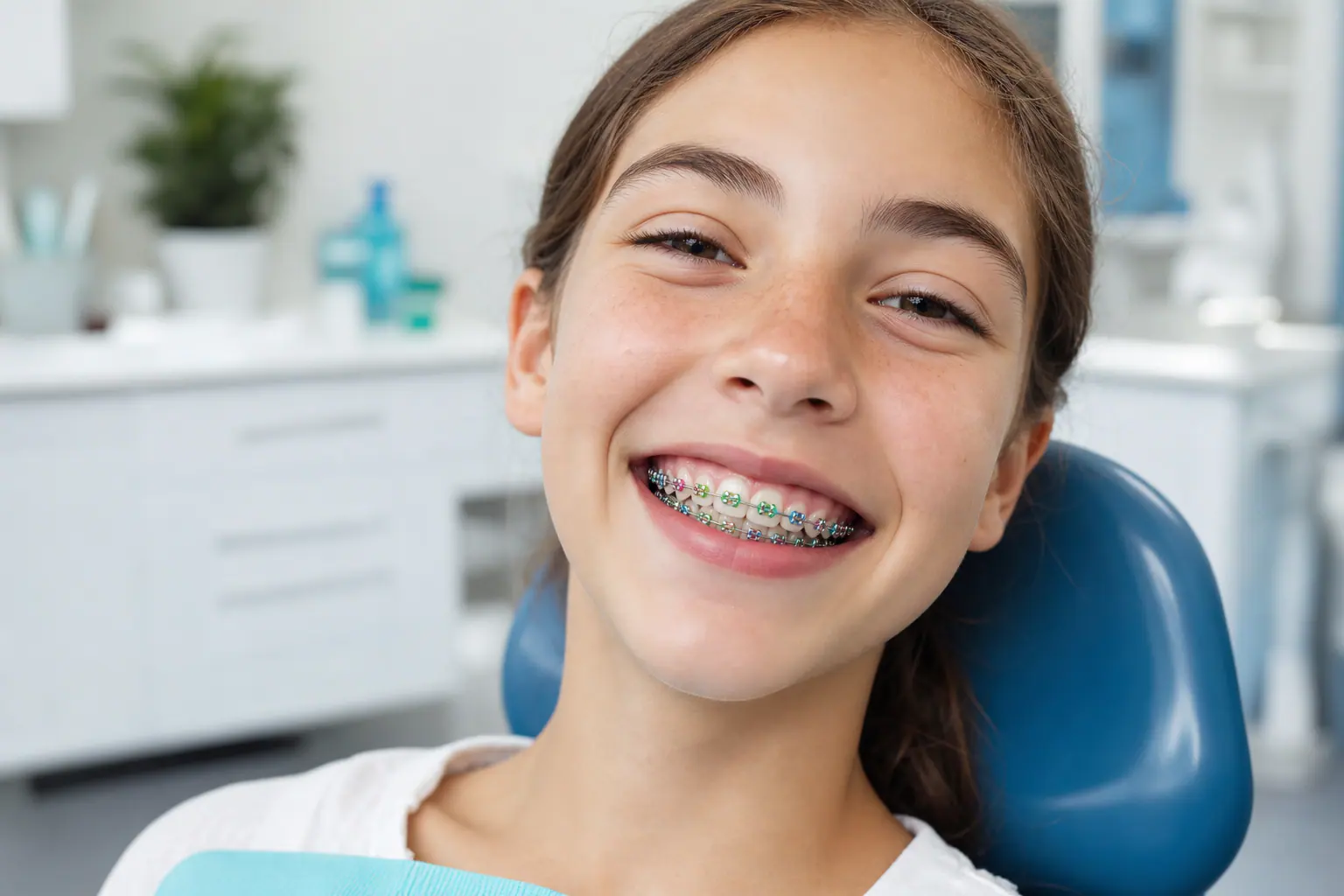
Metal braces for children and teens
Metal braces are a popular and effective option for treating alignment and occlusion problems, especially when greater control of tooth movement is needed.
- ● Suitable for moderate to severe cases
- ● It is fixed and does not depend on remembering the confusion
- ● Accurate results with regular follow-up
Suitability is determined after a complete orthodontic examination.
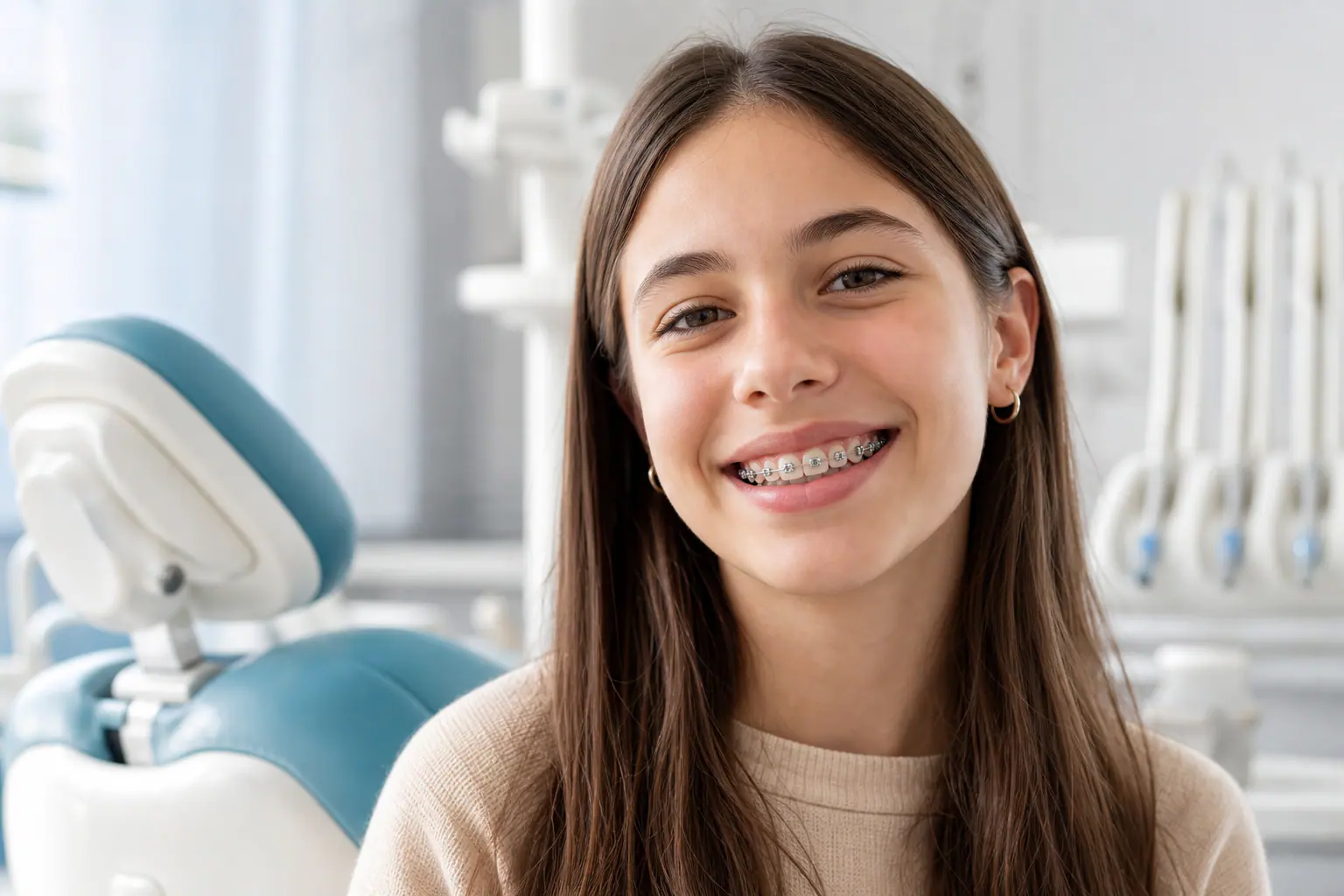
Clear braces for teens
Clear braces may be suitable for some teenagers, provided they adhere to wearing trays and taking good care of oral hygiene.
- ● Less visible
- ● Removable for eating and cleaning
- ● Requires high commitment
- ● Not suitable for all cases
The doctor chooses this option when the condition and cooperation are appropriate.
Steps for pediatric orthodontic treatment
First consultation
Reviewing the family's complaint and treatment goals.
Clinical examination
Examination of teeth, occlusion, and jaw growth.
Pictures and x-rays when needed
More accurate analysis of the area and path of tooth eruption.
Diagnosis and timing
Determine whether the case is follow-up, early intervention, or comprehensive evaluation.
Explanation of options
View age-appropriate types of devices or braces.
Start treatment
Installing the device or braces according to plan.
Periodic reviews
Adjusting treatment and monitoring the development of teeth and jaws.
Finishing and installation
Stabilizing the result with stabilizers and long-term follow-up.
Care guide and frequently asked questions during pediatric orthodontics
Are children's braces painful?
Your child may feel a slight, temporary pressure after starting treatment or adjustments, and this is often normal.
- ● Mild discomfort at first
- ● Gets better within days
- ● Temporary nutritional advice
- ● See a doctor if pain is abnormal
Severe or persistent pain requires immediate evaluation.
Eating during braces for children
Soft foods are preferred in the first days, while avoiding hard or sticky foods to protect the device.
- ● Avoid hard nuts
- ● Avoid chewing gum and caramel
- ● Cut food into small pieces
- ● Pay attention to water and hygiene after eating
Adherence to instructions reduces malfunctions and speeds up the outcome.
Teeth cleaning during braces
Daily hygiene is the basis for successful treatment and prevention of caries and gingivitis during orthodontics.
- ● Brushing after meals
- ● Use thread or interstitial tools
- ● Regular cleaning review
- ● Check for any premature stains
Preventive follow-up preserves teeth throughout the entire orthodontic journey.
The role of fluoride during orthodontics
Fluoride may be recommended for children who are susceptible to cavities to help strengthen the enamel during treatment.
- ● Strengthening enamel
- ● Reducing the risk of caries
- ● Home care support
- ● Professional application as needed
The protocol is determined by the child's age and caries risk. Check out the service
White spots after braces
White spots may appear when hygiene around the brackets is poor, and are an early sign of enamel demineralization.
- ● Insufficient brushing
- ● Frequent sugars
- ● Lack of preventive follow-up
- ● Neglecting fluoride
Early prevention is more important than later treatment.
How long is the pediatric orthodontic treatment?
The duration varies according to the type and severity of the problem, the age of the child, and cooperation with instructions and reviews.
- ● Severity of the condition
- ● Growth stage
- ● Device type
- ● Commitment to reviews
- ● Oral hygiene
The expected duration is determined after the initial assessment.
Do we need an orthodontic extraction for children?
Extraction is not always the first option, and is only discussed when there is a clear reason and there is significantly insufficient space.
- ● Severe crowding
- ● Great prominence
- ● Obvious lack of space
- ● Inadequate conservative alternatives
The decision depends on a careful examination, diagnostic images, and a detailed explanation to the family.
School and sports with orthodontic treatment
Children can follow school and sports with braces with some simple precautions.
- ● Use a mouth guard during contact sports
- ● Commitment to hygiene after school meals
- ● Carry simple emergency tools
- ● Inform your parents of any discomfort
A normal lifestyle often continues with correct preventive instructions.
What if part of the braces breaks?
If a wire or bracket is broken, you must contact the clinic to schedule a repair appointment soon.
- ● Do not tighten the wire by hand
- ● Temporarily cover the annoying limb when needed
- ● Avoid harsh foods
- ● Attend maintenance quickly
Delaying repair may prolong treatment.
The importance of retainer after braces
A retainer is necessary to maintain the result after the braces are finished and prevent teeth shifting back.
- ● Movable stabilizer
- ● Fixed retainer behind the teeth
- ● A clothing plan according to the situation
- ● Periodic follow-up to ensure stability
Adherence to the fixator is an essential part of long-term treatment success. Check out the service
The role of parents in the success of the child’s treatment
The success of pediatric orthodontics depends largely on home follow-up and daily support from the family.
- ● Follow up on appointments
- ● Encouraging hygiene
- ● Organizing appropriate food
- ● Device monitoring and instructions
- ● Psychological support for the child
Parents' cooperation is directly reflected in the speed and quality of the result.
Evaluation of children with special needs
An appropriate evaluation plan for children with special needs can be developed after a comprehensive assessment of cooperation, medical and behavioral needs.
- ● Adapt appointments
- ● Simplified plan
- ● Multidisciplinary collaboration
- ● Realistic and safe treatment goals
An individual approach to each child is the basis.
Do we need braces before veneers in the future?
In older teens, braces may help align the teeth first before any future cosmetic options such as veneers.
- ● Better arrangement of teeth
- ● Reduce tooth filing later
- ● Improved occlusion
- ● A more natural cosmetic result
The priority at young ages remains health, function, and proper growth.
Common errors in children's orthodontic treatment
- ● Postponing the examination despite the presence of clear signs
- ● Neglecting hygiene during treatment
- ∙ reliance on form without assessment of application
- ● Failure to adhere to reviews
- ● Neglecting the installer after the braces are finished
- ● Break dietary restrictions frequently
- ● Stop treatment before the plan is completed
Avoiding these mistakes improves the result and reduces the duration of treatment and complications.
Pediatric Orthodontics in Al Shamkha - Abu Dhabi
If you are looking for orthodontics for children in Abu Dhabi, AHLI Specialists Medical Center in Al Shamkha offers early evaluation and appropriate treatment plans for children and teenagers.
We provide multiple treatment options and convenient family follow-up close to your areas.

Why choose AHLI Specialists Medical Center?
- ✓ Accurate early orthodontic assessment of children
- ✓ Experience in treating occlusal and growth problems
- ✓ Multiple options: follow-up, snap appliances, metal and clear braces
- ✓ A clear explanation for parents and a step-by-step plan
- ✓ Regular follow-up and progress reports
- ✓ Link treatment with prevention and regular hygiene
- ✓ Suitable environment for children and teenagers
- ✓ Location close to Al Shamkha, Baniyas, Al Falah and Shakhbout
Orthodontic services for children
Orthodontics
Orthodontic services home page.
Metal and Ceramic Braces
Fixed orthodontic treatment option for moderate to complex cases.
Clear Aligners
A less visible option for fit teens.
Dental retainer after orthodontics
To maintain the result and prevent tooth recurrence.
Treatment of crowded teeth
Diagnosis and treatment of crowding at different stages of growth.
Treating gaps between teeth
Evaluate the causes of voids and options for correcting them.
Protruding teeth treatment
Orthodontic plans to reduce overhang and improve occlusion.
Open bite treatment
Diagnosis and treatment of open bite in children and adolescents.
Deep bite treatment
Improving the vertical alignment of teeth with correct position.
Crossbite treatment
Treatment plans for dental and skeletal crossbites.
Pediatric dentistry
Comprehensive children's dental care and prevention.
Children's dental examination
Periodic and early examination to detect problems before they worsen.
Cleaning children's teeth
Preventive cleaning helps during your orthodontic journey.
Teeth cleaning
Professional cleaning of teeth and gums before and during treatment.
When do I book an appointment for my child?
Early screening gives you a clear plan and avoids delays at a critical time of growth.
AHLI Specialists Medical Center - Al Shamkha, Abu Dhabi
For reservations and inquiries: 02-448-7553
Location: Al Qayed Street, Al Shamkha, Abu Dhabi
Short answers
When should children have orthodontic examinations?
It is preferable to examine the child early when signs such as crowding, protrusion, open or reverse bite, or delayed tooth eruption appear.
Does every child need braces?
No, some children only need follow-up, while others need early intervention or comprehensive evaluation depending on the diagnosis.
Can children's braces be treated without pain?
The sensation is often a temporary, mild pressure, with instructions to help the child adjust quickly.
What is the difference between an orthodontic examination and a children's dental examination?
The pediatric examination focuses on tooth decay and prevention, while the orthodontic examination focuses on occlusion, jaw growth, and tooth alignment.
Where can I find children's orthodontic treatment in Abu Dhabi?
You can book a pediatric orthopedic evaluation at AHLI Specialists Medical Center - Al Shamkha, Abu Dhabi.
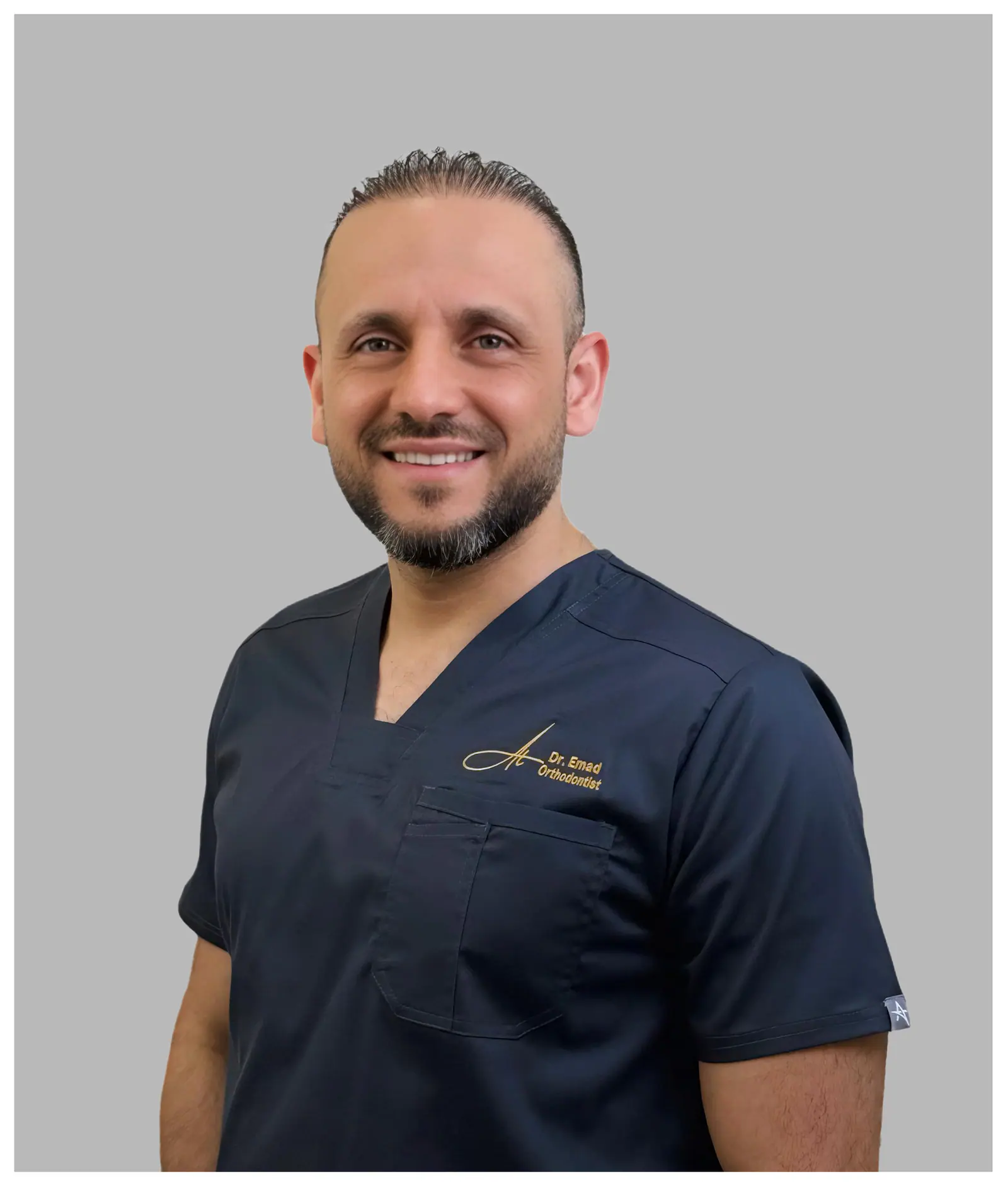
Orthodontists

Frequently asked questions about orthodontics for children
What is the best age for orthodontic examination for children?
Does every child need braces?
Can dental crowding in children be treated early?
Does early orthodontic treatment replace later orthodontic treatment?
Are children's braces painful?
How long do children's orthodontics last?
Can my child exercise with braces?
What do we do if part of the braces breaks?
Are clear braces suitable for children?
Do we need to extract teeth in children's braces?
Does losing a baby tooth early affect braces?
How do we protect teeth from white spots during braces?
Does the child need a retainer after the braces are finished?
What is the role of parents in the success of orthodontic treatment?
Do braces help before any future cosmetic dentistry?
Book a pediatric orthodontic assessment
Early examination of the development of teeth and jaws with a clear plan: follow-up, early appliance, or age-appropriate braces.