
Crossbite treatment in Abu Dhabi
Correcting the advancement of the lower teeth and improving occlusion at AHLI Specialists Medical Center - Al Shamkha
Do you notice that the lower teeth are in front of the upper teeth when the mouth is closed?
Does the lower jaw appear advanced or the chin protrudes?
Does your child have a crossbite or front teeth that don't meet normally?
Do you feel difficulty chewing or cutting food due to occlusion?
Are you looking for crossbite treatment in Abu Dhabi or crossbite correction in Al Shamkha near Baniyas, Al Falah and Shakhbout?
The reverse bite or Underbite is one of the problems of misapplication, and when the lower head teeth are advanced to the upper head teeth when the mouth shuts, the problem may be simple and limited in teeth, and may be linked to the growth of the lower jaw or the lack of growth of the upper jaw, so the treatment varies from case to case.
At AHLI Specialists Medical Center in Al Shamkha - Abu Dhabi, we provide a comprehensive evaluation of crossbite cases in children, adolescents, and adults, determining whether the problem is dental or structural, and whether it needs braces only, clear braces, metal or ceramic braces, growth devices for children, or advanced evaluation for severe cases. We serve clients from Al Shamkha, Baniyas, Al Falah, Al Shawamekh, Shakhbout, Mohammed bin Zayed City, Khalifa City, Al Bahia, Al Raha, and various areas of Abu Dhabi.
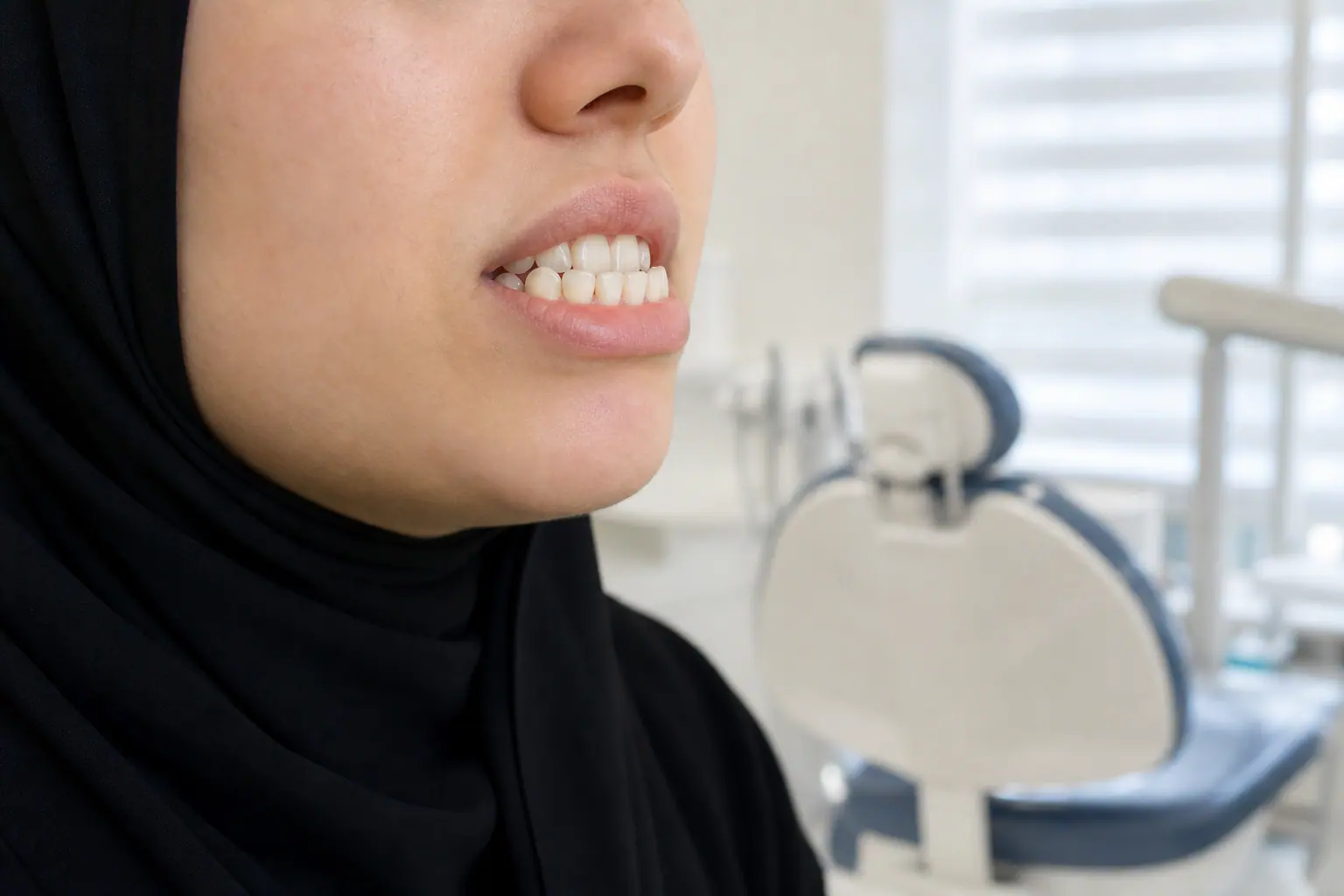
What is a crossbite?
A crossbite is a malocclusion that occurs when the lower teeth advance ahead of the upper teeth when the mouth is closed. In a normal bite, the upper front teeth are slightly ahead of the lower teeth. In a crossbite, the opposite happens, and the lower teeth appear in front of the upper ones.
A crossbite may be minor at one or more teeth, or it may be part of a larger problem with the jaw relationship.
Is a crossbite the same as a lateral crossbite?
In general use, some may confuse anterior crossbite with lateral crossbite. On this page we mostly mean Underbite, meaning that the lower front teeth are in front of the upper teeth. As for a lateral or posterior crossbite, it may mean that some of the upper back teeth are inside the lower teeth instead of outside them, and require a different evaluation.
Anterior crossbite/underbite
The lower front teeth are in front of the upper teeth.
Lateral crossbite
Some side or back teeth do not meet in the correct position.
Both are occlusal problems, but the treatment plan varies depending on the type, cause, and age.
Types of crossbite
Dental crossbite
The problem is in the position of the teeth themselves, such as the upper teeth tilting inward or the lower teeth outward. These conditions may be easier to treat, especially if caught early.
Skeletal crossbite
The problem is in the relationship of the jaw bones, such as the advancement of the lower jaw or the recession of the upper jaw. These conditions may require early treatment in children or a more complex plan in adults.
Functional crossbite
It occurs when the jaw slides into a forward or sideways position when closing due to incorrect contact between the teeth. This condition may affect jaw growth if not treated in time.
Anterior crossbite
They appear in the front teeth, and are what many patients mean by underbite.
Lateral or posterior crossbite
They appear in the lateral or back teeth, and may be related to maxillary narrowing or occlusal asymmetry.
Is crossbite only a cosmetic problem?
no. A crossbite may affect the shape of your smile and face, but it may also affect your oral function and dental health.
- ● Difficulty biting food
- ● Unbalanced chewing
- ● Erosion in the front teeth
- ● Excessive pressure on some teeth
- ● Jaw or muscle pain in some patients
- ● Difficulty in cleaning some areas
- ● Speech problems in some cases
- ● Uncomfortable movement of the jaw when closing
- ● Effect on the shape of the smile and chin
- ● Increased complexity of some cosmetic treatments if occlusion is not corrected
- ● Orthodontic problems return if the cause is not treated
Therefore, treating a crossbite may be important for health and function, not just appearance.
Signs of a crossbite
- ● The lower front teeth are in front of the upper ones
- ● The lower jaw appears advanced
- ● The chin is more prominent than normal
- ● Difficulty biting food
- ● Uncomfortable friction between the front teeth
- ● Erosion of the edges of the teeth
- ● Pain or pressure when biting
- ● Uncomfortable occlusion
- ● Smile asymmetry
- ● Difficulty pronouncing some sounds in some cases
- ● Jaw deviation when closing
- ● Crossbite in a child while changing teeth
- ● Upper front teeth appear to be set back
- ● Lower teeth appear to be advanced forward
- ● The problem returns after a previous correction
If these signs appear, it is best to book an orthodontic evaluation early, especially in children.
Causes of crossbite
Genetic factor
A crossbite may be linked to genetics, such as having a developed lower jaw or small upper jaw in the family.
Advancement of the lower jaw
In some cases, the lower jaw grows forward more than normal, putting the lower teeth in front of the upper teeth.
Lack of growth of the upper jaw
The upper jaw may be small or retracted, putting the upper teeth behind the lower teeth.
Incorrect position of teeth
Sometimes the problem is only in the tilt of the teeth, such as the upper teeth tilting inward or the lower teeth outward, without a major problem with the jaw bones.
Permanent teeth erupt in an incorrect manner
In children, the front permanent teeth may erupt in such a way that they lie behind the lower teeth, creating an early crossbite.
Early loss of baby teeth
Losing some baby teeth early may affect the spaces and path of eruption of permanent teeth.
Oral habits
Some habits may affect the growth of the jaws or the position of the teeth, such as mouth breathing or abnormal tongue position in some cases.
Problems with functional occlusion
The jaw may shift forward or to one side when closing due to premature contact between the teeth, and this needs careful assessment.
Rare injuries or developmental disorders
In some less common cases, there may be factors associated with an injury or disorder in the growth of the jaw.
Failure to treat the problem in childhood
Some cases of crossbite begin at a young age and increase with growth if not followed up or treated in a timely manner.
Determining the cause is very important, because the treatment of a dental crossbite is different from the treatment of a skeletal crossbite.
Crossbite treatment options
Treatment for crossbites varies depending on the patient's age, the severity of the condition, and its cause. There is no one-size-fits-all treatment.
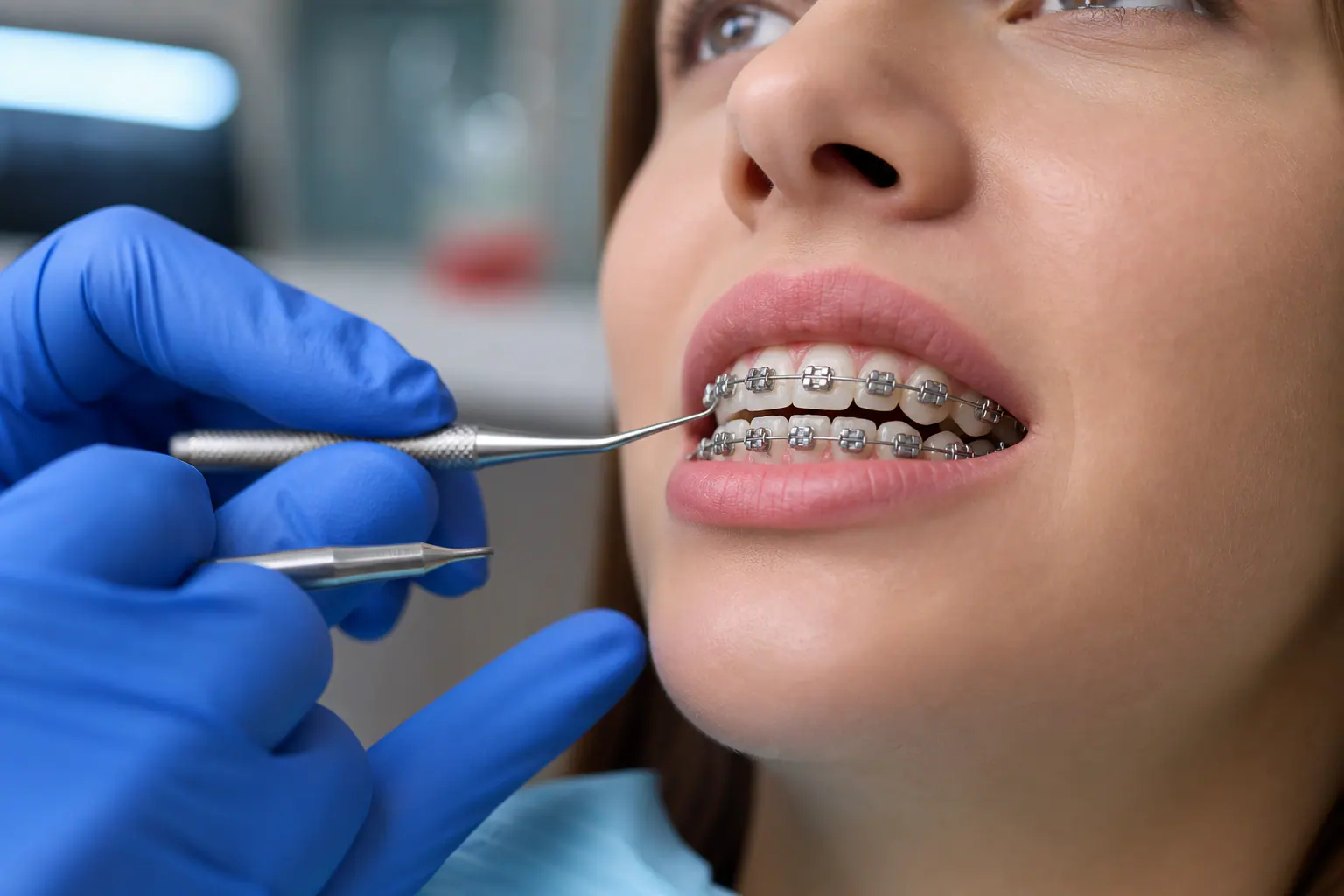
Metal braces to treat crossbites
Metal braces may be a suitable option for many cases of crossbite, especially when we need precise control of tooth movement and bite.
- ● Anterior crossbite
- ● Crowding with crossbite
- ● Orthodontic elastics needed
- ● Complex tooth movement
- ● Moderate or severe condition
- ● A teenager or adult who needs comprehensive treatment
- ● Desire for an effective solution and regular follow-up
Metal braces are more visible, but give good control over occlusal correction in many cases.
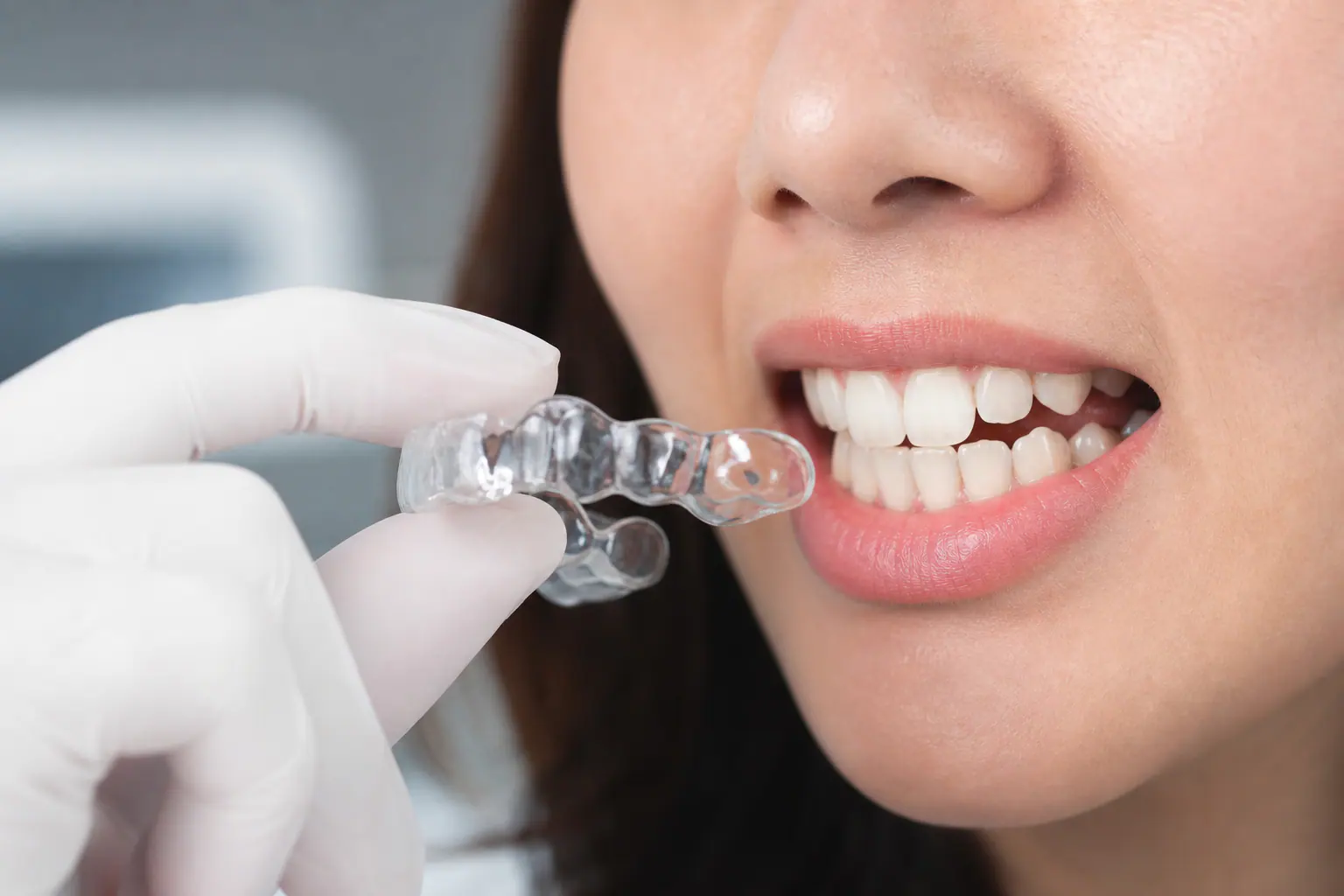
Clear aligners for treating crossbites
Clear braces may be suitable for some cases of mild or moderate crossbite, especially if the problem is dental rather than severe structural. But not every Underbite fits into clear molds.
- ● Simple crossbite
- ● A severe dental rather than skeletal problem
- ● Commitment to wearing the casts for sufficient hours daily
- ● Gums and teeth in good condition
- ● Desire for less visible treatment
- ● A condition that can be treated with predictable tooth movement
It may not be suitable if the lower jaw is significantly advanced or if the condition requires complex growth, surgery or orthodontic control.
Ceramic braces to treat crossbites
Ceramic braces work in a similar way to metal braces, but are less noticeable because the brackets are a color similar to the teeth. It may suit patients who want consistent treatment with a calmer appearance.
- ● A stable treatment for crossbite
- ● Less visible than metallic appearance
- ● Good control of tooth movement
- ● Suitable for adults or teens
- ● A treatment for which clear braces alone are not suitable
Ceramic braces need good hygiene care to avoid pigmentation and gingivitis.
Orthodontics to treat crossbites
Orthodontics is the primary service for correcting crossbites and associated occlusal problems.
- ● Gradually correcting the advancement of the lower teeth
- ● Improving the relationship of the upper and lower teeth
- ● Correcting crowding or accompanying voids
- ● Use growth devices or elastics as needed
The type of braces is chosen after a comprehensive evaluation of the type and cause of the crossbite.
The correct treatment depends on the cause, not just the appearance of the teeth.
The difference between types of occlusal problems
Crossbite vs deep bite
It occurs when the lower teeth or lower jaw are advanced in front of the upper teeth.
It occurs when the upper teeth cover the lower teeth more than normal.
An inverse bite means an advance of the lower, while a deep bite means an excessive overbite of the upper. Each case has different causes and treatment plan.
Crossbite vs open bite
It occurs when the lower teeth advance over the upper teeth when the mouth is closed.
It occurs when the upper and lower teeth do not meet when the mouth is closed, and a space appears between them.
The crossbite is a problem of advancement and arrangement, while the open bite is a problem of lack of contact. The teeth and jaws should be examined before the plan is determined.
Deep bite vs open bite
It means increasing the vertical overlap between the upper and lower teeth.
It means there is not enough contact between the teeth when closing.
These conditions are all occlusal problems, but they are very different in diagnosis and treatment.
How is a crossbite diagnosed?
Occlusal examination
The relationship of the upper and lower teeth is examined when the mouth is closed, and whether the lower teeth are in front of the upper teeth.
Examination of the jaw and face
We evaluate jaw shape, chin prominence, upper lip support, and jaw relationship.
Dental examination
We look for crowding, gaps, wear, tilt, or misplaced teeth.
Examination of functional deviation
We determine whether the jaw is sliding forward or sideways due to premature contact between the teeth.
Pictures and x-rays
We may need pictures and x-rays to measure the relationship of the jaws, roots, and permanent teeth in children.
Scans or prints
Helps in occlusal analysis and treatment planning.
Determine the type of problem
After analysis, we determine whether the condition is dental, skeletal, functional, or joint.
Develop a treatment plan
It is determined whether treatment will be with fixed braces, clear braces, a pediatric growth device, expanders, elastics, or surgical evaluation in severe cases.
Steps to treat a crossbite
Consultation and evaluation
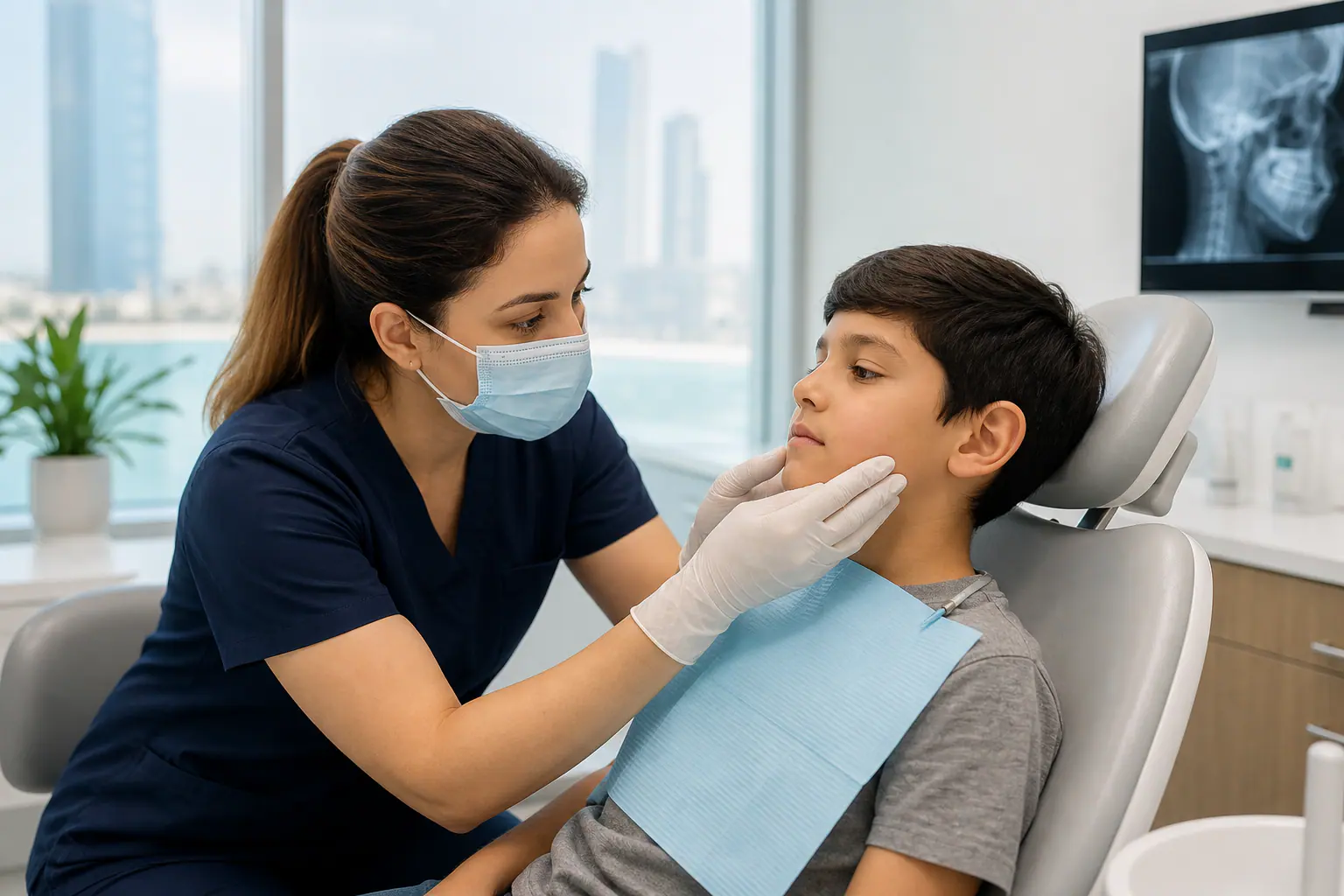
The doctor begins by examining the teeth, jaws, and teeth, and finding out the patient’s complaints about shape, chewing, or pain.
Determine the type of crossbite
It is determined whether the condition is dental, skeletal, functional, or joint.
Pictures and x-rays
We may need pictures, x-rays, and analysis of the relationship of the jaws and teeth, especially in children or severe cases.
Examination of gums and teeth
It is ensured that there is no decay, gingivitis, or erosion that needs to be treated before braces.
Choose a treatment plan
Metal, ceramic, clear braces, pediatric appliances or surgical evaluation are chosen depending on the case.
Start treatment
It begins moving teeth or directing growth according to plan.
Periodic follow-up
Occlusal, tooth movement and gum health are reviewed regularly.
Correction of tooth contact
The goal is to improve the relationship of the upper and lower teeth so that the bite becomes more balanced.
Termination of treatment
After reaching the appropriate result, the orthodontic treatment or templates are finalized according to plan.
Stabilizer after treatment
A fixative is necessary to maintain the result and reduce the possibility of the problem coming back.
Is crossbite treatment painful?
Treating a crossbite with braces is not constantly painful, but it may cause temporary pressure or discomfort after braces are fitted, adjustments are made, or trays are changed.
- ● Pressure on teeth
- ● Slight difficulty eating on the first days of treatment
- ● Friction from brackets
- ● Discomfort when using elastics
- ● Tighten when changing molds
- ● Need time to get used to the new occlusion
These symptoms are often temporary. If the pain is severe or persistent, you should see a doctor.
Does the crossbite return after treatment?
The crossbite may return if the result is not stable, if the problem is severe structurally, or if the patient does not follow instructions. So follow up and installer are very important.
- ● Do not use a stabilizer
- ● Broken or lost stabilizer
- ● Continuous growth of the jaw in some children or adolescents
- ● Strong structural problem
- ● Failure to adhere to rubber bands or molds
- ● Incomplete treatment
- ● Tooth erosion or loss
- ● Teeth grinding
- ● Not following up on the case after the evaluation
Correct diagnosis from the beginning helps reduce the possibility of the problem recurring.
Important topics in crossbite treatment
Crossbite in children
Crossbite in children is a condition that deserves early evaluation, because the child is in a developmental stage, and there may be an opportunity to direct jaw growth or correct the position of the teeth before the problem becomes more complex.
- ● The lower teeth are in front of the upper teeth
- ● The lower jaw appears advanced
- ● The upper front teeth appear behind the lower ones
- ● A deviation occurs in the jaw when closing
- ● There is a crossbite on one side
- ● Permanent teeth appear incorrectly
- ● There is a family history of a progressive lower jaw
- ● The child has difficulty biting food
- ● There is premature wear in the front teeth
Early intervention does not always mean installing full braces, but it does mean evaluating the condition and choosing the appropriate timing for treatment. Check out the service
When should a child's crossbite be examined?
It is best to evaluate the child early if the parents notice that the lower teeth are ahead of the upper, or if the lower jaw appears advanced. Some cases of crossbite may need early treatment because the jaw is still growing.
- ● The lower teeth are in front of the upper teeth
- ● The lower jaw advances when closing
- ● Jaw deviation when biting
- ● Difficulty biting food
- ● Erosion in the front teeth
- ● Front upper teeth set back
- ● Family history of crossbite
- ● Crossbite on one side
- ● Asymmetry in the smile or jaw
- ● Problems with replacing teeth
Early examination helps to know whether we need only follow-up, an orthotic device, expansion, a temporary orthodontic procedure, or a treatment plan later. Check out the service
Crossbite in adults
Crossbites in adults can be treated in many cases, but treatment depends on the cause and severity of the problem. If the dental problem is minor, braces or clear braces may be appropriate. If the problem is severe structurally due to the advancement of the lower jaw or the recession of the upper jaw, the case may need to be evaluated by jaw surgery with orthodontics.
- ● Is the problem with the teeth or jaws?
- ● Is the lower jaw skeletally advanced?
- ● Is the upper jaw retracted?
- ● Is there tooth erosion?
- ● Is there pain in the jaw?
- ● Are there gum or bone problems?
- ● Are there fillings, crowns or implants?
- ● Are there crowding or gaps?
- ● Has the patient had prior orthodontic treatment?
- ● Does treatment require only an assessment or a joint plan?
Treatment for adults requires a careful plan because jaw growth is complete.
Does crossbite get better on its own?
In some very simple cases in children during tooth replacement, the relationship of the teeth may change with growth, but this should not be relied upon without examination. A crossbite may affect jaw growth, cause wear or establish an incorrect occlusal pattern if it persists.
- ● The lower teeth are always in front of the upper teeth
- ● The child moves the jaw forward when biting
- ● Crossbite is present in permanent teeth
- ● The condition increases with time
- ● There is erosion or pain
- ● There is a deviation in the jaw when closing
- ● There is a clear family history
Early evaluation does not always mean immediate treatment, but it protects against inappropriate delay.
Does crossbite affect the shape of the face?
A skeletal crossbite may affect facial appearance, especially if the lower jaw is advanced or the upper jaw is recessed. The chin may appear prominent or the midface less supported in some cases.
- ● The relationship of the upper and lower jaw
- ● Chin position
- ● Lip support
- ● Smile shape
- ● The extent of advancement of the lower jaw
- ● Is the problem dental or structural?
- ● Is the condition in a developing child or an adult?
Not every patient with a crossbite will experience a noticeable change in facial shape. Sometimes the problem is only with the teeth and can be treated orthodontically without significant impact on the appearance of the face.
Does a crossbite cause jaw pain?
In some patients, crossbites may be associated with jaw pain or fatigue, especially if the occlusion is unbalanced or if the jaw misaligns when closing. But it is not the only cause of jaw pain, so it needs a comprehensive examination.
- ● Jaw pain
- ● Cracking or discomfort when opening the mouth
- ● Fatigue when chewing
- ● Pressure on the front teeth
- ● Difficulty closing the mouth comfortably
- ● Headache associated with muscle tension
- ● Erosion or sensitivity in teeth
If pain is present, occlusion, jaw joint, muscles, and bruxism should be evaluated before treatment is determined.
Does a crossbite cause tooth erosion?
Yes, a crossbite may cause wear on some teeth due to abnormal contact between the upper and lower teeth. Wear may appear on the front teeth or at certain points of the occlusion.
- ● Flat tooth edges
- ● Tooth sensitivity
- ● Small cracks
- ● Pain when biting
- ● Fracture of the front gaskets
- ● Strong friction when closing the mouth
- ● A grinding or squeaking sound
- ● Change in the shape of teeth over time
Erosion treatment is not complete with fillings alone if the cause is occlusal; The bite should be evaluated and corrected as needed.
Crossbite and pronunciation
A crossbite may affect speech in some people, especially if it is evident or associated with an abnormal position of the tongue or front teeth. But not every patient with a crossbite has a speech disorder.
- ● Difficulty pronouncing some letters
- ● Air coming out while speaking
- ● Placing the tongue in an unnatural place
- ● A clear crossbite in a child
- ● A delay or speech disorder associated with an occlusal problem
In some cases, collaboration between orthotics and speech therapy may be helpful, especially in children.
Crossbite and chewing
A crossbite can make biting or chewing uncomfortable, especially if the contact between the teeth is uneven. The patient may rely on one side more than the other or feel that the teeth do not fit normally.
- ● Difficulty biting food
- ● Uneven chewing
- ● Excessive pressure on certain teeth
- ● Erosion in the front teeth
- ● Jaw deviation during closure
- ● Pain or fatigue when eating
- ● Difficulty tearing food with the front teeth
Treating a crossbite may help improve occlusal function, not just the appearance of the smile.
Crossbite and crowding
A crossbite may be associated with crowding of teeth, especially if the upper jaw is narrow or if the upper teeth do not have enough space to be in front of the lower teeth.
- ● Upper teeth set back
- ● Crowding in the front teeth
- ● One or more teeth in a crossbite
- ● Fangs out of track
- ● Jaw deviation when closing
- ● Difficulty in brushing teeth
In these cases, treatment may need to correct the bite and align the teeth together. Check out the service
Crossbite and gaps between teeth
A crossbite may appear with gaps between the teeth in some cases, especially if there is a difference in the size of the teeth, an incorrect relationship between the jaws, or missing teeth.
- ● Braces to correct the bite
- ● Close or organize spaces
- ● Evaluation of tooth size
- ● Replacement of a missing tooth if it is present
- ● Use stabilizer after treatment
- ● Cosmetic fillings or veneers after orthodontics in selected cases
It is necessary to know whether the gaps are caused by the position of the teeth only, or whether the crossbite is part of the problem. Check out the service
Crossbite and missing teeth
Tooth loss may affect occlusion, increase tooth tilt, or change the relationship of the jaws. If a patient has a crossbite with missing teeth, the plan may be to have braces and replace the missing tooth with an implant, bridge, or other plan.
- ● Did the gap cause a change in occlusion?
- ● Are the adjacent teeth tilted?
- ● Do we need to open or close a space?
- ● Is implantation suitable after orthodontics?
- ● Does the bite need to be corrected before compensation?
- ● Is there bone deficiency in the place of the missing tooth?
Replacing missing teeth may be an essential part of long-term occlusal stability. Check out the service
Developmental devices for the treatment of crossbite in children
In some pediatric cases, the doctor may use devices that help guide jaw growth or expand the upper jaw depending on the diagnosis. These devices are most useful when the child is still developing.
- ● Widen the upper jaw if it is narrow
- ● Facial mask to stimulate maxillary advancement in selected cases
- ● Functional devices depending on the situation
- ● Phased orthodontics of the front teeth
- ● Monitor jaw growth
- ● A comprehensive evaluation later when needed
These devices are not suitable for all cases, and are only used after examination, x-rays and analysis of the child’s growth.
Can crossbite be treated without surgery?
Yes, many cases of crossbite can be treated without surgery, especially if the condition is mild or moderate or in children who are growing. However, severe skeletal conditions in adults may require maxillofacial evaluation.
- ● The problem is more with the teeth than with the jaw bones
- ● The condition in a developing child
- ● Crossbite is mild or moderate
- ● The lower jaw is not very advanced
- ● Teeth can be safely expanded or moved
- ● The patient adheres to braces or casts
- ● Good gum and bone health
The decision requires careful diagnosis, because trying to treat a severe skeletal condition with braces alone may give a limited or unstable result.
When does a crossbite require maxillofacial surgery?
Some cases of crossbite in adults are due to a marked advancement of the lower jaw or a marked recession of the upper jaw. In these cases, braces alone may not be enough to correct the relationship between the jaws.
- ● A clearly developed lower jaw
- ● Receded upper jaw
- ● Severe crossbite
- ● Great difficulty chewing or speaking
- ● A clear effect on the shape of the face
- ● Failure or return of previous treatment
- ● Structural problem after growth is complete
- ● A need to correct the relationship of the jaws, not just the teeth
Surgery is not required for all cases, and is only decided after a comprehensive evaluation and discussion of options with the patient.
Do veneers treat crossbites?
Veneers do not treat true crossbites. Veneers may improve the shape and color of teeth, but they do not correct the relationship of the jaws or bite if the lower teeth are in front of the upper teeth.
- ● The veneer broke due to pressure
- ● Unstable result
- ● Persistent functional problem
- ● Difficulty biting
- ● Wear or stress on restorations
- ● Need for orthodontic treatment later
If you have a crossbite and are considering veneers, your occlusion should be evaluated first. Braces or bite correction may be the first step. Check out the service
Treatment of crossbite before cosmetic surgery
Before making veneers, crowns, or making a smile design, you must ensure that the occlusion is appropriate. A crossbite may cause abnormal pressure on the front teeth and restorations.
- ● Protect veneers or crowns from breakage
- ● Improving the shape of the smile
- ● Reducing the need to file teeth
- ● Improving the balance of application
- ● Make the cosmetic result more stable
- ● Improving the relationship of the lips and teeth in a smile
Successful beautification requires healthy dishes, not just color and shape.
Treating crossbites with decayed teeth
If a crossbite has caused tooth erosion, the plan may require two stages: first correcting the bite, then assessing the need to restore the worn teeth.
- ● Braces to correct the bite
- ● Treatment of squeak, if present
- ● Restoration of decayed teeth after correcting occlusion
- ● Cosmetic fillings or crowns, depending on the case
- ● Night guard if there is grinding
- ● Periodic follow-up
It is not preferable to restore only corroded teeth without treating the cause of the corrosion if occlusion is the cause.
Teeth cleaning during crossbite treatment
Cleaning teeth during braces is very important, because brackets, wires, or trays may increase plaque buildup if teeth are not cleaned well. Treating a bite also requires healthy gums and teeth throughout the treatment period.
- ● Brush teeth after meals
- ● Use an aligner brush if you have fixed braces
- ● Use floss or braces cleaning tools
- ● Clean the clear molds daily if you use them
- ● Reduce sugar and sweetened drinks
- ● Visit the clinic for regular cleaning
- ● Do not neglect bleeding gums
- ● Tell your doctor if you feel pain, abrasion, or abnormal pressure
- ● Adhere to inflatables or devices as instructed
Healthy teeth and gums are important for the success of orthodontic treatment. Check out the service
Common errors in crossbite treatment
Some errors may affect the treatment result or cause a delay in correction.
- ● Postponing the child’s examination despite the obvious crossbite
- ● Consider the problem cosmetic only
- ● Trying to treat a severe skeletal condition with cosmetic dentistry only
- ● Make veneers before correcting the occlusion
- ● Failure to adhere to rubber bands or molds
- ● Do not use a retainer after treatment
- ● Ignore jaw deviation when closing
- ● Ignore jaw pain or wear
- ● Not treating cavities or gums before braces
- ● Not brushing teeth during braces
- ● Comparing the situation with the situation of another person
- ● Choosing clear braces without ensuring that they are suitable for the situation
Successful treatment begins with a clear diagnosis and a realistic plan.
Crossbite treatment in Al Shamkha - Abu Dhabi
If you are looking for crossbite treatment in Abu Dhabi or crossbite correction in Al Shamkha, AHLI Specialists Medical Center offers a comprehensive evaluation of crossbite cases in children and adults, determining whether the problem is dental, structural, or functional.
We help you know whether your condition requires metal braces, ceramic braces, clear braces, expansion, growth devices for children, or advanced evaluation for severe cases.
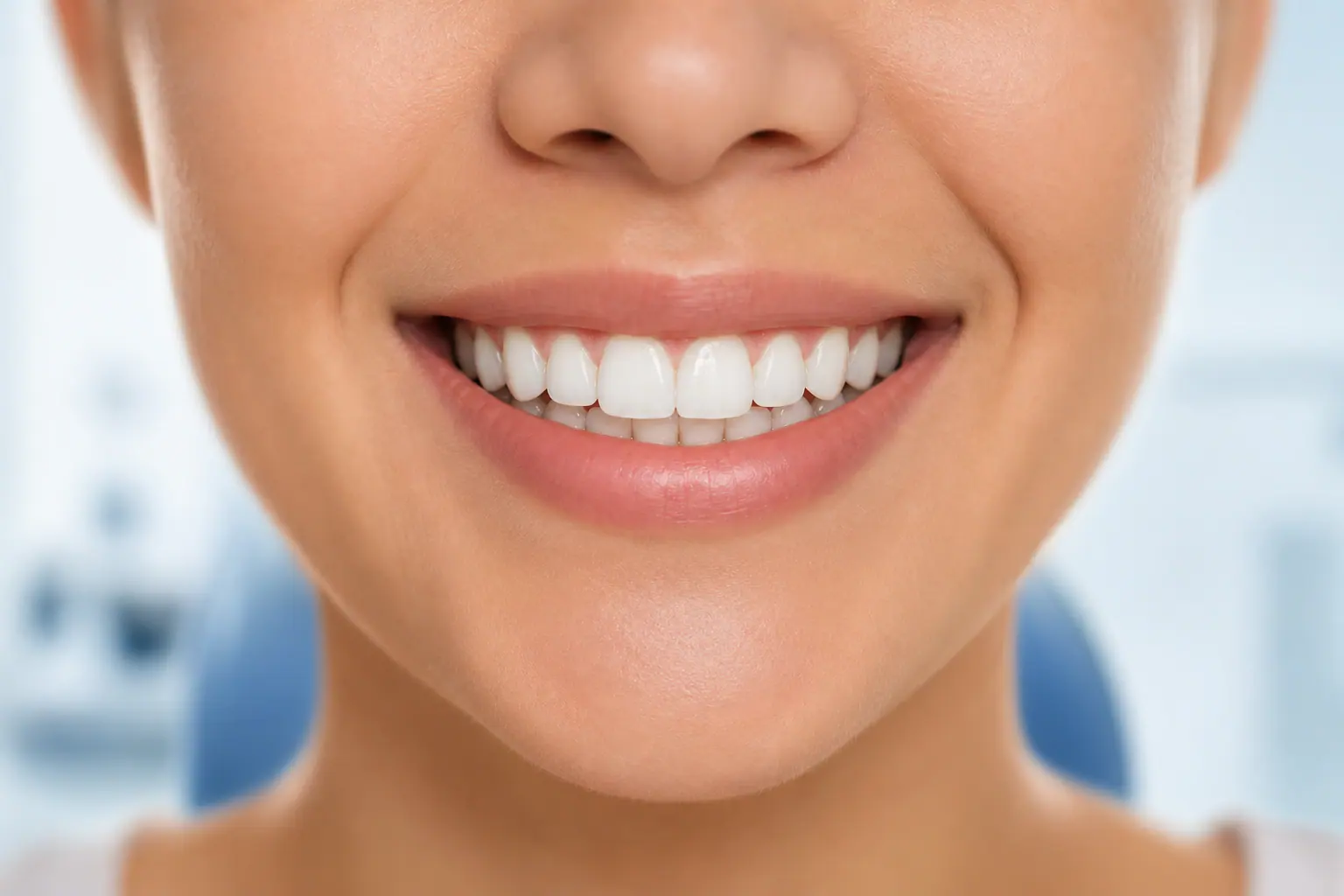
Why choose AHLI Specialists Medical Center?
- ✓ Careful assessment of the type and cause of the crossbite
- ✓ Treating crossbites in children and adults
- ✓ Multiple braces options: metal, ceramic, clear
- ✓ Evaluate whether the problem is dental or structural
- ✓ Interest in early diagnosis of children in the developmental stage
- ✓ Inspect abrasion, gums and occlusion before treatment
- ✓ Connect the treatment with a stabilizer to maintain the result
- ✓ Evaluating cases that need combined treatment or advanced referral
- ✓ Linking treatment with orthodontic services, pediatric dentistry, cleanings, and veneers when needed
- ✓ Location close to Al Shamkha, Baniyas, Al Falah, Shakhbout and Abu Dhabi areas
- ✓ A quiet medical environment suitable for families
Services related to crossbite treatment
Orthodontics
The main service for correcting crossbites and occlusal problems.
Clear Aligners
A suitable option for some simple crossbite cases with a dental cause.
Metal and Ceramic Braces
Fixed orthodontic options for cases that require finer control of tooth movement and occlusion.
Dental retainer after orthodontics
It is important to maintain the results of crossbite treatment and reduce its recurrence.
Treatment of crowded teeth
Related service if the crossbite is accompanied by crowding or twisting of the teeth.
Treating gaps between teeth
Related service if the crossbite is accompanied by gaps or missing teeth.
Deep bite treatment
Service related to malocclusion problems.
Open bite treatment
A related service within the problems of non-contact teeth.
Pediatric dentistry
Follow-up of crossbites in children and the stages of tooth replacement.
Children's dental examination
Early evaluation of crossbite and tooth replacement problems in children.
Teeth cleaning
It is important before and during braces to maintain healthy gums and teeth.
Dental Veneers
It may be a cosmetic option after occlusion correction if teeth need to improve shape or color.
Dental implants
Related service if there are missing teeth affecting the occlusion or plan.
When do I make an appointment for crossbite treatment?
The first step is a comprehensive orthodontic examination to determine the cause and an appropriate treatment plan.
AHLI Specialists Medical Center - Al Shamkha, Abu Dhabi
For reservations and inquiries: 02-448-7553
Location: Al Qayed Street, Al Shamkha, Abu Dhabi
Short answers
What is a crossbite?
A crossbite is a condition in which the lower front teeth are in front of the upper front teeth when the mouth is closed. It may be due to the position of the teeth, the advancement of the lower jaw, or the retraction of the upper jaw.
What are the causes of crossbite?
A crossbite may be caused by genetics, advancement of the lower jaw, underdevelopment of the upper jaw, incorrect position of the teeth, eruption of permanent teeth in the wrong direction, or functional problems in occlusion.
Does a crossbite need braces?
In many cases yes, especially if it affects chewing, causes abrasion, or is evident in children. Treatment may be orthotics, growth appliances for children, or surgery for severe skeletal conditions in adults.
Can crossbite in children be treated?
Yes, and treating it in children may be important because the jaw is still in a growing stage, and orthodontic devices, expanders, or growth guidance devices may help in some cases.
Where can I find crossbite treatment in Abu Dhabi?
A crossbite treatment consultation can be booked at AHLI Specialists Medical Center in Al Shamkha - Abu Dhabi to evaluate the condition and choose the appropriate orthodontic plan.
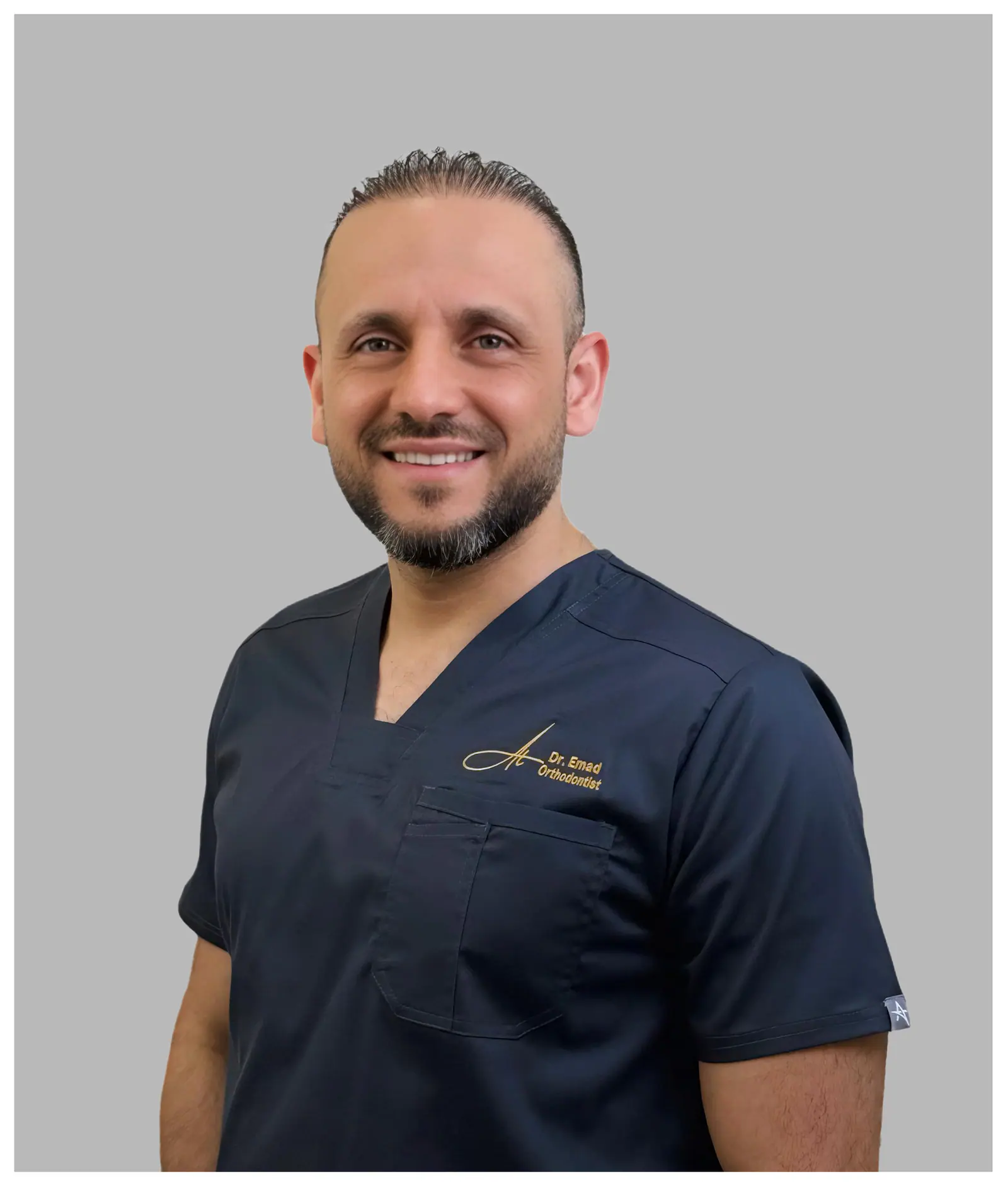
Orthodontists

Frequently asked questions about crossbite treatment
Is a crossbite dangerous?
Does crossbite get better on its own?
Can crossbite be treated without surgery?
Do clear braces treat crossbites?
Are metal braces better for crossbites?
Does crossbite in children require early treatment?
Does crossbite affect the face?
Does a crossbite cause jaw pain?
Does a crossbite cause tooth erosion?
Do veneers treat crossbites?
Does crossbite treatment require extraction?
How long does a crossbite treatment take?
Is crossbite treatment painful?
Does the crossbite return after braces?
Is a retainer necessary after treating a crossbite?
Book a crossbite treatment consultation
Evaluate the type of crossbite and an appropriate orthodontic plan — for children and adults.