
orthodontic treatment installer in Abu Dhabi
Maintaining orthodontic results and preventing tooth recurrence at AHLI Specialists Medical Center - Al Shamkha
Have you finished your orthodontic treatment and want to maintain the result?
Are you afraid that tooth crowding will return or gaps will open after removing the braces?
Did your orthodontic retainer break or get lost and you want a suitable replacement?
Did you stop wearing your retainer and your teeth started moving?
Are you looking for an orthodontic retainer in Abu Dhabi or a dental retainer after braces in Al Shamkha near Baniyas, Al Falah and Shakhbout?
The orthodontic retainer is the stage that maintains the orthodontic result after the teeth have finished moving. After removing the metal or ceramic braces or completing the clear trays, the teeth will have reached a new position, but they need a period of stabilization and follow-up until the possibility of them returning to their previous position is reduced.
At AHLI Specialists Medical Center in Al Shamkha - Abu Dhabi, we provide evaluation, installation, and follow-up of the orthodontic retainer, whether it is a clear removable retainer, a Hawley retainer, a fixed retainer behind the teeth, or a plan that combines the two types according to the patient’s condition and the type of problem being treated. We serve clients from Al Shamkha, Baniyas, Al Falah, Al Shawamekh, Shakhbout, Mohammed bin Zayed City, Khalifa City, Al Bahia, Al Raha, and various areas of Abu Dhabi.

What is a orthodontic treatment sticker?
An orthodontic retainer is a device used after orthodontic treatment to maintain teeth in their new position. It may be a removable retainer that the patient puts on and removes themselves, or a fixed retainer that is attached behind the teeth and that the patient does not remove themselves.
Retainers are not only a cosmetic step, but an essential part of the long-term success of braces. Braces move the teeth into the right place, and retainers help keep them there.
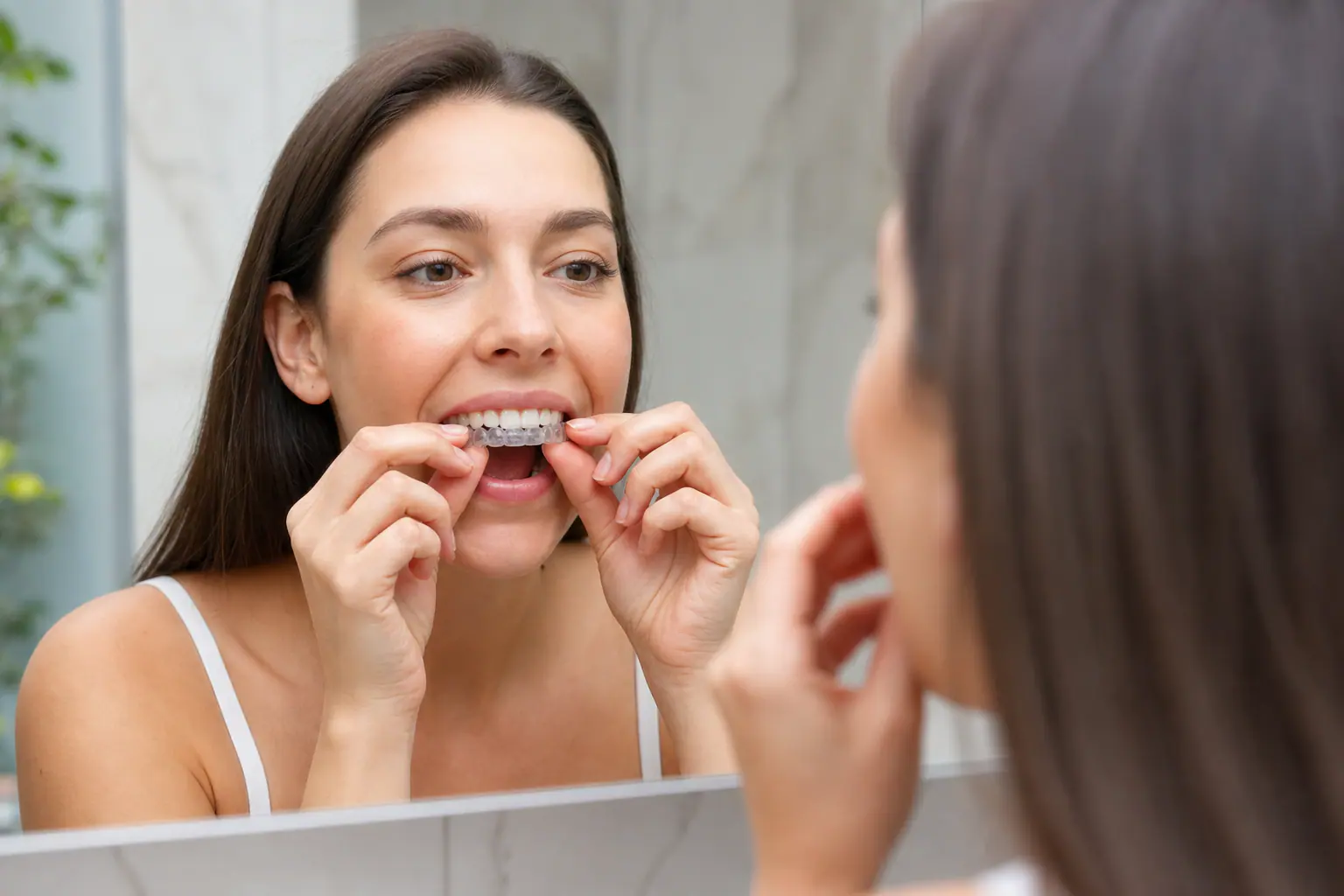
Why do we need a retainer after braces?
- ● Maintaining dental arrangement
- ● Reduce crowding back
- ● Keep gaps closed
- ● Stabilizing the result of protrusion treatment
- ● Maintaining the result of bite treatment
- ● Reduces the need for new braces later
- ● Support the stability of teeth after clear trays
- ● Protecting the treatment result after years of effort
After the teeth are moved, the surrounding tissues may gradually try to return to the previous position if the retainer is not used as instructed by the doctor.
Is a orthodontic treatment installer necessary?
- ● Yes, in most orthodontic cases a retainer is necessary
- ● The stabilization phase is no less important than the evaluation phase itself
- ● Without a stabilizer, crowding may return or gaps may open
- ● The lower front teeth may move quickly
- ● You may need new corrective braces
- ● The stabilizer should not be considered an additional option
Many patients think that treatment is over once the braces are removed, but the truth is that retainers are part of the complete treatment plan.
Types of orthodontic treatment stabilizer
Movable transparent stabilizer
Clear trays are similar to clear aligners, less conspicuous and easier to use, but require commitment and good maintenance.
Hawley mobile stabilizer
Acrylic base and front wire, removable and adjustable in some cases according to the doctor's evaluation.
Fixed retainer behind the teeth
A thin wire that is fixed behind the teeth and is not removed by the patient. It is useful for continuous placement, but requires careful cleaning.
Combining fixed and moving
In some cases, the doctor recommends a fixed retainer with a removable retainer at night for cases at risk of recurrence.
There is no one type that is best for everyone. The best is what suits your condition, commitment, and risk of tooth loss.
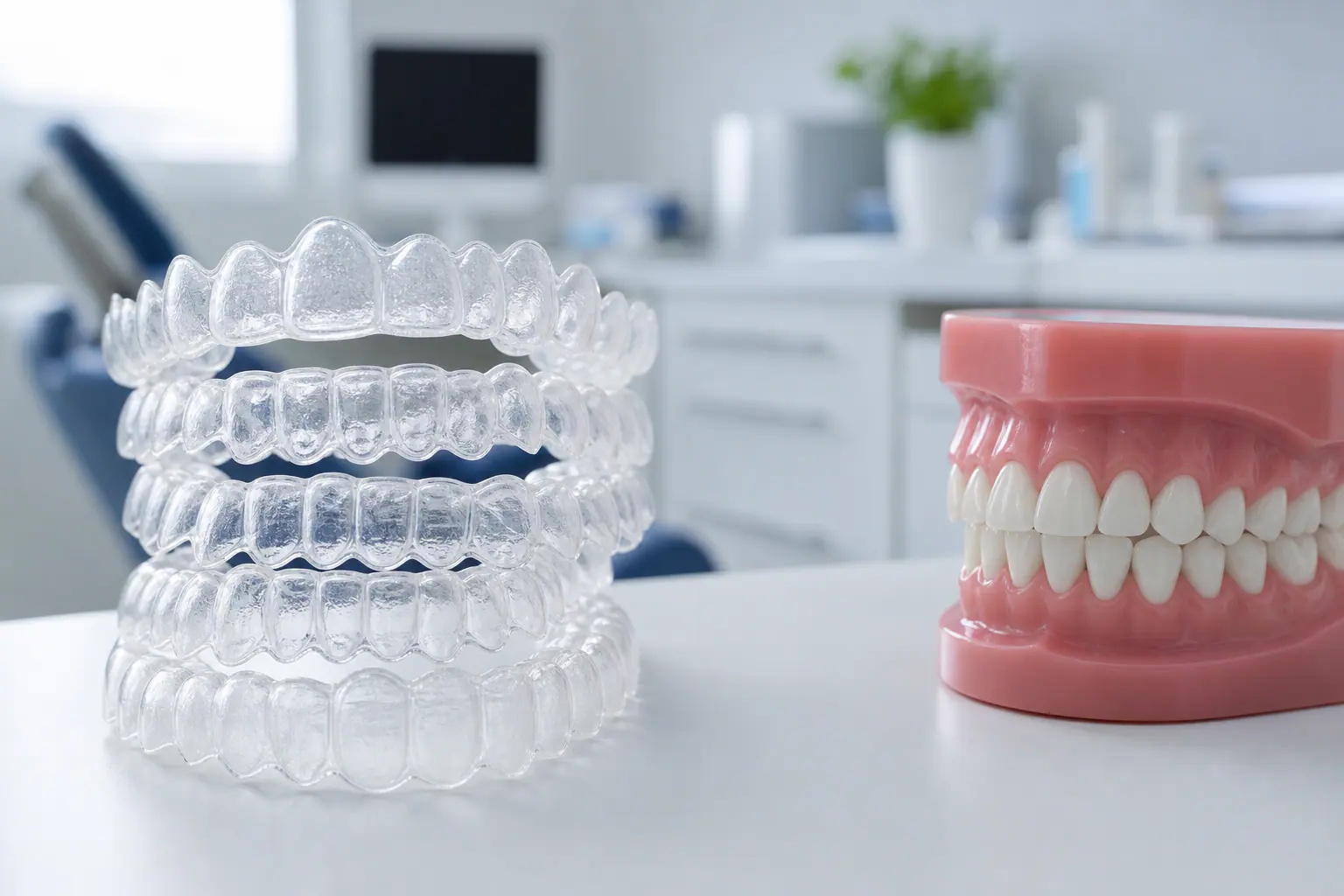
Clear retainer after braces
Removable clear retainer is one of the most popular types because it is less visible. It is designed according to the shape of the teeth after the braces are completed and is worn according to the doctor’s instructions.
- ● Installed less visible
- ● A relatively comfortable template
- ● It can be removed for eating and cleaning
- ● Suitable for maintaining the results of clear aligners
- ● A suitable choice for adults and teenagers
Clear retainer needs care; May be heat deformed, broken or lost if not kept in its packaging.
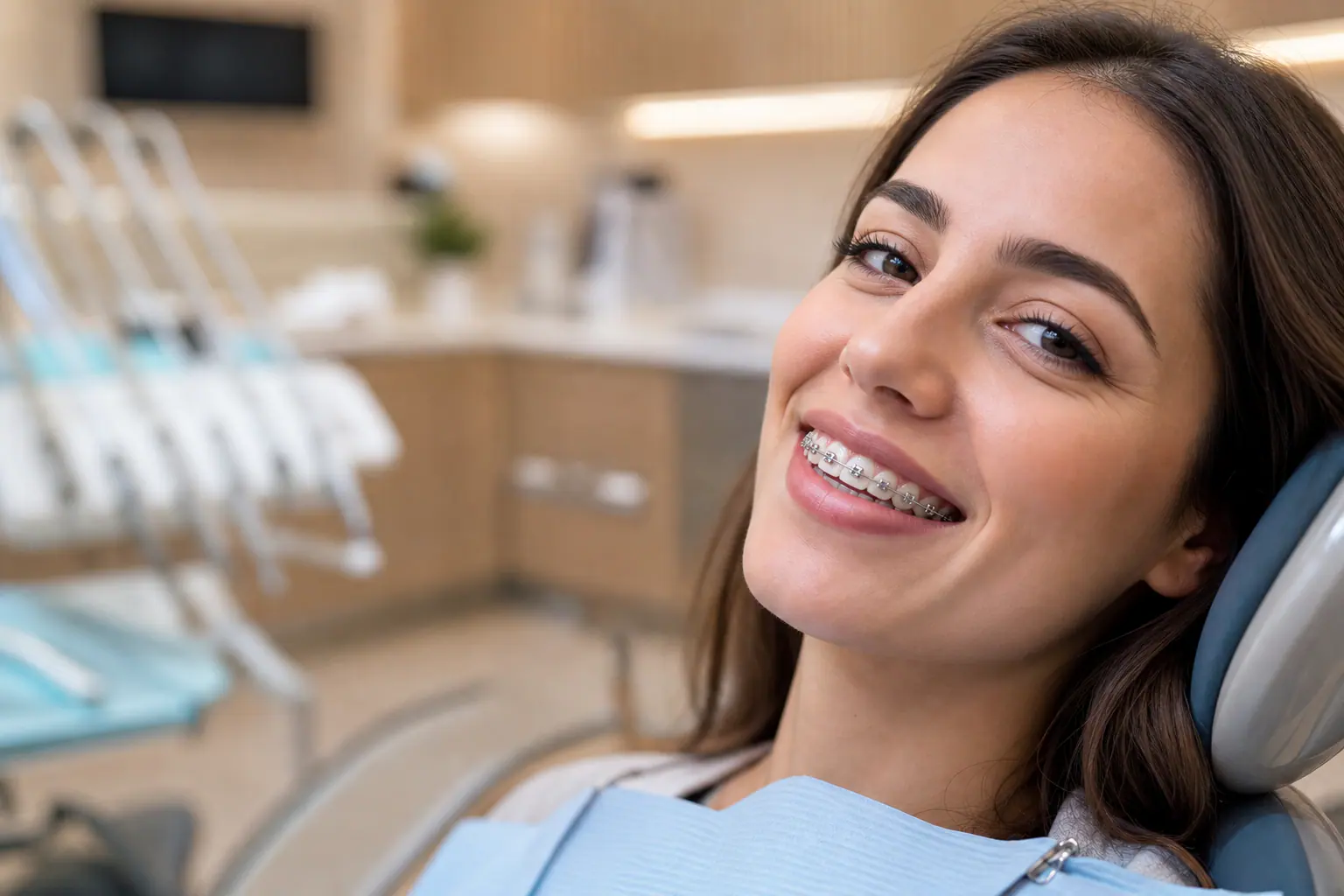
Fixed retainer behind the teeth
A thin wire that is attached behind the teeth, often behind the lower or upper front teeth. It stays in place and the patient does not need to remember to wear it daily.
- ● Previous frontal crowding
- ● Spaces closed in the orthodontic treatment
- ● High probability of tooth reoccurrence
- ● Difficulty adhering to the moving retainer
- ● Need for continuous fixation of the front teeth
If part of the fixed retainer becomes loose, the teeth may begin to move without the patient noticing. It needs to be fixed quickly.
Hawley mobile stabilizer
The Hawley retainer usually has a base and an anterior wire. Some patients may find it more visible than a clear retainer, but it is durable and adjustable in some cases.
- ● Suitable according to occlusal condition
- ● Movable stabilizer that can be adjusted
- ● An option when clear retainer alone is not suitable
- ● Requires commitment to wear and maintain it
Choosing a Hawley retainer or clear retainer depends on the condition of the teeth and the preference of the doctor and patient.
The difference between a fixed and a moving stabilizer
Fixed installer
- ● It remains behind the teeth and the patient does not remove it
- ● You don't need to remember to wear it daily
- ● Beneficial for front teeth in some cases
- ● Requires careful cleaning with floss or special tools
- ● It may be broken or loose and need repair
- ● Needs periodic reviews
Mobile stabilizer
- ● It can be removed and installed
- ● Easier to clean teeth
- ● It requires commitment to wear it
- ● It can be lost or broken
- ● It must be stored in its box
- ● It is removed when eating
- ● May need replacement over time
Sometimes the best option is a combination of both, especially in cases prone to relapse.
Which is better: fixed or transparent retainer?
A fixed retainer may be better if
- ● You have previously had severe anterior crowding
- ● You have difficulty adhering to the moving retainer
- ● Anterior spaces are closed
- ● The lower front teeth are vulnerable to recession
Clear fixative may be better if
- ● You want a mobile retainer that is easy to put on
- ● You can adhere to dress instructions
- ● You do not want a permanent wire behind your teeth
- ● You have previous clear braces
- ● Your condition is stable and suitable for a mobile retainer
The final selection is made after examining the teeth and occlusion.
How long do you wear braces?
The duration of wearing a retainer varies according to the condition and the doctor’s instructions. In many cases, your doctor may ask you to wear your retainer for a longer period of time at first, then move on to wearing it at night.
- ● The type of problem treated
- ● Intensity of crowding or prominence
- ● Were there any gaps between the teeth?
- ● Patient age and type of fixator
- ● Stability of the result after removing the braces
- ● Patient adherence and reviews
- ● Did a previous return occur after an old orthodontic treatment
The duration of wearing the retainer should not be reduced or stopped without asking the doctor.
Do I have to wear a retainer for life?
Teeth may change with age even after successful orthodontics. Therefore, the doctor may recommend that some patients wear the retainer at night for a very long time to maintain the result.
- ● Previously severe crowding
- ● Spaces closed in the orthodontic treatment
- ● A previous return after a orthodontic treatment
- ● Grinding or clenching of teeth
- ● A desire to maintain the result for the longest period
The longer you adhere to the retainer, the greater the chance of maintaining your braces result. This does not mean that the orthodontic treatment has failed.
Orthodontic retainer according to the type of previous treatment
Orthodontic retainer after metal and ceramic braces
After removing metal or ceramic braces, the patient needs a retainer to maintain the result. This applies to most fixed orthodontic cases.
- ● Movable transparent stabilizer
- ● Hawley stabilizer
- ● Fixed retainer behind the teeth
- ● A combination of fixed and dynamic
Related page: Check out the service
Braces retainer after clear braces
After the clear aligners are finished, the patient also needs a retainer. Many patients think that the last casts are enough, but often the patient needs a special fixative to maintain the result.
- ● Transparent stabilizer similar to molds
- ● Fixed stabilizer in some cases
- ● Mix according to reversion risk
Related page: Check out the service
Orthodontic retainer after treating crowded teeth
Tooth crowding, especially in the lower front teeth, is one of the most common conditions that may occur if the patient does not adhere to the retainer.
- ● Prevent tooth warping
- ● Keep the cutters in order
- ● Reduce overlay return
- ● Protect the evaluation result
Related page: Check out the service
Orthodontic retainer after treating the gaps
Gaps between teeth may return if retainers are not used, especially the space between the front teeth.
- ● Keep spaces closed
- ● Reduce front vacuum return
- ● Stabilizing teeth after closing the space
Related page: Check out the service
Orthodontic retainer after treating protruding teeth
After eruption treatment, a retainer helps maintain the position of the front teeth. If the protrusion is related to habits such as tongue thrusting, additional follow-up may be needed.
Related page: Check out the service
Orthodontic retainer after open bite treatment
Open bite cases need special attention in the stabilization phase, because they may be related to habits such as tongue thrusting or mouth breathing.
- ● Suitable stabilizer
- ● Follow the position of the tongue
- ● Follow up occlusion
- ● Regular reviews
Related page: Check out the service
Orthodontic retainer after deep bite treatment
After treating a deep bite, a retainer helps maintain the new occlusion and reduce the recurrence of overbite.
Related page: Check out the service
orthodontic treatment retainer for children and teens
Children and teenagers need special follow-up after orthodontics, because their teeth and jaws may continue to change as they grow. The role of the parents is important in reminding the child to wear the retainer, protect it, and clean it.
- ● Remind the child to wear a retainer
- ● Keep the stabilizer in the box
- ● Note any breakage or loss
- ∙ Attendance at follow-up dates
Related page: Check out the service
Orthodontic retainer for adults
Adults also need a retainer after braces. Some adults may be more susceptible to tooth movement due to previous gum disease, bruxism, or lack of retainer use after old braces.
- ● Clear fixative at night
- ● Fixed retainer for anterior teeth
- ● Periodic periodontal follow-up
- ● New retainer after crowns or implants
Age does not prevent confirmation, but rather makes follow-up more important in some cases.
Steps to evaluate and install the orthodontic retainer
Dental and occlusal examination
We evaluate the stability of the result after the evaluation and whether there is early action.
Determine the type of installer
Transparent, clear, fixed, or a combination depending on the situation and commitment.
Taking measurements or surveying
To design a precise retainer that fits the shape of your current teeth.
Installing the stabilizer
Install the fixed retainer or deliver the removable retainer with wearing instructions.
Explanation of the wearing schedule
When to wear it, when to remove it, and for how long daily or nightly wear.
Care instructions
Clean, preserve, and avoid heat and harsh foods.
Periodic follow-up
Checking the stability of the teeth and the safety of the fixed retainer or replacing the removable one.
Modify the plan when needed
If there is movement, breakage or loss, we will determine the appropriate repair or replacement.
Care guide and common problems with aligner retainers
What happens if I don't wear a retainer?
If you stop wearing your retainer, your teeth may gradually begin to move. The move may be subtle at first and then become apparent over time.
- ● Recrowding of the front teeth
- ● Opening spaces between teeth
- ● Tilt or rotation of some teeth
- ● Change in occlusion
- ● Difficulty installing the old stabilizer
- ● The need for corrective braces if the teeth move a lot
If you stop wearing your retainer and start to notice a change, do not try to force the old retainer. See a doctor.
If the retainer becomes tight what should I do?
If your retainer feels tight, it may be because your teeth have moved or haven't been worn for a while. Don't force it.
- ● It does not enter completely
- ● Causes severe pain
- ● Presses one tooth firmly
- ● Causes gum injury
- ● Became different after leaving it for a long time
See your doctor to evaluate the situation and determine whether the retainer can be repaired or needs to be replaced.
What do I do if the orthodontic treatment stabilizer is lost?
If the retainer is lost, you must contact the clinic quickly, because the teeth may begin to move within a short period.
- ● Call the clinic to book an appointment
- ● Don't wait long weeks
- ● Do not use someone else's installer
- ● Always keep new retainer in its packaging
- ● Avoid wrapping it in a tissue so that it is not accidentally thrown away
The sooner the retainer is replaced, the less likely the teeth will move.
What should I do if my orthodontic retainer breaks?
If the retainer breaks, do not try to glue it at home. Non-specific adhesives may be harmful or change the shape of the fastener.
- ● Broken clear retainer
- ● Cracks in the mold
- ● Hawley wire fracture
- ● Fixed stabilizer outage
- ● Loosening of the wire from one of the teeth
The stabilizer may need repair or replacement depending on its type and condition.
Fixed Fixator: What should I do?
If a fixed retainer comes loose from a tooth, the patient may not notice an obvious problem at first, but the teeth may begin to move.
- ● Feeling of a wire moving behind the teeth
- ● Tingling in the tongue
- ● There is a new space between the teeth
- ● Food collects around the wire
- ● Note that part of the wire is not attached
Do not pull or cut the wire yourself unless directed by a doctor in an emergency. Book an appointment to have it repaired.
Is it possible to make a new stabilizer after years?
Yes, a new retainer can be made after years if the teeth are still in good position or if there is slight movement. But if the teeth move a lot, you may need corrective braces.
- ● The old retainer is lost or broken
- ● The retainer is no longer inserting well
- ● Change in the shape of teeth after crowns or veneers
- ● Old and worn fastener
- ● Squeak effect on the mold
The examination determines whether it is possible to make a stabilizer only or whether a simple correction is needed before the stabilizer.
Does the retainer restore the teeth as they were?
The installer does not work like the full orthodontic treatment. Its main function is to maintain position, not to move the teeth too much.
- ● The installer does not enter
- ● The front teeth are clearly crowded
- ● Large voids appeared
- ● Occlusal change
- ● It's been a long time without a stabilizer
Do not try to use the stabilizer forcefully to correct a large movement. You may need corrective braces.
Cleaning the transparent and removable retainer
Cleaning the stabilizer is very important to avoid odor, staining, and bacteria buildup.
- ● Rinse the retainer when removing it
- ● Clean it gently as instructed by your doctor
- ● Do not use hot water as it may distort the retainer
- ● Do not eat while wearing the removable retainer
- ● Place it in its case when not in use
- ● Do not leave it on a tissue or near animals
If an odor or discoloration develops that won't go away, the retainer may need special cleaning or replacement.
Cleaning the fixed retainer behind the teeth
Fixed retainers need careful cleaning because they may collect plaque and tartar behind the teeth.
- ● Brush behind the teeth carefully
- ● Use specialized floss or tools that help pass the floss
- ● Attend regular cleaning at the clinic
- ● Do not neglect bleeding gums around the wire
- ● See a doctor if you feel that the wire has come loose
A fixed retainer is comfortable because it does not require daily wear, but it does require excellent hygiene. Check out the service
Is it possible to eat with braces on?
If the retainer is mobile, eating while it is in the mouth is not recommended. You must remove it, place it in the tray, and then clean the teeth before putting the retainer back on.
- ● Broken stabilizer
- ● Deformation of the mold
- ● Food gathering
- ● Bad smell
- ● Pigmentation fixative
The fixed retainer remains on while eating, but you should avoid biting on hard objects that may loosen the wire.
Is it possible to drink coffee with braces?
If the retainer is mobile or transparent, it is best to remove it when drinking coffee, tea, or colored or hot beverages.
- ● Drink only water while wearing a clear retainer
- ● Remove the stabilizer when drinking coffee or tea
- ● Rinse the mouth before returning it
- ● Do not leave the stabilizer out of its package for a long time
Hot and colored beverages may cause staining or discoloration of the retainer.
Fixer odor: why does it occur?
An unpleasant odor may develop if the retainer is not cleaned well or if it is worn over unclean teeth.
- ● Accumulation of bacteria
- ● Not cleaning it daily
- ● Wear it after eating without brushing your teeth
- ● Drink sweetened drinks with it
- ● The presence of gingivitis or tartar
If the odor persists despite cleaning, your retainer, teeth, and gums should be examined.
Does orthodontic retainer cause pain?
The new retainer may feel a slight pressure sensation at first, but it should not cause severe pain or injury.
- ● Causes severe pain
- ● Does not enter easily
- ● Injures the gums
- ● Presses one tooth firmly
- ● It does not stay in place
Do not attempt to modify the installer yourself. See a doctor.
Does braces affect speech?
A removable retainer may affect speech in the early days, especially the Hawley retainer. Pronunciation often improves after a short period of getting used to it.
- ● Read aloud
- ● Speak naturally
- ● Do not remove the retainer too often if it is required to be worn
- ● See a doctor if significant difficulty persists
Clear stabilizer often has less effect on speech.
Do I need revisions after installing the stabilizer?
Yes, follow-up after the installer is important. It is best to check with your doctor to make sure that the retainer is working well and that the teeth are stable.
- ● Checking the stability of teeth
- ● Check the fixed stabilizer
- ● Repair any loose part
- ● Replace the mobile stabilizer if it is damaged
- ● Early motion detection
- ● Modify the dress plan if necessary
The retainer requires follow-up like any oral appliance.
orthodontic treatment and sports sticker
The removable retainer should not be worn during contact sports or risk of impact on the mouth.
- ● Do not use the retainer as a sports protector
- ● Remove the retainer before strenuous exercise
- ● Put it in its box
- ● Use a suitable mouth guard if recommended by your doctor
If you take a hit and lose or break your retainer, see the clinic.
Orthodontic retainer with squeak
If you suffer from teeth grinding or nighttime pressure, you should tell your doctor. Some retainers may wear or break faster in people with stridor.
- ● Corrosion of the fastener
- ● Cracked clear fixative
- ● Jaw pain in the morning
- ● Repeated fracture of the stabilizer
The doctor determines whether the retainer is sufficient or whether a different protective device is needed.
Orthodontic retainer after veneers or crowns
If you get veneers or crowns after braces, the shape of the teeth may change and the old retainer may not fit. You may need a new stabilizer.
- ● Veneers or crowns were installed after orthodontics
- ● Changed the shape of the front teeth
- ● The fixative is no longer inserted after treatment
- ● Fracture of the retainer after restorations
Do not try to force old retainers over teeth that are out of shape.
Orthodontic retainer after dental implant
If you have dental implants, the retainer must be coordinated with the implant plan. Dental implants do not move like natural teeth.
- ● An implant crown was installed after orthodontics
- ● Change in the shape of teeth after implantation
- ● The old retainer does not fit after restoration
The design of the retainer requires consideration of the location of the implant and crown. Check out the service
Common errors with the orthodontic treatment installer
- ● Do not wear retainer according to instructions
- ● Stop the retainer after a short period without asking the doctor
- ● Place the fixative in a tissue
- ● Eating with a movable stabilizer
- ● Drink coffee with a clear fixative
- ● Clean the retainer with hot water
- ● Failure to repair the fixed retainer when it comes loose
- ● Force the retainer tight to the teeth
- ● Do not make a new stabilizer after it is broken or lost
- ● Not seeing a doctor for years after braces
Avoiding these mistakes will preserve the results of the braces for a longer period.
When do I need an urgent installer appointment?
- ● Loss or breakage of the fastener
- ● The retainer does not fit or has become tight
- ● Severe pain from the retainer
- ● Loosening of the fixed retainer
- ● The wire injures the tongue
- ● A new space appears between the teeth
- ● Visible movement of teeth
- ● Bleeding gums around the fixed wire
- ● End of veneer or crown treatment renders the retainer unsuitable
The sooner you review, the greater the chance of keeping score.
Braces fixture in Al Shamkha - Abu Dhabi
If you are looking for orthodontic retainers in Abu Dhabi, AHLI Specialists Medical Center in Al Shamkha offers a service for evaluating, designing, and following up orthodontic retainers after treatment.
We help you choose the right retainer, repair your fixed retainer, or make a new retainer if it is lost or broken.

Why choose AHLI Specialists Medical Center?
- ✓ Appropriate evaluation after the evaluation is completed
- ✓ Transparent, fixed or moving stabilizer options depending on the case
- ✓ Treating cases of loss or breakage of the stabilizer
- ✓ Fix a fixed retainer behind the teeth when needed
- ✓ New fastener design after a simple move or after renovations
- ✓ Follow up on the return of crowding or gaps after the evaluation
- ✓ Clear instructions for care and cleaning of the retainer
- ✓ Connecting the retainer service with metal, ceramic and clear braces services
- ✓ Location close to Al Shamkha, Baniyas, Al Falah and Shakhbout
- ✓ A quiet medical environment suitable for families
Services associated with the orthodontic retainer
Orthodontics
The main service for correcting tooth alignment and occlusal problems.
Metal and Ceramic Braces
Fixed braces after which the patient needs a retainer.
Clear Aligners
Transparent molds then need a stabilizer to maintain the result.
Orthodontics for children
Follow-up of children and adolescents after orthodontics.
Treatment of crowded teeth
It is one of the most common cases that require a stabilizer after treatment.
Treating gaps between teeth
Gaps may return if fixative is not used.
Protruding teeth treatment
It needs a retainer after braces to maintain the position of the front teeth.
Open bite treatment
You may need special installation and monitoring.
Deep bite treatment
Requires retaining to maintain the new occlusion.
Crossbite treatment
It needs to be monitored and installed after patching.
Teeth cleaning
Important to clean limescale around fixed retainer.
When do I book an appointment for an orthodontist?
The first step is to examine the teeth and retainer, then determine whether you need a repair, a new retainer, or simple corrective braces.
AHLI Specialists Medical Center - Al Shamkha, Abu Dhabi
For reservations and inquiries: 02-448-7553
Location: Al Qayed Street, Al Shamkha, Abu Dhabi
Short answers
What is a orthodontic treatment sticker?
An orthodontic retainer is a device used after orthodontic treatment to maintain the teeth in their new position and reduce the possibility of crowding or gaps returning.
Is braces retainer necessary after braces are removed?
Yes, an orthodontic retainer is often necessary after the braces are removed or the clear trays are finished, because the teeth may move if they are not fixed.
What are the types of orthodontic treatment stabilizers?
They include the removable clear retainer, the Hawley retainer, and the fixed retainer behind the teeth. The doctor may combine more than one type depending on the case.
What do I do if the orthodontic treatment stabilizer is lost?
You must contact the clinic quickly to make a new retainer or evaluate the teeth, because the teeth may begin to move if they remain without a retainer for a period of time.
Where can I find orthodontic treatment installers in Abu Dhabi?
An orthodontist appointment can be booked at AHLI Specialists Medical Center in Al Shamkha - Abu Dhabi.
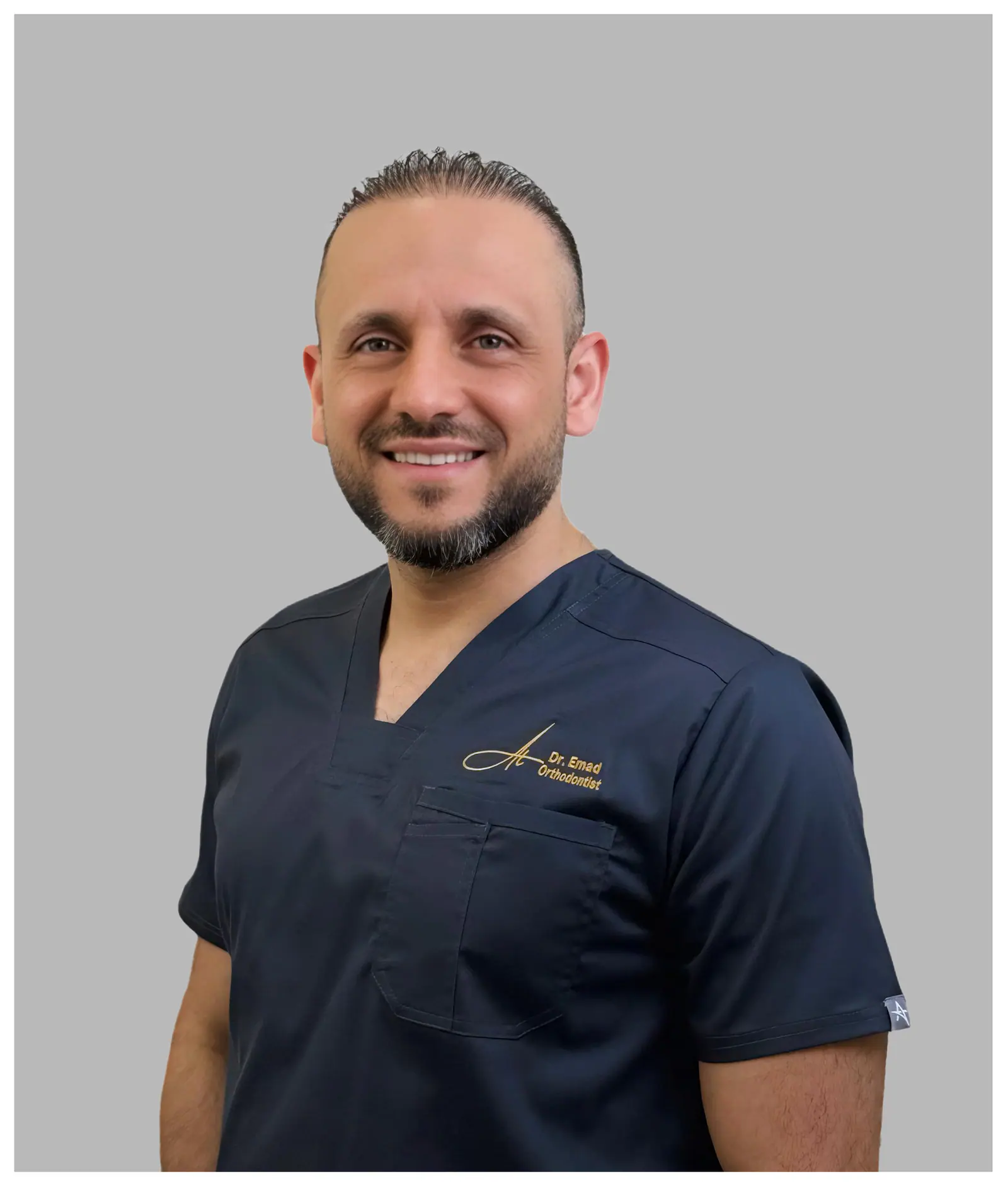
Orthodontists

Frequently asked questions about the orthodontic treatment installer
Should a retainer be worn after braces?
How long do you wear braces?
Can the stabilizer be stopped after a year?
Are braces painful?
What should I do if the retainer becomes tight?
Does a retainer restore teeth if they move?
Is a fixed fixture better than a mobile one?
Does the clear retainer break?
Is it possible to eat with a mobile stabilizer?
Can you drink coffee with a clear stabilizer?
How do I clean the orthodontic treatment installer?
Why does stabilizer smell bad?
What should I do if the fixed retainer breaks?
Do children need a retainer after braces?
Is a retainer necessary after clear braces?
Book an appointment with the orthodontic treatment
Evaluation and installation or repair of orthodontic retainers to maintain the results of your treatment after the braces are finished.