
Deep bite treatment in Abu Dhabi
Correcting excessive tooth overlap and improving occlusion at AHLI Specialists Medical Center - Al Shamkha
Do the upper teeth cover the lower teeth too much when the mouth is closed?
Do your lower teeth not show up well when you smile or bite?
Do you feel like your front teeth are pressing on your gums or causing wear?
Have you been told that you have a deep bite and need braces?
Are you looking for deep bite treatment in Abu Dhabi or deep bite correction in Al Shamkha near Baniyas, Al Falah and Shakhbout?
A deep bite is an occlusal problem that occurs when the upper front teeth cover the lower teeth more than normal when the mouth is closed. The problem may seem minor at first, but it may affect tooth wear, gum health, jaw comfort, smile shape, and chewing function if it is evident or advanced.
At AHLI Specialists Medical Center in Al Shamkha - Abu Dhabi, we provide a comprehensive evaluation of deep bite cases in children, adolescents and adults, determining the cause and degree of overbite, examining the teeth, gums and jaw, then choosing the appropriate treatment plan such as metal braces, ceramic braces, clear braces, orthodontic devices for children, or advanced orthodontic plans depending on the case. We serve clients from Al Shamkha, Baniyas, Al Falah, Al Shawamekh, Shakhbout, Mohammed bin Zayed City, Khalifa City, Al Bahia, Al Raha, and various areas of Abu Dhabi.
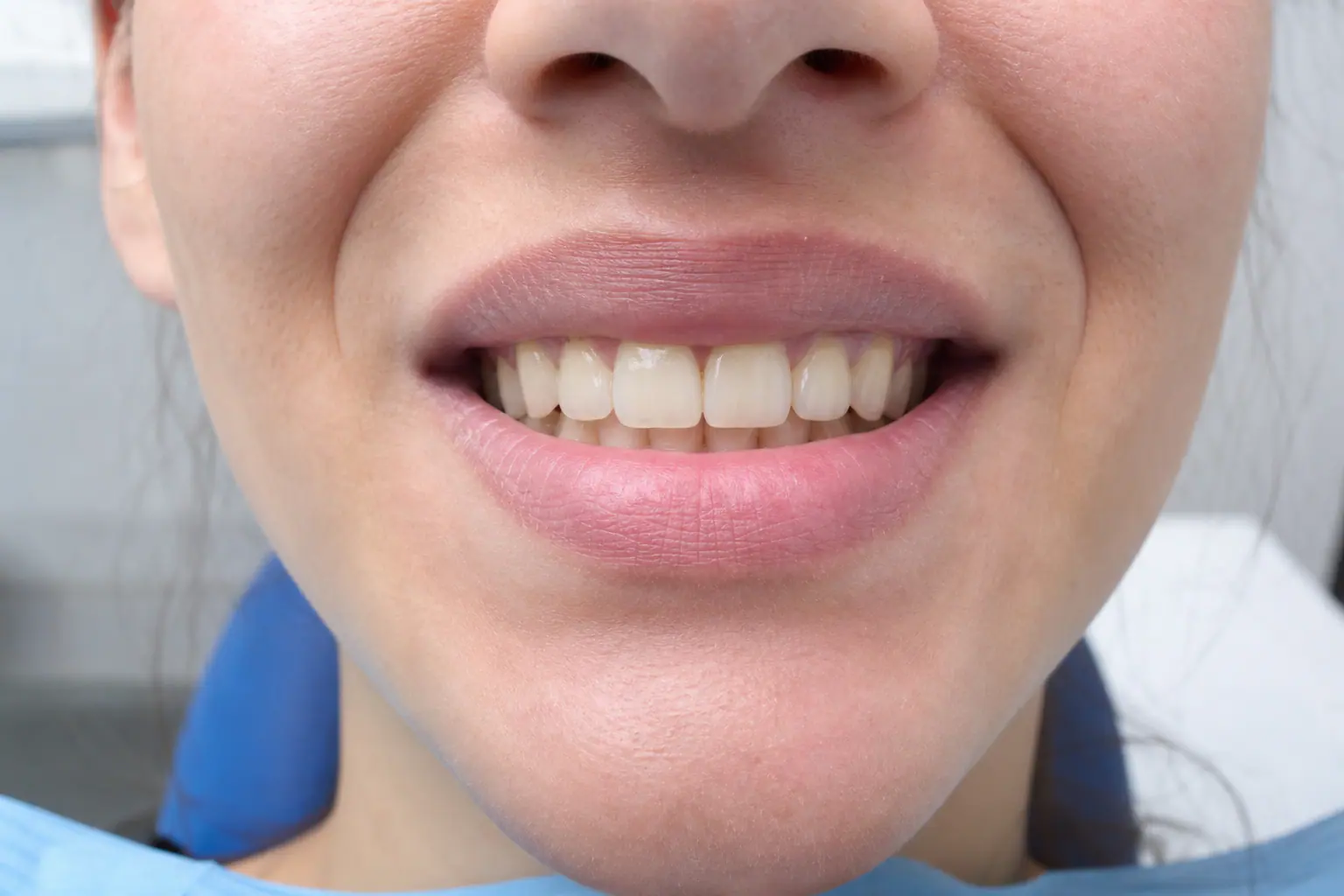
What is a deep bite?
A deep bite is a malocclusion in which there is an excessive overlap of the upper front teeth over the lower teeth when the mouth is closed. Normally, the upper teeth cover a small portion of the lower teeth, but in a deep bite this overlap is larger than normal.
A deep bite is not just a smile shape, it is an imbalanced relationship between the upper and lower teeth and may need orthodontic treatment if it affects your oral health or dental function.
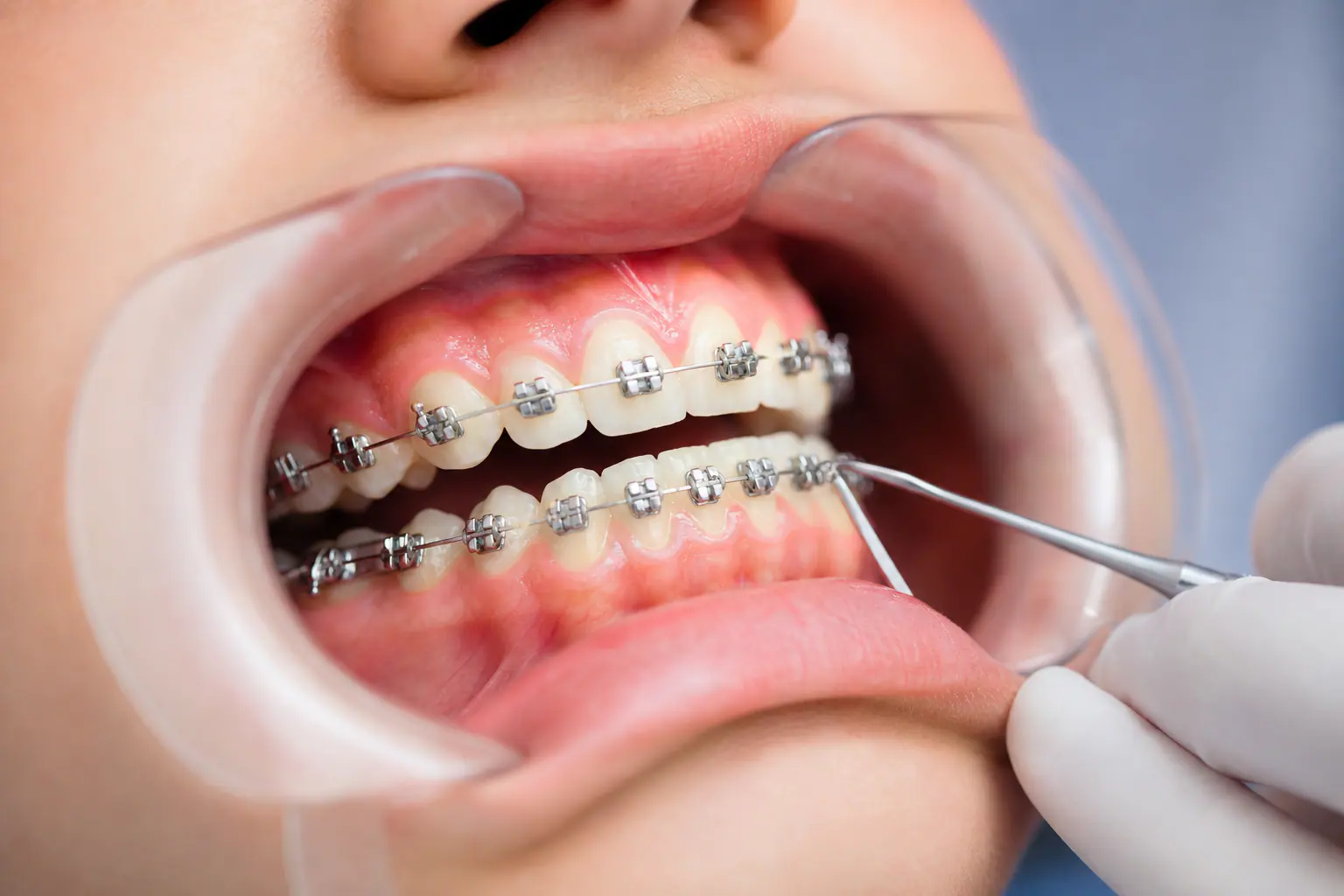
The difference between a deep bite and a natural bite
Natural bite
- ● The upper front teeth cover a small portion of the lower teeth when the mouth is closed
- ● Proper contact helps with biting and chewing
- ● Balanced force distribution when closing
Deep bite
- ● Vertical overlap is redundant
- ● The lower teeth may disappear behind the upper ones
- ● Excessive pressure may occur on the front teeth
- ● The lower teeth may touch the gums or the roof of the mouth
- ● Erosion or sensitivity may appear in the teeth
- ● Smile shape and occlusion may be affected
Determining whether the bite is deep enough to require treatment is done by orthodontic examination, not just by sight.
Is a deep bite only a cosmetic problem?
no. A deep bite may affect the appearance of a smile, but it may also affect the health of your teeth, gums, and jaw.
- ● Erosion of the front teeth
- ● Tooth sensitivity
- ● Tooth pain when biting
- ● Pressure on the gums
- ● Injury to the roof of the mouth in severe cases
- ● Pain or fatigue in the jaw muscles
- ● Difficulty in cleaning some areas
- ● Increased risk of fracture of front fillings or crowns
- ● Problems with occlusion and chewing
- ● Unbalanced smile appearance
- ● Increased difficulty of some cosmetic treatments such as veneers if bites are not treated
Therefore, treating deep bites may be important for health and function, not just for improving appearance.
Deep bite marks
- ● The upper teeth cover the lower teeth to a large extent
- ● The lower teeth do not appear when smiling
- ● Erosion in the front teeth
- ● Pain or sensitivity in the edges of the teeth
- ● The lower teeth touch firmly behind the upper teeth
- ● The lower teeth put pressure on the gums of the upper teeth or the roof of the mouth
- ● Jaw pain or fatigue when chewing
- ● Difficulty in cleaning some areas due to occlusion
- ● A grinding or grinding sound
- ● A smile in which the upper teeth appear to dominate the lower ones
- ● Severe occlusion of the front teeth
- ● The problem returns after a previous correction
- ● Fracture or corrosion of front gaskets or panels due to pressure
If you notice one or more of these signs, it is best to book an orthodontic evaluation to find out the degree of your deep bite and treatment options.
Causes of deep bite
Genetic factors
The patient may inherit the shape of the jaw or the relationship of the teeth from the family, making a deep bite more likely.
Jaw growth
A deep bite may be related to the way the upper or lower jaw grows or the direction of facial growth.
Short back teeth or insufficient eruption
If there is not enough height in the back teeth, the front teeth may close deeper.
Increased eruption of front teeth
The front teeth may be more vertically protruding or protruding than normal, increasing the depth of the bite.
Loss of back teeth
Loss or wear of molars may reduce posterior occlusal height and increase pressure on the anterior teeth.
Tooth erosion
Severe wear, especially on the back teeth, may contribute to a deepening of the bite over time.
Teeth grinding
Squeezing or grinding teeth may cause tooth wear, change the occlusal relationship, and may increase some bite problems.
Teeth crowding
Crowded teeth may sometimes be associated with a deep bite, especially if the lower incisors are tilted or sandwiched behind the upper ones.
Failure to treat the problem in childhood
Some cases of deep bite begin at a young age and increase with growth if not monitored.
Back after the orthodontic treatment
The deep bite or part of it may return after orthodontics if the patient does not adhere to the retainer or if the previous plan was not sufficient to stabilize the occlusion.
Knowing the cause is very important before treatment, because treating the bite without treating the cause may lead to the problem returning or continued erosion.
Deep bite treatment options
Treatment for a deep bite depends on the severity of the condition, the patient's age, the cause of the problem, the presence of erosion or pain, and the health of the gums and teeth.
Metal braces for treating deep bites
Metal braces are a popular and effective option for treating deep bites, especially in cases that require precise control of tooth movement and occlusion.
- ● Moderate or severe deep bite
- ● Crowding with deep bite
- ● Occlusal wear
- ● Need for elastics or assistive devices
- ● A condition that requires strong control of tooth movement
- ● A teenager or adult who needs comprehensive treatment
Metal braces are more visible, but they give the doctor a good ability to correct the relationship between the upper and lower teeth.
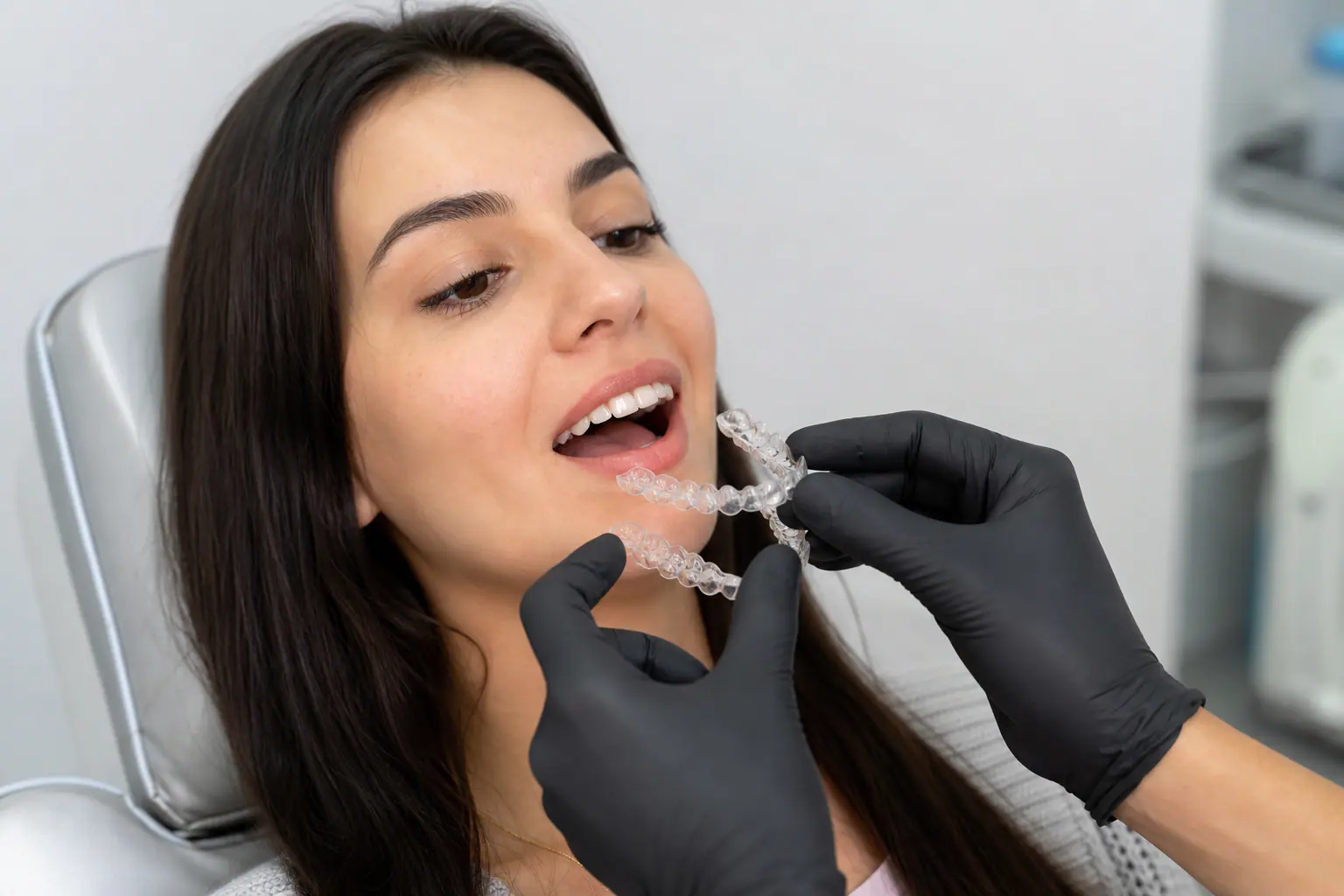
Clear aligners for treating deep bites
Clear braces may be a suitable option for some cases of simple to moderate deep bites, especially if the patient is committed to wearing the trays as instructed by the doctor.
- ● Simple or moderate deep bite
- ● Desire for less visible treatment
- ● Commitment to wearing the casts for sufficient hours daily
- ● Teeth and gums in good condition
- ● No severe structural problem
- ● A condition in which teeth can be moved predictably in trays
It may not be suitable if the deep bite is severe, or if there is extensive wear, complex malocclusion, or inability to adhere to the casts.
Ceramic braces to treat deep bites
Ceramic braces work in a similar way to metal braces, but are less noticeable because the brackets are a color similar to the teeth. It may be suitable for patients who want fixed braces with a calmer appearance.
- ● Correction of a deep bite with fixed braces
- ● Less visible than metallic appearance
- ● Suitable treatment for adults or adolescents
- ● Good control of tooth movement
- ● An orthodontic plan that is not suitable for clear braces alone
Ceramic braces require good hygiene care to reduce pigmentation and gingivitis.
Orthodontics to treat deep bite
Orthodontics is the primary service for correcting a deep bite and associated occlusal problems.
- ● Gradually reduce excess overlap
- ● Improving the relationship of the upper and lower teeth
- ● Correction of crowding or accompanying protrusion
- ● Use assistive devices as needed
The type of braces is chosen after a comprehensive evaluation of the degree and cause of the bite.
The right plan is not just an “orthodontist,” but a treatment for both the occlusion and cause and effect.
The difference between types of occlusal problems
Open bite vs deep bite
It occurs when the upper and lower teeth do not meet when closed, and a space appears between the teeth.
It occurs when the upper teeth cover the lower teeth more than normal, i.e. there is excessive vertical overlap.
A deep bite means too much coverage, while an open bite means not enough contact. Each case has different causes and treatment plan.
Deep bite vs protrusion
It means increasing the vertical overlap between the upper and lower teeth.
It means that the upper front teeth are advanced forward more than normal compared to the lower teeth.
The patient may have only a deep bite, only a protrusion, or both. When they combine, treatment may require a more comprehensive orthodontic plan.
How is a deep bite diagnosed?
Vertical overlap check
The amount of coverage of the upper teeth of the lower teeth is determined.
Occlusal examination
The relationship of the back and front teeth is evaluated, and whether there is excessive pressure or inappropriate contact.
Examination of worn teeth
We look for wear, breakage, sensitivity, or bite-impacted restorations.
Examination of the gums and roof of the mouth
It is ensured that there is no pressure or irritation due to the lower teeth.
Examination of the jaw joint and muscles
If there is pain or grinding, we evaluate the relationship of the bite to the jaw pain.
Pictures and x-rays
We may need x-rays, pictures, and dental scans to study the roots, jaw, and type of problem.
Cause analysis
We determine whether the deep bite is dental, skeletal, or related to tooth wear or loss.
Develop a treatment plan
After diagnosis, it is determined whether treatment will be treated with metal, ceramic, clear braces, an orthodontic appliance, or a combined plan with dental restoration.
Steps to treat a deep bite
Consultation and evaluation
The doctor begins by examining the teeth, occlusion, gums, erosion, and any pain or functional complaints.
Determine the degree of deep bite
The amount of overlap between the upper and lower teeth is measured and it is determined whether the condition is simple, moderate, or severe.
Pictures and x-rays
We may need pictures, x-rays, and dental scans to analyze the relationship of the teeth, jaws, and roots.
Determine the cause
It is determined whether the problem is dental, structural, or related to erosion, loss of teeth, or bruxism.
Choose a treatment plan
Metal, ceramic, clear braces, orthotics, or a combined plan are chosen depending on the case.
Oral preparation
The patient may need teeth cleaning, cavity treatment, gum treatment, or temporary restorations before braces can begin.
Starting orthodontic treatment
The teeth are gradually moved to improve overbite and occlusion.
Track progress
Occclusion, tooth level, gum health, and oral hygiene are reviewed during treatment.
Termination of treatment
After achieving a better occlusal relationship, the aligners or casts are finished according to plan.
Installed after orthodontic treatment
A retainer is used to maintain the result and reduce the possibility of recurrence of the deep bite.
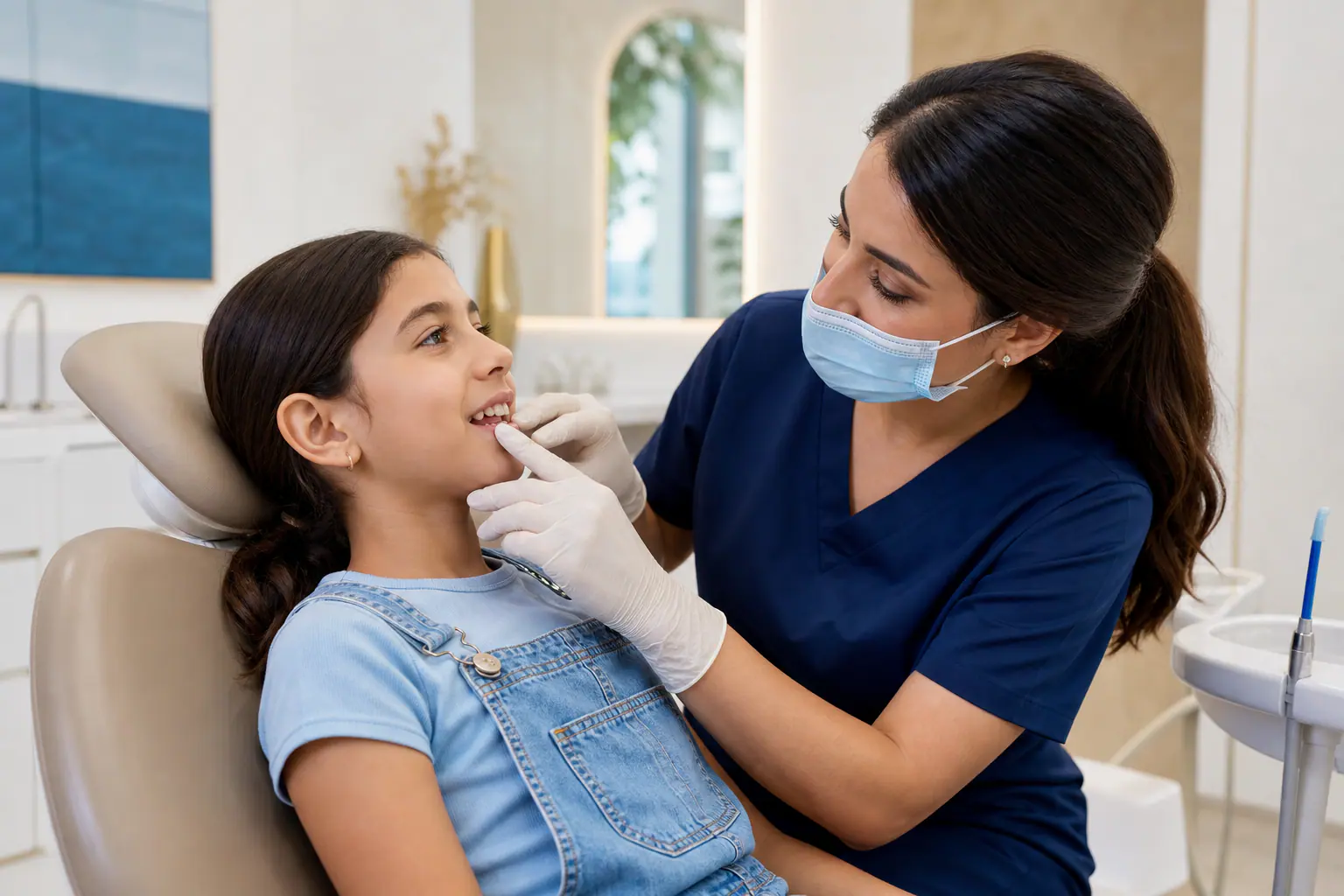
Is deep bite treatment painful?
Treating a deep bite with braces is not constantly painful, but it may cause temporary pressure or discomfort after braces are fitted, after adjustments, or when clear trays are changed.
- ● Pressure on teeth
- ● Slight sensitivity when chewing in the first days
- ● Friction from brackets
- ● Discomfort when using elastics
- ● Temporary difficulty eating
- ● Need time to get used to the change in bite
These symptoms are often temporary. If the pain is severe or persistent, you should see a doctor.
Does the deep bite return after treatment?
A deep bite may return if the result is not maintained with a retainer or if factors such as bruxism, missing teeth or persistent wear remain.
- ● Do not use a stabilizer
- ● Loss or breakage of the stabilizer
- ● Teeth grinding
- ● Tooth erosion
- ● Loss of back teeth
- ● Natural changes with age
- ● Failure to treat the underlying cause
- ● Lack of follow-up after treatment
Therefore, stabilizer and follow-up are an essential part of treatment, not an optional step.
Important topics in the treatment of deep bite
Deep bite in children
Deep bites in children may appear during the development of the teeth and jaw. Some cases only need follow-up, and some require early intervention if they are severe or affect the teeth, gums, or occlusal growth.
- ● The upper teeth cover the lower ones too much
- ● The lower teeth do not appear when biting
- ● Early tooth wear
- ● The child presses hard on the teeth
- ● Difficulty in closing the teeth comfortably
- ● Crowding in the front teeth
- ● Protrusion or retraction of the jaw
- ● Habit of teeth grinding
- ● Early loss of baby teeth
- ● A deep bite that increases with the replacement of teeth
Early evaluation helps determine whether the child needs follow-up, an orthosis, interim treatment, or comprehensive orthodontics later. Check out the service
When should a child's deep bite be examined?
It is preferable to examine the child if the parents notice that the upper teeth cover the lower teeth to a large extent, or if there is wear, pain, or difficulty biting.
- ● A pronounced deep bite
- ● The lower teeth disappear when closed
- ● Erosion in the front teeth
- ● Obvious crowding
- ● Teeth grinding during sleep
- ● Pain or sensitivity
- ● Premature loss of baby teeth
- ● A clear difference in the shape of the jaw or smile
- ● Difficulty in cleaning the front teeth
- ● Problems with replacing teeth
Not every child needs immediate treatment, but examination determines the appropriate time for intervention. Check out the service
Deep bite in adults
Deep bites in adults can be treated in many cases, but treatment requires careful evaluation of the health of the gums, bone and teeth, especially if there is erosion, fillings, crowns or missing teeth.
- ● Degree of bite depth
- ● Are there any erosions in the teeth?
- ● Is there pain in the jaw?
- ● Are the lower teeth touching the gums or the roof of the mouth?
- ● Gum and bone health
- ● The presence of fillings, crowns, or veneers
- ● The presence of implants or missing teeth
- ● There is squeaking or pressure
- ● Did the previous treatment bring back results?
- ● Is the condition dental or skeletal?
- ● Can it be treated with orthodontics or does it require a multidisciplinary plan?
Treatment for adults may include braces, clear molds, rebuilding some worn teeth, treating bruxism, or replacing missing teeth, depending on the case.
Does a deep bite cause tooth erosion?
Yes, a deep bite may contribute to tooth wear, especially if the contact between the front teeth is strong or lopsided. Erosion may cause sensitivity, a change in the shape of the teeth, or shortening of the teeth.
- ● The edges of the front teeth have become flat
- ● Sensitivity to cold or hot
- ● Small cracks
- ● Repeated fracture of the anterior implants
- ● Change in the shape of the teeth
- ● Pain when biting
- ● A rubbing or squeaking sound
- ● Erosion behind the upper teeth or on the edges of the lower teeth
If wear is evident, the plan may be for orthodontic treatment with tooth protection and possibly restorations after occlusal correction.
Does a deep bite affect the gums?
In some cases, a deep bite may affect the gums, especially if the lower teeth put pressure on the gums of the upper teeth or on the roof of the mouth. This may cause pain, irritation, or receding gums in advanced cases.
- ● Pain in the gums behind the upper teeth
- ● Ulceration or redness on the roof of the mouth
- ● Receding gums around the lower or upper teeth
- ● Bleeding or gingivitis
- ● Clear pressure when biting
- ● A feeling that the lower teeth are “hitting” the gums
In these cases, evaluation should not be postponed because the occlusion may be causing persistent irritation.
Does a deep bite cause jaw pain?
In some patients, a deep bite may be associated with jaw pain or fatigue, especially if occlusion causes excessive pressure or if there is clenching or muscle tension. But it is not the only cause of jaw pain, so the condition must be fully evaluated.
- ● Pain in the jaw joint
- ● Fatigue when chewing
- ● Morning headache
- ● Pain in the facial muscles
- ● Difficulty opening the mouth sometimes
- ● Pressure on the front teeth
- ● Squeaking or grinding during sleep
If jaw pain is present, occlusion, muscles, jaw joint, and habits should be evaluated before a plan is made.
Deep bite and teeth grinding
Nocturnal teeth grinding or clenching may increase tooth wear and may make deep bite problems more noticeable. Sometimes a patient needs braces to correct bite, and may also need a night guard or plan to control grinding after treatment.
- ● Obvious tooth erosion
- ● Pain when waking up
- ● Morning headache
- ● Jaw pain
- ● Broken fillings or coverings
- ● Tooth sensitivity
- ● Hearing a grinding sound while sleeping
- ● Lines or cracks in the teeth
Treating a deep bite with bruxism requires careful planning to protect the result and the teeth.
Deep bite and crowding of teeth
A deep bite may be associated with tooth crowding, especially in the lower front teeth. In this case, the treatment aims not only to raise the bite or reduce the overbite, but also to align the teeth and improve the cleaning area.
- ● Arrange crowded teeth
- ● Adjusting the inclination of the cutters
- ● Improved vertical overlay
- ● Treat the gums if they are inflamed
- ● Use fixed or transparent braces, depending on the case
- ● Retained after treatment to prevent recurrence of crowding and bite
The plan may include the use of elastics or orthotics in some cases. Check out the service
Deep bite and gaps between teeth
A deep bite may appear with gaps between the teeth in some cases, especially if there is a protrusion or difference in the size of the teeth or a retraction after previous braces. Closing spaces without occlusal correction may not be sufficient.
- ● Correction of deep bite
- ● Close the blanks in the orthodontic treatment
- ● Evaluation of tooth size
- ● Using cosmetic fillings or veneers after orthodontics in specific cases
- ● Strong fixative after treatment
It is necessary to know whether the gaps are caused by the position of the teeth only, or whether the deep bite is part of the problem. Check out the service
Can a deep bite be treated without surgery?
Yes, many deep bite cases are treated non-surgically using braces, clear trays, or orthodontic appliances. Surgery is only discussed in severe skeletal cases or when the problem is caused by the relationship of the jaws and not just the teeth.
- ● A deep bite is dental rather than skeletal
- ● The condition is mild or moderate
- ● Teeth can be moved orthodontically
- ● The patient is in a developmental stage
- ● No severe jaw problem
- ● The patient is committed to treatment and stabilized
- ● Good gum and tooth health
The decision requires examination, x-rays, and evaluation analysis.
When might a deep bite require maxillofacial surgery?
Some severe cases in adults may be related to the relationship of the jaws or bone growth, not just the position of the teeth. In these cases, orthodontics alone may not be enough to achieve an ideal and stable result.
- ● Severe skeletal deep bite
- ● A clear problem in the relationship of the upper and lower jaw
- ● Significant functional difficulty
- ● A clear difference in the shape of the face or chin
- ● Corrosion or persistent severe pressure
- ● Failure or recurrence after previous treatment
- ● A need to correct the relationship of the jaws, not just the teeth
Surgery is not the first choice for all cases, and is only decided after a comprehensive orthodontic and surgical evaluation.
Does veneer treat deep bites?
Veneers do not treat a true deep bite. Veneers may improve the shape and color of teeth, but they do not correct the relationship of the upper and lower teeth if there is excessive overlap or strong pressure.
- ● Broken veneer
- ● Wear or stress on restorations
- ● Unstable result
- ● Need for greater cold
- ● Persistent functional problem
- ● Pain or sensitivity due to pressure
If a patient wants a veneer and has a deep bite, braces may be the best option first, followed by cosmetic correction after the bite is corrected. Check out the service
Deep bite treatment before cosmetic surgery
Before making veneers, front crowns, or smile design, your bite must be evaluated. If the bite is deep, there may be excess pressure on the front teeth and restorations.
- ● Reduce the risk of broken veneers or fillings
- ● Improving the shape of the smile
- ● Reducing the need to file teeth
- ● Improved occlusion
- ● Better bite force distribution
- ● Make the cosmetic result more stable
- ● Protect worn teeth
Successful cosmetic surgery requires balanced occlusion, not just color and shape.
Treatment of deep bite with decayed teeth
If a deep bite has caused tooth erosion, treatment may require two stages: first correcting the bite with braces, then assessing the need to restore the worn teeth.
- ● Braces to correct the bite
- ● Treatment of squeak, if present
- ● Night protector after treatment
- ● Cosmetic fillings for decayed teeth
- ● Crowns or veneers in specific cases
- ● Periodic follow-up to protect restorations
- ● Clean and monitor gums
It is not preferable to restore only decayed teeth without treating the cause of the erosion if the bite is the cause.
Treatment of deep bite with missing teeth
Loss or wear of back teeth may affect the bite height and increase pressure on the front teeth. In these cases, the plan may need braces to replace missing teeth.
- ● Orthotics to improve occlusion
- ● Implants for missing teeth
- ● Bridges or compensation as the case may be
- ● Reconstruction of the bite height in some cases
- ● Protect the front teeth from excessive pressure
- ● Treat squeak if present
Prosthesis of posterior teeth may be an essential part of long-term occlusal stability. Check out the service
Deep bite treatment devices for children
In some pediatric cases, early intervention may help guide occlusal development and improve the bite before it becomes more complex. The choice of appliance depends on the child's age, existing teeth, degree of bite, and coexistence.
- ● Functional devices in some cases
- ● Bite plate or devices that help reduce overlay depending on the diagnosis
- ● Interim orthodontic treatment
- ● Follow growth
- ● Treating premature loss of baby teeth
- ● Keep your distance if necessary
- ● Treat habits or squeaks, if any
- ● Comprehensive evaluation later when an appropriate phase is completed
Not every deep bite in a child needs an appliance immediately, but early evaluation helps choose the right time.
Cleaning teeth during deep bite treatment
Cleaning your teeth during braces is very important, because braces or trays may increase plaque buildup if not taken care of well. Some deep bite patients also have erosion or pressure, so gum and tooth health must be maintained throughout treatment.
- ● Brush teeth after meals
- ● Use an aligner brush if you have fixed braces
- ● Use floss or braces cleaning tools
- ● Clean the clear molds daily if you use them
- ● Reduce sugar and sweetened drinks
- ● Visit the clinic for regular cleaning
- ● Do not neglect bleeding gums
- ● Tell your doctor if you feel pain, abrasion, or abnormal pressure
- ● Follow the instructions of the elastics or molds
Healthy teeth and gums are important for successful orthodontic treatment and protecting teeth from additional wear. Check out the service
Common mistakes in treating a deep bite
Some errors may affect the treatment result or cause the problem to return.
- ● Postponing evaluation despite the presence of erosion or pain
- ● Treat form only without examining occlusion
- ● Make a veneer before treating a deep bite
- ● Do not use a retainer after braces
- ● Ignore teeth grinding
- ● Ignore missing back teeth
- ● Not treating gingivitis before braces
- ● Neglecting to clean teeth during braces
- ● Choose clear braces even though the condition does not suit him
- ● Failure to wear molds or elastics
- ● Failure to monitor corrosion after treatment
- ● Comparing the situation with the situation of another person
Successful treatment begins with diagnosing the cause, then choosing the appropriate plan, then adhering to the proven method and following up.
Deep bite treatment in Al Shamkha - Abu Dhabi
If you are looking for deep bite treatment in Abu Dhabi or deep bite correction in Al Shamkha, AHLI Specialists Medical Center offers a comprehensive evaluation of the case, identifying the cause of the deep bite and appropriate treatment options for children and adults.
We help you find out whether your case requires metal braces, ceramic braces, clear braces, orthodontic appliances for children, treatment for grinding, restoration of decayed teeth, or an advanced orthodontic plan according to the diagnosis.

Why choose AHLI Specialists Medical Center?
- ✓ Careful assessment of the degree and cause of the deep bite
- ✓ Treatment of deep bite in children and adults
- ✓ Multiple braces options: metal, ceramic, clear
- ✓ Inspect abrasion, gums and occlusion before treatment
- ✓ Take into account chewing, gums, and jaw, not just the shape of the smile
- ✓ Connect the treatment with a stabilizer to maintain the result
- ✓ Evaluation of cases of deep bite recurrence after orthodontics
- ✓ Linking treatment with dental cleaning, orthodontics, veneers, and dental implant services when needed
- ✓ Location close to Al Shamkha, Baniyas, Al Falah, Shakhbout and Abu Dhabi areas
- ✓ A quiet medical environment suitable for families
Services related to deep bite treatment
Orthodontics
Main service for correcting deep bite and occlusal problems.
Clear Aligners
A suitable option for some minor to moderate deep bite cases.
Metal and Ceramic Braces
Fixed orthodontic options for cases that require finer control of tooth movement and occlusion.
Dental retainer after orthodontics
It is important to maintain the results of deep bite treatment and reduce its recurrence.
Open bite treatment
An associated service to illustrate the difference between overlapping and non-contact.
Treatment of crowded teeth
Related service if the deep bite is accompanied by crowding of the teeth.
Treating gaps between teeth
Related service if the deep bite is accompanied by gaps or backbite after braces.
Teeth cleaning
It is important before and during braces to maintain healthy gums and teeth.
Dental Veneers
It may be a cosmetic option after bite correction if teeth need to improve shape or color.
Pediatric dentistry
Follow-up of the deep bite in children and the stages of tooth replacement.
When do I book an appointment for deep bite treatment?
The first step is a comprehensive orthodontic examination to find out the cause and an appropriate treatment plan.
AHLI Specialists Medical Center - Al Shamkha, Abu Dhabi
For reservations and inquiries: 02-448-7553
Location: Al Qayed Street, Al Shamkha, Abu Dhabi
Short answers
What is a deep bite?
A deep bite is an overbite of the upper front teeth over the lower teeth when the mouth is closed, and may make the lower teeth not visible or put pressure on the gums or roof of the mouth.
What are the causes of a deep bite?
A deep bite may be caused by genetic factors, jaw growth, overeruption of front teeth, shortened back teeth, loss of back teeth, tooth wear, bruxism, or crowding of teeth.
Does a deep bite need braces?
In many cases yes, especially if they cause erosion, pain, pressure on the gums or affect bite. The type of braces depends on the severity of the condition and its cause.
Do clear braces treat deep bites?
It may treat some simple to moderate deep bite cases, but it is not suitable for all cases, especially severe or complex cases or those that require significant occlusal control.
Where can I find deep bite treatment in Abu Dhabi?
A deep bite treatment consultation can be booked at AHLI Specialists Medical Center in Al Shamkha - Abu Dhabi to evaluate the overbite and choose the appropriate orthodontic plan.
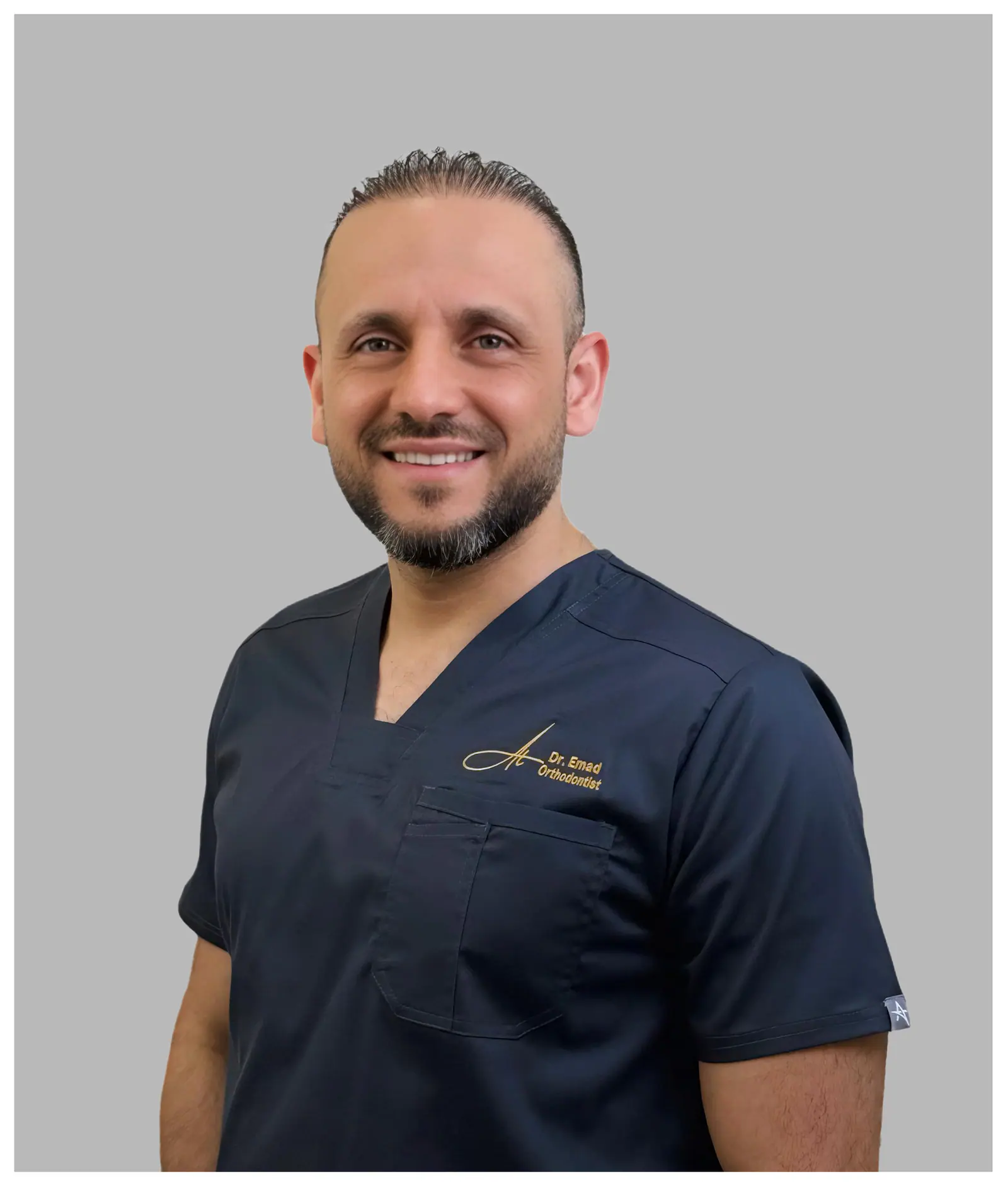
Orthodontists

Frequently asked questions about deep bite treatment
Is a deep bite dangerous?
Does a deep bite affect the gums?
Does a deep bite cause tooth erosion?
Can a deep bite in children be treated?
Can a deep bite in adults be treated?
Does treating a deep bite require surgery?
Does veneer treat deep bites?
Does a deep bite cause jaw pain?
Does gnashing increase the deep bite?
Are metal braces better for deep bites?
Can a deep bite be treated without extraction?
How long does it take to treat a deep bite?
Is deep bite treatment painful?
Does the deep bite return after braces?
Is a retainer necessary after treating a deep bite?
Book a deep bite treatment consultation
Evaluation of overbite and an appropriate orthodontic plan — for children and adults.