
Treatment of gaps between teeth in Abu Dhabi
Closing spaces between teeth with braces or cosmetic solutions at AHLI Specialists Medical Center - Al Shamkha
Do you have a visible gap between your front teeth?
Do spaces appear between the teeth when smiling or speaking?
Do you feel that gaps make your smile asymmetrical?
Have gaps appeared between the teeth after previous braces or over time?
Are you looking for gap treatment in Abu Dhabi or dental gap closure in Al Shamkha near Baniyas, Al Falah and Shakhbout?
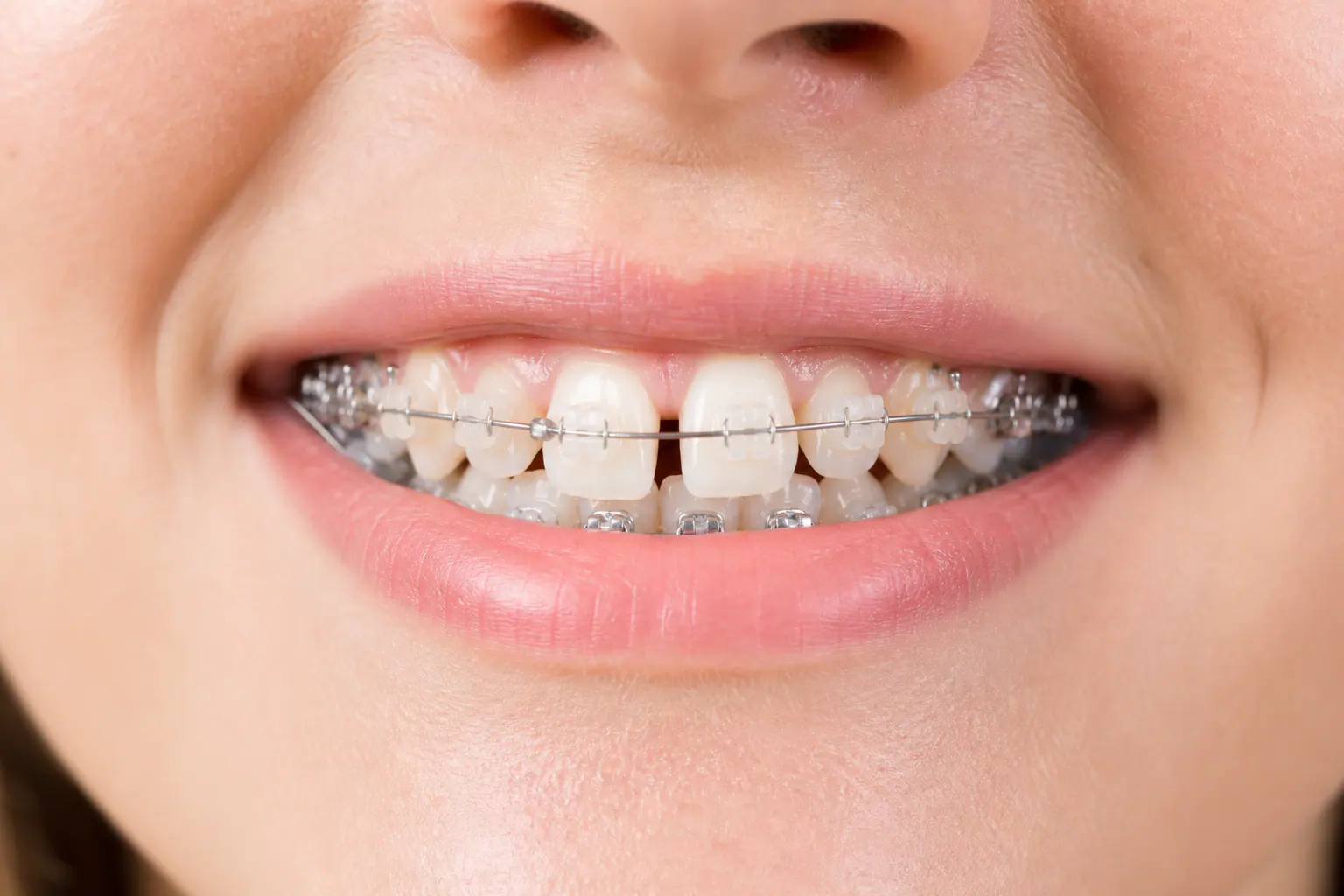
Gaps between teeth, or what is sometimes known as Diastema, is the presence of a clear space between two or more teeth, and may appear in the front teeth or between several teeth in the upper or lower jaw. Some gaps are minor and cosmetic only, and others may be related to tooth size, jaw size, missing tooth, tongue thrusting habit, gum problems, or tooth loss after braces.
At AHLI Specialists Medical Center in Al Shamkha - Abu Dhabi, we provide a comprehensive evaluation of cases of gaps between teeth in children, adolescents and adults, to determine the cause of the gap and choose the most appropriate treatment: orthodontics, clear braces, metal or ceramic braces, cosmetic fillings, veneers, or gum treatment and replacing missing teeth depending on the case. We serve clients from Al Shamkha, Baniyas, Al Falah, Al Shawamekh, Shakhbout, Mohammed bin Zayed City, Khalifa City, Al Bahia, Al Raha, and various areas of Abu Dhabi.

What are the spaces between teeth?
Interdental spaces are the presence of larger than normal spaces between the teeth. The space may be between the upper front teeth only, or it may be between several teeth in the jaw. Sometimes the gaps are even and give a certain shape to the smile, and sometimes they are irregular and affect the shape, cleaning and occlusion.
Not all tooth gaps need treatment, but they should be evaluated if they affect the smile, speech, bite, gum health, or if they appear suddenly over time.
Are spaces between teeth only a cosmetic problem?
In some cases, yes, the spaces are only a cosmetic problem and do not cause pain or a functional problem. But in other cases, gaps may be a sign of a larger problem such as a missing tooth, tooth movement due to the gums, tongue thrust, or occlusal imbalance.
- ● Smile asymmetry
- ● Food collects between the teeth
- ● Difficulty in cleaning some areas
- ● Bad breath due to food residue
- ● Unclear pronunciation of some letters in some cases
- ● Movement or inclination of adjacent teeth
- ● Gum problems if the cause of the gap is gum disease
- ● Teeth restoration after braces
Treatment does not depend on closing the void only, but on knowing the cause first.
Types of spaces between teeth
Space between the front teeth
The type most noticed by patients, especially between the upper incisors.
Multiple spaces between teeth
Spaces between more than one tooth due to small teeth or large jaw size.
Gaps due to a missing tooth
When a tooth is missing, teeth may move and additional spaces appear.
Blanks after orthodontic treatment
It may return if the retainer is not used or there is persistent oral habit.
Black triangular spaces
It may be due to receding gums or bone loss and needs a different evaluation.
Voids in children
Some of them are normal during development, but some require monitoring.
Causes of gaps between teeth
Small size of the teeth compared to the size of the jaw
If the teeth are small or the jaw is relatively wide, spaces may appear because the size of the teeth does not completely fill the dental arch.
Genetic factors
Gaps may be present in more than one family member due to the shape of the teeth or the size of the jaw.
Loss of a tooth or molar
When a tooth is lost and not replaced, adjacent teeth may begin to move and gaps or tilts appear.
Small size of some teeth
Some teeth, especially the upper lateral incisors, may be smaller than normal.
The labial frenum between the front teeth
In some cases, the tissue between the upper lip and gums is stretched or thickened.
Tongue thrust
The habit of pushing the tongue against the teeth while swallowing or speaking may contribute to opening spaces.
Sucking a finger or a pacifier
In children, certain habits may affect the development of teeth and jaw.
Gum disease
Loss of bone supporting the teeth may lead to tooth movement and the appearance of gaps.
Failure to adhere to the retainer after orthodontics
Some spaces may return if the patient does not adhere to the retainer.
Difference in tooth shape or wear
Small or worn teeth may cause visible spaces.
Correct treatment begins with identifying the cause; Because closing the void without treating the cause may lead to its return.
The space between the front teeth
The space between the upper front teeth is one of the most common types of spaces, and it may be simple or obvious in the smile. Many patients seek to close this void because it appears in speech, laughter, and pictures.
- ● Small size of teeth
- ● The size of the jaw is larger than the size of the teeth
- ● The presence of an effective labial frenum
- ● Tongue thrust
- ● Loss of spaces after straightening
- ● Teeth tilt
- ● Gum diseases in some cases
Treatment may be with braces, clear braces, cosmetic fillings, veneers, or a combination of more than one treatment depending on the cause and desired form.

Options for treating gaps between teeth
Treatment of cavities depends on the cause, the size of the space, the age of the patient, and the condition of the teeth and gums.
Metal or ceramic braces to treat gaps
Fixed braces may be suitable for larger or complex gaps, or when we need greater control over tooth movement and occlusion.
- ● Multiple spaces
- ● Large front gap
- ● Slanted teeth that need correction
- ● Open bite or overbite
- ● Case that does not fit clear aligners
Ceramic braces may be less visible than metal braces, but they require good hygiene care.
Transparent braces for treating gaps
Clear braces may be a suitable option for some cases of gaps, especially if the distances are simple or medium and the patient is committed to wearing trays.
- ● A less visible treatment
- ● Closing minor or medium gaps
- ● Improving tooth alignment without visible brackets
- ● Suitable for cooperative adults or teens
It may not be suitable in cases where complex movements or significant occlusal adjustment are required.
Cosmetic fillings to close gaps
Cosmetic fillings or dental bonding may be a suitable option for closing small gaps between teeth, especially if the cause of the gap is the small size of the teeth or a simple space that does not require comprehensive orthodontics.
- ● Small space between the front teeth
- ● Small teeth
- ● Desire for a conservative and relatively quick solution
- ● Proper occlusion that does not put pressure on the filling
- ● Healthy gums
They may not be suitable if the gaps are large or if occlusion causes strong pressure on the filling.
Veneers to treat gaps between teeth
Veneers may be appropriate in some cases of gaps, especially when the problem is the shape, size, and color of the teeth together. Veneers cover the front surface of the teeth and change their shape and size to close the gaps.
- ● Small to medium voids
- ● Small or mismatched teeth
- ● A desire to improve both color and shape
- ● Pigmentation that does not respond to bleaching
- ● A smile needs comprehensive cosmetic design
It may not be best if the spaces are due to a malocclusion or significant tilt — where braces may be the first step.
There is no single treatment suitable for all spaces. Sometimes braces are best, and sometimes veneers or fillings are faster and more suitable.
Treating gaps: braces or veneers?
orthodontic treatment is best when
- ● Gaps due to tooth tilt
- ● There is a malocclusion
- ● Multiple blanks
- ● Teeth need actual movement
- ● There are spaces after losing a tooth that need to be regulated
Veneers or fillings are better when
- ● Teeth are small
- ● The space is simple
- ● Occlusion is good
- ● There is no need to move the teeth
- ● Gums are healthy
- ● The vacuum is cosmetic only
Sometimes the best solution is to combine braces first and then veneers or fillings to improve the final appearance.
Treating gaps with braces
Braces address gaps by gradually moving teeth to close spaces and improve bite. It is suitable when gaps are due to the distribution of teeth, their inclination, or the presence of multiple spaces.
- ● Multiple spaces between teeth
- ● Large front gap
- ● Teeth tilt
- ● Malocclusion
- ● Spaces returned after a previous evaluation
- ● A desire to treat the cause instead of just covering the void
Braces may be metal, ceramic, or transparent, depending on the case.
How are gaps between teeth diagnosed?
Dental examination
We determine the location of the space, its size, the number of spaces, and the shape of the teeth.
Gum examination
We look for signs of gingivitis, receding gums, or bone loss.
Occlusal examination
We evaluate the way the teeth touch and whether there is a protrusion or open bite.
Habit assessment
Ask about tongue thrusting, finger sucking, or teeth grinding.
Pictures and x-rays
We may need pictures or x-rays to determine the position of the missing roots and teeth.
Develop a treatment plan
We determine whether braces, fillings, veneers, or combining more than one treatment is better.
Steps to treat gaps between teeth
Consultation and examination
The doctor begins by examining the location of the space, the size of the space, the shape of the teeth, gums, and occlusion.
Determine the reason for the void
Whether the space is due to the size of the teeth, jaw, missing tooth, gums, or habit of tongue thrust is determined.
Pictures and x-rays
We may need pictures or x-rays to evaluate the roots, bone, and missing teeth.
Discuss treatment options
The difference between braces, cosmetic fillings, veneers, or prosthetics is explained.
Choose the appropriate plan
The plan is chosen depending on the goal: space closure, smile improvement, or occlusion treatment.
Preparing teeth and gums
The patient may need cleaning, gum treatment, or whitening before cosmetic surgery.
Implementation of treatment
Treatment begins with orthodontics, cosmetics, or compensation according to the plan.
Pin the result
If the space is closed with braces, the retainer is very important to prevent the space from reoccurring.
Follow up
The teeth and gums are reviewed and the result is made sure that they are comfortable and easy to clean.

Is treating gaps painful?
Most vacuum treatments are not very painful. Braces may cause temporary pressure, and cosmetic fillers and veneers are often comfortable with sedation if needed.
- ● Light pressure with braces
- ● Temporary sensitivity after some cosmetic procedures
- ● A need to get used to the new shape of the teeth
Any severe or persistent pain needs to be consulted by a doctor.
Do the spaces come back after they are closed?
Voids may return if the result is not stabilized or if the cause of the void is not treated. Retainers are very important after braces, and habits or gum problems should also be treated if they are the cause.
- ● Do not use a stabilizer
- ● Tongue thrust
- ● Gum diseases
- ● Loss of a new tooth
- ● Cosmetic treatment without treating the cause
Maintaining score is an essential part of the plan and not an additional step.
Important topics in the treatment of spaces between teeth
Gaps between teeth in children
The presence of spaces between baby teeth in children may be normal in many cases, and may even be beneficial because it gives space for larger permanent teeth.
- ● Too large space between the front teeth
- ● The gap continues after the permanent teeth appear
- ● Habit of finger sucking or tongue thrusting
- ● Open bite
- ● Premature loss of a baby tooth
- ● Delayed appearance of permanent teeth
Not every child needs immediate treatment, but early examination helps determine whether the condition is normal or needs follow-up. Check out the service
Spaces between teeth in adults
In adults, spaces may be present since childhood or appear over time. The appearance of new voids in adults requires evaluation.
- ● Old void that has not been repaired
- ● Loss of a tooth or molar
- ● Teeth restoration after braces
- ● Gum diseases
- ● Receding gums
- ● Tongue thrust
Treatment in adults may be orthodontic, cosmetic, prosthetic, or combined depending on the cause.
Gaps after tooth loss
If you lose a tooth or molar and it is not replaced, adjacent teeth may begin to shift and move, and new spaces may appear in the mouth.
- ● Inclination of adjacent teeth
- ● The corresponding tooth comes out
- ● Widening or appearance of voids
- ● Change in occlusion
- ● The need for braces before implantation or bridgework
Treatment may require braces to realign the teeth, then an implant or bridge. Check out the service
Blanks after orthodontic treatment
Gaps may appear again after the braces are finished if the patient does not adhere to the retainer or if the fixed retainer breaks.
- ● A small space appears between the front teeth
- ● Opening spaces that were closed after the orthodontic treatment
- ● The retainer is missing or not worn
- ● Fracture of the fixed retainer
- ● Change in occlusion
In this case, treatment may be simple if reviewed early. Check out the service
Do spaces between teeth cause cavities?
The spaces themselves do not directly cause cavities, but they may allow food to collect between the teeth.
- ● Food gathering
- ● Mouth odor
- ● Inflammation of the gums between the teeth
- ● Difficulty using floss
- ● Decay in certain areas if food and plaque remain
Even if you do not want to seal the vacuum cosmetically, you should maintain a good cleaning and regular inspection.
Do spaces affect pronunciation?
Some large frontal spaces may affect the pronunciation of some letters in some people, especially if there is tongue thrust or an open bite.
- ● Difficulty pronouncing some letters
- ● Pushing the tongue between the teeth
- ● Open bite
- ● Large front gaps
In some cases, treatment may require braces, tongue habit monitoring, or speech therapy.
Should all spaces between teeth be treated?
no. Some voids are simple and do not cause a health or functional problem. But treatment is useful if the vacuum causes a cosmetic, functional or health problem.
- ● It bothers the patient to smile
- ● Causes food to collect
- ● Affects pronunciation
- ● Associated with tooth loss
- ● It increases with time
- ● It appears suddenly in adults
- ● Returned after a previous evaluation
The evaluation determines whether treatment is necessary or optional.
Treating gaps due to small teeth
In some cases, the teeth are small, causing gaps around them. Here the orthodontic treatment alone may not be enough.
- ● orthodontic treatment to distribute distances correctly
- ● Cosmetic fillings to increase the width of small teeth
- ● Veneers to improve shape and size
- ● Teeth whitening before cosmetic surgery if appropriate
These cases require combined cosmetic and orthodontic planning to obtain a natural smile.
Treating gaps due to gums
If new gaps appear between teeth in adults, especially with tooth movement or bleeding gums, the cause may be related to gum disease.
- ● Bleeding when brushing
- ● Movement in the teeth
- ● Receding gums
- ● Newly appeared voids
- ● Lime build-up
The space should not be closed cosmetically before periodontal treatment.
Treating gaps due to tongue thrust
Tongue thrust is an oral habit that may cause or increase gaps between teeth, especially in the front teeth.
- ● Front vacuum
- ● Open bite
- ● Thrust of the tongue while speaking or swallowing
- ● Return of the void after a previous evaluation
- ● Eruption of front teeth
Treatment may require braces and functional training so that the result is more stable.
Treatment of gaps with missing teeth
If the space is due to a missing tooth, it must be determined whether it is better to close the space with braces or maintain the space to replace the tooth with an implant or bridge.
- ● Close the space with braces if appropriate
- ● Regulating the distance and then implanting the missing tooth
- ● Dental bridge in some cases
- ● Straighten before planting to optimize space
This decision is very important and should not be made without a full examination. Check out the service
Can gaps be treated without braces?
Yes, in some cases, gaps can be treated without braces using cosmetic fillings or veneers.
- ● The space is small
- ● Teeth are straight
- ● Occlusion is good
- ● The problem is the size of the teeth, not their arrangement
- ● Healthy gums
But if the teeth are slanted, have multiple gaps, or there is a malocclusion, braces may be better.
Can the vacuum be closed in one day?
Some small gaps can be improved with cosmetic fillers in one or a few visits.
- ● The space is small
- ● Teeth do not require movement
- ● Healthy gums
- ● Occlusal does not put pressure on the filling
Large gaps or those related to bites or gums need a longer plan such as braces.
Treating gaps before smile design
If you are thinking about veneers or a Hollywood smile and you have gaps, you must evaluate whether it is better to close them with braces first or with veneers directly.
- ● Reduces the need to file teeth
- ● Improves distance distribution
- ● Improves occlusion
- ● Makes the veneer the right size
Sometimes braces before veneer are better, and in other cases veneer may be sufficient. Check out the service
Treating gaps and teeth whitening
If you plan to close spaces with dental fillings or veneers, it may be best to whiten your natural teeth first.
- ● Examination of teeth and gums
- ● Teeth cleaning
- ● Teeth whitening if appropriate
- ● Close the gap with fillings or veneers in a consistent color
The color of the fillings or veneers does not change after installation. Check out the service
Cleaning teeth with gaps
The presence of gaps may cause food to get stuck between the teeth, so daily cleaning must be taken care of.
- ● Brush twice daily
- ● Use floss correctly
- ● Use interdental brushes if recommended by your doctor
- ● Regular cleaning in the clinic
- ● Treat the gums if there is bleeding or odor
Don't ignore the vacuums that constantly collect food. Check out the service
Signs that require a visit to the doctor
Book an appointment if you notice any of the following signs:
- ● A vacuum that increases with time
- ● New spaces appear in adults
- ● Gaps with bleeding gums
- ● Movement in the teeth
- ● Vacuum after losing a tooth
- ● Return of the void after straightening
- ● Receding gums or black triangles between the teeth
The earlier the cause is assessed, the clearer and easier the plan will be.
Common errors in treating gaps between teeth
Some errors may affect the result or cause the blank to return:
- ● Closing the space with gaskets without knowing the reason
- ● Ignore gum disease
- ● Do not use a retainer after braces
- ● Choosing veneers for a case that requires straightening first
- ● Ignore the tongue thrusting habit
- ● Leaving a missing tooth without compensation
- ● Postpone the evaluation when new voids appear
Proper treatment means not only closing the space, but maintaining a healthy and stable outcome.
Treatment of gaps between teeth in Al Shamkha - Abu Dhabi
If you are looking for treatment for gaps between teeth in Abu Dhabi or closing dental gaps in Al Shamkha, AHLI Specialists Medical Center provides a comprehensive evaluation to find out the cause of the gap and choose the appropriate treatment.
We help you choose the appropriate solution to close the gaps in a way that takes into account the shape of the smile, the health of the teeth and gums, and the consistency of the result.

Why choose AHLI Specialists Medical Center?
- ✓ Evaluate the cause of the void before choosing treatment
- ✓ Multiple options: braces, clear braces, cosmetic fillings, and veneers
- ✓ Treatment of voids in children and adults
- ✓ Inspect the gums and occlusion before closing the space
- ✓ Evaluation of cases of void return after orthodontics
- ✓ Connect the treatment with fixative to prevent the recurrence of voids
- ✓ Cosmetic planning when there are small teeth or front gaps
- ✓ Evaluate missing teeth and replace them when needed
- ✓ Location close to Al Shamkha, Baniyas, Al Falah, Shakhbout and Abu Dhabi areas
Services related to the treatment of gaps between teeth
Orthodontics
The main service for treating gaps resulting from tooth distribution or malocclusion.
Clear Aligners
A suitable option for some simple to medium vacuum situations.
Metal and Ceramic Braces
Fixed orthodontic options for treating larger gaps or complex cases.
Dental retainer after orthodontics
Important to keep voids closed and prevent them from coming back.
Treatment of crowded teeth
Treatment of adverse conditions - crowding and overlapping of teeth.
Dental Veneers
A cosmetic solution for some gaps associated with small teeth.
Teeth whitening
It may be preceded by cosmetic fillers or veneers if a lighter color is desired.
Teeth cleaning
Important if the gaps collect food or cause gingivitis.
Dental implants
An option to replace a missing tooth if the gap is due to a missing tooth.
Pediatric dentistry
Following up on gaps in children and the stage of tooth replacement.
When do I make an appointment for gap treatment?
The first step is to examine the cause, then choose the most appropriate treatment.
AHLI Specialists Medical Center - Al Shamkha, Abu Dhabi
For reservations and inquiries: 02-448-7553
Location: Al Qayed Street, Al Shamkha, Abu Dhabi
Short answers
What are the spaces between teeth?
Gaps between teeth are visible spaces between two or more teeth, and may appear due to small teeth, jaw size, missing teeth, oral habits, gum problems, or tooth loss after braces.
How are gaps between teeth treated?
Gaps are treated depending on the cause, and options may include braces, clear aligners, cosmetic fillings, veneers, gum treatment, or replacing the missing tooth with an implant or bridge.
Does braces treat gaps between teeth?
Yes, braces can close gaps by gradually moving the teeth, especially if the gaps are due to tooth distribution, malocclusion, or tooth tilt.
Is it possible to close spaces without braces?
Yes, some small gaps can be closed with cosmetic fillings or veneers if the teeth are straight, the gums are healthy, and the occlusion is appropriate.
Where can I find treatment for gaps between teeth in Abu Dhabi?
A consultation for the treatment of gaps between teeth can be booked at AHLI Specialists Medical Center in Al Shamkha - Abu Dhabi to determine the cause and choose the appropriate treatment.
Orthodontists


Frequently asked questions about treating gaps between teeth
Is the space between teeth normal?
What is the cause of the space between the front teeth?
Can the gap between the front teeth be treated?
Do spaces between teeth cause bad breath?
Do voids cause cavities?
Can gaps be closed with cosmetic fillings?
Do veneers close the spaces between teeth?
Is clear braces suitable for blanks?
Will the gaps return after treatment?
Does closing gaps require a stabilizer?
Do voids in children need treatment?
Is treating gaps painful?
Can gaps be treated in one day?
Are new voids in adults dangerous?
What is better for gaps: braces or veneers?

Book a gap treatment consultation
Evaluation of the cause of the gap and an appropriate treatment plan — braces, cosmetic fillings, or veneers depending on your condition.