
Cognitive and motor skills for children in Abu Dhabi
Occupational therapy to develop attention, planning, balance and coordination at AHLI Specialists Medical Center - Al Shamkha
Do you notice that your child understands what is required but does not know how to start?
Does he find it difficult to imitate movements or arrange the steps of play?
Does he stumble often or seem uncoordinated in movement?
Does he have difficulty concentrating, planning, solving problems, or moving from one activity to another?
Does he find difficulty in activities that require both thinking and movement, such as assembling toys, cutting, writing, dressing up, or group play?
Cognitive and motor skills are a set of skills that help the child understand a task, plan it, implement it, correct his mistakes, and control his body movement during play, learning, and daily activities. When these skills are weak, a child may appear distracted, disorganized, avoid tasks, move uncoordinated, or need constant help even though his age allows for a greater degree of independence.
At AHLI Specialists Medical Center in Al Shamkha - Abu Dhabi, we provide assessment and occupational treatment for children who face difficulties in cognitive and motor skills, through an individual plan that helps the child develop attention, planning, balance, coordination, problem solving, body control, and the ability to participate at home, nursery, and school.
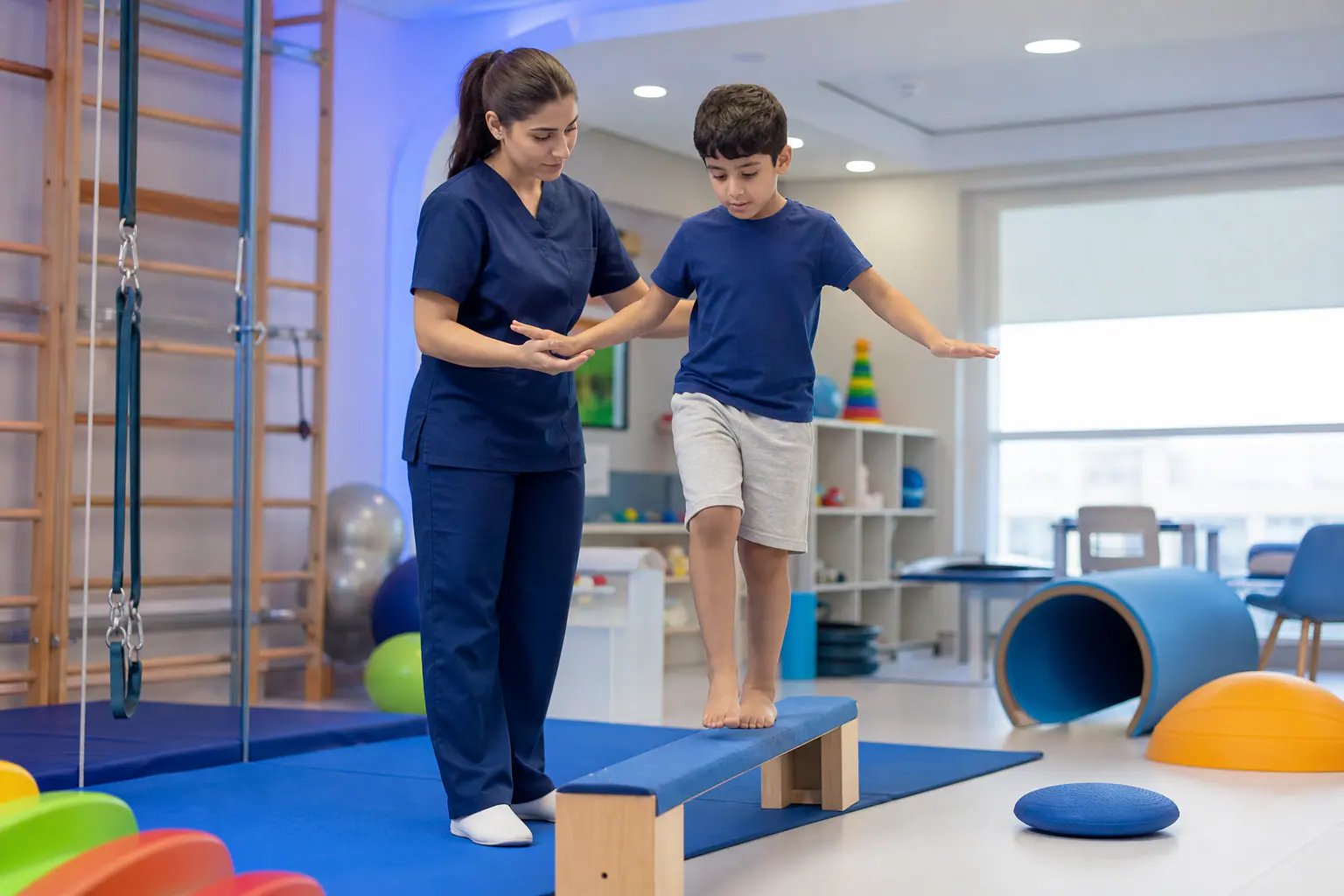
What are meant by cognitive and motor skills?
Cognitive and motor skills are skills that combine thinking and movement. The child not only needs to move his hand or body, but he also needs to understand what he wants to do, arrange the steps, choose the appropriate movement, monitor the result, and adjust the performance if he makes a mistake.
When a child is asked to assemble a toy, he needs to look at the pieces, understand the relationship between them, plan where to place each piece, use his hands carefully, focus until he finishes the task, and correct the attempt if it does not succeed.
When a child gets dressed, he needs to know the front and back, insert the hand or foot in the right place, maintain balance, use the hands together, arrange the steps, and pay attention until he finishes.
Cognitive and motor skills appear not only in games, but in all the details of a child’s daily life, such as writing, dressing, eating, playing, learning, sports, and arranging tools.
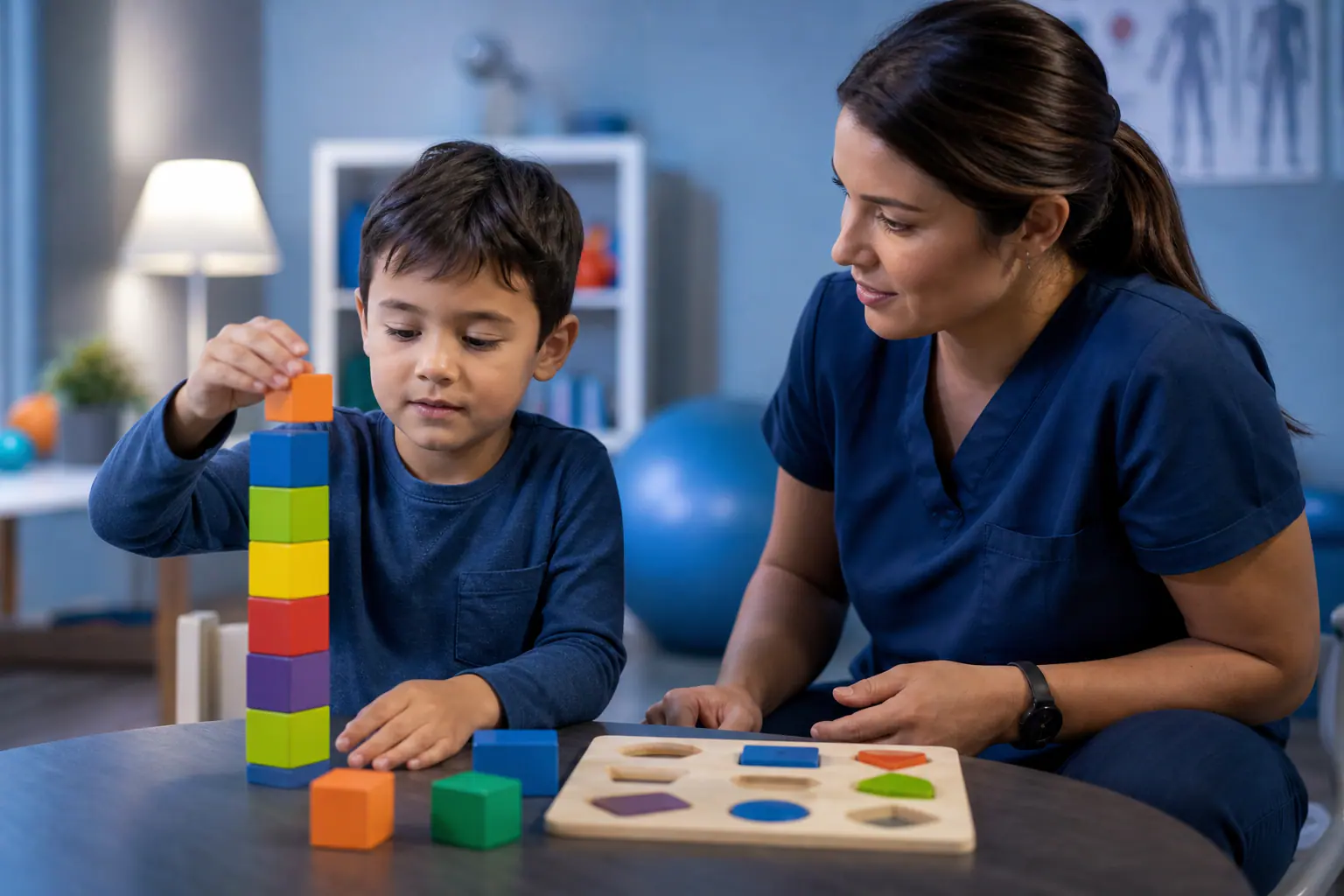
The difference between cognitive skills and motor skills
Cognitive skills
These are skills related to thinking, understanding and organizing, such as:
Motor skills
These are skills related to body and hand movement, such as:
Cognitive-motor skills
It is when thinking and movement skills work together. Example: The child hears the instructions, understands them, plans the movement, and then executes it with his body or hands.
Why are cognitive and motor skills important?
These skills are important because they help the child participate in their daily life with confidence and independence. A child who has good cognitive and motor skills can learn from experience, organize his body, solve problems, and participate in play and school activities in a better way.
When these skills are weak, a child may need to work harder than his peers to accomplish the same task, and may appear to refuse or be lazy, when in fact he does not know how to organize his body or plan the task.
Signs of poor cognitive and motor skills in children
Your child may need an occupational therapy evaluation if you notice one or more of the following signs:
The presence of one sign does not necessarily mean there is a major problem, but the persistence of difficulties and their impact on home, school, or play deserves evaluation.
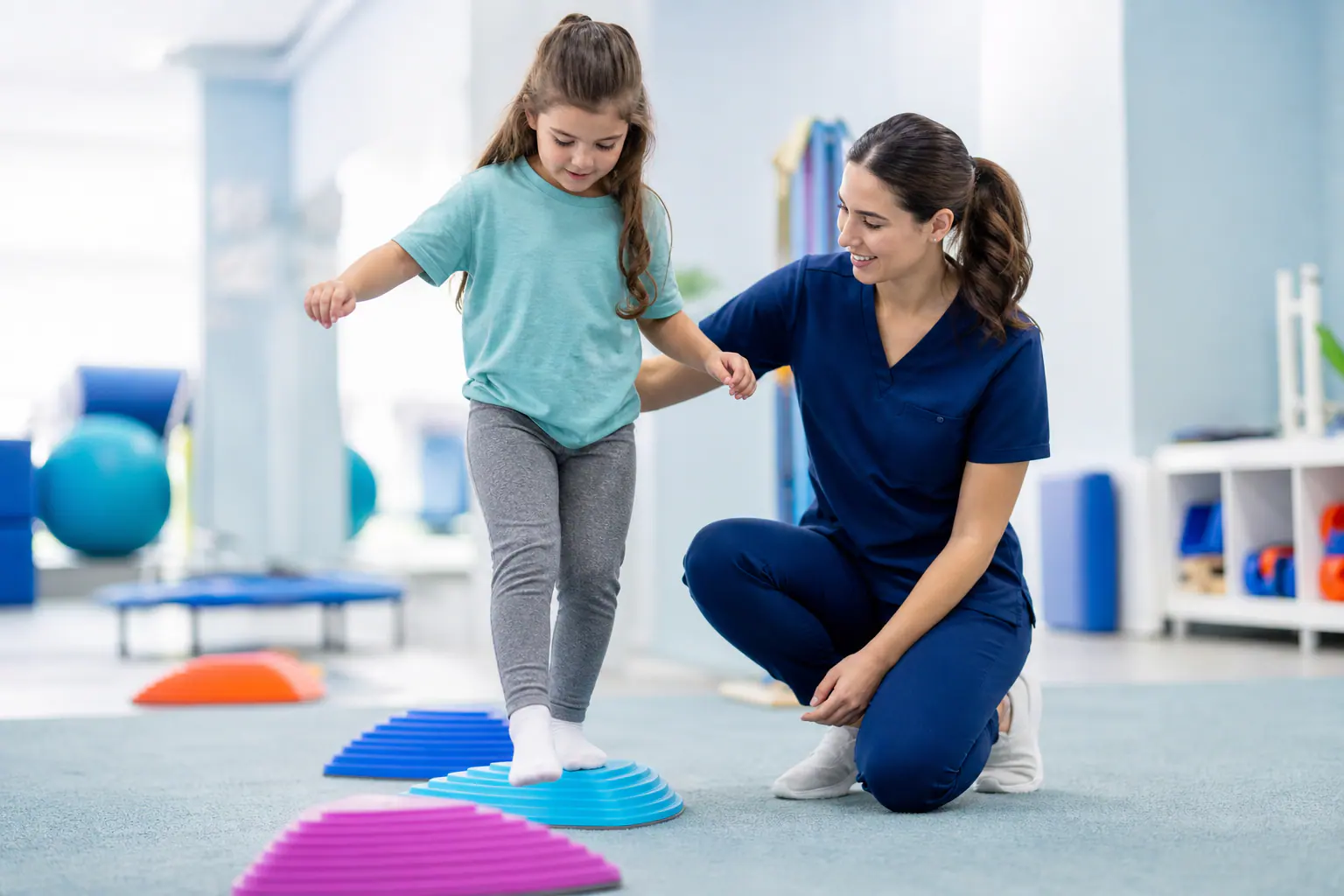
How do difficulties appear at home?
- ● The order of dressing steps is not known
- ● He forgets what was asked of him after seconds
- ● He starts eating and then gets distracted
- ● He cannot arrange his toys
- ● He finds it difficult to open cans or use tools
- ● Doesn't know how to play with a new toy without help
- ● He repeats the same mistake and does not change his method
- ● Breaks down at any change in routine
- ● Needs constant monitoring during tasks
- ● He does not know how to go from playing to sleeping
- ● Moves a lot without a clear goal
- ● Collides with furniture or people
- ● He seems unaware of his body position in the place
These difficulties may make the daily routine tiring for the family, especially when it is repeated every day.
How do difficulties appear at school?
In school or nursery, difficulties may be more pronounced because the child needs to sit, pay attention, follow instructions, use tools, and move between activities.
- ● Does not follow instructions the first time
- ● Needs a lot of repetition
- ● Does not know how to start the activity
- ● He is late in completing tasks
- ● He finds it difficult to cut, paste, or color
- ● He gets tired of writing
- ● He has difficulty sitting properly
- ● He moves a lot or bumps into children
- ● He does not participate in motor games easily
- ● He has difficulty in group activities
- ● He forgets his tools or does not organize his bag
- ● Cannot transition between activities smoothly
- ● He gets angry when the game is lost or when the plan is changed
- ● He needs more help than his colleagues
Occupational therapy helps understand whether the cause is related to attention, planning, balance, fine motor skills, sensory integration, or more than one aspect together.
Types of skills that occupational therapy works on
Attention and focus
The child needs to pay attention in order to hear the instructions, begin the activity, and complete the task. Some children get distracted quickly or move from one activity to another without finishing. Occupational therapy may help a child improve attention through structured activities, reducing distractions, dividing tasks, and regulating the body before sitting down for activities.
Motor planning
Motor planning means the child's ability to know how to perform a new movement. Example: How to get on a toy, how to ride a bike, how to imitate a movement, or how to put on a shirt. Poor motor planning may make a child appear hesitant, slow, or inconsistent in performing tasks.
Problem solving
Some children stop immediately if the first attempt is not successful. Occupational therapy helps the child try different solutions, accept mistakes, and think in a more flexible way.
Working memory
Working memory helps the child remember instructions as they are carried out. Example: “Take the pen, open the notebook, and write your name.” If working memory is weak, a child may execute a step and forget the rest.
Balance and body control
Balance is important for sitting, walking, running, jumping, climbing stairs, and playing. Poor balance may also affect writing, sitting, and attention.
Eye-hand coordination
This skill helps the child pick up the ball, assemble the puzzle, color, write, cut, and put the pieces in the correct place.
Use your hands together
Many tasks require the use of both hands, such as opening a package, cutting a sheet of paper, putting on socks, closing a zipper, or holding the paper steady while writing.
Visual perception
Visual perception helps a child understand shapes, sizes, directions, distances, and details. Weakness in this skill may affect puzzles, reading, writing, copying from the board, or arranging things.
Self-regulation
Self-regulation means the child's ability to calm his body, control impulses, and transition between activities in an appropriate manner. Some children need sensory and motor support to regulate their bodies.
Cognitive flexibility
Flexibility means that the child can change his plan if the first method does not work. Poor resilience may manifest as anger at loss, refusal to change, or sticking to only one way.
Causes of weak cognitive and motor skills
These difficulties may occur for various reasons, and may be simple or related to broader developmental challenges.
The assessment is not aimed at making a scary diagnosis, but rather at understanding where the difficulty lies and how the child can be supported in a practical way.
Does poor cognitive and motor skills mean that a child is not intelligent?
no. The child may be smart and understand a lot, but he has difficulty organizing his body, arranging his steps, or executing the required movement. Intelligence alone is not enough to accomplish daily tasks; The child needs attention, planning, movement, coordination, and the ability to correct mistakes.
- ● The child may know what is required, but cannot carry it out well.
- ● He may understand the game, but he doesn't know how to get started.
- ● He may want to write, but gets tired or cannot organize his hand.
- ● He may know that he has to dress, but he gets lost in the order of the steps.
We should not describe the child as lazy or stubborn before understanding the real reason.
How do cognitive and motor difficulties affect the child?
Occupational therapy helps the child build skills from the foundation, so that he becomes more able to participate confidently.
Impact on gameplay
Play requires imagination, planning, movement, imitation, problem solving, and interaction with others. A child who has difficulty with these skills may avoid new toys or repeat the same way of playing.
Impact on the school
The child may have difficulty sitting, writing, cutting, coloring, following instructions, arranging tools, or participating in group activities.
Impact on daily living skills
He may have difficulty dressing, eating, using the bathroom, brushing his teeth, organizing a bag, or following a routine.
Impact on self-confidence
When a child fails at tasks that seem easy to others, he or she may feel frustrated or refuse to try.
Impact on Behaviour
Sometimes rejection or anger appears because the child does not know how to carry out the task or because it requires too much effort.
Impact on social relationships
The child may find difficulty in group games that require waiting for turns, planning, movement, and flexibility.
How are cognitive and motor skills assessed?
At AHLI Specialists Medical Center, the evaluation begins with a comprehensive understanding of the child’s difficulties at home, school, and play. Evaluation is done through observation, play, motor activities, precise tasks, and questions for the parents.
After the evaluation, the results are explained to the parents in a clear way, identifying strengths, weaknesses, and an appropriate plan.
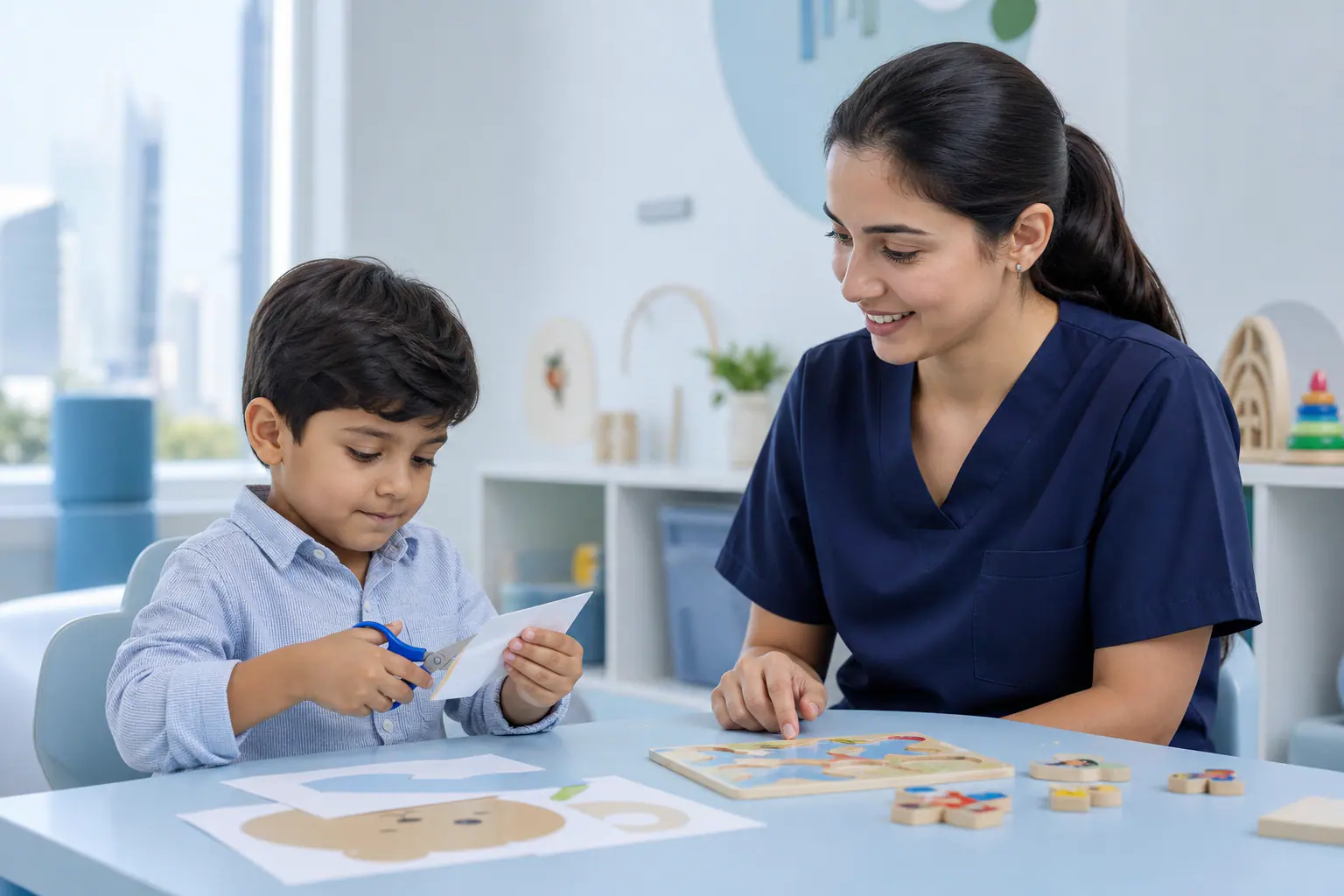
What happens after the evaluation?
- ✓ Regular occupational therapy sessions
- ✓ Activities to develop attention and concentration
- ✓ Motor planning training
- ✓ Strengthen balance and coordination
- ✓ Support fine motor skills
- ✓ Practice problem solving through play
- ✓ Activities for visual perception
- ✓ Step sequence training
- ✓ Strategies for self-regulation
- ✓ Home instructions for parents
- ✓ Recommendations for nursery or school
- ✓ Collaborate with speech therapy or other evaluations when needed
The plan varies from one child to another. One child may need support with balance, another with motor planning, and a third with attention and the order of steps.
Steps of occupational therapy for cognitive and motor skills
Identify the most influential skills
We start with the skills that most affect a child's life, such as sitting and paying attention, playing, writing, dressing, or following instructions.
Divide the task into steps
If the task is difficult, it is broken down into small steps that the child can gradually learn.
Use therapeutic play
Children learn through play. So sessions use fun activities but are designed to develop specific skills such as balance, planning, or problem solving.
Motor planning training
The child is trained to try new movements, imitate models, use his body in an organized manner, and repeat the skill until it becomes easier.
Develop attention and organization
Motor or sensory activities may be used before tasks that require sitting and concentration, so that the child's body is ready to learn.
Improve motor coordination
We use activities that require throwing, catching, jumping, balance, use of two hands, or eye-hand coordination.
Support visual perception
Through matching games, puzzles, tracing paths, copying shapes, distinguishing directions, and organizing space.
Problem solving training
We help the child try different solutions, instead of giving up or getting angry when the first attempt fails.
Parent training
Parents learn how to support skills at home through simple activities within the daily routine.
Transfer the skill to everyday life
The goal is to demonstrate the skill at home and school, and not just within the session.
Examples of treatment goals
- ● The child follows two or three-step instructions
- ● To complete an activity for a longer period of time without distraction
- ● To imitate body movements better
- ● To improve his balance while jumping or walking on a line
- ● To use his hands together when cutting or dressing
- ● To ride a puzzle appropriate for his age
- ● To improve eye-hand coordination
- ● To arrange the steps of a simple activity
- ● To reduce impulsiveness while playing
- ● To move between activities more calmly
- ● To develop writing and copying skills
- ● To bear trying when he makes mistakes
- ● To use a strategy to solve a simple problem
- ● To participate in a group game in a better way
- ● To complete a daily task with less help
Goals are chosen according to the child's age, ability, and the needs of the family and school.
The relationship between cognitive, motor, and writing skills
Writing is not just holding a pen. The child needs:
Difficulty writing may be related to both cognitive and motor skills. Occupational therapy helps to understand where the problem is located, then train the child in a gradual manner.
The relationship between cognitive and motor skills and play
Play is an important way to develop thinking and movement. Through play, the child learns to plan, wait, solve problems, use his hands, imitate others, and try new movements.
- ● He does not know how to play with a new toy
- ● Always repeats the same game
- ● Cannot install games
- ● Avoids motor games
- ● Does not imitate movements
- ● He gets angry when the game fails
- ● He does not wait his turn
- ● Does not know how to share with other children
Occupational therapy uses play as a therapeutic method to build these skills in a fun, non-stressful way.
The relationship between cognitive and motor skills and sensory integration
Sensory integration affects a child's ability to organize his body, pay attention, and move. If a child does not receive or organize sensory information well, he or she may appear fidgety, afraid to move, distracted, or unaware of his or her body position.
In these cases, sensory regulation activities may be combined with cognitive and motor skills training.

The role of parents in developing cognitive and motor skills
- ✓ Give the child time to try
- ✓ Break tasks into short steps
- ✓ Use clear and simple instructions
- ✓ Reduce distractions during the task
- ✓ Praise the attempt, not just the result
- ✓ Encouraging safe motor play
- ✓ Using puzzle and construction games
- ✓ Playing with the ball, throwing and catching
- ✓ Train the child to arrange the steps of the routine
- ✓ Use visual tables when needed
- ✓ Do not rush to carry out the task for him
- ✓ Reduce screen time and increase active play
- ✓ Apply home exercises recommended by the specialist
- ✓ Tell the specialist what is happening at home and school
It is better for training to be short, fun, and repetitive, rather than long and stressful.
School and nursery homes
The child may need support within school or nursery, especially if difficulties affect writing, sitting, following instructions, or participating.
- ● Give short and clear instructions
- ● Break long tasks into steps
- ● Use pictures or visual models
- ● Giving additional time for motor or written tasks
- ● Reduce distractions around the child
- ● Allow short movement breaks
- ● Choose a suitable seating place
- ● Use tools that help writing when needed
- ● Do not compare him with other children
- ● Encourage progressive motor engagement
- ● Communicate with parents about progress and difficulties
These recommendations vary according to the child's condition and do not all apply to all children.
When should you not wait?
It is best to book an evaluation if difficulties are affecting the child's daily life or causing ongoing frustration.
- ● He does not acquire motor skills appropriate for his age
- ● He cannot imitate movements
- ● He has great difficulty with balance or coordination
- ● Falls or stumbles frequently
- ● He cannot follow instructions appropriate for his age
- ● He is very late in writing, cutting, or coloring
- ● He does not know how to play or solve a simple problem
- ● Needs a lot of help with daily tasks
- ● He shows extreme frustration with activities
- ● Frequent school comments about attention, movement, or organization
However, if there is a sudden loss of skills, apparent weakness in a limb of the body, convulsions, severe decline, or worrying medical symptoms, a doctor must be consulted urgently.
Do cognitive and motor skills improve?
Many children improve when they receive an appropriate evaluation and stepwise treatment plan. Improvement may manifest as better concentration, longer activity engagement, better balance, more organized movement, better use of the hands, greater problem-solving ability, less frustration, greater independence in daily tasks, improvement in writing or playing, and better response to instructions.
Improvement requires time, repetition, cooperation from parents, and application of skills in daily life.
Common mistakes to avoid
- ✗ Describing the child as lazy or stubborn
- ✗ Always do everything instead
- ✗ Giving long and complex instructions
- ✗ Expect him to suddenly learn the skill
- ✗ Comparing the child with his siblings or classmates
- ✗ Click on it for every error
- ✗ Completely preventing movement instead of regulating it
- ✗ Excessive screen use for long periods
- ✗ Ignoring balance or motor-planning difficulties
- ✗ Postponing evaluation despite repeated school observations
- ✗ Using random exercises without knowing why
- ✗ Focus on writing only without supporting basic skills
The best approach is to understand the cause, then train the skills step by step.
Cognitive and motor skills in Al Shamkha - Abu Dhabi
If you are looking for occupational therapy to develop cognitive and motor skills in Abu Dhabi or a pediatric occupational therapist in Al Shamkha, AHLI Specialists Medical Center provides an assessment and treatment plan that helps the child develop attention, planning, balance, coordination, problem solving, and the ability to participate in activities of daily living.
We help parents understand why the child has difficulty moving, concentrating, planning, or performing daily tasks, and then we develop a practical plan that suits his age and needs.
Specialized evaluation
Comprehensive assessment of cognitive and motor skills.
Individual plan
An occupational treatment plan according to the child’s age and needs.
Support attention and planning
Develop attention, planning, balance, and coordination.
Purposeful play
Therapeutic activities based on purposeful play.
Problem solving
Training the child to solve problems and organize movement.
Writing and routine
Support writing skills, play and daily routines.
Home instructions
Practical guidance for parents.
School recommendations
Recommendations for nursery or school when needed.
Quiet environment
A medical environment suitable for children and families.
Distinctive location
Close to Al Shamkha, Baniyas, Al Falah, Shakhbout and Abu Dhabi areas.
Services related to cognitive and motor skills
The child may need one or more of the following services depending on the assessment:
Evaluation of cognitive and motor skills
To know the child’s level of attention, planning, balance, coordination, and problem solving.
Most requestedImproving cognitive and perceptual skills
Support attention, planning, problem solving, and organization.
Early intervention for developmental delay
Early support for children who need to develop their skills.
Rehabilitation of fine motor skills
Holding a pen, cutting, coloring, and assembling games.
Improve visual-motor synergy
Support writing, transcription, and visual perception.
Motor planning training
Help the child imitate movements and perform new tasks.
Develop balance and coordination
Support movement skills, jumping, running, and playing.
Support attention and organization
Sitting, completing tasks, and transitioning between activities.
Daily life skills
Support independence in daily tasks associated with planning and movement.
When do I book an appointment for my child?
Book an assessment if your child has:
- ● Difficulty concentrating or completing activities
- ● Difficulty imitating movements
- ● Poor balance or coordination
- ● Frequent tripping or falling
- ● Difficulty using both hands
- ● Difficulty in puzzle or assembly
- ● Weakness in writing, cutting, or coloring
- ● Difficulty arranging the steps of tasks
- ● Quick anger when a task is failed
- ● Difficulty in group play
- ● Feedback from school about movement, attention, or organization
- ● Great need for help with age-appropriate tasks
The first step is a clear evaluation that helps to find out the cause and develop an appropriate treatment plan.
Book a cognitive and motor skills assessment for your child
If you notice that your child is having difficulty paying attention, planning, moving, balancing, coordinating, or performing daily tasks, we can help you through an occupational therapy evaluation for cognitive and motor skills and develop an appropriate plan to develop his abilities and confidence.
AHLI Specialists Medical Center - Al Shamkha, Abu Dhabi
Al Qayed Street, Al Shamkha, Abu Dhabi
Frequently asked questions about cognitive and motor skills
What are cognitive and motor skills?
When does a child need occupational therapy for these skills?
Does weak cognitive and motor skills mean weak intelligence?
Does occupational therapy help a child who is very mobile?
Do these skills affect writing?
Can these skills be trained at home?
Does playing help develop cognitive and motor skills?
How many sessions does a child need?
Does the school need to participate in the plan?
Do cognitive and motor skills improve?
Our specialized team


Book a cognitive and motor skills assessment
02-448-7553 — Al Shamkha, Abu Dhabi