
Learning difficulties and assessment in Abu Dhabi
Assessing language, reading, writing, and academic readiness skills at AHLI Specialists Medical Center - Al Shamkha
Does your child have difficulty reading or writing?
Does he forget letters and words despite repeated training?
Does he not understand academic instructions easily?
Does he find it difficult to express his thoughts orally or in writing?
Does the school notice that his level is lower than expected, even though he is smart and trying?
Learning difficulties may appear when a child has persistent difficulty in acquiring academic skills such as reading, writing, spelling, understanding, expression, or sometimes arithmetic, despite providing education and trying. In many cases, language is an essential part of the problem, because the child needs to understand speech, organize ideas, distinguish sounds, remember instructions, and build sentences in order to be able to learn in class.
At AHLI Specialists Medical Center in Al Shamkha - Abu Dhabi, we provide a specialized assessment of language and communication skills related to learning, to help parents understand the reason for the child’s difficulty in school, and determine whether he needs speech and language therapy, academic language support, school follow-up, or additional evaluations such as a psychoeducational evaluation when needed.
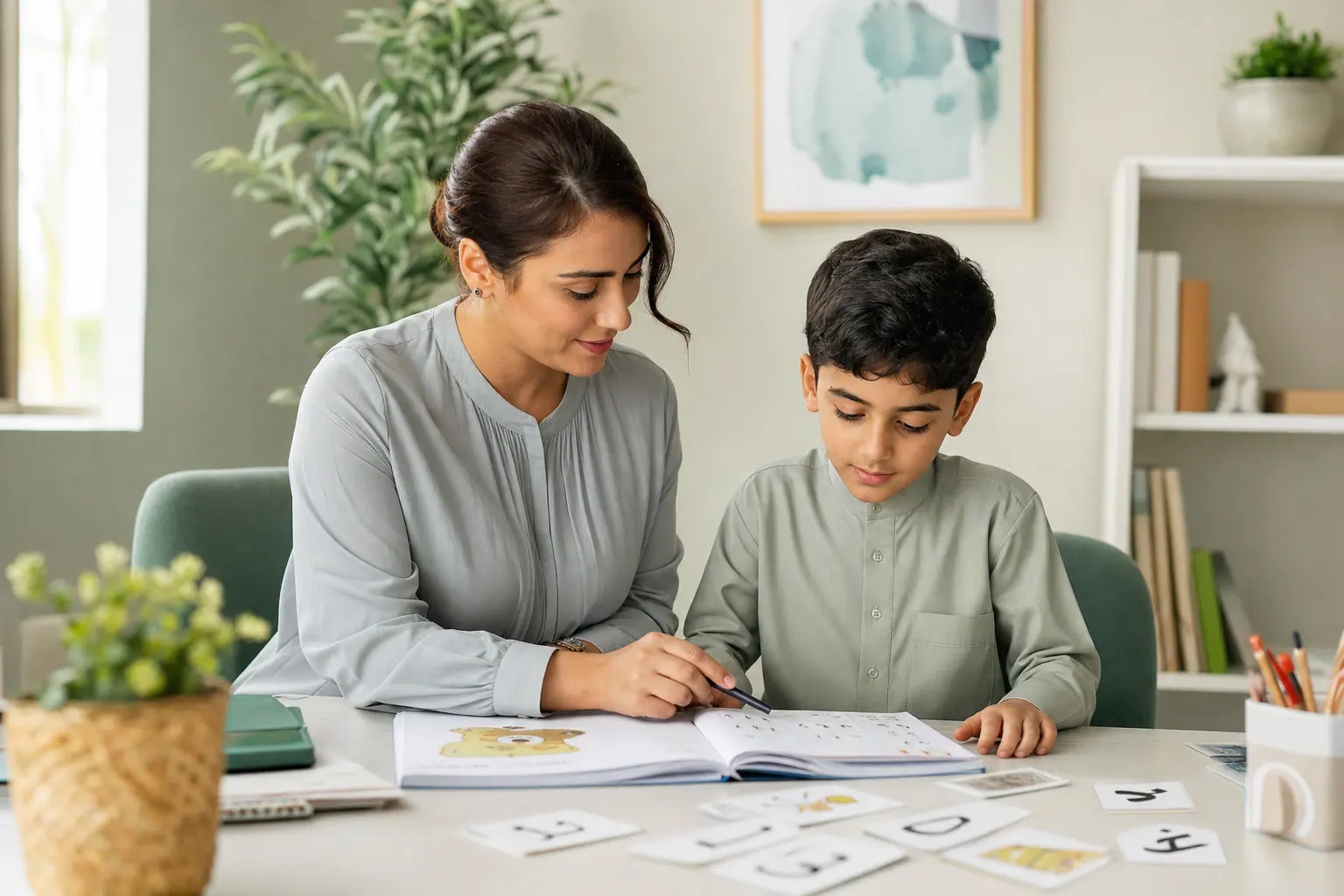
What are learning difficulties?
Learning disabilities are difficulties that affect a child's ability to acquire or use certain academic skills, such as reading, writing, spelling, understanding, expression, or arithmetic. A child with a learning disability may be intelligent, curious, sociable, and have good abilities in many areas, but face a distinct challenge in a specific learning skill.
Learning difficulties do not mean that the child is lazy or uninterested. Many children make a great effort, but the result is not commensurate with the amount of effort. The child needs an assessment to show exactly where the difficulty is.
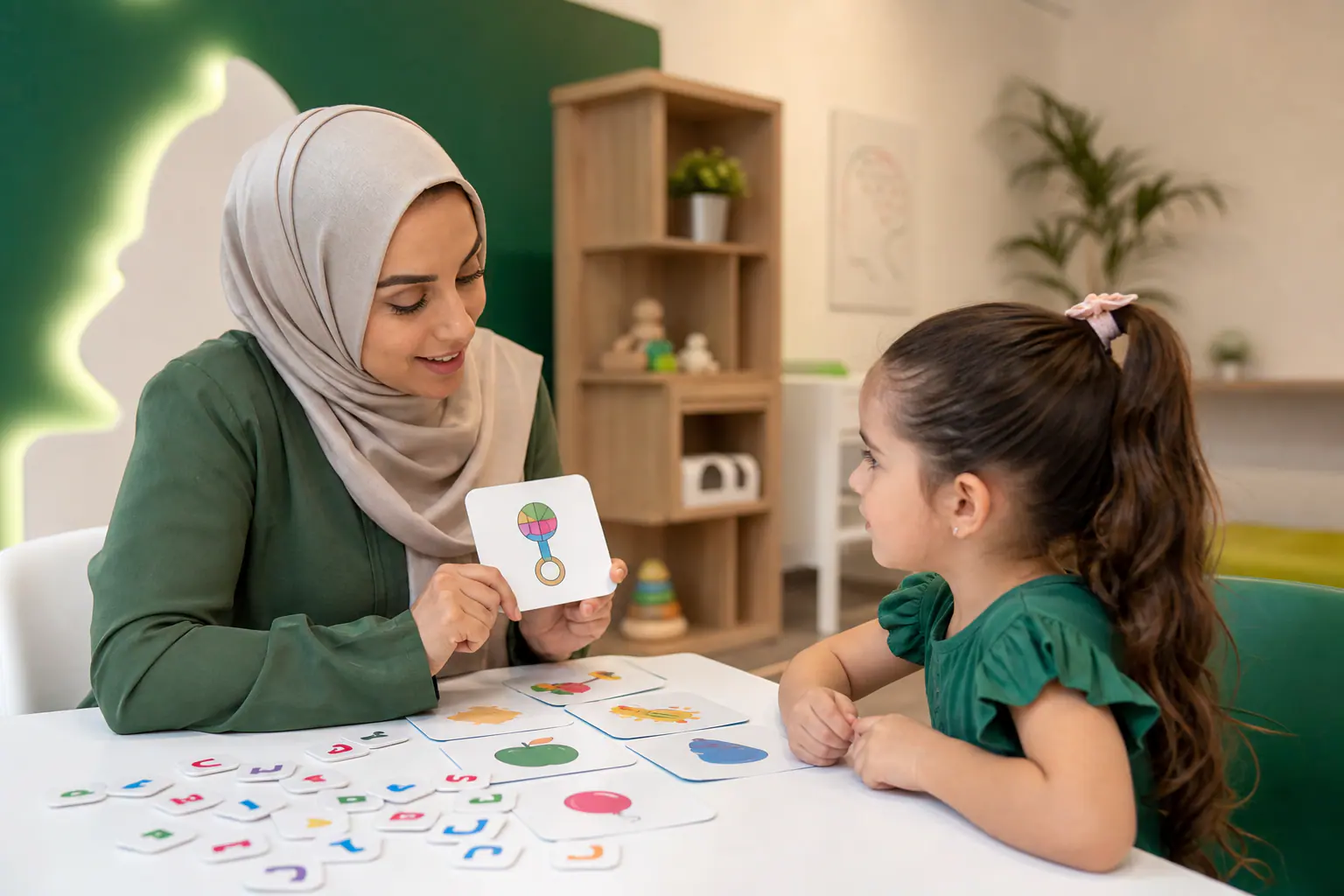
The relationship of learning difficulties to language and speech
Language is the basis of learning. The child needs language in order to understand the teacher, follow instructions, memorize concepts, read, write, explain, and answer questions.
A speech and language therapist may be an important part of the evaluation of a child with a learning disability, especially if the problem is related to language, reading, writing, comprehension, or expression.
Do learning difficulties mean weak intelligence?
no. Learning difficulties do not mean weak intelligence. A child may be very intelligent, but have difficulty with the way he processes or uses information to read, write, or understand.
- ● A child may be able to explain an idea orally, but cannot write it down.
- ● He may know the answer but cannot read it from the paper.
- ● The lesson may be understood when explained orally, but lost when reading the text alone.
- ● He may memorize letters today and forget them tomorrow despite training.
The child does not choose this difficulty. He needs a method of support appropriate to his learning style and needs.
The difference between learning difficulties and academic delay
Not every child who is behind in school has learning difficulties. Evaluation helps differentiate between these possibilities.
Academic delay
It may occur due to external circumstances, poor follow-up, or an educational gap, and the child may improve when he receives proper explanation and training.
Learning difficulties
Difficulty persists in a particular skill despite training and trying, and the child may need a different teaching method and specialized support.
Language difficulties associated with learning
The child may have difficulty understanding, expressing, or organizing ideas, affecting reading, writing, and academic subjects.
Signs of learning difficulties in children
Your child may need evaluation if you notice one or more of the following signs:
The presence of one mark does not necessarily mean there is a learning difficulty, but the persistence of the difficulty or its impact on school deserves evaluation.
Signs of learning difficulties at kindergarten age
Early assessment helps support pre-reading and language skills before entering school.
Signs of learning difficulties in school
Reading
- ● Very slow reading
- ● Inaccurate reading
- ● Confusing letters
- ● Difficulty reading new words
- ● Guess the words from the shape
- ● Difficulty understanding the text after reading it
Writing
- ● Many spelling errors
- ● Difficulty arranging sentences
- ● Blurred line
- ● Difficulty moving words from the board
- ● Weakness in written expression
- ● Very short writing for his age
Understanding
- ● Does not understand instructions the first time
- ● Needs to repeat the explanation
- ● He does not know how to start the task
- ● He quickly forgets what he heard
- ● Confuses what is asked in the question
Academic behavior
- ● Refuses assignments
- ● Avoids reading
- ● Gets nervous before tests
- ● It seems as if he is not paying attention
- ● Needs constant help
- ● He loses his self-confidence because of studying
Types of learning difficulties
1. Reading difficulties
Difficulty distinguishing letters, associating letters and sounds, reading words, reading fluency, or understanding texts.
2. Writing difficulties
Difficulty with spelling, sentence formation, paragraph organization, written expression, or transferring thoughts to paper.
3. Difficulties in linguistic understanding
Not understanding audible or read instructions, questions, or texts well.
4. Difficulties in linguistic expression
Knowing the information but not being able to explain it orally or in writing in an organized manner.
5. Difficulties in auditory memory
Hearing instructions but quickly forgetting them, or not remembering the sequence of steps.
6. Difficulties in phonemic awareness
Difficulty noticing sounds within words — a very important skill for reading and spelling.
7. Difficulties in calculation
Difficulty understanding numbers or arithmetic operations — may require additional educational or psychoeducational evaluation.
8. Difficulties in organization and attention
Difficulty arranging tools, finishing an assignment, remembering what is required, or organizing time.

When does a child need to be evaluated for learning disabilities?
It is preferable to book an evaluation if the difficulty is persistent and affects the child’s performance, confidence, or relationship with studies.
- ✓ Falls behind grade level in reading or writing
- ✓ Does not improve despite training
- ✓ He forgets letters and words quickly
- ✓ Does not understand academic instructions
- ✓ He has obvious difficulty in expression
- ✓ He refuses to study due to frustration
- ✓ Needs constant help with assignments
- ✓ Has frequent notes from school
- ✓ He shows signs of anxiety or lack of confidence
- ✓ Has a previous history of speech or language delay
- ✓ He has pronunciation or comprehension difficulties that affect reading and writing
Assessment helps shift the problem from “My child doesn’t want to study” to a clear understanding: What skill is weak? What type of support is appropriate?
What does a learning disability assessment include?
We focus on assessing language, communication, and literacy-related skills, because these aspects directly impact learning.
- ✓ Taking a history of the child’s linguistic and academic development
- ✓ Review school notes, if any
- ✓ Know your current reading and writing level
- ✓ Assess understanding of instructions
- ✓ Evaluation of receptive and expressive language
- ✓ Assess vocabulary and sentence formation
- ✓ Evaluate storytelling and organization of ideas
- ✓ Evaluation of auditory memory
- ✓ Assess phonological awareness
- ✓ Evaluate the connection between sounds and letters
Assessment is not about giving the child a 'judgement', but rather at understanding how they learn and what they need to progress.
Does this assessment formally diagnose learning disabilities?
Evaluation by a speech-language pathologist helps understand the linguistic aspects associated with learning. But it alone may not be sufficient to issue a formal psycho-educational diagnosis in all cases.
- ● Psycho-educational evaluation
- ● Cognitive assessment
- ● School academic evaluation
- ● Assess attention and concentration
- ● Occupational therapy evaluation for writing
We explain to parents what can be assessed within a speech and language session, and what additional assessments may be helpful.
The relationship of phonological awareness to reading
Phonological awareness is a child's ability to notice sounds within words — such as knowing that the word "door" begins with a "b" sound, or dividing the word "book" into syllables.
- ● Learn letters
- ● Read new words
- ● Spelling
- ● Identify similar words
- ● Writing words from hearing
- ● Remember the shape and sound of the word
Speech and language therapy may help develop this skill through structured, age-appropriate activities.
Difficulties in writing: Is it a language or a hand skill?
Difficulties in writing may be due to weak fine motor skills, or poor language, organization of ideas, and spelling. Sometimes a child needs speech therapy and occupational therapy together.
- ● Blurred line
- ● Tired quickly while writing
- ● Difficulty conveying words
- ● Many spelling errors
- ● Unordered sentences
- ● Weakness in writing a story or paragraph
The relationship between speech and language delay and learning difficulties
Children with a history of speech or language delay may be more likely to have difficulties reading and writing later.
If a child has a prior history of speech therapy or language delay, and begins to exhibit school difficulties, it is best to evaluate learning-related language skills.
How do we help the child after the evaluation?
- ✓ Speech and language therapy sessions to support understanding and expression
- ✓ Training phonological awareness and pre-reading skills
- ✓ Support academic vocabulary and concepts
- ✓ Train the child to understand instructions
- ✓ Develop storytelling skills
- ✓ Practice organizing ideas before writing
- ✓ Support reading comprehension
- ✓ Training in oral and written expression
- ✓ Instructions for parents while studying at home
- ✓ Recommendations for the school
- ✓ Referral for additional assessments when needed
The goal is not only to improve grades, but to help the child understand themselves, reduce frustration, and build better confidence in learning.
Steps of the therapeutic support plan
1. Identify strengths and weaknesses
Find out what the child can do well, and what skills need support.
2. Set clear goals
Improve phonemic awareness, understand instructions, organize ideas, increase vocabulary, or support written expression.
3. Training in an organized manner
Step-by-step training with activities appropriate to his age and level.
4. Linking the skill to school
Link what he learns in the session to what he needs in class and assignments.
5. Parent training
Practical ways to study with your child without excessive pressure or comparison.
6. Track progress
Monitor the child’s improvement and modify the plan according to his response and the school’s feedback.
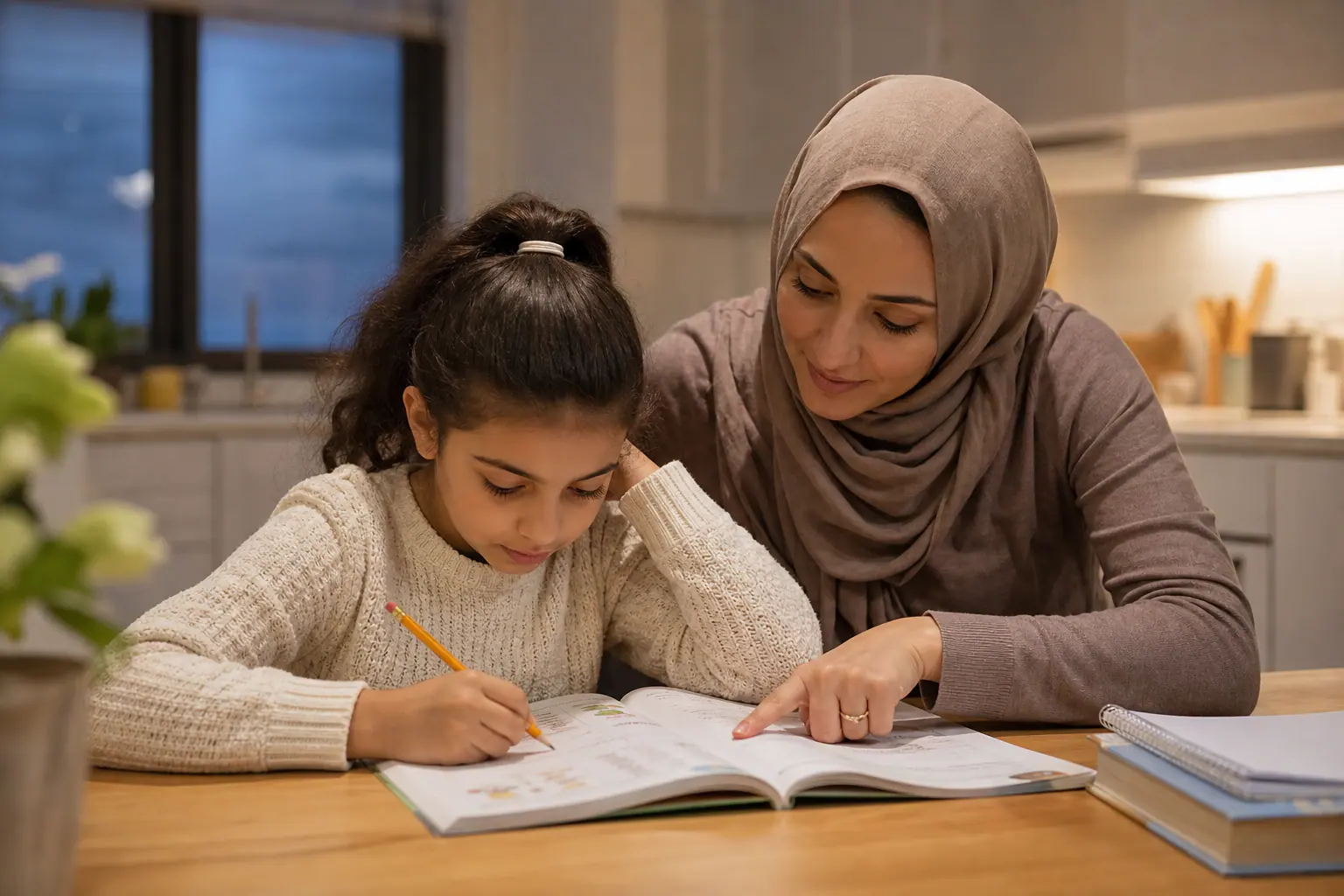
The role of parents in supporting the child
- ✓ Avoid describing the child as lazy
- ✓ Divide assignments into short parts
- ✓ Give the child enough time to answer
- ✓ Reading stories together every day
- ✓ Practice letters and sounds in a fun way
- ✓ Use pictures and cards
- ✓ Encourage the child to explain what he understood
- ✓ Not comparing him to his brothers or colleagues
- ✓ Praise effort, not just grade
- ✓ Communicate with the school regularly
- ✓ Adherence to treatment recommendations
- ✓ Reduce distractions while studying
- ✓ Transform learning into clear and possible steps
Calm family support helps the child reduce anxiety and improve response to training.

The role of the school in supporting learning difficulties
The school is an important partner in supporting the child. The child may need simple modifications to help him learn better.
- ● Give short and clear instructions
- ● Ensure that the child understands what is required
- ● Reduce the amount of copies of the board when needed
- ● Give extra time on some tasks
- ● Use visual aids
- ● Divide long assignments
- ● Assessing the child verbally in some cases
- ● Do not force him to read in front of the class if this causes severe anxiety
- ● Focus on progress, not comparison
- ● Share any early feedback with your parents
- ● Cooperate with the specialist according to the plan
These recommendations vary depending on the child's condition and are not all suitable for all children.
Do learning difficulties improve?
Many children improve when the cause of the difficulty is understood and appropriate support is given. Improvement may not happen simply by increasing study hours, but rather requires a training method that suits the weak skill.
- ● Type of difficulty
- ● The age of the child
- ● Severity of the problem
- ● The presence of language or attention delays or other difficulties
- ● Parental cooperation
- ● School cooperation
- ● Regularity of sessions
- ● Apply the instructions at home
Even if some difficulties remain, the child can learn strategies to help him succeed and reduce frustration.
Common mistakes to avoid
- ✗ Describing the child as lazy
- ✗ Forcing him to read in front of others despite his fear
- ✗ Increase duties without treating the basic skill
- ✗ Comparing the child with his siblings
- ✗ Reprimand him for every spelling mistake
- ✗ Relying on memorization alone
- ✗ Ignore school notes
- ✗ Postponing the evaluation for years
- ✗ Always consider learning difficulty to be a temporary problem
- ✗ Ignoring history of speech or language delay
- ✗ Do not examine your hearing or vision if there are any indications
- ✗ Not requesting additional evaluation when needed
The best thing is to evaluate, understand, and then have an appropriate support plan.
Learning difficulties and assessment in Al Shamkha - Abu Dhabi
If you are looking for a learning disabilities assessment in Abu Dhabi or a reading, writing and language assessment in Al Shamkha, Al Ahli Center provides specialized assessment of language and communication skills related to learning.
We help parents understand why their child is struggling to read, write, understand or express, and develop practical recommendations to support them at home and at school.
Specialized evaluation
For language skills related to learning.
Comprehensive understanding
For comprehension, expression, phonemic awareness, reading and writing.
Individual plan
Depending on the child's age and level.
Practical recommendations
For parents and school.
Kindergarten support
And school.
Link to language
With delayed speech or language when needed.
Multiple collaborations
With occupational therapy and other specialties.
Suitable environment
Quiet medical treatment for children and families.
Distinctive location
Close to Al Shamkha, Baniyas and Al Falah.
Services related to learning disabilities and assessment
The child may need one or more of the following services depending on the assessment:
Speech and language assessment
Comprehensive assessment of communication, language, reading, and writing.
Learning difficulties
Assess and support academic learning skills.
Speech therapy sessions for children
Regular language, reading and writing support sessions.
Delayed speech in children
Supporting children who have a history of delayed speech and school difficulties.
Language delay in children
Support comprehension, expression and vocabulary.
Occupational Therapy
Support fine motor skills for writing when needed.
When do I book an appointment for my child?
Book an assessment if your child has:
- ● Difficulty reading
- ● Difficulty writing or dictating
- ● Poor understanding of instructions
- ● Difficulty expressing his thoughts
- ● He quickly forgets what he learns
- ● Delay in learning letters
- ● Weak reading comprehension
- ● Difficulty organizing assignments
The first step is a clear assessment that helps determine whether the problem is linguistic, educational, attentional, motor, or needs additional evaluations.
Book a learning disability assessment for your child
If you notice that your child is having difficulty reading, writing, understanding, expressing, or keeping up with school despite trying, we can help you by assessing learning difficulties and school-related language skills.
AHLI Specialists Medical Center - Al Shamkha, Abu Dhabi
Al Qayed Street, Al Shamkha, Abu Dhabi
Frequently asked questions about learning disabilities and assessment
What are learning difficulties?
Do learning difficulties mean that the child is weak in intelligence?
What is the relationship between speech therapy and learning difficulties?
Does speech and language assessment formally diagnose learning disabilities?
When do I worry about difficulty reading?
Is difficulty writing always a problem with the hand?
Can learning difficulties be treated?
Should the school be involved?
Could delayed speech cause learning difficulties later?
Does the child need a hearing or vision test?
Our specialized team


Book a learning disabilities assessment
02-448-7553 — Al Shamkha, Abu Dhabi