
Teeth whitening in Abu Dhabi
Safe whitening and a brighter smile at AHLI Specialists Medical Center - Al Shamkha
Have your teeth become yellow or dark over time?
Does coffee, tea or smoking affect the color of your smile?
Do you want a whiter smile before an important occasion?
Have you tried whitening pastes and did not get a clear result?
Are you looking for teeth whitening in Abu Dhabi or teeth whitening in Al Shamkha near Baniyas, Al Falah and Shakhbout?
Teeth whitening is one of the most in-demand cosmetic dentistry treatments, because it helps lighten the color of natural teeth and improve the appearance of the smile in a non-surgical way. But successful whitening does not depend only on the bleaching agent. Rather, it begins with examining the teeth and gums, finding out the cause of the staining, cleaning tartar and surface stains when needed, and then choosing the appropriate whitening method for the patient’s condition.
At AHLI Specialists Medical Center in Al Shamkha - Abu Dhabi, we provide teeth whitening service within a safe and thoughtful plan, evaluating tooth color, gum health, the presence of fillings, crowns, or veneers, and the degree of sensitivity before starting treatment. We serve clients from Al Shamkha, Baniyas, Al Falah, Al Shawamekh, Shakhbout, Mohammed bin Zayed City, Khalifa City, Al Bahia, Al Raha, and various areas of Abu Dhabi.

What is teeth whitening?
Teeth whitening is a cosmetic treatment that aims to lighten the color of natural teeth using specialized materials that help reduce internal and external pigmentation in the layers of the tooth. Whitening is different from teeth cleaning; Cleaning removes tartar, plaque, and surface stains, while bleaching works to lighten the color of the tooth itself.
Whitening may help improve the color of teeth affected by:
Whitening does not change the color of fillings, crowns, veneers, or fixtures, so you should plan carefully if you have visible restorations on your front teeth.
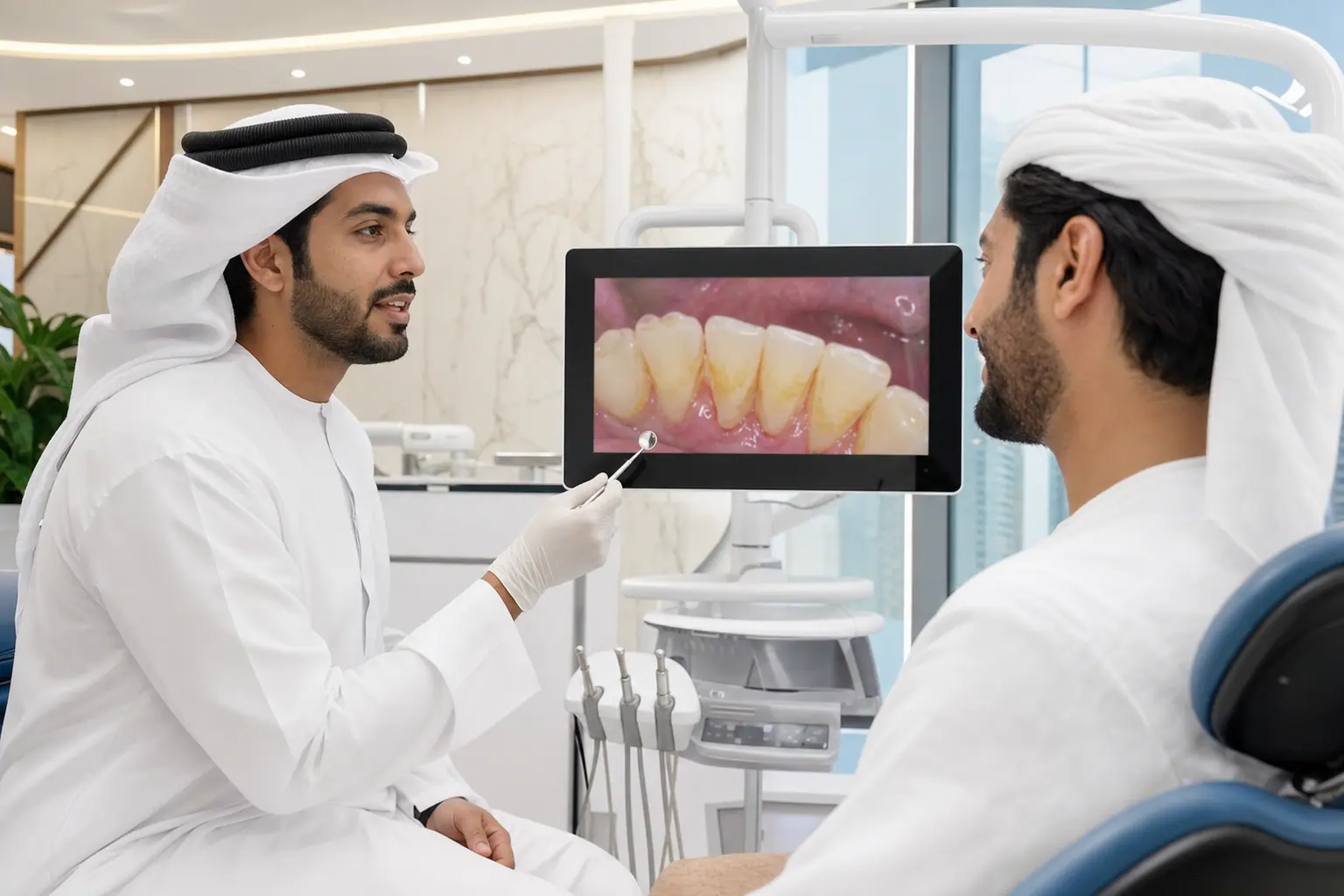
Why do teeth change color?
Teeth color may change for many reasons, some of which are superficial and some of which are deeper inside the tooth.
Coffee and tea
It is one of the most common causes of superficial staining, especially when drinking it on a daily basis and not cleaning the teeth well.
Smoking
It causes yellow or brown stains on the teeth, and may also affect gum health and mouth odor.
Colorful foods and drinks
Dark sauces, soft drinks, colored juices, and strong spices may contribute to discoloration.
Getting older
Over time, teeth may become yellower due to natural changes in the layers of the tooth and the gradual erosion of enamel.
Tartar and plaque accumulation
Tartar and surface stains may make teeth appear darker, and here teeth cleaning may be the first step before whitening.
Certain medications or internal agents
Some deeper pigmentation may be related to internal factors, medications, or tooth formation.
Old fillings and fixtures
A difference in color may appear if the fillings or crowns are old or do not match the natural tooth color.
Knowing the cause of the color change helps choose the most appropriate treatment: cleaning, whitening, veneer, or another treatment.
What is the difference between teeth cleaning and teeth whitening?
Teeth cleaning
It cleans teeth from tartar, plaque, and surface stains. It may make the teeth appear cleaner and a little lighter if the problem is superficial, but it does not lighten the inner color of the teeth.
Teeth whitening
It uses specialized bleaching agents to lighten the color of natural teeth themselves. Suitable for people who want a lighter shade after ensuring the health of their teeth and gums.
Teeth cleaning removes external plaque, while teeth whitening lightens the color of natural teeth. In many cases, we recommend cleaning your teeth before whitening for a better, more uniform result.
Teeth cleaning ←Who is suitable for teeth whitening?
Teeth whitening may be appropriate if your teeth are natural and relatively healthy, and you want to lighten their color in a non-surgical way.
The final decision needs to be examined, because bleaching does not suit all cases in the same way.
Who may not be suitable for direct teeth whitening?
In these cases, we may need a cleaning, gum treatment, cavity treatment, or discuss alternatives such as veneers before choosing whitening.
Types of teeth whitening
The appropriate choice varies depending on the condition of the teeth, the degree of pigmentation, sensitivity, and the speed of the desired result.
Teeth whitening in the clinic
It is done inside the dental clinic using specialized whitening materials and under the supervision of the doctor. Suitable for those who want a faster result and direct medical monitoring.
- •Faster result
- •Whitening under the supervision of a doctor
- •Follow up on tooth sensitivity
- •Whiten before an upcoming event
- •A safe plan instead of random products
Home whitening with custom trays
Trays are prepared according to the shape of your teeth, with a whitening gel used at home according to the doctor’s instructions.
- •Softer hue
- •Better sensitivity control
- •Gradual result
- •Custom templates
- •Follow up from the doctor
Combined bleaching
Combine office whitening with home whitening to maintain the result or achieve a better shade.
- •In-office whitening first
- •Home templates to follow
- •Longer lasting result
Whitening pastes
It may help remove some superficial pigmentation, but it usually does not give the same results as professional whitening.
- •Superficial pigmentation only
- •Do not change the interior color significantly
Ready-made whitening strips and products
It may give some results when used correctly, but it is not suitable for all cases and may cause allergies.
- •Incorrect use may cause gum irritation
- •There is no substitute for examination
Teeth whitening in the clinic
Teeth whitening in the clinic is done under medical supervision, and is often suitable for those who want a faster result. Before whitening, the doctor examines the teeth and gums and ensures that there is no decay or infection.
- ● Examination of teeth and gums
- ● Determine the current color tone
- ● Cleaning teeth if there is tartar or surface stains
- ● Protect the gums and surrounding tissues
- ● Apply bleach to the teeth
- ● Monitor dental response during the session
- ● Remove the material and clean the teeth
- ● Color evaluation after the session
- ● Give instructions after bleaching
The result may vary from person to person depending on the original tooth color, type of staining, enamel thickness, and post-treatment care.
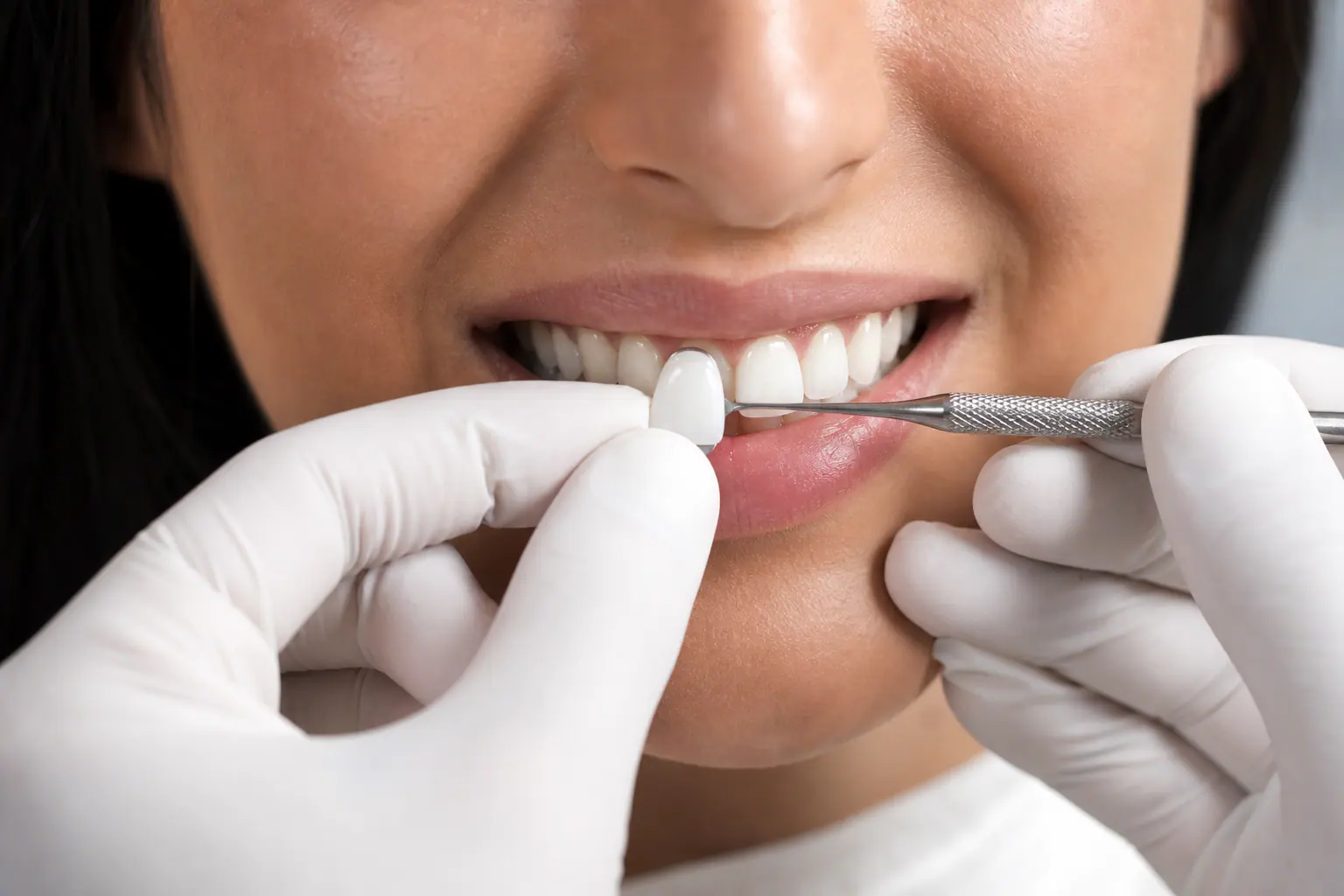
Home whitening with custom trays
Customized home whitening differs from ready-made products, because it relies on molds that are prepared according to the shape of your teeth, which helps to better distribute the whitening material and reduce its leakage into the gums.
- ● Examination of teeth and gums
- ● Taking measurements or scanning the teeth
- ● Preparing customized whitening trays
- ● Deliver the appropriate whitening gel
- ● Explain the method of use and duration
- ● Follow up on sensitivity and outcome
- ● Modify the plan if necessary
It may be suitable for people who want gradual whitening or want to maintain the result after in-office whitening.
Teeth whitening before the event
If you have an upcoming event such as a wedding, graduation, photo shoot, important interview, or family event, teeth whitening can help make your smile brighter.
It is preferable to book a consultation well in advance of the event so that the appropriate plan can be safely chosen.
Important questions about bleaching
Does teeth whitening remove all stains?
Not always. The result of bleaching depends on the type of pigmentation and the cause of the color change. Some teeth respond quickly, and some require additional sessions or home bleaching.
In these cases, other cosmetic options such as veneers may be more appropriate after the examination.
Dental veneers ←Does bleaching change the color of fillings, crowns and veneers?
no. Teeth whitening works on natural teeth only. It does not change the color of cosmetic fillings, crowns, bridges, veneers, dental veneers, restorations, or dentures.
If you have a filling, crown, or veneer on your front teeth, the difference may appear after whitening your natural teeth. Formulations should be evaluated before bleaching.
Is teeth whitening painful?
Teeth whitening is not usually painful, but it may cause temporary sensitivity in some people, especially with cold drinks or air.
- ● Having a previous allergy
- ● Receding gums
- ● Cracks or erosion in the enamel
- ● Use very strong products
- ● Excessive bleaching frequency
- ● The presence of untreated caries
If you have an allergy, tell your doctor before bleaching so an appropriate plan can be chosen.
How do we reduce tooth sensitivity after whitening?
- ● Dental examination before whitening
- ● Treating cavities or gum problems before treatment
- ● Use appropriate materials or concentrations
- ● Avoid excessive bleaching
- ● Use allergy paste as recommended by your doctor
- ● Avoid very cold drinks for a short period
- ● Adherence to the doctor’s instructions
- ● Tell your doctor if the allergy is severe or persistent
Allergies are often temporary, but their persistence needs to be checked.
Does teeth whitening weaken enamel?
When used appropriately under medical supervision and according to instructions, bleaching is safe for many patients. The problem often occurs when overusing or using unreliable products.
- ● Use of materials not intended for teeth
- ● Lemon, charcoal or citrus recipes
- ● Over-bleaching
- ● Leave the gel longer than recommended
- ● Using highly concentrated products without supervision
- ● Whitening teeth with untreated decay or erosion
It is best for whitening to be done after examination and guidance from a dentist.
Is teeth whitening safe?
Teeth whitening may be safe when used correctly and under medical supervision, and with appropriate condition selection.
- ● No untreated caries
- ● No severe gingivitis
- ● No severe unexplained allergies
- ● No cracks or visible corrosion
- ● Knowing the presence of visible fillings or crowns
- ● Choose a method appropriate to the situation
- ● Explain instructions clearly to the patient
Whitening is not a random procedure, it should be part of a cosmetic and health plan.
Teeth whitening steps at AHLI Specialists Medical Center
Consultation and examination
Examine the teeth and gums, find out the cause of the discoloration, and determine whether bleaching is appropriate.
Evaluate the current color
Evaluate the current tooth color and realistically discuss the expected color.
Cleaning teeth when needed
If there is tartar or surface stains, a dental cleaning may be recommended first.
Choose a bleaching method
Determine whether in-office whitening, home whitening with trays, or a combined plan is most appropriate.
Protect gums and tissues
In in-office whitening, steps are taken to protect the gums and reduce irritation.
Apply bleach
Use bleach according to the appropriate plan for the case.
Evaluate the result
After the session or after a period of home bleaching, the color is evaluated.
Post-bleaching instructions
Instructions to maintain results, reduce sensitivity and avoid pigmentation.
What should I do before teeth whitening?
- ● Book a check-up at the dentist
- ● Treating any cavities or gingivitis
- ● Cleaning teeth if there is tartar
- ● Tell the doctor about the presence of an allergy
- ● Tell your doctor about fillings, crowns, or veneers
- ● Avoid using home mixtures before the appointment
- ● Realistically discuss expected color tone
- ● Know that bleaching does not change the color of fixtures
Good preparation helps for a better and safer result.
What should I do after teeth whitening?
After whitening, teeth are more susceptible to staining for a short period in some people, so it is best to adhere to the doctor’s instructions.
- ● Avoid coffee, tea and colored drinks for a specified period
- ● Avoid smoking as much as possible
- ● Avoid highly pigmented foods in the first period
- ● Use a suitable paste if sensitivity occurs
- ● Do not bleach repeatedly without a doctor’s guidance
- ● Drink water after colorful drinks later
- ● Maintain teeth brushing twice daily
- ● Use floss or cleaning tools between the teeth
- ● See a doctor if severe sensitivity or pain appears
Following the instructions helps maintain color and reduce sensitivity.
What foods and drinks affect the whitening result?
This does not mean banning these foods forever, but reducing them and taking good care will help maintain the result.
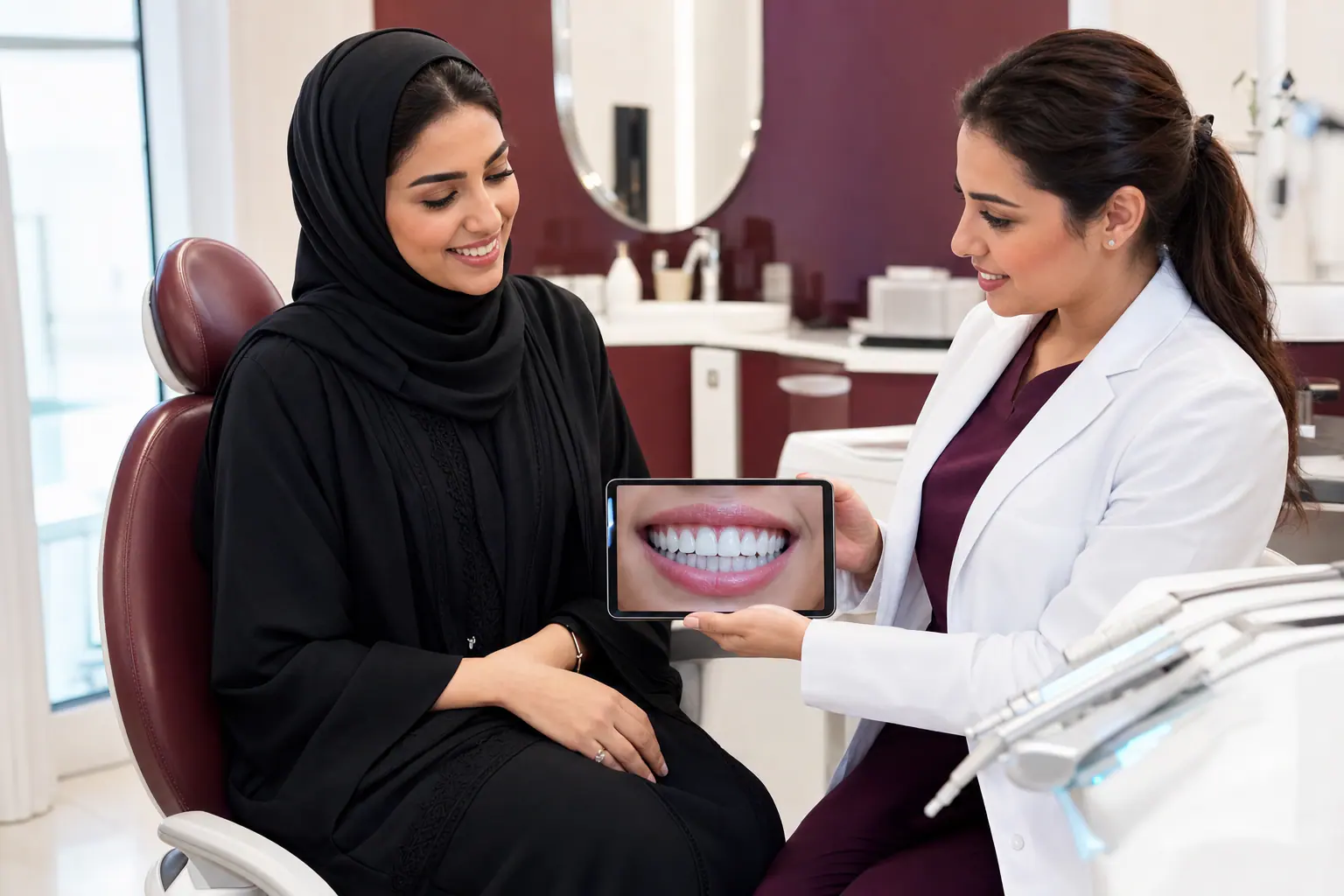
How long do teeth whitening results last?
How long the whitening result lasts varies from person to person. The result may last longer in people who maintain oral hygiene and avoid smoking and excessively colored drinks.
Whitening is not permanent forever, and may require conservative or follow-up sessions depending on the case.
Special cases
Can teeth whitening be repeated?
Yes, bleaching can be repeated when needed, but this must be according to the doctor’s recommendation and not randomly. Excessive bleaching may increase sensitivity and irritate the gums.
Do not use bleaching agents repeatedly without consulting, especially if you have allergies, abrasions, or frontal fillings.
Is teeth whitening suitable for sensitive teeth?
It may be suitable for some allergy patients after evaluating the cause and choosing an appropriate plan, but not always. If the sensitivity is due to decay, receding gums, or severe erosion, the cause must be treated first.
We do not recommend whitening sensitive teeth with random products without checking.
Is teeth whitening suitable for smokers?
Smokers can whiten teeth in some cases, but smoking causes stains that may return more quickly, and may also affect the health of the gums.
Whitening may improve color, but it does not address the effects of smoking on gums and oral health.
Is teeth whitening appropriate before veneers?
Teeth whitening may be appropriate before veneers if the plan includes veneers for a limited number of teeth, so that the color of the veneers is chosen to match the color of the teeth after whitening.
If you want to bleach and veneer together, you usually bleach first, then choose the color of the veneer after the color stabilizes.
Dental veneers ←Teeth whitening after braces
After braces are removed, some patients may want to have their teeth whitened to improve the color of the smile. Before whitening after braces, you should check the presence of white spots, gum health, tartar, cavities around the brackets, and tooth sensitivity.
If there are white spots or enamel problems, the treatment may need a different plan and not just direct whitening.
Teeth whitening for children and teens
Teeth whitening is not an appropriate procedure for all ages, and the condition should be carefully evaluated in adolescents. Cosmetic whitening for young children is often not a first choice.
Children should not use whitening products without medical supervision.
Are home bleaching recipes safe?
We do not recommend excessive use of recipes such as lemon, charcoal, sodium bicarbonate, or any mixtures that are harsh on the teeth. Some of these recipes may scratch the enamel or increase sensitivity.
The goal is healthy whiteness, not temporary whiteness at the expense of enamel and gums.
Teeth whitening or dental veneers?
Teeth whitening
It is suitable if the main problem is the color of the teeth, and the teeth themselves are in good shape and arrangement.
Dental Veneers
It is suitable if the problem is with both color and shape, such as deep pigmentation, gaps, different tooth shapes, or the desire for a comprehensive smile design.
If bleaching is sufficient, it may be a more conservative option. If the color and shape require a major change, the veneer may be better after examination.
Dental veneers ←Teeth whitening or teeth cleaning?
If teeth are darkened by tartar or superficial stains, tooth cleaning may be sufficient. If the inner color of the teeth is dark, you may need whitening. In some cases, both are done: cleaning then whitening.
Teeth cleaning ←Common mistakes in teeth whitening
- ● Bleaching before treating caries
- ● Whitening with obvious gingivitis
- ● Expect that bleaching will change the color of fillings or crowns
- ● Excessive use of gel or strips
- ● Leave the bleach on longer than directed
- ● Using products of unknown origin
- ● Harsh use of lemon or charcoal
- ● Frequent bleaching over short periods
- ● Drink plenty of coffee and tea immediately after the session
- ● Smoking after bleaching
- ● Ignore severe allergies
- ● Choosing an unrealistic and exaggerated color
Safe whitening begins with proper assessment and adherence to instructions.
Short answers
What is teeth whitening?
Teeth whitening is a cosmetic treatment that aims to lighten the color of natural teeth using specialized materials that help reduce pigmentation and improve the appearance of the smile.
What is the difference between teeth cleaning and teeth whitening?
Teeth cleaning removes tartar, plaque, and surface stains, while teeth whitening lightens the color of the natural teeth themselves. It is often recommended to clean before whitening if there is plaque or surface stains.
Does teeth whitening change the color of fillings and crowns?
No, teeth whitening does not change the color of fillings, crowns, veneers, or fixtures. Therefore, you should examine your teeth before bleaching if you have frontal restorations.
Does teeth whitening cause sensitivity?
Teeth whitening may cause temporary sensitivity in some people, especially if the teeth were previously sensitive or bleaching agents were used incorrectly.
Where can I find teeth whitening in Abu Dhabi?
A teeth whitening appointment can be booked at AHLI Specialists Medical Center in Al Shamkha - Abu Dhabi, with the teeth and gums evaluated and the appropriate whitening method chosen.
Book a teeth whitening appointment
The first step is an examination, then determining whether you need cleaning, whitening, or other cosmetic treatment.
Why choose AHLI Specialists Medical Center?
Examine teeth and gums before whitening
A comprehensive evaluation before any cosmetic procedure.
Evaluate the cause of pigmentation
Find out the cause before choosing the appropriate treatment.
Clean before bleaching
Remove tartar and surface pigmentation when needed.
Explain the difference between cleaning, whitening and veneering
Clear and honest choices.
Choose an appropriate whitening method
Clinic, home, or shared plan.
Take into account allergies and gums
A personalized plan to reduce discomfort.
Clear instructions after bleaching
To maintain the result for a longer period.
Link to other services
Cleaning, veneers, and general dentistry.
Quiet medical environment
Suitable for families in Al Shamkha.
Nearby location
From Bani Yas, Al Falah, Shakhbout and Abu Dhabi areas.
Teeth whitening in Al Shamkha - Abu Dhabi
If you are looking for teeth whitening in Abu Dhabi or teeth whitening in Al Shamkha, AHLI Specialists Medical Center provides a teeth whitening service after examining the health of your teeth and gums and determining the appropriate method for your condition.
We help you know whether you need cleaning before whitening, whether whitening is suitable for the color of your teeth, and what is the best way to get a brighter smile in a safe and thoughtful way.
AHLI Specialists Medical Center — Al Qayed Street, Al Shamkha, Abu Dhabi
For reservations and inquiries: 02-448-7553
When do I book a teeth whitening appointment?
Services related to teeth whitening
Teeth Whitening Team



Frequently asked questions about teeth whitening
Is teeth whitening safe?
Is teeth whitening painful?
How long does teeth whitening last?
Does bleaching remove coffee and tea stains?
Does teeth whitening change the color of veneers?
Do I need to brush my teeth before whitening?
Can sensitive teeth be whitened?
Is home bleaching safe?
Can one dark tooth be whitened?
Is teeth whitening suitable for smokers?
Is it possible to drink coffee after bleaching?
Is teeth whitening better or veneers?
Does bleaching damage enamel?
Can bleaching be repeated?
Is teeth whitening suitable before marriage or special occasions?
A brighter smile starts here
Safe teeth whitening in Al Shamkha - comprehensive examination and choosing the appropriate method for your condition.