
Children's dental examination in Abu Dhabi
Early examination and prevention of caries at AHLI Specialists Medical Center - Al Shamkha
Do you want to check on your child's teeth before the pain appears?
Have you noticed white or black spots on your baby's teeth?
Is your child afraid of the dentist and want a simple and convenient visit?
Do you want to know whether your child's teeth are growing normally?
Are you looking for a baby dental check-up in Abu Dhabi or a baby dental check-up in Al Shamkha near Baniyas, Al Falah and Shakhbout?
Examining children's teeth is the first step to maintaining oral health and preventing cavities and problems with the gums and primary and permanent teeth. The examination is not only done when there is pain; Rather, it helps detect early caries, monitor tooth growth, evaluate the brushing method, know the risk of caries, and direct parents to the best way to care for the child’s teeth at home.
At AHLI Specialists Medical Center in Al Shamkha - Abu Dhabi, we provide children’s dental examinations in a calm and gentle manner appropriate to the child’s age, with a clear explanation to the parents about the condition of the teeth, the need for cleaning, fluoride, fillings or follow-up, and how to prevent cavities in the future. We serve families from Al Shamkha, Baniyas, Al Falah, Al Shawamekh, Shakhbout, Mohammed bin Zayed City, Khalifa City, Al Bahia, Al Raha, and various areas of Abu Dhabi.
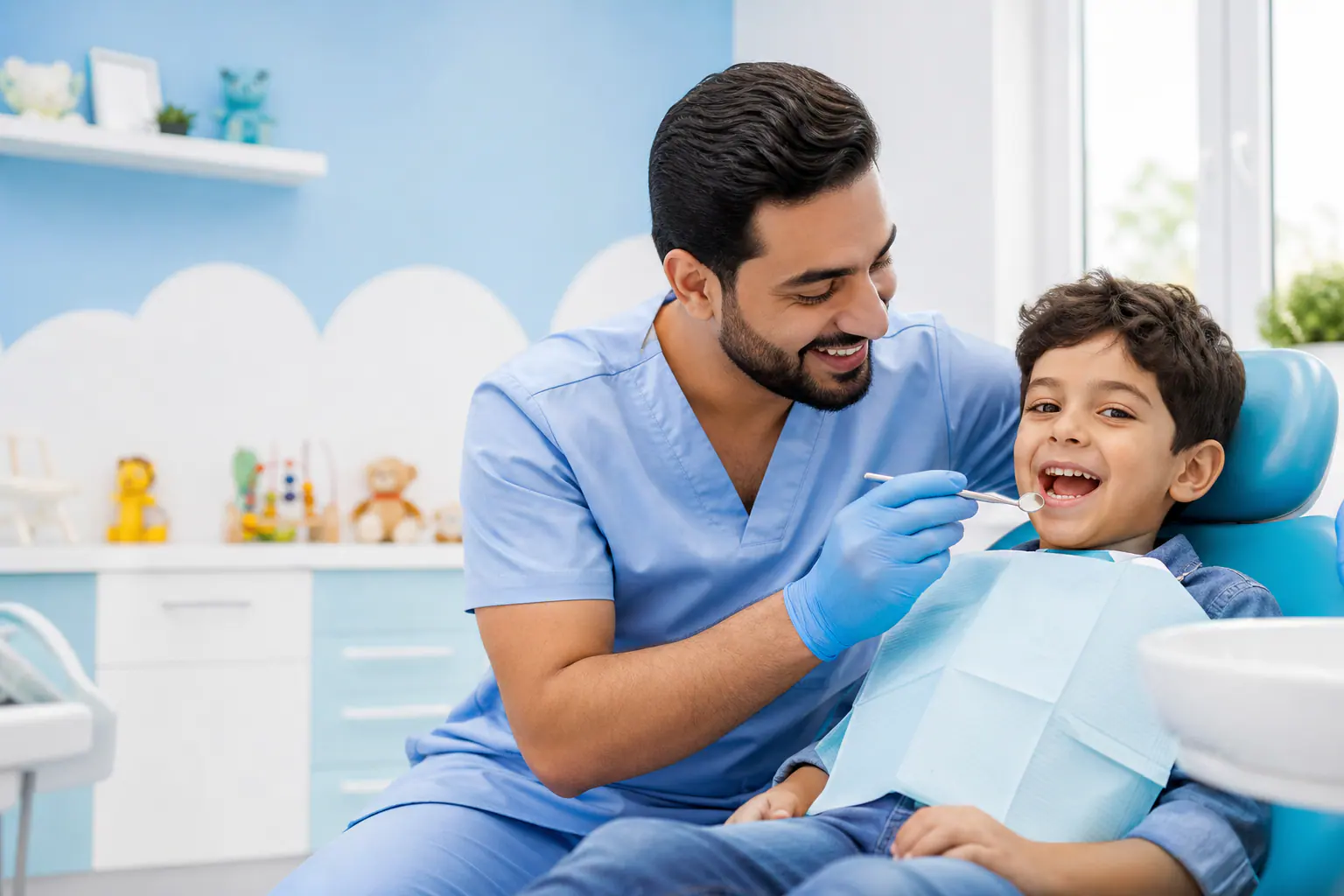
What is a children's dental examination?
A pediatric dental examination is an evaluation visit in which the dentist examines the child’s teeth, gums, mouth, the way teeth erupt, the presence of decay, stains, or inflammation, and the child’s need for cleaning, treatment, or prevention.
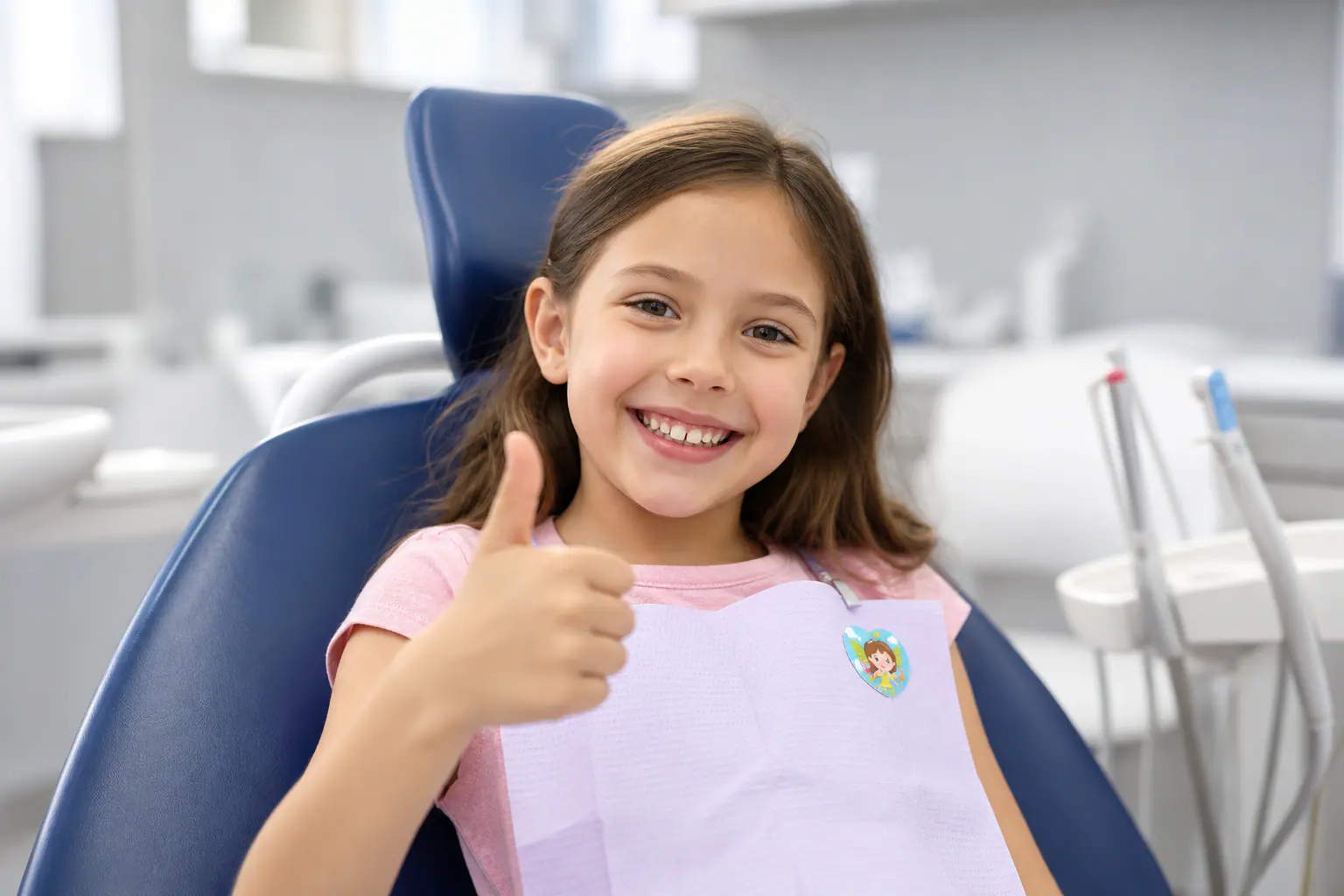
A children's dental checkup is not a scary procedure, but rather it can be a simple visit that helps the child get to know the dental office in a positive way.
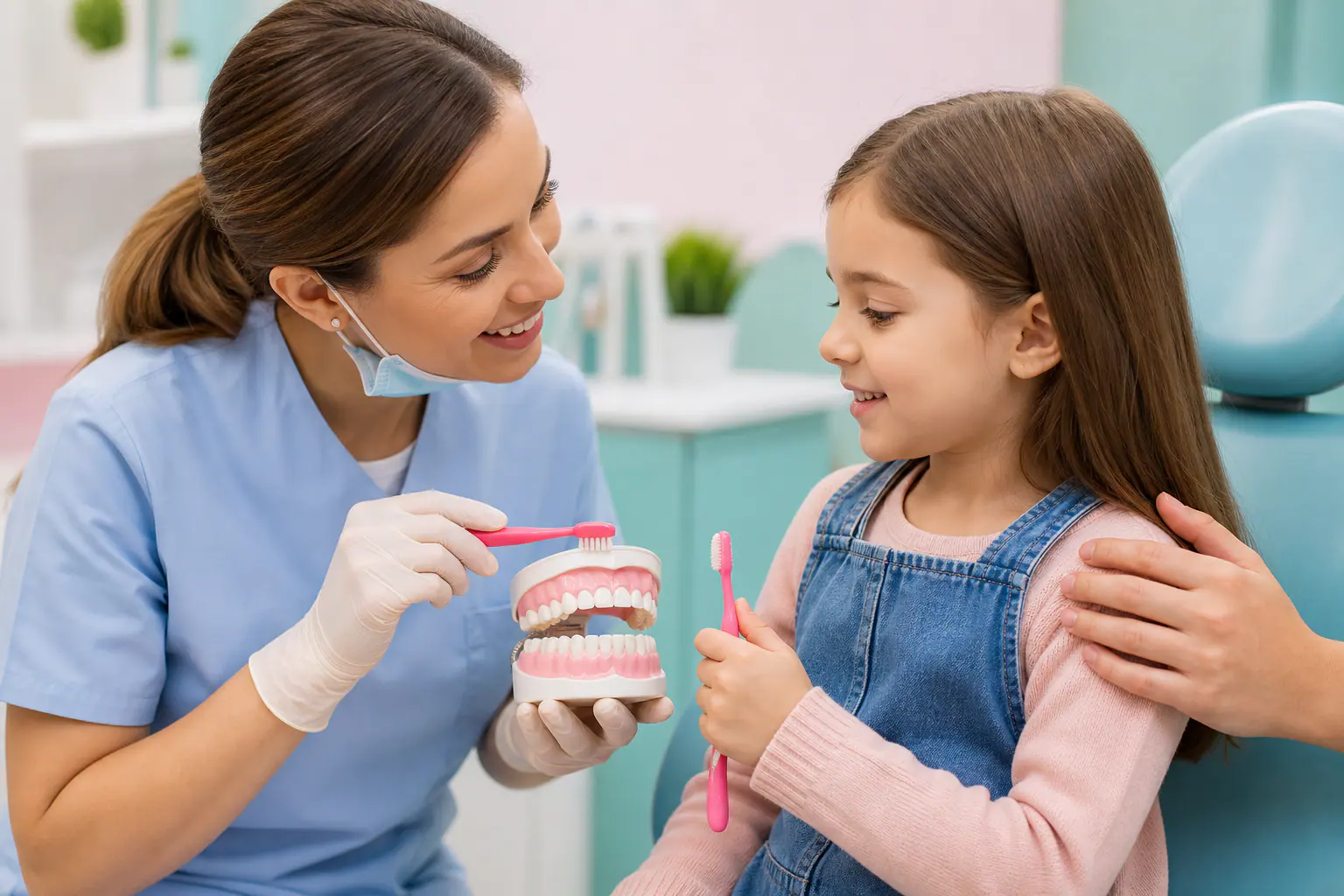
Why is children's dental examination important?
Many children's dental problems begin without pain. There may be a small cavity, a white spot, the beginning of a weakening of the enamel, or a buildup of plaque that the parents do not notice. When pain appears, the decay may have reached a stage that requires further treatment.
- ● Detecting caries early
- ● Preventing toothache
- ● Protecting baby teeth until they fall out naturally
- ● Follow up on the eruption of permanent teeth
- ● Reducing the need for root canal treatment or extraction
- ● Teach the child proper care
- ● Reducing the child’s fear of the dentist
- ● Assess the risk of caries according to the child’s habits
- ● Provide fluoride or protective materials when needed
- ● Guiding parents regarding nutrition, breastfeeding, and juices
- ● Discover the need for early correction or a distance keeper
The earlier a dental examination begins, the easier the treatment and the stronger the prevention.
When should a child's first dental checkup be?
It is preferable that the first visit to the dentist be when the first tooth appears or around the age of one year. This early visit helps with prevention, and teaches parents how to take care of the child’s teeth from the beginning, instead of waiting until tooth decay or pain appears.
- ● Checking the eruption of teeth
- ● Knowing how to clean the first teeth
- ● Preventing breastfeeding caries
- ● Know the appropriate amount of toothpaste
- ● Assess the risk of caries
- ● Talk about night feedings and juices
- ● Accustom the child to visiting the teeth without fear
- ● Building a comfortable relationship between the child and the doctor
Even if a child only has one tooth, a visit can be very beneficial for parents.
How often does a child need a dental check-up?
Mostly, the child needs a regular check-up every 6 months, but some children need more or fewer visits depending on the risk of decay and the condition of the teeth and gums.
A child may need more regular visits if he or she has:
- ● Previous caries
- ● Repeated caries
- ● White spots on the teeth
- ● Difficulty in brushing
- ● A diet rich in sugars
- ● Drink juices or sweetened drinks regularly
- ● Tartar or plaque buildup
- ● Orthotics or oral appliances
- ● New permanent teeth with deep grooves
- ● Strong family history of caries
- ● Sensory difficulties or limited cooperation with brushing
The doctor determines the appropriate period after evaluating the child's condition.
When should I book a dental check-up for my child?
The presence of pain is not required to book an examination; Preventive inspection is better than waiting for the problem.
What happens during a children's dental examination?
A pediatric dental check-up visit is usually simple and appropriate for the child's age. First, we try to make the child feel comfortable, then the teeth are examined in a calm manner.
Acquaintance and soothing the child
The child is treated gently and with simple words until he feels that the visit is not scary.
Asking the parents about health history
We ask about the child’s age, the parents’ complaints, brushing habits, food, breastfeeding, the presence of pain, or a history of previous caries.
Dental examination
The milk and permanent teeth are examined, looking for decay, stains, fractures, or previous fillings.
Examination of the gums and mouth
The gums are evaluated for inflammation, bleeding, plaque buildup, or any other abnormal signs.
Follow up on tooth eruption
It is ensured that teeth appear, fall out, and change appropriately for the child's age.
Evaluation of caries risk
The child's likelihood of developing cavities is estimated based on eating and cleaning habits and current dental condition.
Determine the need for x-rays
X-rays are not always required, but they may be necessary in some cases to diagnose tooth decay or root problems.
Explaining the condition to the parents
After the examination, the condition of the teeth and the prevention or treatment plan are clarified, with priorities if the child needs more than one procedure.
Home instructions
We explain the brushing method, the amount of paste, the use of floss, and feeding tips according to the child’s age.
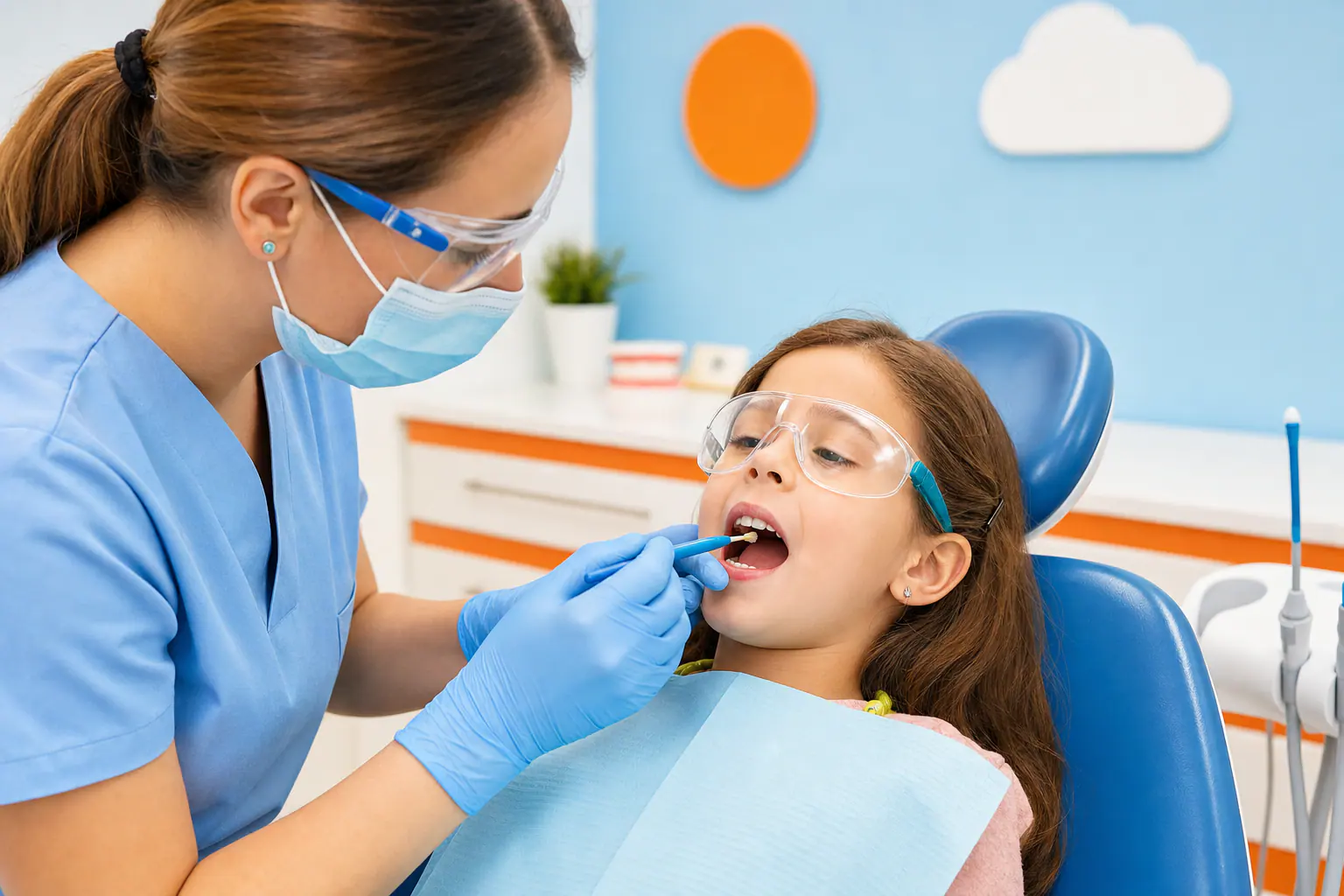
Is it painful to examine children's teeth?
The dental exam itself is often not painful. It just looks inside the mouth and examines the teeth and gums. The child may feel some discomfort if he is afraid or if he has pain or inflammation, but we try to make the experience gentle and reassuring.
Early examination helps the child visit the doctor at ease, instead of the first visit being due to pain, dislocation, or emergency treatment.
Does the child need x-rays for dental examination?
Not every child needs x-rays at every examination. X-rays are ordered when needed, if the doctor cannot see the problem adequately with a normal examination.
- ● Suspected tooth decay
- ● Unexplained pain
- ● Abscess or swelling
- ● A broken tooth
- ● Delayed tooth eruption
- ● A permanent tooth appears in an abnormal place
- ● Planning treatment for a root canal or dislocation
- ● Follow up on the loss of an early baby tooth
- ● Evaluation of permanent teeth under the gums
- ● Frequent cavities or high risk of cavities
Radiology is used as needed for diagnosis, not randomly.
What does a children's dental examination reveal?
A dental examination may reveal many problems before they become apparent to the parents.
Therefore, an examination is not just a look, but an important step in planning your child's oral health.
Important topics in children's dental examination
Examination of baby teeth
Baby teeth are very important although they will fall out later. During the examination, we evaluate whether the baby teeth are healthy, whether there is decay, whether there is pain, and whether the teeth maintain the distance for the permanent teeth.
- ● Chewing, talking and smiling
- ● Save space for permanent teeth
- ● Proper jaw growth
- ● Avoid pain and abscess
- ● Reducing the need for early extraction
If there is decay in a baby tooth, it is evaluated whether it needs a filling, root canal treatment, a crown, or an extraction, depending on the case.
Examination of permanent teeth in children
Some permanent teeth appear early, especially the first permanent molar, which often appears around the age of 6 years behind the baby teeth without a tooth falling out before it. Therefore, parents may not realize that it is a permanent tooth.
- ● Early detection of caries
- ● Protection of new permanent molars
- ● Evaluate the need for crack sealants
- ● Follow up on the arrangement of the teeth
- ● Evaluation of normal eruption
- ● Detection of stains or weak enamel
- ● Protect teeth that will remain with the child for life
New permanent teeth need special care because they are more susceptible to decay in the beginning.
Screening for early caries in children
Cavities don't always start out as a black hole. It may start as a white spot or rough area on the tooth, then progress to visible decay if not treated.
- ● White spots
- ● Brown pigmentation
- ● Small holes
- ● Caries between teeth
- ● Caries near the gums
- ● Caries of back molars
- ● Weak enamel
- ● Food collects between the teeth
- ● Pain or sensitivity to touch
If cavities are detected early, treatment may be simpler, and we may be able to stop its progression with a preventative plan depending on the case.
Gum examination in children
Healthy gums are as important as teeth. The child may suffer from gingivitis due to plaque buildup, poor brushing, or the presence of orthodontic appliances.
- ● Gum redness
- ● Bleeding when brushing
- ● Mouth odor
- ● Mild swelling
- ● Pain when brushing teeth
- ● Plaque accumulation near the gums
- ● Difficulty in cleaning the back teeth
Gum examination helps determine whether the child needs cleaning, improved brushing method, or special follow-up.
Examination of mouth odor in children
Bad breath in children may be due to plaque buildup, cavities, gingivitis, food debris, dry mouth, mouth breathing, or other causes.
- ● The presence of caries
- ● The presence of tartar or plaque
- ● Gum health
- ● Tongue hygiene
- ● The presence of an abscess or infection
- ● Breathing method
- ● Eating and cleaning habits
- ● The presence of fillings or teeth that require treatment
If the cause is from the mouth, it can often be improved with cleaning, treatment, and daily care.
Dental examination after a fall or blow
If a child falls or gets hit in the mouth, the teeth should be examined even if the fracture appears minor. Some infections may not appear immediately, and tooth discoloration, pain, or inflammation may occur after a while.
- ● A fractured tooth
- ● Bleeding from the gums
- ● Movement in the tooth
- ● The tooth has moved in or changed its position
- ● Pain when biting
- ● Tooth color changes after days or weeks
- ● Swelling near the tooth
- ● A permanent tooth comes out of its place
- ● A wound to the lips or gums
If a complete permanent tooth is knocked out, emergency care should be sought immediately.
Dental check-up before school
A dental examination before entering school or nursery is very useful, because dental problems may affect the child’s concentration, eating, sleeping, and school attendance.
- ● Detection of caries before the beginning of the school year
- ● Treat pain before it affects the study
- ● Ensure the safety of permanent molars
- ● Give fluoride or preventive agents when needed
- ● Teaching the child brushing habits
- ● Reducing absences due to toothache
- ● Reassure parents before school starts
Prevention before school is better than emergency treatment during school.
Dental examination before orthodontics
If a child is a candidate for braces or has overcrowding or an abnormal bite, an examination of the teeth and gums is important before beginning any orthodontic plan.
- ● The presence of caries
- ● Gum health
- ● Plaque buildup
- ● Remaining baby teeth
- ● Visible permanent teeth
- ● The need to extract a baby tooth
- ● Need for cleaning
- ● The child’s ability to brush
- ● Risk of caries during braces
Teeth must be as healthy and clean as possible before braces are fitted.
Dental examination for children with frequent caries
Some children develop cavities quickly or have cavities that recur despite treatment. These need more careful preventive examination.
- ● Brushing method
- ● The amount of putty
- ● Repetition of sweets
- ● Juices and sweetened drinks
- ● Night feeding
- ● Brushing teeth before bed
- ● Presence of early white spots
- ● The need for fluoride
- ● The need for sealants for cracks
- ● Spacers between teeth
- ● The presence of interstitial caries that does not appear easily
- ● The role of parents in brushing
The goal is not only to treat cavities, but also to reduce their recurrence.
Dental examination of a frightened child
If a child is afraid of the dentist, a checkup visit can be a great opportunity to build confidence, especially if there is no pain or difficult treatment involved.
- ● Gradient
- ● Explaining the tools in a simple way
- ● Do not rush the child
- ● Allow him to get to know the place
- ● Use comforting words
- ● Praise simple cooperation
- ● Don't force it terribly
- ● Make the first visit as positive as possible
- ● Involve parents in a way that helps and does not increase stress
Each calm visit makes the next easier.
How do I prepare my child for a dental examination?
Parents can prepare the child for the examination in a simple way:
- ● Talk about the visit positively
- ● Tell him that the doctor will count the teeth and examine the smile
- ● Avoid words like pain, needle, dislocation, blood
- ● Do not scare him with the dentist
- ● Read him a story about visiting the dentist
- ● Choose a time when the child is not tired or hungry
- ● Bring a small toy if it helps him
- ● Do not promise that “nothing will happen” if the possibility of treatment exists
- ● Praise him after the visit
- ● Stay calm because the child picks up on the parents’ tension
Proper preparation of the child may make the examination much easier.
Can the dental examination be only the first visit without treatment?
Yes. In many cases, especially with young or frightened children, the first visit is just for familiarization and examination, if there is not an emergency. This helps the child build confidence before any treatment.
- ● Sitting in the dental chair
- ● Get to know the doctor
- ● Simple check
- ● Counting teeth
- ● Explanation of brushing
- ● Tips for parents
- ● Determine a treatment plan later if you find a problem
This approach may reduce fear and make the next treatment easier.
Dental examination and fluoride
After a dental examination, the doctor may recommend a fluoride application if the child is susceptible to cavities or has beginning to weaken enamel. Fluoride helps strengthen tooth enamel and reduce the risk of cavities.
- ● Previous caries
- ● White spots
- ● A lot of sweets or juices
- ● Poor cleaning
- ● New permanent molars
- ● High susceptibility to caries
- ● Use braces or oral appliances
- ● Difficulty in brushing
Fluoride is part of prevention and is not a substitute for brushing.
Dental examination and sealants for cracks
During the examination, the doctor may notice that the child's permanent molars have deep grooves that are difficult to clean. In this case, incision sealants may be recommended.
- ● Protecting the back molars
- ● Reduce food accumulation in the grooves
- ● Reduce the risk of caries
- ● Support prevention in children exposed to caries
- ● Protecting the first permanent molar after its emergence
Not all molars need sealants, but an examination determines the need.
Dental checkup and distance keeper
If a child loses a baby tooth early due to extraction or decay, he or she may need a spacer so that adjacent teeth do not move and block the space of the permanent tooth.
- ● When was the tooth lost?
- ● How old is the child?
- ● Is the permanent tooth close to appearing?
- ● Are the adjacent teeth starting to move?
- ● Does the child need a distance keeper?
- ● Does it need follow-up evaluation?
Space maintainers are not used in all cases, but they are important when tooth loss is early and may affect the arrangement of permanent teeth.
Dental examination and tooth replacement
The stage of tooth replacement needs to be followed up, because the milk and permanent teeth may sometimes overlap in the mouth.
- ● A permanent tooth appears behind the baby tooth
- ● A baby tooth that does not fall out despite the permanent appearance
- ● Premature loss of a baby tooth
- ● Delayed appearance of a permanent tooth
- ● Obvious crowding
- ● Large voids
- ● Abnormal bite
- ● Need for early evaluation
Early evaluation helps to know whether the condition is normal and only needs follow-up, or whether it needs intervention.
Dental examination and oral habits
Some habits may affect the child's teeth and jaw, and their effect can be detected during the examination.
- ● Thumb sucking
- ● Using the pacifier for a long time
- ● Mouth breathing
- ● Tongue thrust
- ● Nail biting
- ● Teeth grinding
- ● Biting pens or toys
- ● Sleeping while breastfeeding
- ● Drinking juices frequently
During the examination, the doctor can guide parents about the habit, its effects, and when to intervene.
Dental examination for children with special needs
Children with special needs may need a more gradual and calm dental examination, especially if the child has sensory, communication or motor difficulties.
- ● The child's sensitivity to light or sound
- ● His fear of touching the mouth
- ● Difficulty sitting
- ● Difficulty understanding instructions
- ● Needing a longer time
- ● Use visual explanations or simple steps
- ● Parental presence in a supportive manner
- ● Divide the visit into stages
- ● Focus on prevention to reduce the need for major treatments
The goal is to provide appropriate care to each child according to his or her needs.
What do parents ask when examining their children’s teeth?
A dental exam is an excellent opportunity to ask important questions, such as:
- ● Are my child's teeth healthy?
- ● Does he have the onset of caries?
- ● Does it need fluoride?
- ● Does it need crack sealants?
- ● Is the amount of paste appropriate?
- ● Is the brushing method correct?
- ● Do permanent teeth appear normally?
- ● Is there a need for a distance keeper?
- ● Is the habit of pacifier or thumb sucking effective?
- ● Does the child need early orthodontics?
- ● How often should one visit the dentist?
- ● What should I do if he complains of pain?
- ● Does the clinic need cleaning?
The earlier parents know the answers, the easier it will be to keep their child's teeth.
Tips after examining a child's teeth
After the examination, the doctor may give a simple plan depending on the child's condition. General advice:
- ● Brush your child's teeth twice a day
- ● Use an amount of paste appropriate for his age
- ● Help the child with brushing and do not rely on him alone at a young age
- ● Reduce sweets and juices
- ● Do not let the child sleep with milk or a sweetened drink in his mouth
- ● Encourage drinking water
- ● Use floss if teeth are close together as directed by your doctor
- ● See a doctor periodically
- ● Don't wait for pain to book an appointment
- ● Follow recommendations for fluoride or sealants if prescribed
- ● Watch for any spots, pain or swelling
Daily prevention is the foundation of children's dental health.
Children's dental examination in Al Shamkha - Abu Dhabi
If you are looking for a pediatric dental check-up in Abu Dhabi or a child dental check-up in Al Shamkha, AHLI Specialists Medical Center offers a gentle and child-friendly examination, with a comprehensive assessment of teeth, gums, growth and cavity prevention.
We help parents know the condition of their child’s teeth early, and determine whether they need cleaning, fluoride, sealants, fillings, treatment, or just follow-up.
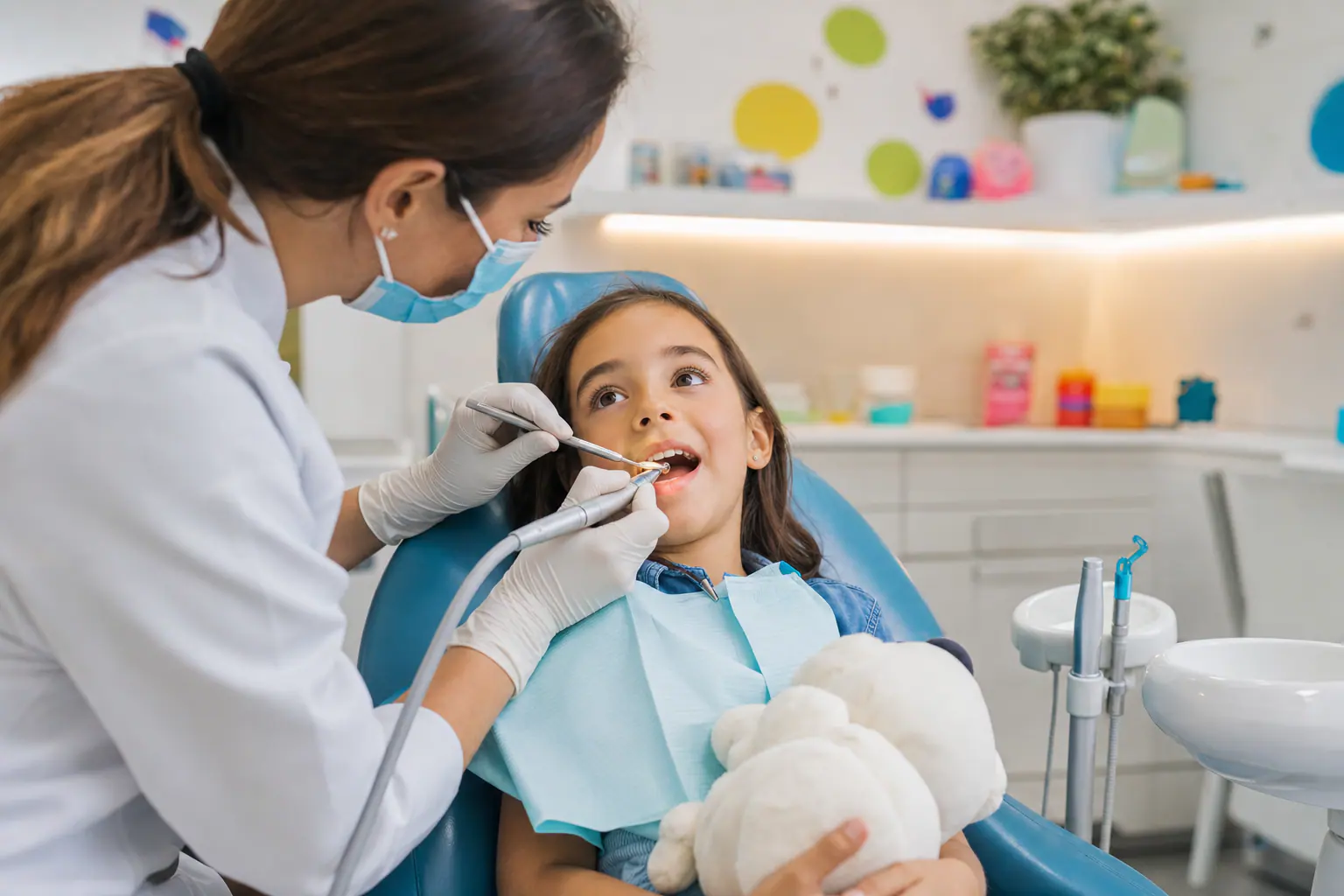
Why choose AHLI Specialists Medical Center?
- ✓ Examine children's teeth in a gentle and comfortable way
- ✓ Evaluation of deciduous and permanent teeth
- ✓ Early detection of caries
- ✓ Instructing parents on how to take care of themselves at home
- ✓ Assess the need for cleaning, fluoride or sealants
- ✓ Follow up on tooth replacement and growth
- ✓ Dealing with a child's fear of the dentist
- ✓ A quiet medical environment suitable for families
- ✓ Location close to Al Shamkha, Baniyas, Al Falah, Shakhbout and Abu Dhabi areas
- ✓ Linking the service to pediatric dentistry services, teeth cleaning, fluoride, fillings, and distance keeping
Services related to children's dental examination
Pediatric dentistry
The main service for children's dental care, caries treatment and prevention.
Cleaning children's teeth
Remove plaque and pigmentation and teach the child proper care.
Teeth cleaning
Professional cleaning of teeth and gums.
General Dentistry
Comprehensive family dental care.
Teeth whitening
Improving tooth color for adults.
Dental implants
Replace missing teeth.
Children's fluoride
Strengthening tooth enamel and reducing the risk of caries.
Children's fillings
Treating early and moderate caries.
Root canal treatment of baby teeth
Treating baby teeth if the decay reaches the nerve.
Keep your distance
Preserving the location of the permanent tooth after losing a baby tooth.
Treating child fear
Be courteous and build trust in the clinic.
When should I book a dental check-up for my child?
Early screening helps prevent and avoid late treatment.
AHLI Specialists Medical Center - Al Shamkha, Abu Dhabi
For reservations and inquiries: 02-448-7553
Location: Al Qayed Street, Al Shamkha, Abu Dhabi
Short answers
What is a children's dental examination?
A pediatric dental examination is a visit in which the dentist evaluates the baby and permanent teeth and gums, detects early decay, monitors tooth growth, and determines the need for cleaning, fluoride, or treatment.
When should a child have his first dental examination?
It is preferable that the first dental examination be when the first tooth appears or near the age of one year, so that the parents receive early preventive guidance and the risk of decay is reduced.
Does the child need to be examined if he does not have pain?
Yes, because cavities and gum problems may begin without pain. Regular examination helps detect problems early before they become painful.
What happens at a child's dental exam?
The doctor examines the teeth and gums, evaluates cavities and stains, follows up on tooth replacement, determines the need for x-rays, fluoride, or cleaning, and then explains the plan to the parents.
Where can I find a pediatric dental check-up in Al Shamkha, Abu Dhabi?
Children's dental examination can be booked at AHLI Specialists Medical Center in Al Shamkha - Abu Dhabi for families from Baniyas, Al Falah, Shakhbout and Abu Dhabi areas.
Frequently asked questions about children's dental examinations
Is a child's dental examination necessary?
When is the first visit to the dentist?
How often should a child's teeth be checked?
Is the examination painful for the child?
Does the child need x-rays at every visit?
Do baby teeth need examination and treatment?
Can caries be detected before pain?
Does the examination reveal the child's need for fluoride?
Does the examination reveal the child’s need for sealants for the incisions?
Could the first visit be just to get acquainted?
Should I have my teeth checked before school?
What should I do if my child is afraid of the examination?
Does a dental examination help in following up on tooth replacement?
Does examining children's teeth reveal the need for braces?
Should a child be examined if he has white spots on his teeth?
Book a children's dental check-up
Checking on your child's teeth starts with a simple checkup — catch cavities early and plan for prevention.