
Open bite treatment in Abu Dhabi
Correcting the misalignment of the front or back teeth at AHLI Specialists Medical Center - Al Shamkha
Do you notice a gap between the upper and lower teeth when the mouth is closed?
Do the front teeth not meet when biting?
Does your child have an open bite due to thumb sucking or tongue thrusting?
Do you find it difficult to bite food with your front teeth?
Are you looking for open bite treatment in Abu Dhabi or open bite correction in Al Shamkha near Baniyas, Al Falah and Shakhbout?
An open bite is an occlusal problem that occurs when some of the upper and lower teeth do not meet when the mouth is closed, leaving a visible gap between the teeth. An open bite may be anterior and appear between the front teeth, or posterior and affect the back teeth, and may be the result of oral habits, jaw growth, tongue position, or other orthodontic and skeletal causes.
At AHLI Specialists Medical Center in Al Shamkha - Abu Dhabi, we provide a comprehensive evaluation of open bite cases in children, adolescents and adults, determining the cause of the problem and the degree of its impact on chewing, speech and smiling, then developing an appropriate treatment plan that may include metal braces, ceramic braces, clear braces, orthodontic appliances for children, treating oral habits, or referring severe skeletal cases for specialized evaluation when needed. We serve clients from Al Shamkha, Baniyas, Al Falah, Al Shawamekh, Shakhbout, Mohammed bin Zayed City, Khalifa City, Al Bahia, Al Raha, and various areas of Abu Dhabi.
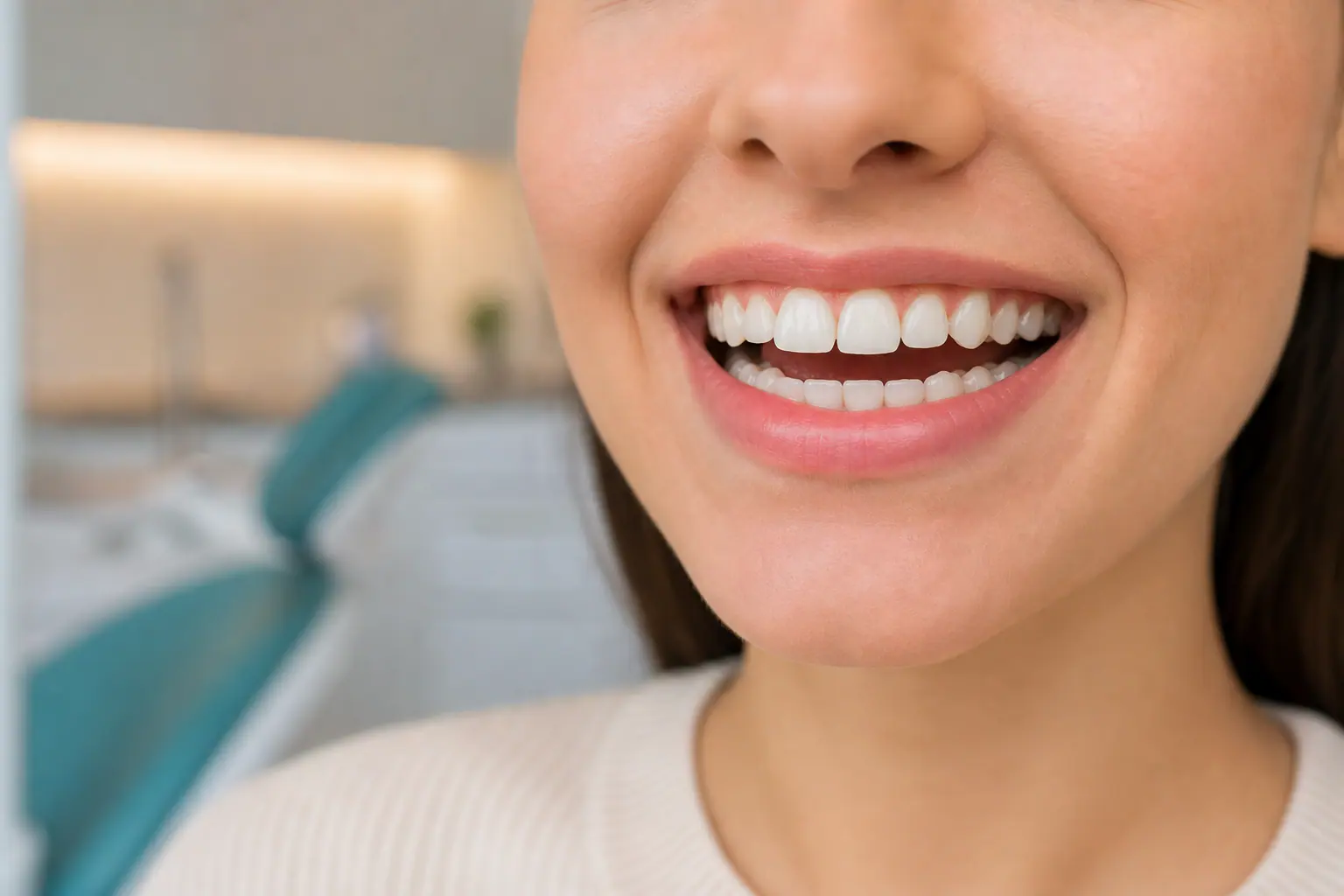
What is an open bite?
An open bite is a malocclusion in which some of the upper and lower teeth do not meet when the mouth is closed. Normally, the upper and lower teeth touch each other to an appropriate degree that helps with biting, chewing, and speech.
An open bite is not just a cosmetic problem; It may affect biting, chewing, speech, tongue position, occlusal balance, and the stability of the orthodontic result if the cause is not treated.
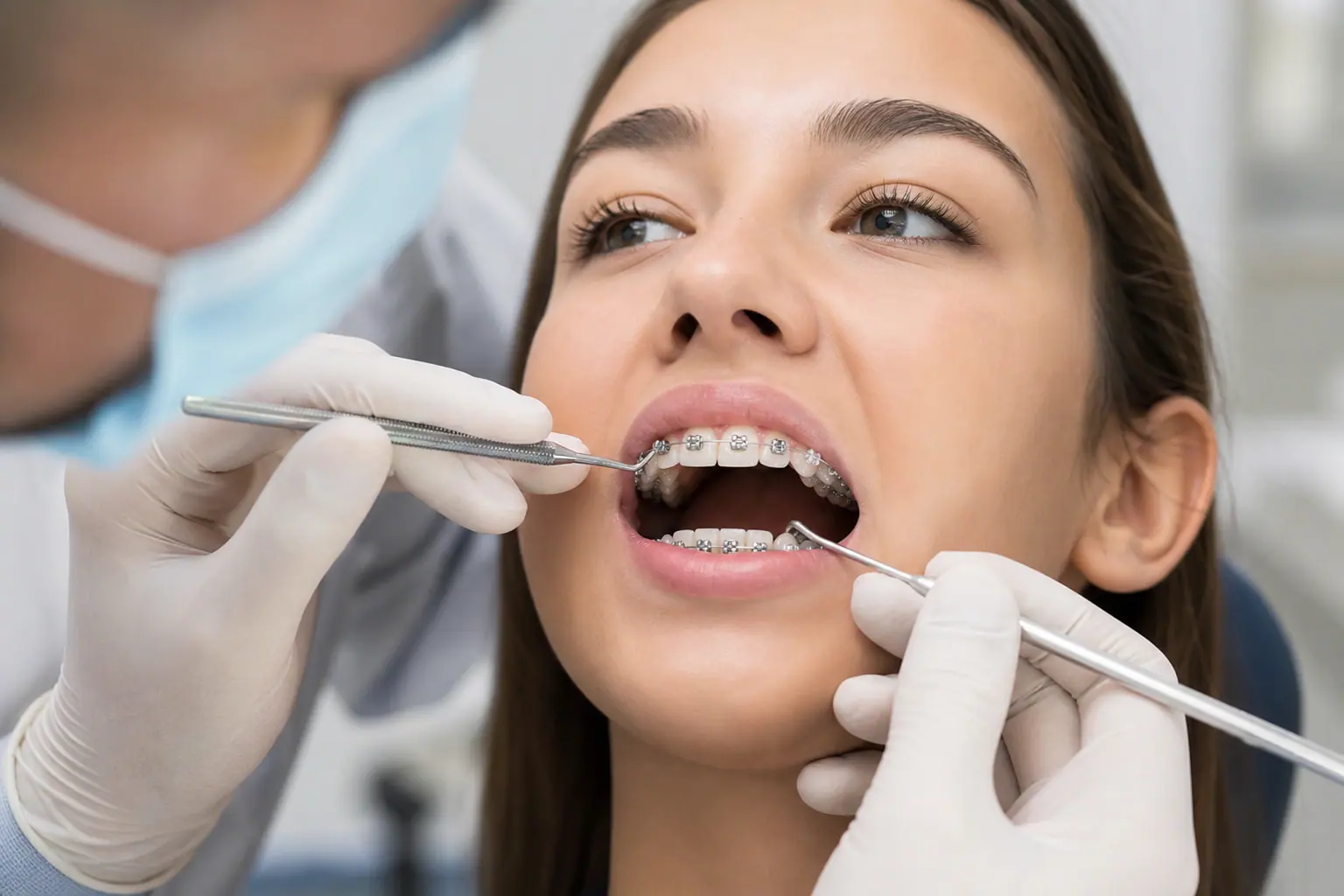
Types of open bite
Anterior open bite
The most common type — the front teeth do not meet when the mouth is closed.
Posterior open bite
The back teeth do not meet in a certain area and affect chewing.
Dental open bite
The problem is the position of the teeth themselves — may be easier to treat if the cause is treated early.
Skeletal open bite
Associated with jaw growth or facial shape — more complex in adults.
Functional open bite
Related to tongue position, tongue thrust, mouth breathing, or swallowing method.
Is an open bite only a cosmetic problem?
no. An open bite may affect the appearance of a smile, but it can also cause functional and health problems.
- ∙ Food and chew
- ● Pronunciation of some letters
- ● Tongue position and occlusal balance
- ● Jaw comfort and wear of some teeth
- ● Stability of the evaluation result
- ● Patient confidence when smiling or speaking
Evaluation of the open bite is important even if there is no pain.
Open bite marks
- ● There is a gap between the front teeth when the mouth is closed
- ● Inability to bite food with the front teeth
- ● The tongue sometimes appears between the teeth
- ● Pushing the tongue forward while speaking or swallowing
- ● Difficulty in pronouncing some letters for some patients
- ● An open bite in a child due to finger or pacifier sucking
- ● Unbalanced chewing
- ● Recurrence of open bite after previous orthodontics
- ● Having persistent oral habits
If you notice these signs, it is best to book an evaluation to find out the cause and degree of the condition.
Causes of open bite
Finger sucking
It may push the front teeth forward and prevent them from meeting normally.
Using a pacifier for a long time
It may affect the position of teeth and jaw in children.
Tongue thrust
It may prevent the teeth from meeting and contribute to an open or bite.
Mouth breathing
It may be associated with changes in tongue position and facial growth in some children.
Genetic factors and jaw growth
The direction of jaw growth or facial shape may cause an open bite.
Teeth protrusion or tilt
The position of the teeth may result in incorrect contact.
Occlusal problems
It may be part of a larger malocclusion such as a protruding or narrow jaw.
Not treating habits early
Continuing habits makes treatment more difficult and increases the likelihood of relapse.
The problem returned after the orthodontic treatment
If the patient does not adhere to the retainer or the habit of pushing the tongue continues.
Knowing the cause is the most important step before treatment, because closing the bite without treating the cause may lead to the problem returning.
Open bite treatment options
Treatment for an open bite varies depending on the age of the patient and the cause and severity of the problem.
Metal braces for treating open bite
Metal braces may be an effective option in many open bite cases, especially if the condition requires precise control of tooth movement and occlusion.
- ● Moderate or severe open bite
- ● Additional occlusal problems
- ● Need to use orthodontic elastics
- ● A teenager or adult who needs comprehensive treatment
Metal braces are more visible, but give the doctor good control in many cases.
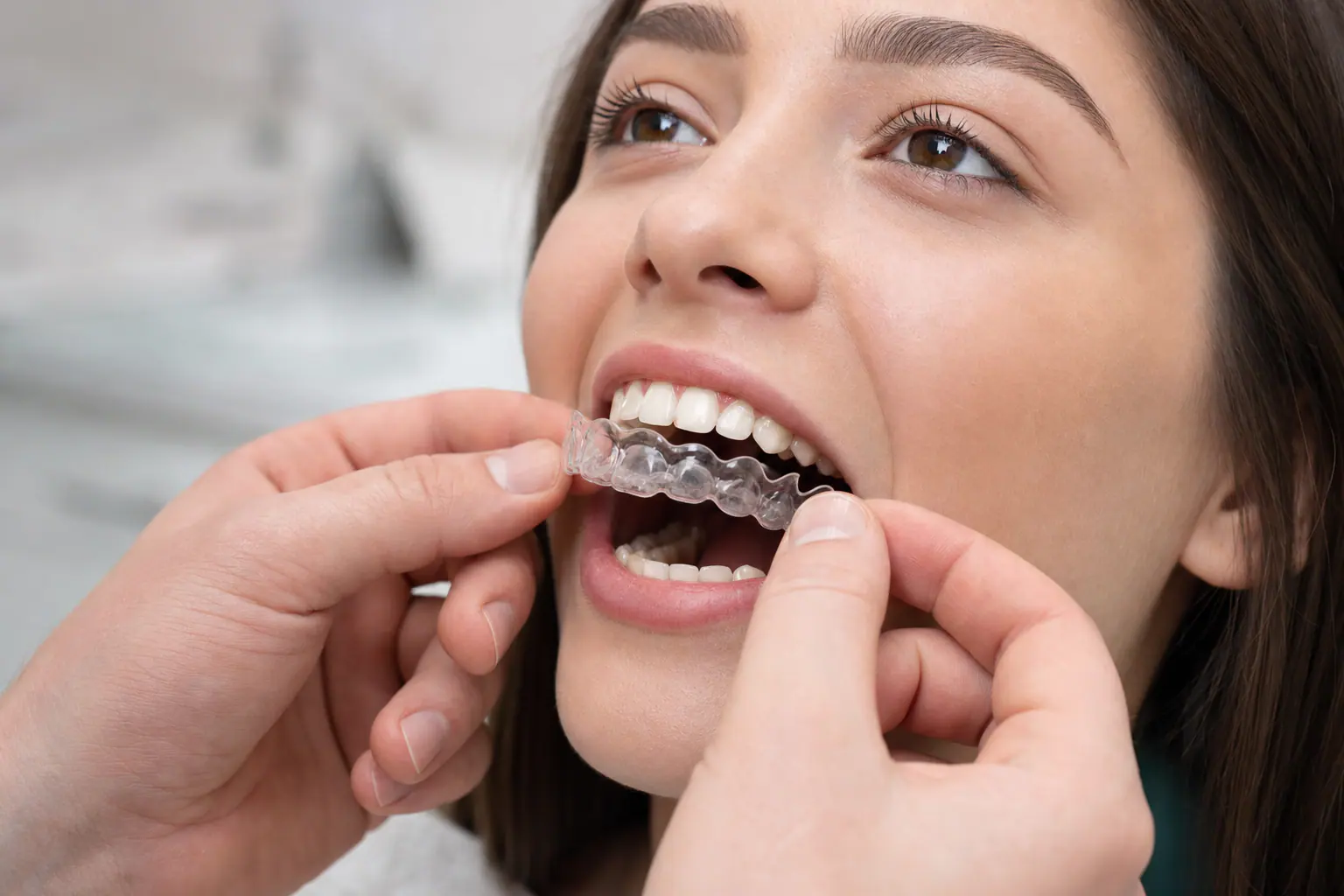
Clear braces for treating open bite
Clear braces may be suitable for some cases of simple to moderate open bite, provided that the patient adheres to wearing the trays.
- ● Simple or moderate open bite
- ● Desire for less visible treatment
- ● Commitment to wearing the casts daily
- ● Gums and teeth in good condition
It may not be appropriate if the bite is severe, skeletal, or related to an uncontrolled tongue habit.
Ceramic braces for treating open bite
Ceramic braces work in a similar way to metal braces, but are less noticeable because the brackets are a color similar to the teeth.
- ● A fixed treatment for open bite
- ● Less noticeable than metal braces
- ● Occlusal correction with good control
Ceramic braces need good hygiene care to avoid stains or gingivitis.
Orthodontics to treat open bite
Orthodontics is the primary service for correcting open bites and associated occlusal problems.
- ● Gradually closing the space between the teeth
- ● Improve the contact of the front and back teeth
- ● Correction of associated tilt or protrusion
- ● Use elastics as needed
The type of orthodontic treatment is chosen after a comprehensive evaluation.
The most important thing is to treat the cause, not just temporarily close the void.
The difference between types of occlusal problems
Open bite vs deep bite
The teeth do not meet in a certain area and a void appears when the mouth is closed.
The upper and lower teeth cover more than normal.
Both are occlusal problems, but the treatment is very different.
Open bite vs teeth protrusion
It means that the teeth do not touch when closing.
It means that the front teeth protrude forward more than normal.
The patient may have only an open bite, only an overbite, or both.
How is an open bite diagnosed?
Dental and occlusal examination
We measure the amount of space and determine whether the bite is open anteriorly or posteriorly.
Check tongue position
We notice whether the tongue enters between the teeth or pushes them.
Examination of oral habits
Ask about finger sucking, a pacifier, tongue thrusting, and mouth breathing.
Evaluation of the jaw and face
We evaluate jaw shape, lip closure, and growth direction.
Pictures and x-rays
We may need pictures and x-rays to study the teeth and jaws.
Determine the type of treatment
We determine whether the treatment is orthotics only, usually an appliance, or surgical evaluation in severe cases.
Steps to treat an open bite
Consultation and evaluation
Examining the teeth and occlusion and identifying the patient’s complaints.
Cause analysis
Determine whether the bite is due to a habit, tongue thrust, dental problem, or jaw growth.
Pictures and x-rays
Evaluation of the roots, jaws and degree of open bite.
Examination of habits and function
Assess tongue, breathing, finger sucking, and vocalization.
Choose a treatment plan
Fixed, clear aligners, appliance for children, or referral for severe cases.
Oral preparation
Cleaning, treating caries, or treating gums before braces.
Starting orthodontic treatment
Gradually move the teeth to close the bite.
Periodic follow-up
Review progress and modify orthodontic treatment or templates.
Termination of treatment
After achieving proper occlusion.
Installer and follow-up
The fixative is very important to maintain the result.
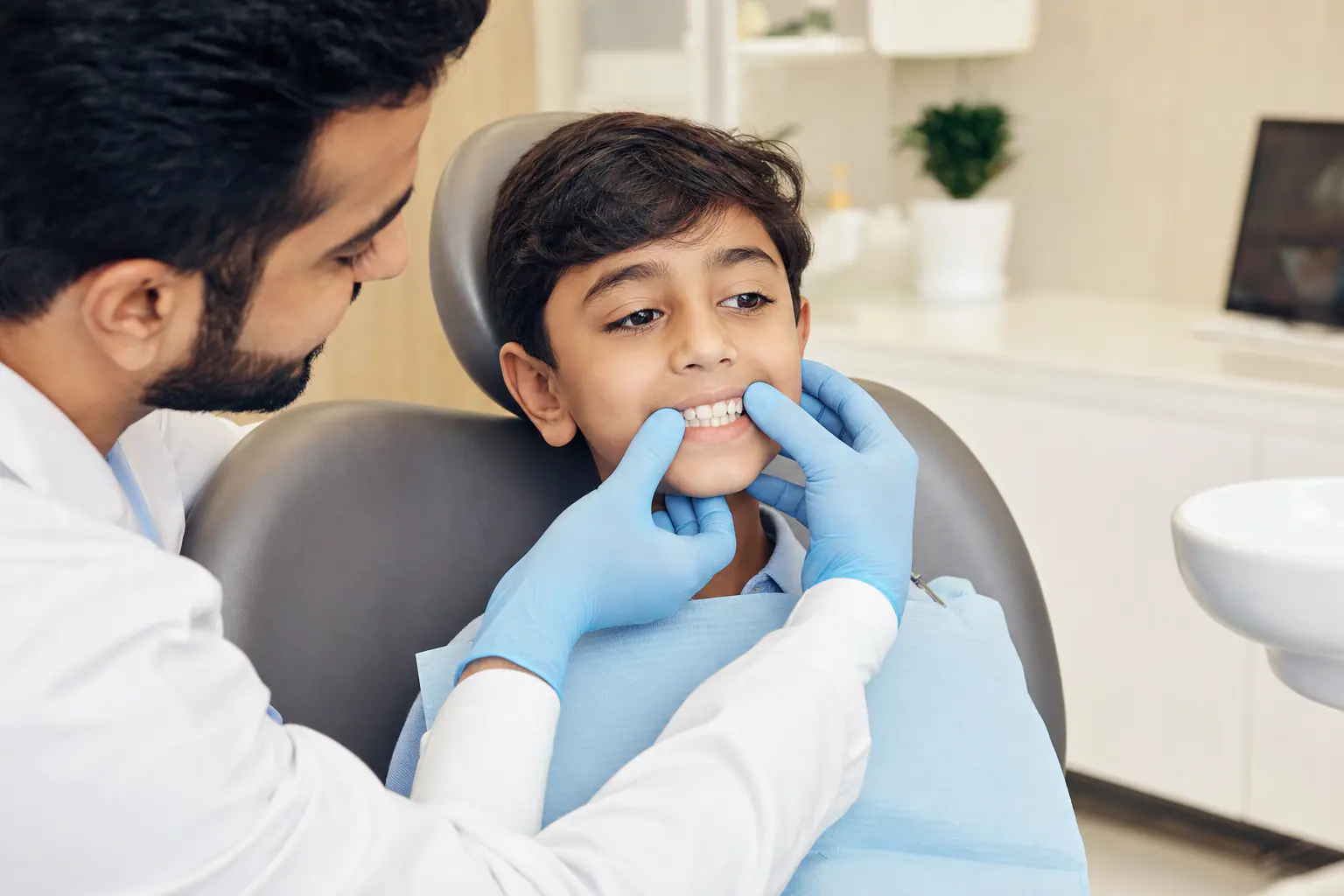
Is open bite treatment painful?
Treating an open bite with braces is not constantly painful, but it may cause temporary pressure or discomfort after fitting or adjustments.
- ● Pressure on teeth
- ● Slight difficulty eating on the first days of treatment
- ● Discomfort when using elastics
- ● Need time to get used to the device
These symptoms are usually temporary. If the pain is severe or persistent, you should see a doctor.
Will the open bite return after treatment?
An open bite may return if the underlying cause is not treated or if the patient does not adhere to the retainer.
- ● Do not use a stabilizer
- ● Continued tongue thrusting
- ● Persistent thumb sucking or oral habits
- ● Untreated mouth breathing
- ● Broken or lost stabilizer
The success of treatment does not depend on the orthodontic treatment only, but also on the stabilizer, habits, and follow-up.
Important topics in open bite treatment
Open bite in children
An open bite in children may be related to habits such as finger or pacifier sucking or tongue thrusting. In some cases, if the habit is stopped early, the problem may improve with growth.
- ● Space between the front teeth when biting
- ● Thumb sucking at an early age
- ● Pushing the tongue between the teeth
- ● Difficulty biting food
- ● Mouth breathing
- ● An open bite that increases over time
Early evaluation helps to know whether we only need follow-up or a correction plan. Check out the service
When should a child's open bite be examined?
It is best to book an evaluation if you notice that the child’s teeth do not meet when biting, or if habits such as thumb sucking or tongue thrusting persist.
- ● A clear gap between the front teeth
- ● Persistent finger sucking habit
- ● Open bite with difficulty speaking
- ● Eruption of front teeth
- ● An open bite that increases over time
Not every child needs immediate braces, but early examination determines the best time to intervene. Check out the service
Open bite in adults
An open bite in adults can be treated in many cases, but treatment depends on the cause — simple dental or severe skeletal.
- ● Is the bite dental or skeletal?
- ● Is there a tongue thrust habit?
- ● Has a previous orthodontic treatment occurred?
- ● What is the effect of the bite on chewing and speech?
- ● Is the patient ready to adhere to the retainer?
Treatment for adults requires careful planning because jaw growth is complete.
Open bite and tongue thrust
Tongue thrust is one of the most important causes that must be evaluated. If the tongue pushes the teeth, it may prevent the bite from closing or cause it to come back.
- ● The tongue appears between the teeth when swallowing
- ● Anterior space between teeth
- ● Difficulty pronouncing some letters
- ● Recurrence of open bite after previous orthodontics
Treatment may require orthotics, functional tongue training, or speech therapy.
Open bite and pronunciation
Some cases of open bite may affect the pronunciation of some sounds, especially if the tongue pushes between the teeth.
- ● Air coming out while speaking
- ● Difficulty with some letters
- ● The child’s speech is unclear
- ● A persistent lisp with an open bite
Collaboration between an orthodontist and a speech pathologist may be helpful.
Open bite and chewing
An open bite may make biting food with the front teeth difficult and may cause the patient to rely on the back teeth more.
- ● Difficulty biting food
- ● Unbalanced chewing
- ● Excess pressure on the back teeth
- ● Erosion in certain teeth
Open bite treatment may help improve biting and chewing function.
Open bite and finger sucking
Prolonged thumb sucking may affect the teeth and jaw and lead to an open bite or protrusion of the front teeth.
- ● Anterior open bite
- ● Eruption of upper teeth
- ● Tightness in the upper jaw
- ● Difficulty closing the front teeth
Stopping the habit early may help improve the condition.
Open bite and pacifier
Using a pacifier for a long time may affect the bite and cause an open bite or protrusion of the front teeth.
- ● Bite shape
- ● Position of front teeth
- ● Vacuum when closed
- ● How long the habit lasts
The goal is to stop the habit in an appropriate way and protect the growth of teeth and jaw.
Open bite and mouth breathing
Mouth breathing may be associated with a lowered position of the tongue or a change in jaw and facial development in some children.
- ● Mouth open most of the time
- ● Breathe through the mouth instead of the nose
- ● Difficulty closing the lips
- ● Open bite or tight jaw
The child may need additional medical evaluation in addition to orthodontic evaluation.
Treatment of open bite without surgery
Many open bite cases can be treated without surgery, especially in children and teenagers.
- ● The problem is due to an oral habit
- ● The bite is simple or moderate
- ● Teeth need orthodontic movement
- ● The patient adheres to treatment instructions
Non-surgical treatment may include braces, appliances, elastics, or habit therapy.
When does an open bite need maxillofacial surgery?
Some adult open bites are severely structural — the problem is in the relationship of the jaws, not just the teeth.
- ● Severe open bite
- ● A clear problem with jaw growth
- ● Great difficulty in chewing
- ● Previous orthodontic failure or severe recurrence
The decision to undergo surgery is made only after a comprehensive evaluation.
Does veneer treat open bite?
Veneers do not treat a true open bite, because they do not change the relationship of the jaws or the way the teeth touch.
- ● A clear void when biting
- ● Difficulty biting
- ● Tongue thrust
- ● Malocclusion
In these cases, braces are often the best option before any cosmetic procedure. Check out the service
Treatment of open bite and gaps between teeth
An open bite may be associated with gaps between the teeth, especially if there is tongue thrusting or oral habit.
- ● Braces to close the bite
- ● Gradually closing gaps
- ● Tongue thrust treatment
- ● Strong fixative after treatment
It is necessary to know whether the gaps are caused by the position of the teeth only, or whether the open bite is part of the problem. Check out the service
Treatment of open bite with crowded teeth
Some patients have an open bite with crowding of teeth. Treatment requires aligning the teeth and improving the occlusion together.
- ● Open space for crowded teeth
- ● Arrangement of incisors and canines
- ● Improving the contact of the front teeth
- ● Installed after treatment
The plan may include the use of elastics or orthotics in some cases. Check out the service
Cleaning teeth during open bite treatment
Cleaning your teeth during braces is very important, because brackets and wires may increase plaque buildup.
- ● Brush your teeth after meals
- ● Use an aligner brush if you have fixed braces
- ● Clean clear molds daily
- ● Visit the clinic for regular cleaning
Healthy teeth and gums are important for the success of orthodontic treatment. Check out the service
Orthopedic devices for children
In some pediatric cases, orthotics or fracture appliances may be used, usually depending on the cause of the bite and the age of the child.
- ● A device to stop finger sucking
- ● Widen the upper jaw if it is narrow
- ● Follow growth
- ● Interim treatment before comprehensive orthodontics
The devices are not suitable for all children, and are only used after a clear evaluation.
Open bite treatment in Al Shamkha - Abu Dhabi
If you are looking for open bite treatment in Abu Dhabi or open bite correction in Al Shamkha, AHLI Specialists Medical Center offers a comprehensive case evaluation.
We help you determine whether your condition requires metal, ceramic, clear braces, custom treatment, or advanced evaluation of structural conditions.

Why choose AHLI Specialists Medical Center?
- ✓ Careful assessment of the type and cause of the open bite
- ✓ Treatment of open bite in children and adults
- ✓ Multiple braces options: metal, ceramic, clear
- ✓ Evaluate oral habits such as finger sucking and tongue thrusting
- ✓ Pay attention to pronunciation and chewing, not just the shape of the smile
- ✓ Examination of gums and teeth before braces
- ✓ Post-treatment stabilization plan to reduce bite recurrence
- ✓ Location close to Al Shamkha, Baniyas, Al Falah, Shakhbout and Abu Dhabi areas
Services related to open bite treatment
Orthodontics
The main service for correcting open bite and occlusal problems.
Clear Aligners
A suitable option for some minor to moderate open bite cases.
Metal and Ceramic Braces
Fixed orthodontic treatment options for situations that require more precise control.
Dental retainer after orthodontics
Important to maintain the result of open bite treatment.
Treating gaps between teeth
If the bite is accompanied by gaps between the teeth.
Treatment of crowded teeth
If the bite is accompanied by crowding or twisting.
Pediatric dentistry
Follow up on oral habits and open bite in children.
Children's dental examination
Early evaluation of open bite in children.
Teeth cleaning
Cleaning the gums and teeth before and during braces.
When do I make an appointment for open bite treatment?
The first step is a comprehensive orthodontic examination to determine the cause and the appropriate type of treatment.
AHLI Specialists Medical Center - Al Shamkha, Abu Dhabi
For reservations and inquiries: 02-448-7553
Location: Al Qayed Street, Al Shamkha, Abu Dhabi
Short answers
What is an open bite?
An open bite is a condition in which the upper and lower teeth do not meet when the mouth is closed, leaving a space between the teeth, most often seen in the front teeth.
What are the causes of an open bite?
It may occur due to thumb sucking, prolonged use of a pacifier, tongue thrusting, mouth breathing, or causes related to jaw growth and occlusion.
Does an open bite need braces?
In many cases yes, especially if it affects your bite, speech, or smile shape. Treatment may be with metal, ceramic, or clear braces, depending on the case.
Can open bite in children be treated?
Yes, and early intervention can be helpful if the bite is associated with habits such as thumb sucking, tongue thrusting, or mouth breathing.
Where can I find open bite treatment in Abu Dhabi?
An open bite treatment consultation can be booked at AHLI Specialists Medical Center in Al Shamkha - Abu Dhabi to evaluate the cause of the condition and choose the appropriate orthodontic plan.
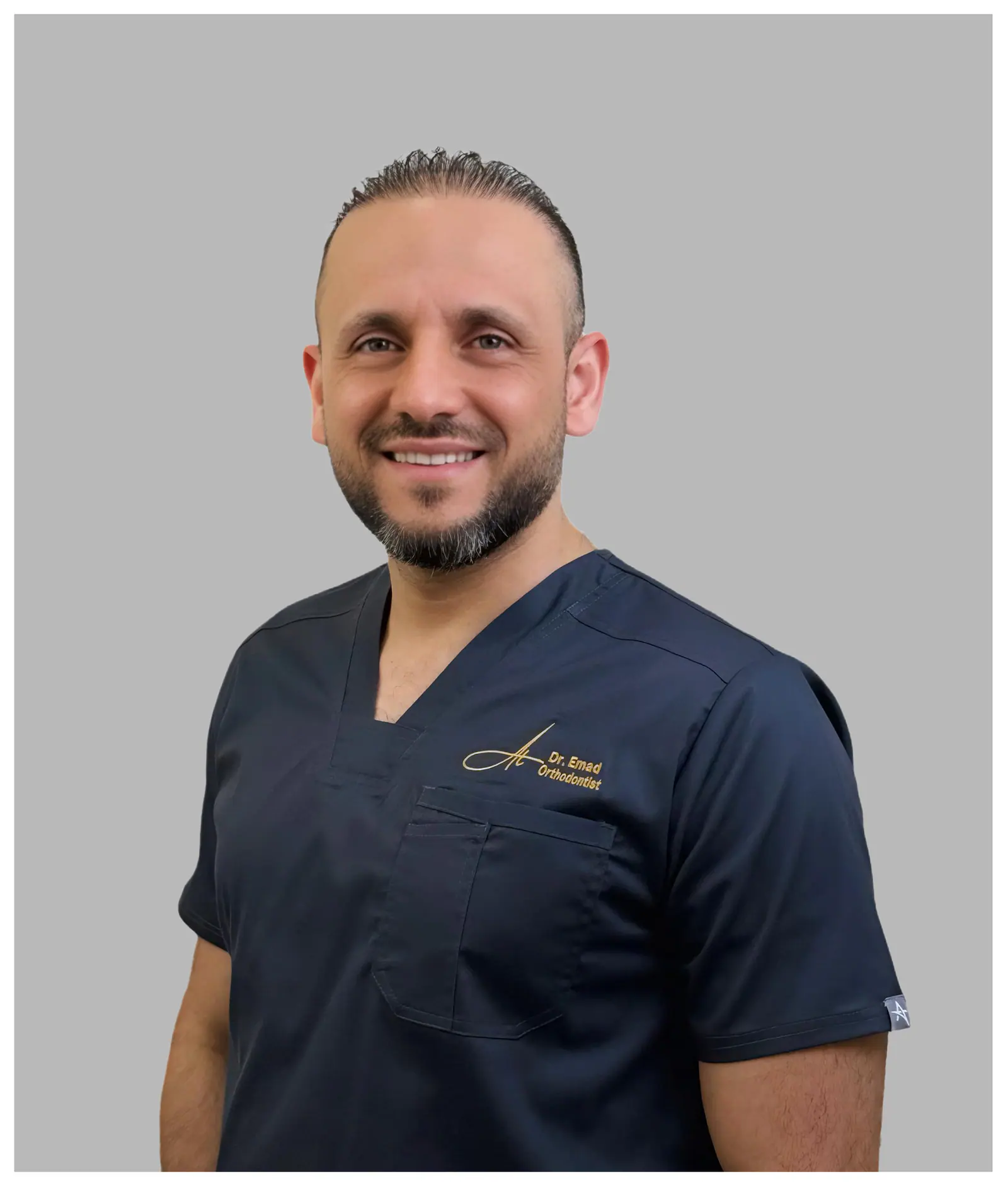
Orthodontists

Frequently asked questions about open bite treatment
Is an open bite dangerous?
Does open bite improve alone in children?
Does tongue thrust cause an open bite?
Do clear braces treat open bite?
Are metal braces better for open bite?
Does open bite affect speech?
Does open bite affect chewing?
Does open bite treatment require surgery?
Does veneer treat open bite?
Does the open bite return after braces?
How long does an open bite treatment take?
Is open bite treatment painful?
Is the child's open bite caused by a pacifier?
Does mouth breathing cause an open bite?
Is a retainer necessary after treating an open bite?
Book an open bite treatment consultation
Evaluate the cause of the open bite and an appropriate orthodontic plan — for children and adults.