
Dental implants for the elderly in Abu Dhabi
Replacing missing teeth and improving chewing and stability at AHLI Specialists Medical Center - Al Shamkha
Have you lost one or more teeth with age?
Has chewing become more difficult than before?
Does the removable denture cause you discomfort or movement while eating and talking?
Do you avoid certain foods because your teeth are unstable or because there are many gaps?
Are you wondering: Are dental implants suitable for elderly people? Does age prevent agriculture?
Dental implants for seniors may be an important option to replace missing teeth and improve the ability to chew, speak, and confidence, especially for people who do not feel comfortable with removable dentures or have missing teeth that affect their daily lives. But the success of transplantation in older age depends on correct evaluation, not on age alone.
At AHLI Specialists Medical Center in Al Shamkha - Abu Dhabi, we provide an evaluation of dental implants for the elderly, taking into account the general health condition, medications, gum health, bone quantity, ability to daily care, and the patient’s needs in terms of chewing, stability, and comfort.
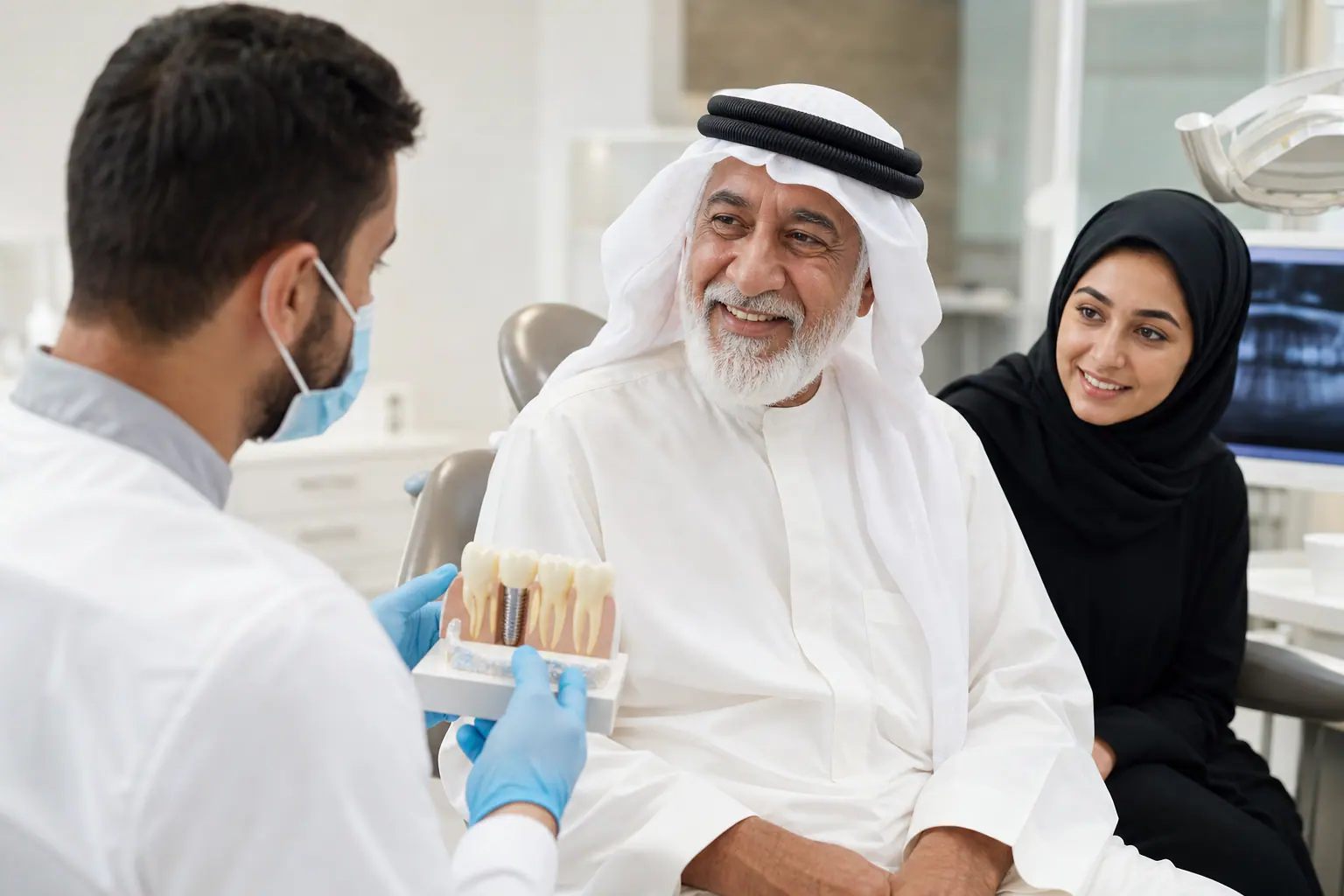
Are dental implants suitable for elderly people?
Yes, dental implants may be suitable for older people in many cases, but the decision does not depend solely on age. The most important thing is oral health, bone quantity, gum health, general medical condition, medications used, and the patient’s ability to clean implants and periodic follow-up.
Wrong question
Am I too old to farm?
The right question
Is my oral health condition suitable for dental implants?
A person in their 70s or 80s may be suitable for a transplant if their health is stable, while a younger person may need to postpone the transplant if they have severe gingivitis or uncontrolled diabetes.
Why might older people need dental implants?
Dental implants may help some patients regain better chewing ability and feel more stable, but the plan must be chosen according to each patient's condition.
What are the benefits of dental implants for the elderly?
Improve chewing ability
Implants may help improve stability and the ability to eat more comfortably.
Improve confidence while speaking
Fixed or implant-supported prosthesis may reduce anxiety about prosthetic motion.
Reducing reliance on moving crews
Implants may be used to improve denture stability in some cases.
Preserve adjacent teeth
In the case of a single tooth, you may not need to file the adjacent teeth as in a bridge.
Improving quality of life
Chewing, talking, and smiling more comfortably may improve confidence and social engagement.
Support fixed compensation
Implants may be used to support a single crown, bridge, or supported fixed/removable denture.
Does age prevent dental implants?
Age alone is not an absolute contraindication for dental implants. Many older people can be evaluated for implants if their health is stable and they have suitable bone and gums or can be prepared.
Dental implants for the elderly require careful evaluation, a realistic plan, and full consideration of the patient’s health.
Who is a suitable candidate for dental implants in the elderly?
- ● Stable general health
- ● Healthy or treatable gums
- ● Sufficient or prepareable bone for transplantation
- ● No active inflammation in the mouth
- ● Ability to clean teeth and implants
- ● Commitment to periodic reviews
- ● Good control of chronic diseases such as diabetes
- ● Realistic expectations about the duration of treatment and outcome
- ● A desire to improve chewing, stability, or the shape of the smile
Examination, x-rays and medical history determine the suitability of the condition.
Who may need special precautions before transplantation?
The presence of these factors does not always mean prevention, but the plan requires medical coordination and careful evaluation.
Chronic diseases and dental implants for the elderly
Diabetes
If diabetes is controlled, transplantation may be possible in many cases. Uncontrolled diabetes may affect healing and increase the possibility of infection.
Heart disease
The doctor may need to know the history of heart disease, medications, and blood thinners, and coordination may be made with the treating physician when needed.
Osteoporosis and bone medications
Some orthopedic medications require significant evaluation before any oral surgical procedure. You should tell your dentist about any bone medications.
Blood thinners
You should not stop blood thinners yourself before your transplant. It must be reported to the dentist, and coordination may be made with the treating physician.
Dry mouth
Dry mouth may increase the risk of cavities and gingivitis. The patient needs a proper care plan before and after transplantation.
Inform your dentist of all illnesses and medications before planning an implant.
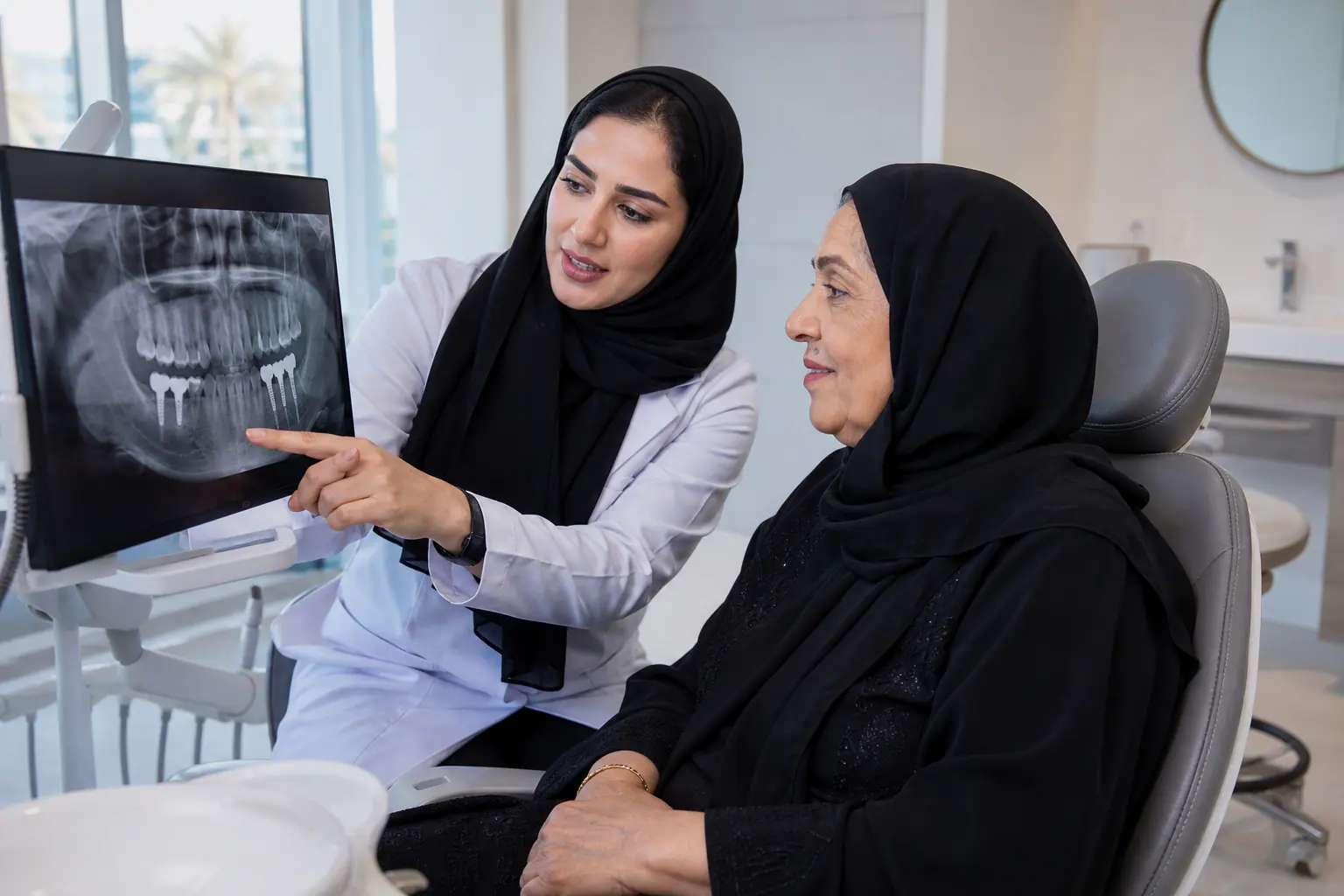
Do elderly people need a bone evaluation before transplantation?
Yes, bone evaluation is very important, especially in the elderly or when teeth have been missing for years. After losing a tooth, the bone in the area of the loss may begin to gradually recede.
- ● Is the bone sufficient for transplantation?
- ● Do we need bone grafts?
- ● Are there areas close to the nerve or sinuses?
- ● What is the appropriate length and diameter of the implant?
- ● Is it possible to perform immediate transplantation?
- ● Can a complete denture be installed with implants?
3D scans may be necessary in some cases for accurate planning.
Bone evaluation before transplantation ←Do elderly people need bone grafts?
Some older people may need a bone graft if the bone is not enough to support the implant. This is common when teeth have been missing for a long time or gum disease.
Not every patient needs bone grafting, but this cannot be known accurately without an examination and x-rays.
Dental implant options for seniors
Single tooth implant for the elderly
Replacing one missing tooth with an implant and crown without filing the adjacent teeth in many cases.
Details ←Immediate implantation for the elderly
Placement of the implant after extraction in specific cases - requires bone evaluation and the absence of severe infection.
Details ←Full jaw implant for the elderly
Replacing most or all of the teeth with implants that support a fixed bridge or supported denture.
Details ←Implant crown for the elderly
The crown is designed to be convenient for chewing, cleaning, and comfort — very important for seniors.
Details ←Agriculture to stabilize moving crews
Many seniors use removable dentures, but some experience denture movement, gum pain, or difficulty eating.
- ● Reduce denture movement
- ● Improve stability while speaking
- ● Improve chewing ability
- ● Reduces the need for adhesives
- ● Increase confidence while eating
- ● Improve daily comfort
Not every denture can be fitted in the same way, and your existing bone, gums and prosthesis should be evaluated before choosing a plan.

Dental implants or removable dentures for the elderly?
Agriculture
It may be suitable if the patient wants better stability and the bone is suitable and health permits the procedure.
Moving kit
It may be appropriate if the health condition does not allow surgery or the patient does not want a surgical procedure.
Sometimes a multi-implant-supported denture is the best solution, as it combines better stability with a lower cost than a full fixed prosthesis in some cases.
Dental implants or bridges for the elderly?
Agriculture
It may be suitable if the adjacent teeth are healthy and we do not want to file them, and the bone is suitable.
Bridge
It may be suitable if adjacent teeth already need crowns or if implants are not suitable.
There is no single best option for everyone. The best is what suits the patient's condition in a safe and practical way.
Steps for dental implants for the elderly
Consultation and examination
Examining teeth, gums and areas of loss, and asking the patient about diseases and medications.
Medical-history Review
A very important step for seniors — all medications and chronic diseases.
Radiology and bone evaluation
Evaluate the bone and implant location — we may need 3D scans.
Treating oral problems
Cleaning, gum treatment, and extraction of non-treatable teeth before implantation.
Establish a farming plan
Determine the type of implant, the number of implants, the type of compensation, and the expected duration.
Transplantation procedure
Place the implant under local anesthesia, taking into account the health condition.
Healing period
Time for the implant to fuse with the bone — varies depending on the bone and overall health.
Installing a crown or prosthesis
After the implant is fixed, the final crown or prosthesis is installed.
Follow-up and maintenance
Periodic reviews are important to maintain the health of the gums and bone around the implant.
Are dental implants for the elderly painful?
It is often performed under local anesthesia, and the patient does not feel pain during the procedure. After implantation there may be temporary discomfort or swelling.
- ● Review medications before the procedure
- ● Reduce the duration of the session as much as possible depending on the case
- ● Clear instructions after planting
- ● Follow up on healing
- ● Communicate with the treating physician when needed
If the patient is concerned about pain or surgery, this can be discussed in the consultation before starting.
How long do dental implants take for the elderly?
The duration varies depending on the case. Some cases of single tooth implantation may be simpler, while cases that require bone grafting or an entire jaw implant may take longer.
The duration cannot be determined accurately without examination and x-rays.
Are dental implants safe for elderly people?
It may be safe for many older adults when the condition is chosen correctly and planned carefully. But like any surgical procedure, it has potential risks.
- ● Inflammation at the implant site
- ● Delayed healing
- ● Failure of the implant to bond to the bone
- ● Bleeding or swelling
- ● Nerve involvement in rare cases
Prevention and follow-up are increasingly important in older people, especially with chronic diseases or medications affecting them.
Factors that help the success of transplantation for the elderly
The success of the transplant does not depend on surgery alone, but on care before and after treatment.
Implant care for the elderly
- ● Use an electric toothbrush if appropriate
- ● Use interdental brushes as recommended by the doctor
- ● Clean around the implant crown well
- ● Clean the implant-supported denture as instructed
- ● Drink water and reduce dry mouth
- ● Attending regular cleaning at the clinic
- ● Ask a family member for help if care is difficult
The implant does not suffer from decay, but the gums and bone around it may be affected by infection if they are not cleaned well.
Do elderly people need facilities after transplantation?
In some cases, yes. An older patient may need a companion on the day of the transplant, especially with chronic illnesses, anxiety, or difficulty moving.
- ● Return home safely
- ● Remember the instructions
- ● Regulation of medicines
- ● Prepare soft food
- ● Monitor for any swelling or bleeding
- ● Communicate with the clinic when needed
This is part of safety and comfort and is not necessarily evidence of the risk of the procedure.
Eating after dental implants for the elderly
Suitable at first:
Should be avoided:
Eating instructions vary depending on the type of transplant — you must follow your doctor's instructions specific to the condition.
Dental implants and elderly people who have old dentures
If you have an old, loose denture, you may need an evaluation to see if it can be improved, replaced or supported with implants.
In some cases, implants may be used to attach a new denture or the plan can be modified for a more stable prosthesis.
Before the consultation — ask yourself
- ? Do you have one or more missing teeth?
- ? Do you use a moving kit?
- ? Do you have difficulty chewing?
- ? Do you have diabetes or chronic medications?
- ? Do you smoke?
- ? Have you lost teeth a long time ago?
Book a dental implant consultation for seniors
The first step is an examination, assessment of the bone, gums and medical history, then determining the most appropriate plan.
Why AHLI Dental Implant Center for the Elderly?
Comprehensive assessment of the elderly
Consider chronic diseases and medications before any plan.
Bone and gum evaluation
Careful examination before planning planting.
Multiple options
One tooth, the entire jaw, or fixing the denture with implants.
Clear explanation
The steps, duration and expectations are explained before starting.
A plan that takes into account comfort
Taking into account the ability to take daily care.
Follow-up after transplantation
Periodic reviews to maintain results.
Location in Al Shamkha
Close to Baniyas, Al Falah, Shakhbout and Abu Dhabi areas.
Specialization
Cleaning, gums, implant crown, and bone evaluation.
When do I book a consult?
Related Services
Dental Implant Team
Dental implants for the elderly in Al Shamkha - Abu Dhabi
AHLI Specialists Medical Center — Al Qayed Street, Al Shamkha, Abu Dhabi
For reservations and inquiries: 02-448-7553
Book a consultationFrequently asked questions about dental implants for the elderly
Does age prevent dental implants?
Are dental implants safe for elderly people?
Are dental implants painful for elderly people?
Can a transplant be done if there is diabetes?
Do blood thinners prevent transplantation?
Do osteoporosis medications affect implants?
Can the removable denture be attached to implants?
Do elderly people need x-rays before transplantation?
Is it possible to have a full jaw implant for the elderly?
How long do dental implants take for the elderly?
Is implantation better than a moving kit?
Can an implant be done if the bone is weak?
How does the elderly take care of dental implants?
Does the implant get decay?
Does the patient need a companion on the day of the transplant?
Is transplantation suitable for your condition?
Book a consultation at Al Shamkha — we review your health and bones and explain your options honestly.